Olhão After Dark: Live Music Without the Show
Forget the laser-lit nightclubs: Olhão's night happens on the waterfront terraces and in the alleys of the Cubist quarter, with music that turns up when you least expect it. An honest guide on when to go, what to eat first, and how to avoid overpaying for your beer.
Let us be honest from the start: if you are looking for nightclubs with laser lights and international DJs, Olhão is not your place. Go to Albufeira, hit the Strip, and may God help you. Olhão is something else. It is a fishing town that still smells of fish in the late afternoon, where nightlife happens on low terraces, in taverns where the owner knows the regulars by name, and in improvised concerts that start when someone picks up a guitar. The night here cannot be bought. It is earned, with patience and a willingness to be in no rush at all.
Where the night begins: the waterfront
Everything in Olhão gravitates around the two red-brick municipal markets, those buildings with towers that look more like a Moroccan railway station than anything Algarvian. By day it is where you buy the freshest fish in the Ria Formosa. As dusk falls, Avenida 5 de Outubro, which runs parallel to the water, becomes the social center of gravity. The terraces fill up, glasses of imperial beer start circulating, and the golden light hits the hulls of the moored boats.
My advice: do not sit at the first terrace you find. Walk. The ones facing the markets directly charge a premium for the view, and the beer tastes exactly the same as the one on the back street for a euro less. Pay the premium for breakfast the next morning, not for the night's beer.
Before the night kicks off properly, there is a ritual worth keeping: climb up to the Miradouro do Cerro de São Miguel in the late afternoon to watch the sun drop over the Ria Formosa and the islands. It is the highest point in the area and the contrast is striking: from up there, the silence and the vastness of the salt pans; down below, an hour later, the buzz of the terraces. Do both on the same day and you will understand Olhão better than any guidebook can explain.
Live music: where, when, and with what expectations
Here is the truth nobody tells you: live music in Olhão is seasonal, irregular, and wonderfully unpredictable. There is no consistent gig calendar like in Lisbon or Porto. What there is, is better in its own way. In the warm months, from May to September, the bars along the waterfront and in the Barreta quarter program live music nights, usually between Thursday and Saturday. Jazz, modern fado, bossa nova, blues, and plenty of that acoustic guitar sound that pairs with a hot night and a beer sweating in the glass.
The golden rule: ask. Ask the waiter at the terrace where you had dinner, ask at the bakery in the morning, read the posters stuck to the lampposts on Avenida da República. Olhão's real program is never fully online. It is on the street, handwritten, and changes from week to week. Always check locally before planning your night around a concert.
For those who want guaranteed quality sound, it is worth checking whether anything is programmed at the Olhão Municipal Auditorium during your stay. It is the home of the town's more formal performances, with a schedule published in advance. Concerts, theater, and occasional festivals. It is not a drinking night, it is a numbered-seat night, but in winter, when the terraces close early, it is often the only live culture option going. Check the program locally or on the town council website.
Fado: managing your expectations
Do not come to Olhão looking for fado houses. It is not the strong tradition here, unlike Lisbon or Coimbra. The Algarve has its own music, the corridinho, and the brass bands that play at festivals. If fado does appear, it is on a special night, in a restaurant or a cultural association, and almost always at the initiative of someone local. If you stumble on a fado poster, go. But do not build your trip around it. To dive properly into the region's musical culture and traditions, read our guide to local culture in Faro and the experiences of the authentic Algarve, which gives you the right context to understand what you are hearing.
The Barreta quarter: the hidden heart of the night
If there is one place in Olhão where the night has a character of its own, it is the Barreta quarter, also known as the Cubist quarter. It is the old part of town, a maze of white houses with flat roofs, açoteias and terraces, built in the 18th century by fishermen who had traveled to North Africa. The streets are narrow, straight, and at night they take on an intimacy the waterfront does not have.
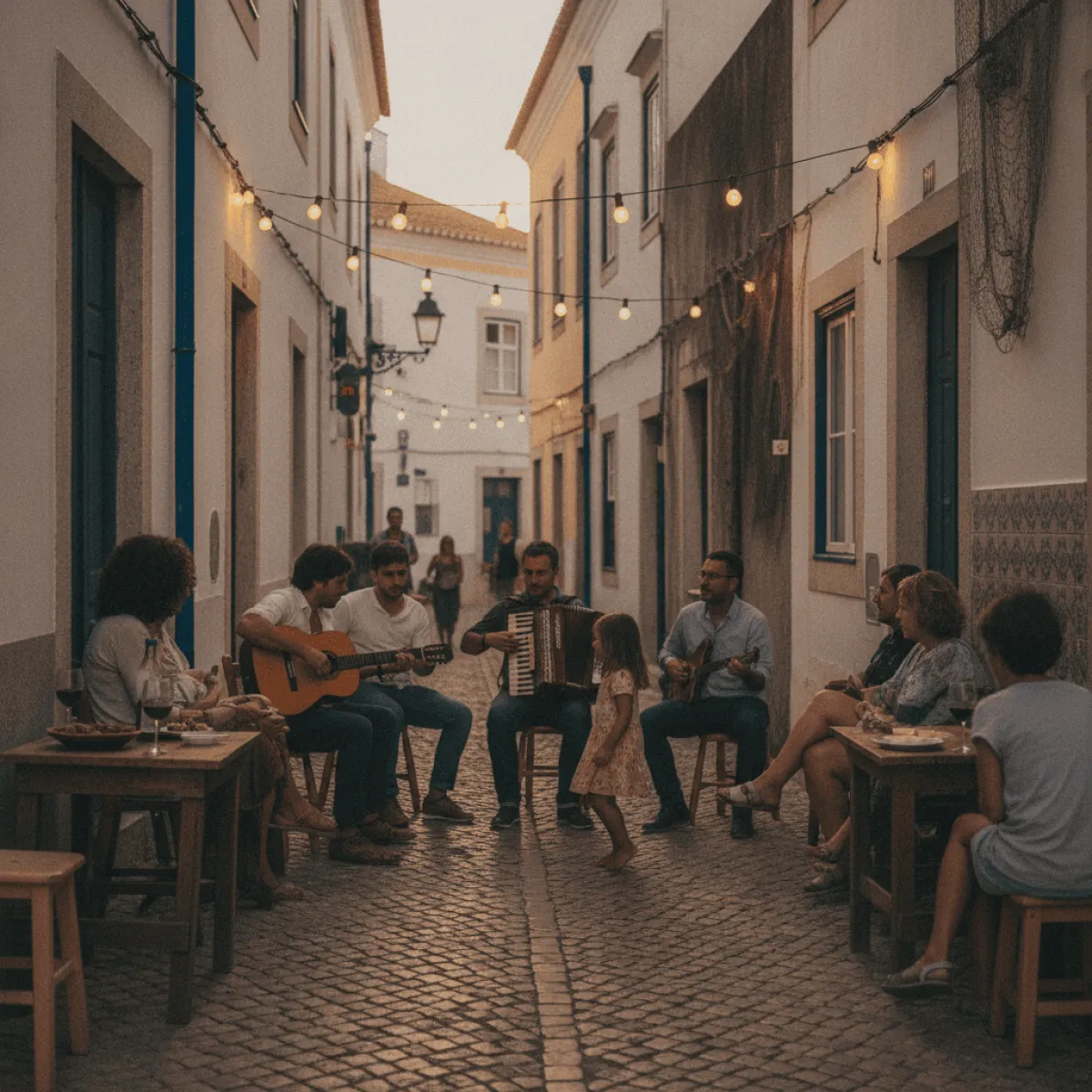
Here you find the small wine bars, the taverns where you nibble on petiscos, and occasionally a musician playing at a café door. This is territory to discover on foot. Get lost on purpose. Turn left wherever you feel like it. The best night you will have in Olhão is probably one you did not plan, in a small square where you tripped over a terrace with three tables and a guitar.
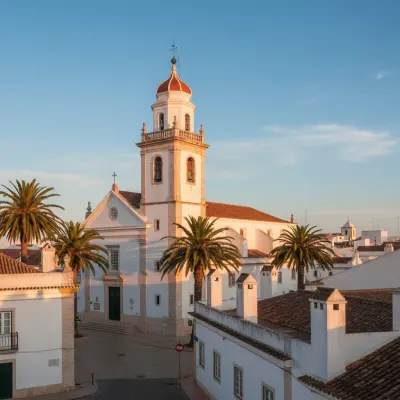
At the heart of this area stands the Tower of the Mother Church of Nossa Senhora do Rosário, worth visiting by day to climb up for the view over the Cubist rooftops, but which at night serves as a navigation beacon. When you get lost in the alleys, and you will get lost, the tower always tells you where the center is.
Eat before you drink: the foundation of the night
In Olhão, the night begins at the table. And what you eat here is, with little competition, the best seafood in the Algarve. The Ria Formosa produces clams, oysters, wedge clams and cockles of a quality that the restaurants of the more touristy coast can only dream of. Start the night with a platter of clams à Bulhão Pato and a chilled white wine from the region. It is the right way to lay down a base before the night's beers.
Do not be seduced only by the restaurants facing the water. The best petiscos are often one street inland, in the taverns that have no view but have the right cook. Order xerém with cockles, the dish that defines Olhão's cooking: a creamy corn porridge with the best of the ria on top. If you see it on the menu, order it. This is what sets Olhão apart from any other Algarvian town.
For the following days, it is worth setting aside time for a folar workshop in Olhão, where you learn the traditional pastry that comes apart in the finest sheets. It is a daytime activity, of course, but it pairs beautifully with a stay where you want to understand the town through your stomach and not just through your glass.
For waking up the next day
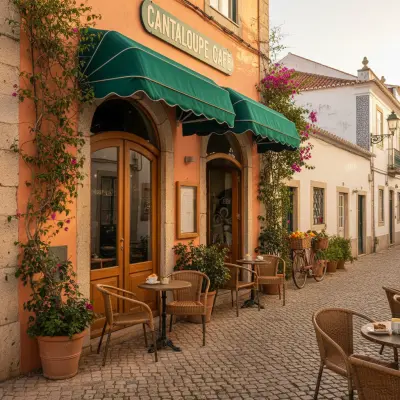
Every good night needs a good day to follow, and in Olhão the morning ritual is as important as the night one. The Cantaloupe Cafe is the place to recover from a long night: decent coffee, a proper breakfast, and the relaxed atmosphere a body running at half speed asks for. Sit down, order a galão, and watch the town wake up.
If you have energy for more than coffee, and I recommend you do, the next morning is the perfect moment for bird watching on the Ria Formosa. Flamingos, herons, spoonbills and dozens of other species make the ria one of the best birdwatching destinations in Europe. There is something deeply restorative about trading the noise of last night's terrace for the silence of the salt pans at dawn. It is the perfect counterweight.
Honest logistics: how to make the night work
- When to go: Olhão's nightlife lives from May to September. Outside that window, the terraces close early and the town turns inward. In winter, expect wine bars and the auditorium, little more.
- Which nights: Thursday to Saturday is when there is most live music. Sunday the town rests.
- What it costs: A draft beer on the terrace runs around 1.50 to 2.50 euros depending on the view. A glass of regional wine, 3 to 5 euros. Do not expect big-city prices, that is one of Olhão's charms. Always confirm locally.
- How to get there: Olhão has a train station on the Algarve line, a few minutes' walk from the waterfront. Coming from Faro, it is about a 10-minute train ride. Use public transport so you do not have to drive after the beers.
- The right footwear: The Barreta streets are stone and uneven. Leave the heels at home.
The rest of the Algarve, if you want to escape
Olhão is an excellent base, but do not lock yourself inside it. If you want a livelier night with bars full of character, Lagos is the obvious destination, and our Lagos neighborhood guide shows you exactly where to go out in each part of town. And if you are traveling with family and a night of drinking is not an option, it is worth understanding how other inland towns work, for example in our honest guide to Silves with kids, which proves the historic Algarve has far more to offer than beaches and late nights.
The final truth about Olhão after dark
Olhão does not compete with the industrial nightlife of the tourist coast, and thank goodness for that. What it offers is a night built to a human scale: music that turns up when you least expect it, terraces where you stay for hours talking, fresh seafood, and the feeling of being in a real town rather than a holiday theme park. The best night you will have here will not be the most expensive or the loudest. It will be the one where, in some square in the Barreta, someone started to play and nobody was in any hurry to leave. Come without a plan. Olhão takes care of the rest.