Odemira's Seafood Summer: Percebes, Oysters, Atlantic Tables
In Odemira, seafood is not a fish-tank performance: it is goose barnacles pulled by hand from the cliffs near Azenha do Mar and oysters raised in the cold Mira estuary. A guide to eating well in town and on the coast, from Tasca O Bernardo to Zambujeira do Mar.
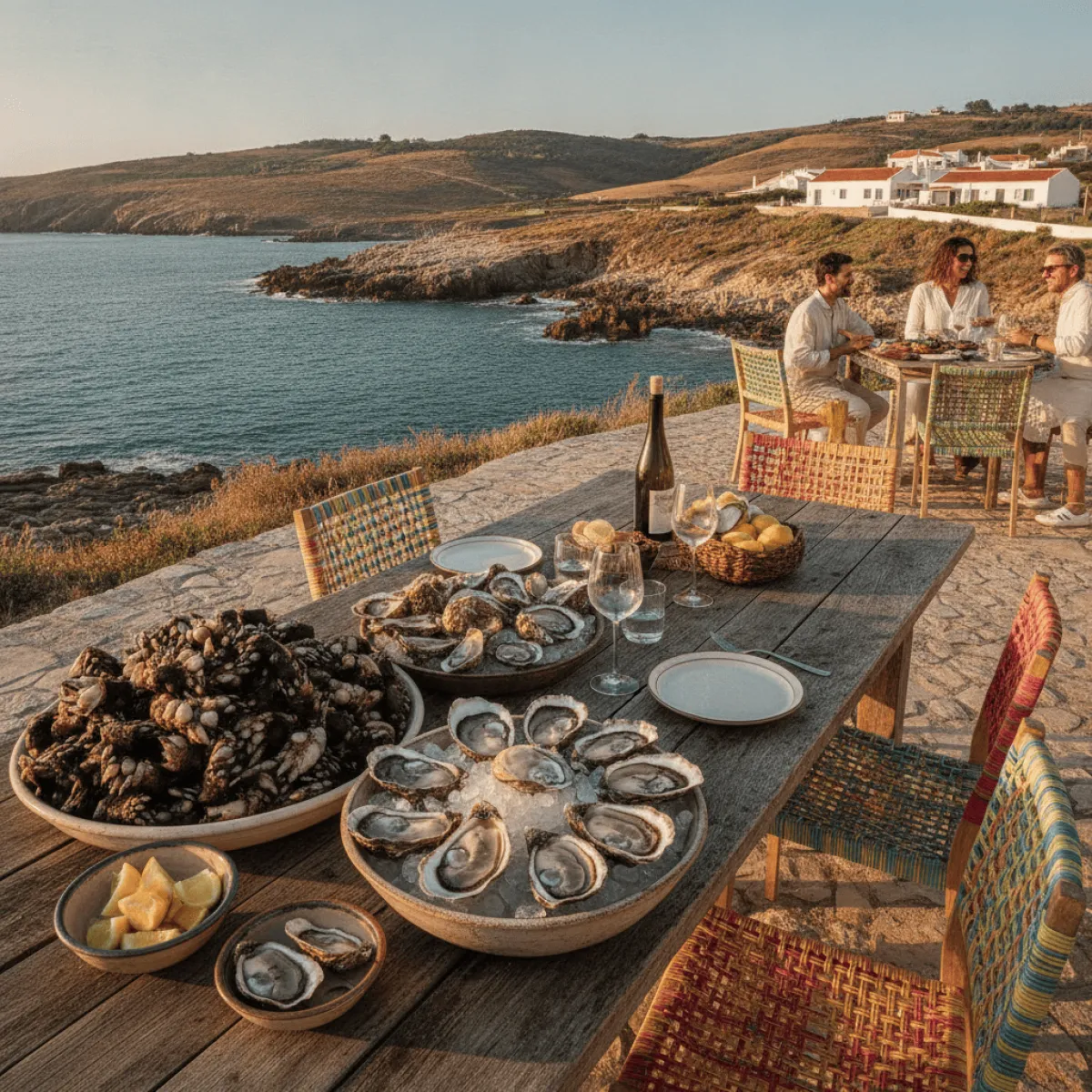
There are two ways to eat seafood in Portugal in summer. The first is the postcard version: a marisqueira with a glowing fish tank, lobster at heart-stopping prices, a waistcoated waiter dismantling a crab with surgical theatre. The second is the Odemira version: an inland Alentejo town that, through a lucky accident of administrative geography, governs kilometres of wild Atlantic coastline, from the Mira estuary down to the cliffs of Zambujeira. Here, seafood is not a performance. It is a consequence. The ocean hammers the rocks of the Costa Vicentina all year, and from those hammered rocks comes the one product that justifies the entire trip: the percebe, the goose barnacle.
One thing to get straight early: Odemira is the largest municipality in Portugal by area. "Eating seafood in Odemira" can mean eating in the town itself, beside the river, or eating half an hour away with sand still in your shoes. Both are worth doing, and this guide covers both. But start with the town, because that is where things are most honest.
First, a crash course in percebes
The goose barnacle is the least photogenic shellfish in the country and possibly the best. It looks like a prehistoric finger with a turtle's claw on the end, and it is harvested by hand by mariscadores who climb down cliff faces with the swell breaking beneath them. On Odemira's coast, the area around Azenha do Mar is one of the historic harvesting spots. This is not folklore staged for visitors: it is a dangerous, regulated trade, and the price per kilo reflects it. Expect it to be expensive, expect it to vary with size and season, and always ask the day's price before ordering. No serious restaurant will be offended by the question.
Here is how you eat one: twist, peel the leathery skin back like a glove, eat the inside. It tastes like concentrated ocean with a faint sweetness underneath that no farmed prawn will ever have. If you try one single shellfish on this trip, make it this one. Everything else, the stuffed crab, the clams in garlic and coriander, the arroz de marisco, is excellent supporting cast. The percebe is the reason this coast matters.
Where to eat in town: the Odemira triangle
Odemira town sits about twenty minutes from the sea, leaning over the Mira river, and most people drive straight past it on the way to the beaches. A mistake. In town you eat without the August queue, surrounded by locals rather than beach towels, and the kitchens have no reason to cut corners for a crowd that will never come back.
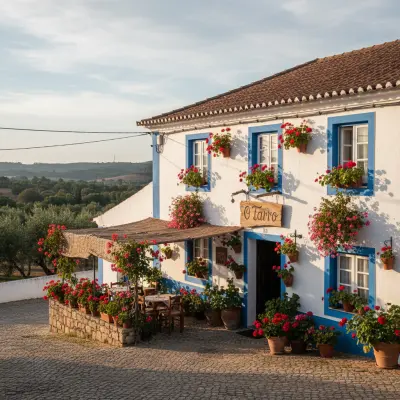
O Tarro
O Tarro is the town classic, the kind of place families book for Sunday lunch, where Alentejo cooking and the Atlantic meet without ceremony. It is the right place to learn the region's central truth: here, the Alentejo does not end where the fish begins. Ask what came in that day and let the answer decide for you. On a coast this wild, the best menu is the question "what's fresh?".
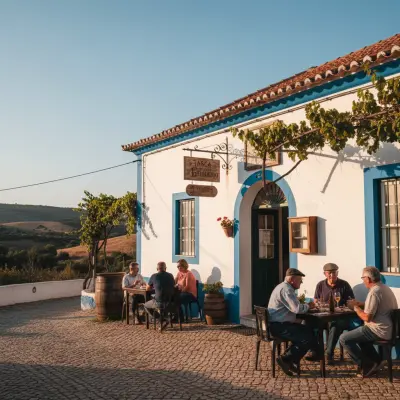
Tasca O Bernardo
Tasca O Bernardo is the opposite of the glowing-fish-tank restaurant, which is exactly the point. A proper tasca, one that resisted the temptation to rebrand itself as a "concept". This is the format for grazing: small plates, house wine, conversation. If you are torn between a formal dinner and a night of petiscos, choose the petiscos. On the Alentejo coast, snacking is not the lesser version of a meal. It is the meal in its most intelligent form.
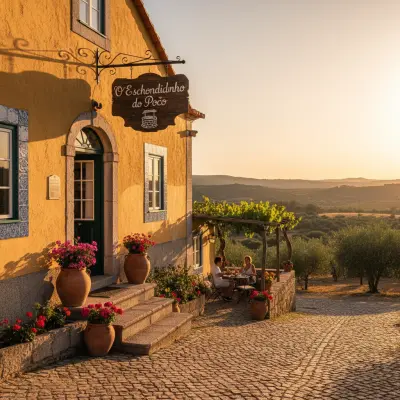
O Escondidinho do Poço
The name of O Escondidinho do Poço translates roughly as "the little hidden one by the well", which tells you what you need to know: it is not on the town's main shop window, and that is precisely why it is interesting. It is the sort of place locals recommend while slightly lowering their voice, the way people do when they would rather not ruin a good thing. Go unhurried, take the house's suggestion, and avoid the classic visitor error of ordering six starters and surrendering halfway through the main course.
One practical note that applies to all three: in July and August, book ahead or arrive early. Alentejo lunch starts at half past twelve sharp, and by 1.30pm a free table is a stroke of luck, not a plan.
The river behind the seafood
Odemira's most under-told story is not a beach. It is an estuary. The Mira river pushes inland from Vila Nova de Milfontes, and in its calm, clean water grow oysters that have quietly built a reputation among people who take these things seriously. Cold-water Atlantic estuary oysters: mineral, briny, with none of the flabby richness of some imported ones. If you see them on a menu in this region, order them. Half a dozen, lemon, nothing else.
Since the river is the protagonist, give it its due: navigating the Mira's hidden estuary is the right way to understand where the flavour on your plate comes from. The Mira is one of the least polluted rivers in Portugal, and seeing it slowly, at the speed of the tide, explains this coast better than any text. If you prefer binoculars to paddles, there is an alternative: a birdwatching trip to the Ria de Alvor departing from Odemira, for the mornings when your body asks for herons and quiet instead of another crab.
Beach day, seafood afternoon
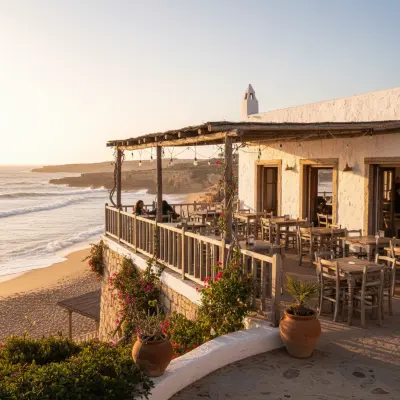
The formula for a perfect summer day on this coast is simple and should be respected: beach in the morning, shellfish mid-afternoon, sunset on the cliff. For the first part, Praia da Zambujeira do Mar is the obvious candidate and, for once, the obvious candidate is correct. A wedge of sand framed by dark cliffs, a serious Atlantic, a white village perched above. The water is cold even in August. This is the west coast, not the Algarve, and anyone who runs in comes out shouting. Walk in slowly and keep your dignity.
A calendar warning: in early August, Zambujeira hosts the MEO Sudoeste music festival and the village changes scale for a few days. If you want quiet, avoid those dates. If you want the opposite, now you know where to find it.
Stretching the trip: Porto Covo and the cold pools
Anyone who comes to this coast for shellfish should, for consistency's sake, follow the product to its source. A little to the north, Porto Covo remains a place where fish goes from boat to plate with almost no intermediaries, and we wrote a whole guide about it: Porto Covo's fresh fish, from fishing boat to plate. It is half an hour by car and worth every bend.
And if the open Atlantic feels too brutal for swimming, there is a middle path: the rock pools the low tide carves along the shore. We mapped them in our guide to natural pools near Porto Covo, and the core advice holds all summer: check the tide table before you go, because the pool that exists at 10am is gone by 2pm.
The essentials, no padding
- When to go: June and September are the smart months. Sun, sea, everything open, half the crowd. July and August work too, but they demand reservations and patience.
- Getting there: by car, Odemira is roughly two hours from Lisbon via the A2 and IC1. Rede Expressos buses serve the town and the coastal villages, but to hop between beaches and restaurants a car is close to essential.
- Costs: shellfish is never cheap, and percebes least of all. Clams and petiscos are affordable, stuffed crab and arroz de marisco sit in the mid range, good-sized percebes are an investment. Prices track the daily auction: check locally and always ask before ordering.
- What to order: percebes above all, Mira estuary oysters when available, amêijoas à Bulhão Pato, and an arroz de marisco for two if it has been a long beach day.
- Timing: lunch at 12.30pm or dinner at 7.30pm if you have no booking. Mid-service, good luck.
One last note, for those who get attached to this coast, and you will: it does not close in September. Vila Nova de Milfontes, at the mouth of the Mira, lives a different and arguably better life once summer ends, a story we tell in our guide to Milfontes off-season. The ocean stays, the percebes stay, and suddenly every table is free. Think about that while you twist open the first barnacle of the afternoon.