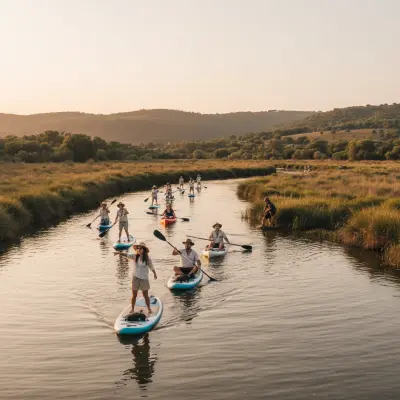
Birdwatching at Ria de Alvor from Odemira
A Rocha Life runs guided birdwatching walks at the Ria de Alvor, about 90 minutes south of Odemira. Three hours, 5 km of flat terrain, groups of no more than 8, and a real chance to see flamingos, ospreys, and bee-eaters in their natural habitat.
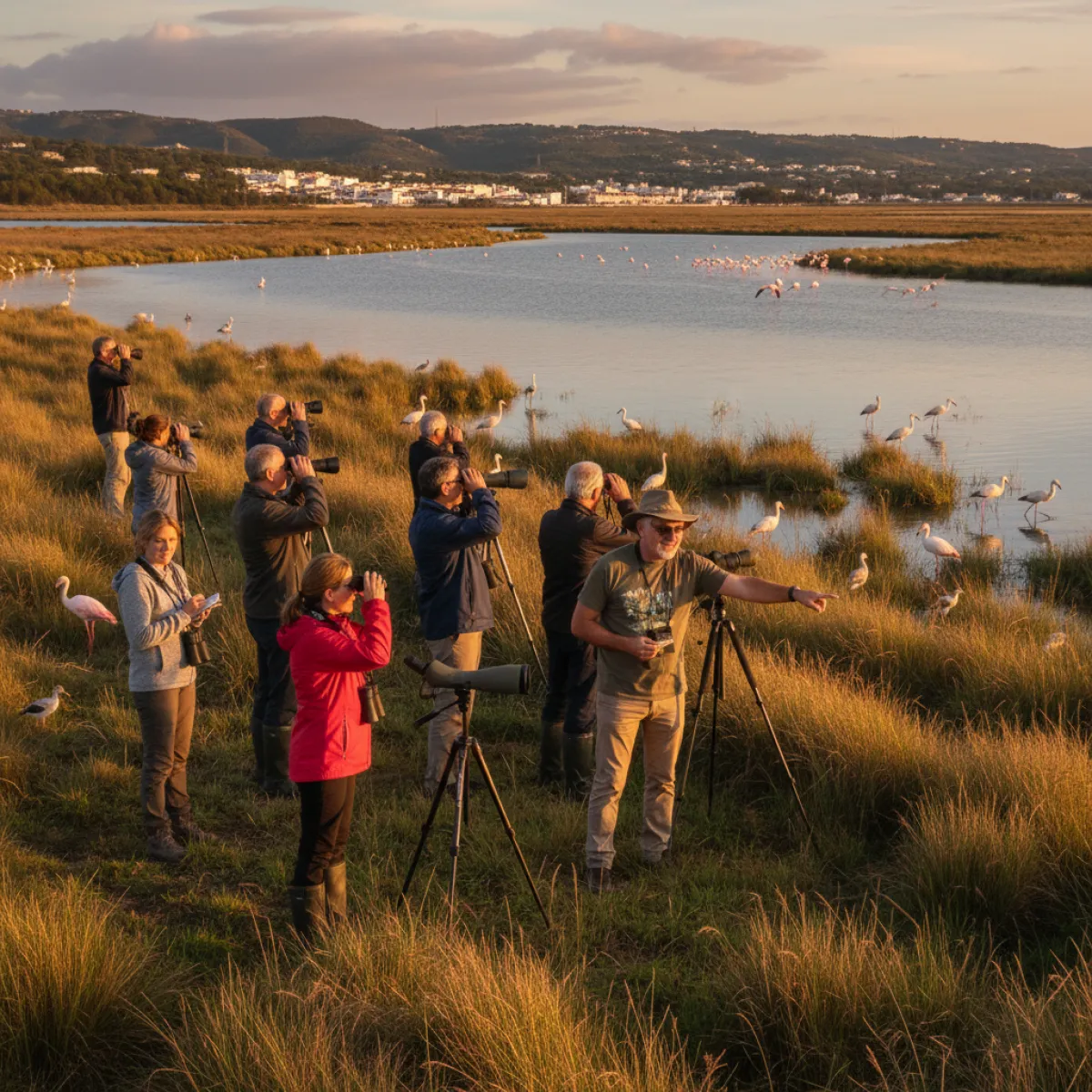
The Ria de Alvor doesn't announce itself. It's a broad, flat expanse of mudflats and brackish water that looks, at first glance, unremarkable. Then you raise your binoculars and the emptiness fills in. Pink flamingos filtering the shallows. An osprey circling overhead in slow, deliberate loops. Waders working the tideline with mechanical precision. It's the kind of place that recalibrates how you see wetlands, and A Rocha Life runs the best way to experience it.
What This Experience Is
A Rocha Life operates guided birdwatching walks from their field study centre at Cruzinha, near Mexilhoeira Grande in the Algarve. Important note: the Ria de Alvor is about 90 minutes' drive south of Odemira. For those staying along the wild Odemira coastline, it makes an excellent half-day trip that pairs beautifully with the Atlantic landscapes of the southwest Alentejo, a completely different ecosystem just down the road.
The walk lasts approximately 3 hours, covers 5 kilometres of flat, accessible terrain, and doesn't require any particular fitness level or birding expertise. You just need curiosity and comfortable shoes.
How It Works, Step by Step
You meet at Cruzinha, A Rocha's field study centre in Mexilhoeira Grande (Portimão municipality). From Odemira, take the N120 and IC4 south, it's about 1 hour 20 minutes through pleasant Algarve countryside.
The guide hands you a species checklist and a field guide. Then your group, never more than 8 people, which makes all the difference, sets off on foot through the farmland surrounding Cruzinha. This first section, through old pastures and orchards, is already productive: cattle egrets among the livestock, azure-winged magpies in the cork oaks, little owls perched on stone walls.
Midway through, you reach the Ria de Alvor salt marsh itself. This is where things shift gear. At low tide, the exposed mudflats attract flocks of waders, dunlins, sandpipers, ringed plovers picking their way through the mud. At high tide, birds concentrate on the remaining sandbanks, making observation easier. The guide sets up the telescope, and suddenly the details appear: feather patterns, feeding behaviours, the social hierarchies within a flock.
The Stars of the Show
What you see depends on the season, naturally. In spring (April to June), bee-eaters are the headline act, that flash of green and blue against the sky stays with you. Flamingos are present nearly year-round but most numerous in autumn and winter. The resident osprey is always a highlight, and if you're lucky, you'll watch it dive for fish. It's the kind of moment that makes you hold your breath.
In January, there's an unexpected bonus: almond trees blooming along the route. It's not just about birds, the whole landscape participates.
What Makes This Experience Worth the Drive
I've done birdwatching on my own at various points along the coast between Odemira and the Algarve, and the difference a specialist guide makes is enormous. It's not just species identification, it's reading the landscape. The A Rocha Life guide explains why a particular bird is in that specific spot, what it's doing, how the tidal cycle affects feeding patterns. You go from seeing birds to understanding an ecosystem.
The small group size (maximum 8) matters too. There's none of that mass-tour feeling. You can ask questions, linger on a species that interests you, and the guide adjusts the pace to the group.
My Honest Take
The morning session is better. Fewer people on the trails, more bird activity, and the light on the water is different, lower, warmer, better for photography. If you have to choose between morning and afternoon, don't hesitate.
What could be improved: the walk itself isn't particularly scenic until you reach the salt marsh. The agricultural fields are functional, not photogenic. But the birds more than compensate.
Practical Information
- Provider: A Rocha Life
- Price: €35 per adult, €27 per child
- Duration: 3 hours (5 km walk)
- Meeting point: Cruzinha, A Rocha Field Study Centre, Mexilhoeira Grande, Portimão
- Maximum group: 8 people
- Includes: Expert guide, field guides, species checklist, telescope, refreshment
- Bookings: arochalife.com
- Private groups: Minimum 4 people
What to Wear and Bring
Dress in layers and muted colours, nothing bright red or gleaming white, which spooks the birds. Comfortable walking shoes are fine; the terrain is flat but can be muddy near the salt marsh. Hat and sunscreen are essential even in the Algarve winter.
Bring binoculars if you have them, the guide has a telescope, but your own binoculars let you explore at your own pace. If you don't have any, don't worry: the shared telescope is good quality.
Water and a light snack are a good idea, especially for the morning session. The guide provides a drink, but three hours outdoors calls for extra hydration.
For Those Based in Odemira
If you're exploring the Odemira region and want to vary the experience, this trip to the Ria de Alvor is an excellent way to see a different side of southern Portugal. The Costa Vicentina has its own birds, white storks nesting on sea cliffs, red-billed choughs at Sagres, but the Ria de Alvor estuary ecosystem is something else entirely. It's like changing the channel: different landscape, different cast, same fascination.
The drive back can include a stop in Aljezur or at Praia da Bordeira for a sunset on the coast. It's the perfect combination: salt marsh in the morning, sea cliffs in the afternoon. If you want to understand the natural rhythm of this part of Portugal, there's no better way than watching the birds that choose to live here.