Alentejo Altitudes: Elevated Perspectives and Odemira's Grand Horizons
Discover Odemira's most exclusive terraces and viewpoints, from the serene curves of the Mira River to the imposing cliffs of Zambujeira do Mar. A guide for travelers seeking elevated perspectives and the best Alentejo light.
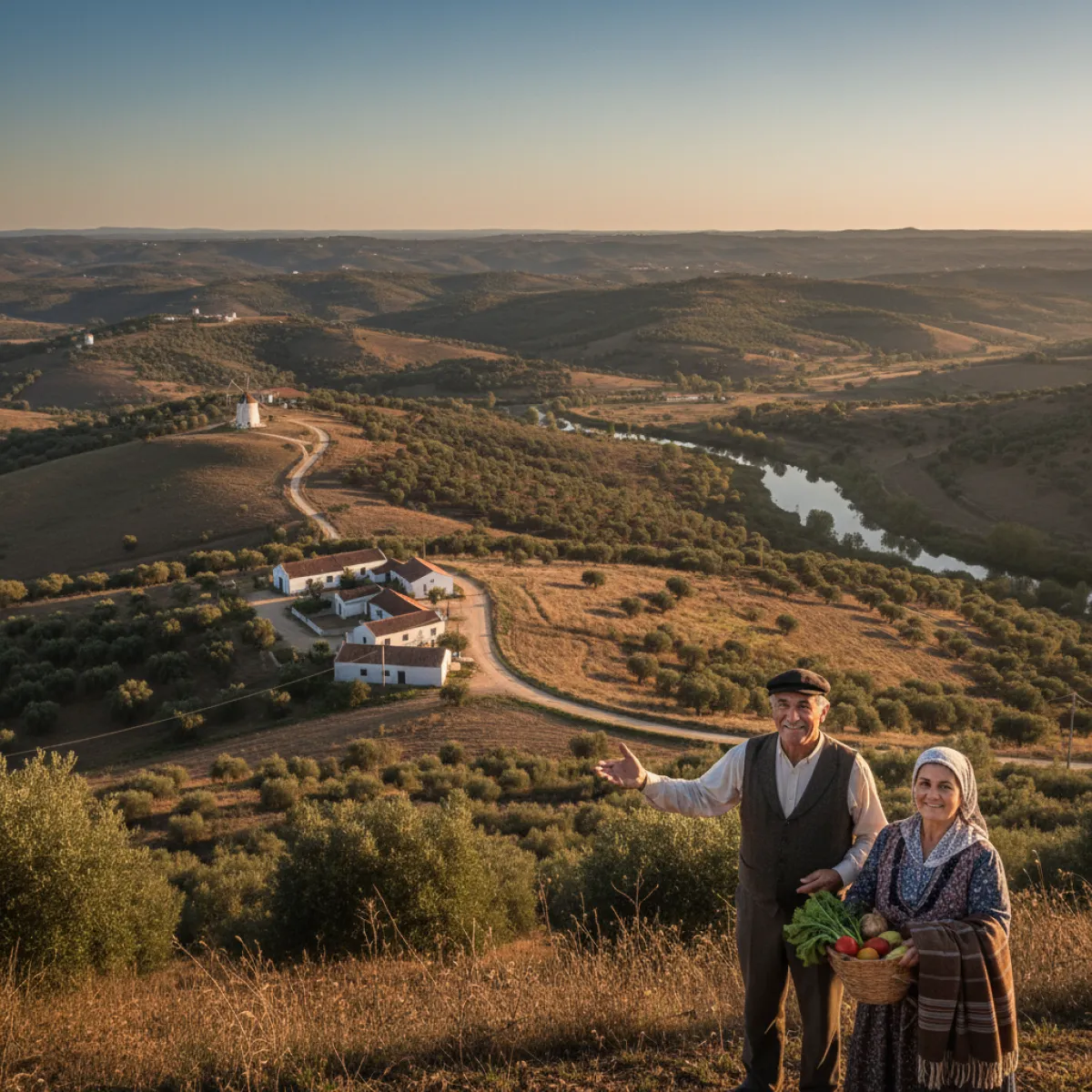
The Aesthetics of Decline: Odemira's Verticality
Odemira does not reveal itself all at once. Unlike the infinite plains that define Upper Alentejo, the geography here is an exercise in patience and elevation. The town, arranged like an amphitheater over the Mira River, requires the traveler to look up to understand its structure and down to appreciate its soul. We are not talking about the glass and steel rooftops of Lisbon or New York; in Odemira, the 'rooftop' is often a schist slab suspended over the valley, or the top of a rampart where the Atlantic wind begins to lose its salinity.
To understand this relationship between architecture and the abyss, one must climb to the highest point of the town, where the castle once stood. From here, the view over the river's curves is hypnotic. The Mira doesn't flow; it meanders with a slowness that dictates the pace of the entire region. It is from this elevated perspective that one best understands the premise of The Slow Flow: Navigating the Mira River's Hidden Estuary in Odemira, an immersion that, seen from above, looks like a ballet between green banks and mirrored water.
Where the River Meets the Sky: Riverside Terraces
While the town is inland, its spirit is fluvial. In the historic center, small family establishments have converted their rooftops into makeshift viewpoints. Look for the spaces near the Misericórdia Church. In these places, the sunset ritual doesn't involve molecular cocktails, but rather a glass of local white wine or a medronho spirit, served with the precision of those who know the value of the land. The budget for an afternoon of contemplation rarely exceeds 15 euros per person, including some snacks of cured sheep's cheese.
Vila Nova de Milfontes: The Estuary Stage
If Odemira is the silence of the valley, Vila Nova de Milfontes is the drama of the river mouth. Here, the views gain an oceanic scale. The Fort of São Clemente dominates the landscape, but it is the terraces of boutique guesthouses on the hillside that offer the best panoramas over Franquia Beach and the Mira Estuary. The light here is different; the sand acts as a natural reflector that gilds the white facades during the late afternoon.
For image enthusiasts, this setting is the ideal laboratory. The changing tides alter the configuration of the sandbanks, creating patterns that look like pictorial abstractions. Many photographers use these elevations as a strategic base to follow the precepts of The Blue Hour: A Photographer's Guide to the Mira Estuary, capturing the exact moment when the town's artificial lighting balances with the last glow of the day over the Atlantic.
Gastronomy with Altitude in Milfontes
When looking for a place to dine or drink at sunset, avoid the most tourist-heavy main streets. The best terraces are often hidden on second lines of buildings, accessed by narrow stairs. Order a sangria made with local red fruits, the production of raspberries and blueberries in Odemira is world-class, and watch the movement of fishing boats returning to the small harbor. Expect to spend around 20 to 30 euros for a more sophisticated evening experience.
Zambujeira do Mar: The World's Balcony
In Zambujeira, the concept of a 'rooftop' merges with the cliff itself. The village is literally hanging over the ocean. The views are not just beautiful; they are imposing and, at times, intimidating. Here, architecture had to adapt to the climate's aggressiveness and the rock's hardness. It is a lesson in resilience that we explore in detail in the guide to Zambujeira do Mar: The Architecture of Slate and Salt.
The viewpoint near the Chapel of Nossa Senhora do Mar is perhaps the most spectacular 'terrace' on the Alentejo coast. However, for a more exclusive experience, rural tourism units on the outskirts of the village offer terraces facing the infinite horizon, where the only sound is the waves crashing against the schist needles. It is the ideal place to taste the region's 'curtimenta' (orange) wines, which have an acidity that cuts through the sea spray.
The Extension of the Horizon: From Porto Covo to the Interior
Although technically outside the Odemira town limits, the influence of this coast extends north. Porto Covo maintains a human scale that invites slow observation. The low houses and the Pombaline layout of the Largo do Marquês de Pombal offer a perspective of order and symmetry. For those looking to understand the basis of this coastal aesthetic, we recommend reading Beyond the Postcard: Authentic Coastal Life in Porto Covo's Fishermen's Quarter.
In the municipality's interior, the views change again. In places like Cercal or Relva Grande, the 'high points' are the restored windmills. From the top of these structures, the view covers the entire mountain range down to the sea. It is a 360-degree perspective that reminds us that Odemira is, above all, a territory of transition.
Practical Advice for View Seekers
- Wind: Even on the hottest August days, the northwest wind (nortada) can be harsh after sunset. Always have a wool knit or a light jacket with you when visiting elevated terraces.
- Reservations: Spaces with direct sea views in Milfontes and Zambujeira are limited. In summer, book at least 48 hours in advance if you want a front-row balcony table.
- Timing: The sun sets late in the Alentejo summer (around 9:00 PM). Arrive early to secure the best angle and to watch the colors shift across the landscape.
In summary, Odemira's best views are not found in catalogs of ostentatious luxury, but in the honest encounter between land and sea. Whether on a private terrace in Milfontes or a schist wall in Zambujeira, the privilege is the same: the feeling that the world, for a few moments, has stopped to be observed.
