Odemira: A Geography of Silence and Sea
Discover the epic scale of Odemira, where the Mira River dictates the pace of life. An editorial guide to slate architecture, estuary light, and authentic coastal life in the Alentejo.
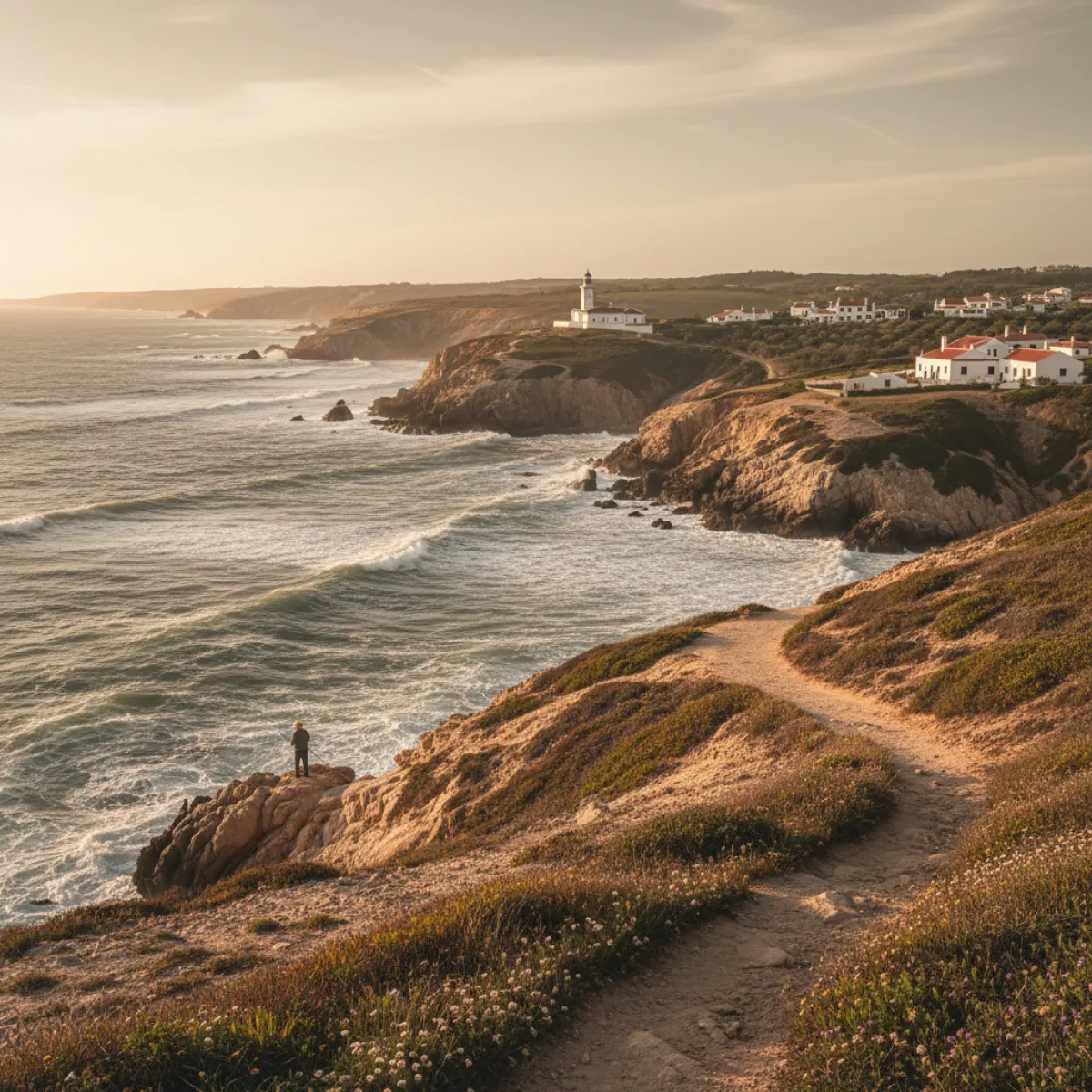
The Great Alentejo Void
Odemira is not a place for those in a hurry. As Portugal’s largest municipality by land area, it is defined not by density, but by space. Here, the Alentejo sheds its golden plains and takes on a more rugged morphology, where hills meet the sea through a network of river valleys that seem to ignore the passage of time. For the traveler seeking more than the two-dimensional image of postcard beaches, Odemira offers a depth that demands slow exploration, by car along secondary roads or, preferably, at the rhythm of the tides.
The town of Odemira, arranged like an amphitheater over the Mira River, serves as the gravitational axis of a region split between inland rusticity and Atlantic rawness. Unlike the gentler coastal towns of the Algarve, the landscape here is dominated by slate, the cold light of morning, and a wind that carries the scent of sea kelp and eucalyptus. It is a frontier territory, where subsistence farming still coexists with new regenerative tourism projects, creating an interesting contrast between old-world Portugal and a conscious modernity.
The River as a Path: The Slow Flow
The Mira River is the lifeblood of this territory. It is one of the least polluted rivers in Europe, and its basin defines much of the local identity. Navigating the Mira is an exercise in contemplation. Far from the noise of motors in seaside resorts, the experience The Slow Flow: Navigating the Mira River's Hidden Estuary in Odemira allows one to understand the importance of this ecosystem. The estuary acts as a natural nursery, where the silence is only broken by the dive of a kingfisher or the movement of grey herons among the reeds.
River navigation here is not a matter of transport, but of observation. As you move upstream toward the interior, the landscape shifts: salt marshes give way to denser vegetation and small farms with direct water access. It is the perfect place to watch how the tide dictates the rhythm of life. Even miles from the coast, the river rises and falls, influencing what is planted and how people live. For those traveling to disconnect, this stretch between Odemira and Vila Nova de Milfontes offers a unique perspective on the resilience of the Alentejo wilderness.
The Slate Aesthetic in Zambujeira
Heading toward the coast, the landscape becomes more dramatic. Zambujeira do Mar is perhaps the most iconic example of the symbiosis between folk architecture and local geology. The houses, protected by thick walls, face the Atlantic with a dignity born of simplicity. In the guide Zambujeira do Mar: The Architecture of Slate and Salt, we explore how the use of local materials was not an aesthetic choice, but a survival necessity. The slate that makes up the cliffs is the same that supports the foundations of the oldest houses, creating a rare visual continuity.
Walking the cliffs of Zambujeira in the late afternoon is a lesson in applied geology. Tectonic folds are visible to the naked eye, revealing millions of years of pressure and movement. The budget for an afternoon here is minimal, the price of a coffee or a glass of local white wine, but the visual return is immense. We suggest a stop in the Azenha do Mar area, where fish comes straight from the boats to the grill. Do not expect superfluous luxuries; the luxury here is the freshness of the sea bream and the view over the river mouth cutting through black rock.
The Estuary Light: A Photographer’s Guide
The light in Southwest Alentejo has an almost Nordic quality in winter and a Mediterranean intensity in summer. However, it is during twilight that the Mira estuary reveals its true face. The resource The Blue Hour: A Photographer's Guide to the Mira Estuary details the best vantage points for capturing this phenomenon. When the sun sets, the river waters reflect cobalt and silver tones that turn the marshland into a surrealist mirror. It is a moment of transition that attracts photographers and naturalists from around the world, yet maintains a serenity rarely found in other European destinations.
For those wishing to photograph the region, the secret lies in patience. The morning mists that often blanket Odemira’s valleys offer unique opportunities to capture the scale of the cork oak estates. You must wake early, before the day’s heat dissipates the fog, and position yourself at high points like the Chapel of Nossa Senhora das Neves, from which you can see the water serpent of the Mira disappearing into the horizon.
Porto Covo: The Quarter and Tradition
Going a bit further north, but still within the sphere of these day-trip explorations, lies Porto Covo. While the central square is the obvious destination for many, the true soul of the village lies away from the main commercial flow. The guide Beyond the Postcard: Authentic Coastal Life in Porto Covo's Fishermen's Quarter invites a closer look at the daily lives of those who live off the sea. The fishermen’s quarter maintains a tight urban grid, designed to break the wind and foster community proximity.
Here, the advice is simple: get lost in the streets leading down to the harbor. Watch the nets drying in the sun and the small colorful boats that daily challenge the dangerous currents of Pessegueiro Island. It is a place of work, not of display. For lunch, skip the tourist menus and seek out small establishments where the specialties are limpets or razor clam rice. The cost of an honest meal in these places rarely exceeds 20 euros per person, and the flavor is the direct translation of the ocean.
Practical Guide to Exploring Odemira
Getting There and Around
The best way to explore Odemira is by car. From Lisbon, the trip takes about two and a half hours via the A2, exiting at Grândola and following the iconic National Road 120. For those preferring the train, Funcheira station is the stop on the South Line, though it requires a taxi or local transport to reach Odemira town (about 30 km). Within the municipality, roads are winding but well-paved, although access to some beaches or river points may involve dirt tracks.
Gastronomy and Budget
Odemira is a paradise for the pragmatic gourmet. Inland, game dishes and lamb dominate. On the coast, the focus is entirely on seafood and line-caught fish.
- What to order: Seafood açorda, goose barnacles (percebes, when in season), migas with black pork, and the inevitable regional sheep cheese.
- Budget: A day of exploration for two, including fuel, a full lunch, and a few coffee stops, runs around 80 to 100 euros. If you opt for picnics with local products bought at Odemira’s municipal market, this figure can drop significantly.
When to Go
Spring (March to May) is the ideal season for hiking and seeing the Alentejo in bloom. Autumn offers soft light and temperatures perfect for photography. Summer is vibrant but can be excessively hot inland and windy on the coast. Winter is for those seeking absolute solitude and the comfort of a slate fireplace after a day exploring cliffs battered by the sea.
