Odemira: The Geometry of Wind and the Still Waters of the Mira
Discover Odemira through an editorial lens, where the Fishermen's Trail and the pure waters of the Mira River reveal an Alentejo of slate and silence. A guide for those seeking to trek between dramatic cliffs and hidden estuaries.
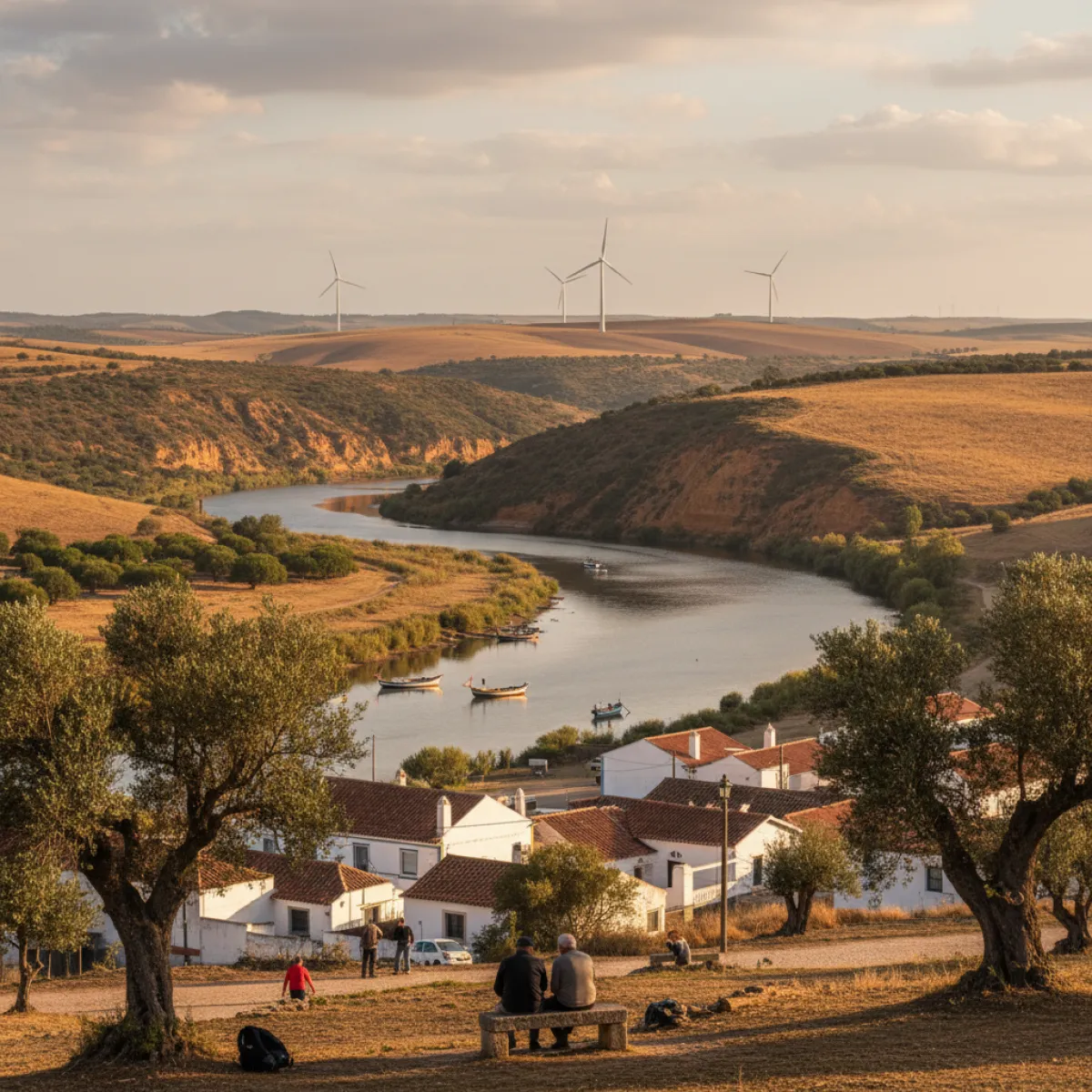
The Scale of Alentejo Solitude
There is a certain arrogance in the way the Alentejo stretches toward the Atlantic, but in Odemira, that vastness turns introspective. Covering over 1,700 square kilometres, this is Portugal’s largest municipality by land area, yet its population density is a mere whisper. Here, luxury isn't measured by hotel stars, but by the absence of human noise and the specific quality of light hitting the schist. For those arriving from Lisbon or Porto, the initial impact is geographical: the endless straights of the heath give way to a rugged orography, where the Mira River snakes like a vital artery through deep valleys and hills covered in cork oaks and rockrose.
Hiking in Odemira is an exercise in patience. The Rota Vicentina, which traverses the region, offers two distinct worlds: the Historical Way through the interior, and the Fishermen’s Trail hugging the cliffs. However, it is at the junction of these two realities, land and sea, that the region’s true identity is revealed. It isn't just about walking; it’s about observing how geology shapes culture. Schist, that dark, laminar stone, defines both the architecture and the resilience of the local people.
The River That Ignores Borders
The Mira River is a fascinating geographical anomaly. It is the only major Portuguese river that begins and ends in Portugal, free from the influence of Spanish watersheds. This grants it a purity and isolation that you feel the moment you enter the water. The best way to comprehend this river basin is through slow immersion. The experience The Slow Flow: Navigating the Mira River's Hidden Estuary in Odemira captures this philosophy perfectly. Navigating the estuary, far from the usual tourist currents, one realizes that time in Odemira flows differently. The banks are populated by herons and spoonbills, and the silence is broken only by the dip of a paddle or the wind in the reeds.
For the traveler who values visual aesthetics, the transition between day and night on the estuary is a spectacle of shadows and reflections. The light in the Alentejo Southwest has an almost solid quality, a density that photographers have chased for decades. Consulting The Blue Hour: A Photographer's Guide to the Mira Estuary is essential for anyone wishing to capture the chromatic essence of this landscape. Between the deep cobalt of the water and the ochre of the banks, there is a thirty-minute window where reality feels suspended.
Cliffs and the Architecture of Salt
Moving from the stillness of the river toward the coast, the landscape becomes dramatic. The Fishermen’s Trail demands strong legs and a resilient spirit. Loose sand and steep climbs are the price paid for some of the most impressive views in Europe. Between Vila Nova de Milfontes and Zambujeira do Mar, the cliffs rise like natural ramparts, shielding the interior from Atlantic gales. It is here we find the village that defies gravity. In Zambujeira do Mar: The Architecture of Slate and Salt, we explore how white-washed houses balance atop dark rocks, creating a visual contrast that is both austere and beautiful.
Odemira is not exhausted by panoramic vistas. Local gastronomy is an extension of the landscape. In the taverns of Zambujeira, one must order stalked barnacles (percebes), harvested at great risk from the rocks below, or razor clam rice. The flavor is intense, saline, and unadorned. Budgeting for a high-quality meal in these spots ranges from 40 to 60 euros per person, depending on the catch of the day.
Authenticity Beyond the Shoreline
While Odemira is the central focus, the neighbor to the north offers a complementary perspective on coastal life. Porto Covo, technically in the Sines municipality but intrinsically linked to the Rota Vicentina’s rhythm, maintains a core of resistance to excessive gentrification. The guide Beyond the Postcard: Authentic Coastal Life in Porto Covo's Fishermen's Quarter reveals the corners where fishermen still mend their nets and where mass tourism hasn't managed to erase the smell of sea spray and the dignity of manual labor.
Practical Information for the Independent Traveler
- When to go: Spring (March to May) is the golden period. The heath explodes in wildflowers, and temperatures are ideal for hiking. Autumn (October and November) offers warmer waters and fewer crowds.
- Logistics: A car is essential for exploring Odemira’s interior (places like São Luís or Santa Clara-a-Velha), but for the coast, the best transport is your own feet. Luggage transfer services are available for those trekking the Rota Vicentina.
- Gear: Trekking boots with good ankle support are mandatory due to the schist and sandy terrain. A quality windbreaker is indispensable, even in summer.
- Budget: For a premium experience, consider design-led rural tourism (such as Herdade da Matinha or Casas do Moinho). Estimate around 200 euros per day for top-tier accommodation and dining.
Odemira demands that we set aside the rush of checklists. There are no grand monuments in the traditional sense; the monument is the land itself. It is the bend in the river disappearing into the morning mist, the sound of storks nesting on sea stacks, a phenomenon unique in the world, and the sense that, in this corner of Alentejo, nature still holds the final word. Those who walk these trails aren't just looking for exercise; they are looking for a recalibration of the senses that only isolation and the constant wind can provide.
