Monção and Melgaço: The Alvarinho Quintas That Matter
Visiting Monção and staying in the town centre is a mistake. The quintas that make Alvarinho one of the world's serious white wines sit in the surrounding parishes and across in Melgaço, where granite and the Spanish border do the heavy lifting. An opinionated, no-fluff guide to what to taste, where to sleep, and when to come.
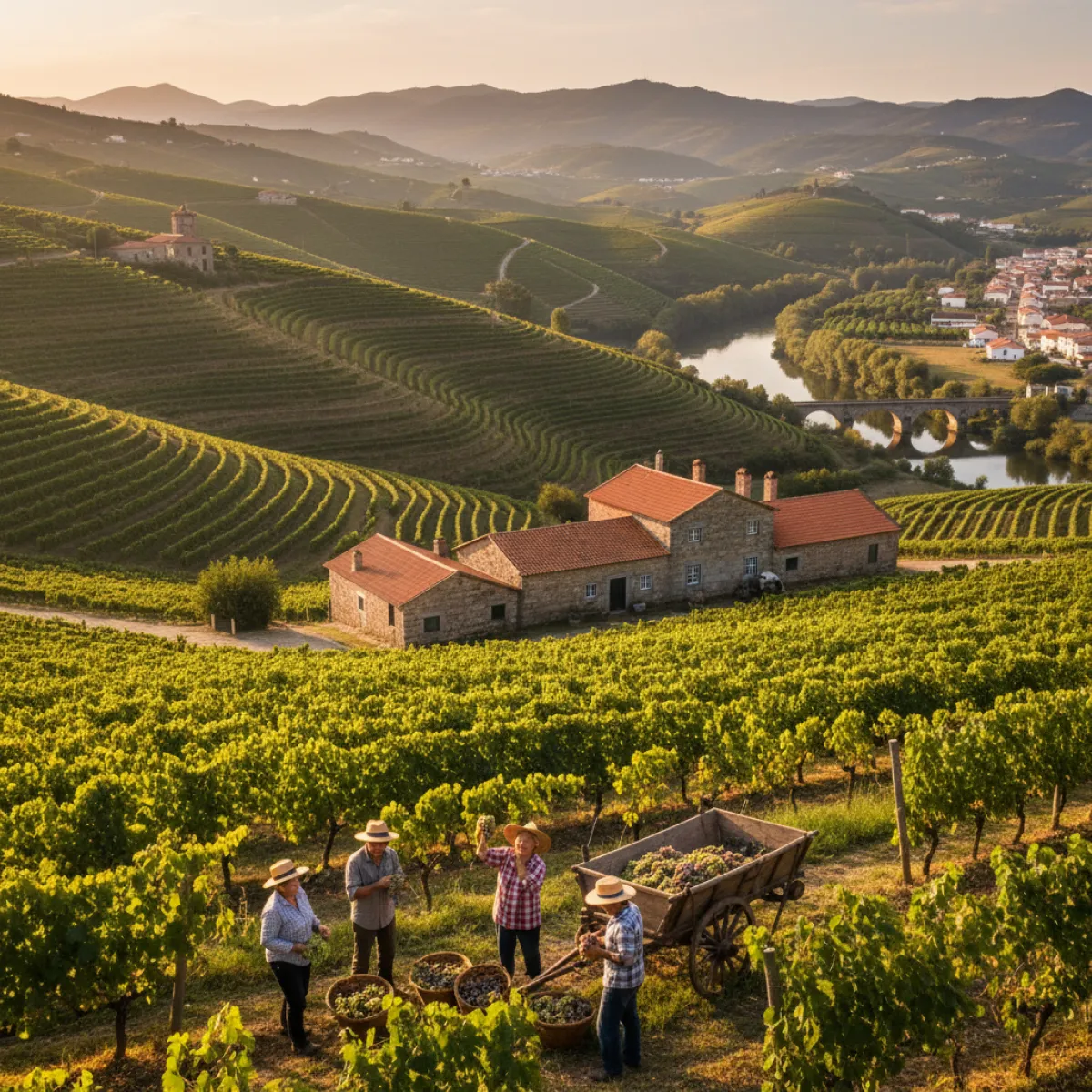
There's a classic mistake almost everyone makes on a first visit to Monção: never leaving the town centre. You stroll through Praça Deu-la-Deu, photograph the viewpoint over the Rio Minho, drink a glass of Alvarinho at a tourist restaurant on the square, and leave thinking you've "done" the region. You haven't. Alvarinho, the crisp citrus-driven white that put northwest Portugal on the world wine map, lives in the parishes around the town: Pinheiros, Lapela, Troviscoso, Riba de Mouro. And it lives even more emphatically further east, in Melgaço, where the slopes are steeper, the granite soils harder, and the producers more stubborn.
This guide is for travellers who want to step out of the centre and understand why this Vinho Verde subregion is unlike anything else in Portugal. It's not poetic: it's geographical. Monção and Melgaço sit protected to the south by the Peneda and Soajo mountains, creating a warmer, drier microclimate than the rest of the Minho. That's why Alvarinho here reaches alcohol levels of 12 to 13.5%, while other Vinhos Verdes rarely pass 11. It's also why the wines have that bright acidity, those aromas of white peach and orange blossom, and in the more serious bottles a saline minerality that recalls the sea even though the Atlantic is sixty kilometres away.
How the subregion works (and why it matters)
The DOC Vinho Verde Monção e Melgaço is the only one in the country where Alvarinho can be bottled as a pure varietal under the Vinho Verde label. Everywhere else, Alvarinho is either a minor blending grape or absent altogether. That exclusivity explains a lot about pricing: a decent bottle starts at 8 to 10 euros, single-quinta wines with oak ageing easily pass 25, and twenty-year-old reserves now sell for over a hundred.
The good news for visitors is that almost every producer accepts visits, even the famous ones. The bad news is you need to book several days ahead, especially between May and September. Show up improvising on a Saturday in August and you'll be staring at closed gates.
Before getting to names, a confession: visiting Alvarinho quintas in your own car is foolish. Not because of the distances, which are short, but because the whole point is tasting. There are two reasonable solutions: hire a driver (local taxis run from around 80 euros a day, check locally) or join an organised route. I recommend, without reservation, the Monção Alvarinho Wine Route experience, which combines three or four producers in a single day with lunch and logistics handled. It's the most efficient way to understand the spread of styles without juggling individual bookings or worrying about getting back.
The names that count (and what to ask for at each)
Soalheiro, in Alvaredo (Melgaço)
Start here if you can only visit one. Soalheiro was the first house in Portugal to bottle a varietal Alvarinho, back in 1982, and remains a world reference. They're tucked against the Spanish border in a valley where the microclimate is so particular that they produce Alvarinhos capable of long ageing, something considered impossible for decades. The standard visit covers a vineyard walk, the production explanation, and a tasting of four or five wines. Ask specifically for the Soalheiro Reserva and, if available, the Granit, which vinifies single granite-soil parcels separately. The gap between the classic Alvarinho and these two is the difference between hearing a song through phone speakers and hearing it on vinyl through good gear.
Palácio da Brejoeira, in Pinheiros (Monção)
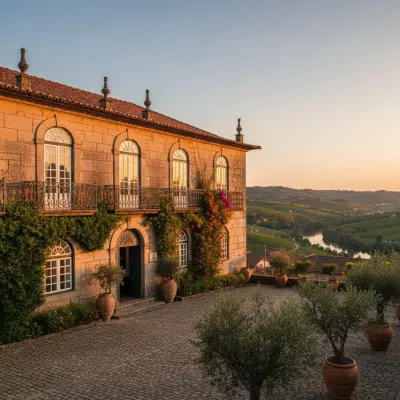
This is the most photographed estate in the subregion, with an early nineteenth-century neoclassical façade that looks transplanted from the Loire. For years it was also the most expensive Alvarinho on the market, trading more on mystique than on absolute quality. The house has modernised, and the wine now justifies its price again. The guided visit covers the gardens, the chapel, and ends with a tasting. It's perhaps the only quinta in the region where the setting genuinely competes with the bottle.
Anselmo Mendes, in Barbeita (Monção)
Anselmo Mendes is widely considered the greatest living Alvarinho winemaker. He works with several estates across the region, but his home base receives visits and is where you can taste the full range, from the entry-level Muros Antigos to the Parcela Única, which is one of the most serious white wines made in Portugal. If you take wine seriously, don't leave without trying at least one Curtimenta, fermented in contact with the skins, which will rewire whatever you thought Alvarinho could be.
Quinta de Melgaço and the small producers
Beyond these three names, there are dozens of small producers worth your time: Adega Regional de Monção (the cooperative, honest wines at accessible prices), Quinta de Santiago, Reguengo de Melgaço, Casa de Paços. I won't list more, because what makes these visits memorable is the human factor: the producer who opens a rare bottle just because the visitor was paying attention, the grandmother who appears mid-tasting with bread and ham, the conversation about the April frost that wiped out half the harvest. You can't plan for any of that. It happens if you arrive with time and curiosity.
Where to stay (without overthinking it)
Monção has reasonable options in the centre, but my clear preference is to stay slightly outside, in a place that breathes the rhythm of the region. Paço Alojamento Local handles this well: close enough to walk into town for dinner, far enough that you wake up to birds rather than the bin lorry. For visitors not renting a car, it also works as a base because most quintas are a short transfer away.
Book ahead if you're coming between June and September, or during harvest (late August to mid September). It's the prettiest time to see the quintas in action, but also the most contested.
What to eat between tastings
The great danger of wine routes is eating badly. Five hours, three quintas, nothing solid in your stomach: that's the most direct path to a wasted afternoon. The local Minho cooking, fortunately, lives up to the wine.
The dish to chase is lamprey, served as rice or à bordalesa, but only from January to April, when the fish is in season. What gets served outside that window is either frozen or fraud. Off-season, order the oven-roasted kid (especially on Sundays), shad if it's available, or bacalhau à minhota. To drink, obviously, the house Alvarinho, often poured into white earthenware bowls in the old style.
In Melgaço, don't leave without trying the cured ham, which holds a Protected Geographical Indication and is genuinely distinct from the better-known Trás-os-Montes or Alentejo styles. The boards at the Solar do Alvarinho, the regional interpretation centre in town, are a good introduction for newcomers.
Beyond the quintas: the river that explains everything
Something most visitors miss is that the Rio Minho isn't decorative scenery: it's the reason this subregion exists at all. Historic floods deposited alluvial soils along the banks, the river creates a humidity corridor that softens summer nights, and the natural border with Galicia has shaped centuries of trade, smuggling, and identity.
Which is why I seriously recommend interleaving at least half a day of river activity with your quinta visits. Going down by kayak from Monção to Melgaço on the Rio Minho is the most direct way to read the geography: you see the vineyard slopes from water level, you understand the visual relationship with Galicia on the opposite bank, and you pass through stretches where the river opens into small fluvial islands. Around thirty euros, half a morning. Come back genuinely hungry for lunch and the afternoon tasting hits differently.
When to come (and when to skip)
The ideal window is May into early June, or late September to mid October. The first option catches the vines in flower, long daylight, mild temperatures, few tourists. The second shows you harvest in motion or its immediate aftermath, with the previous year's wines already settled and pouring well.
July and August are hot and crowded. Not impossible, but you lose the calm that makes the region work. Winter is honest: it rains, it gets cold, several quintas cut their hours, but in exchange accommodation prices halve and the lamprey lunches are real.
If you're planning a longer Minho itinerary, it's worth driving south to Barcelos (about ninety minutes) and adding a couple of days of urban contrast. There's an honest guide to Barcelos cafés that helps you read the city beyond the rooster cliché, a separate family guide for travellers with children, and if you happen to coincide with the May festival, the Festa das Cruzes guide covers what's worth your time and what isn't.
The bottom line, in three lines
Book quinta visits at least ten days ahead. Don't drive yourself. Make the effort to go to Melgaço even if it looks like one kilometre too many on the map: it's where Alvarinho gets most interesting. And don't be embarrassed to spit during tastings. The producers will thank you, and so will your afternoon.