Monção by the Water: Caldas and Minho Riverside Walks
For over a century, Monção has organised itself around thermal water that surfaces at 49ºC right in the centre of town. Add the Ecovia riverside path, kayaking to Melgaço, and Alvarinho tasted at the gate of the estate, and you have the most underrated itinerary in the Minho.
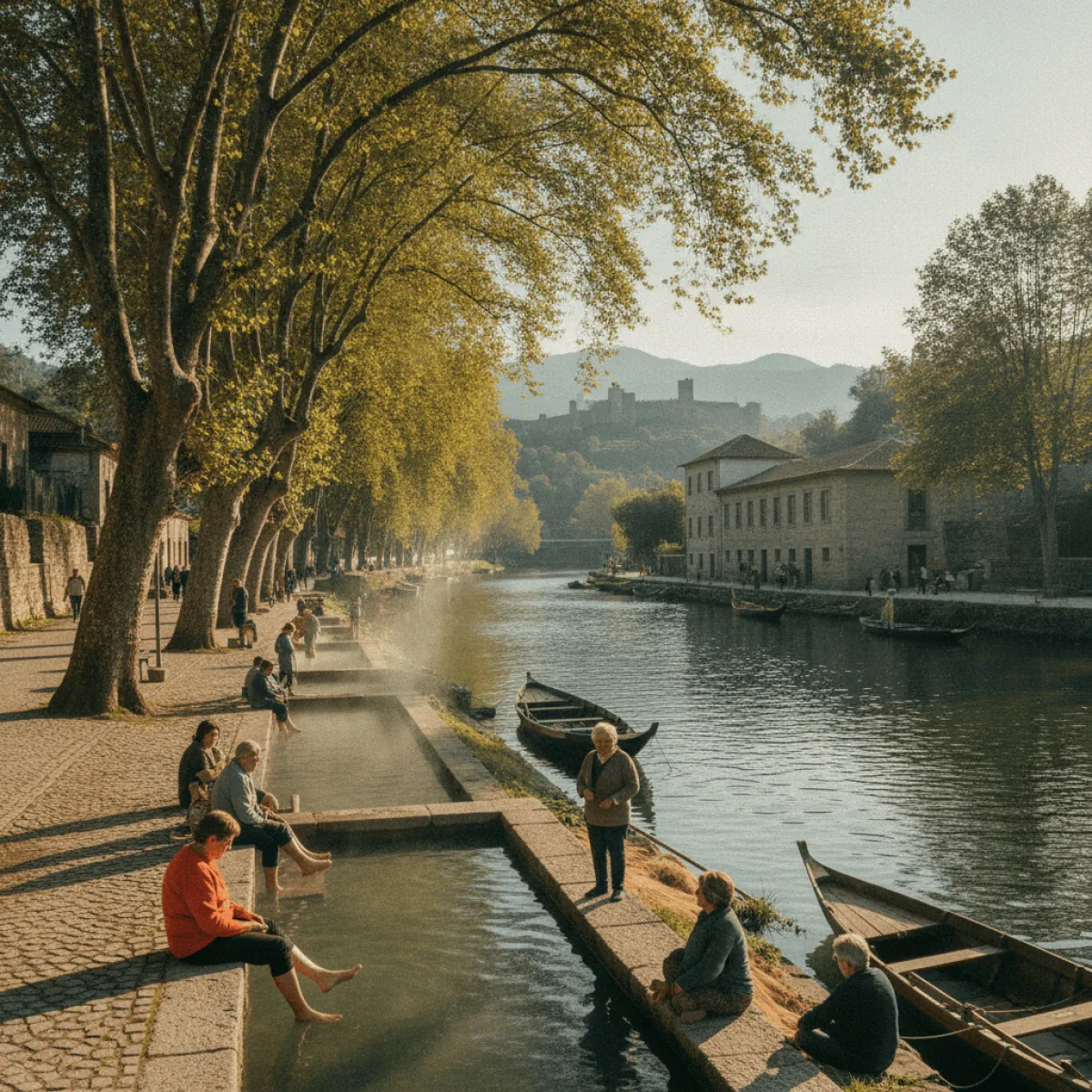
There's a certain logic to starting your day in Monção with a bottle of hot water in your hands. Not a metaphor: literal. The thermal springs of Monção, right in the historic centre, surface at 49ºC, rich in bicarbonate and sodium, and for over a century the town has organised itself around them. Before Alvarinho wine tourism put Monção on the oenological map, it was the water that brought people here. It still does, except now the spa guests share the cobbles of Praça Deu-la-Deu with French cyclists, Spanish kayakers, and a new generation of Portuguese travellers who have figured out that you can sleep with a view of Galicia for less than a night in Lisbon.
This guide is for travellers who want to do Monção slowly: thermal treatment in the morning, unhurried lunch, riverside walk in the afternoon, glass of cold Alvarinho at sunset. I'll tell you what's worth doing, what you can skip, and how to put it all together without needing a car for half the trip.
The Caldas: what they are, what they treat, how to get in
Termas de Monção sits in the centre of town, a few metres from the parish church, and that's the first thing that sets these baths apart from most thermal towns in Portugal. There's no isolated valley, no surrounding forest. There's a street, there are houses, there's the life of the town passing by the door. The water, sulphurous and sodium bicarbonate, is mainly indicated for skin conditions, respiratory issues, and rheumatology. Traditional programmes run fourteen or twenty-one days, but for short visits there are single sessions, day spa options, and brief treatments.
Warning: if you arrive expecting a five-star hotel spa, recalibrate. Termas de Monção has been renovated, yes, but the aesthetic leans clinical rather than cosmetic. This isn't bad. It's honest. You come here to be treated, not photographed. Prices (check locally, they change yearly) tend to be very reasonable compared with the modern thermal offerings of Chaves or São Pedro do Sul.
Practical tip: book ahead by phone or email. In July and August, and during the Alvarinho Festival on the first weekend of July, the place fills with regulars who book a year in advance. September and October are, in my opinion, the best months: still mild weather, harvest in progress, and the spa running full hours.
Where to sleep so you wake up two steps from the water
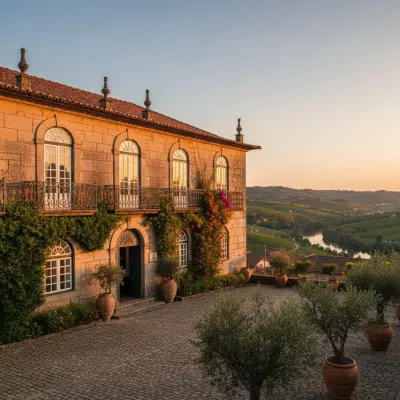
The obvious choice, and one I recommend without hesitation, is Paço Alojamento Local. It's inside the old walls, in a building with history, and rooms that respect that history without falling into pastiche. From the window you watch Monção wake up: bakers opening shutters, older parishioners heading to eight o'clock mass, the smell of warm bread rising from a back street. For a morning bath, sleeping here saves you twenty minutes of logistical irritation. And the host keeps hand-annotated maps of the river trails, which are worth their weight in gold.
Walking the Minho: the riverside path that changes everything
Monção's best-kept secret, if it still qualifies as a secret, is the Ecovia do Rio Minho. It's a pedestrian and cycling route that follows the river, flat, shaded by oaks and alders, with constant views across to the Galician bank. From Monção you can walk west toward Valença, or east toward Melgaço. Both directions have their charms.
I recommend going east, toward Melgaço, for three reasons: the terrain is more varied, there are more Alvarinho estates within view, and you finish in a town worth a visit in its own right. The full route, around twenty-four kilometres, takes a day by bike or two days by foot with a night in between. For travellers who only have a morning, do five to seven kilometres out to the Capela de Longos Vales area and walk back the same way.
Minimum kit: comfortable trainers (you don't need boots), water, a hat in summer, and sunscreen. There are public fountains along the path but don't trust them all. In August, leave before nine or after five; the heat by the river, with no breeze, surprises people.
The river from inside: trade legs for paddle
If you want to understand why this stretch of the Minho is different, do it from the water. The river here is wide, mostly slow, with a few livelier sections that add interest. Our pick is the kayak run between Monção and Melgaço, which combines straightforward logistics (vehicle shuttle at the end) with spectacular scenery. You pass vineyards that come right to the water's edge, small islands where herons nest, and the rare feeling of being on a border that doesn't behave like one.
This is not extreme sport. If you can swim and have a basic level of fitness, you'll be fine. But bring a change of clothes: you will get wet, even without capsizing, and the afternoon wind coming up the river can be cool.
Eating in Monção without falling into the tourist trap
Let me be direct: Monção has one of the most interesting kitchens in the Minho, but you need to know where to look. Lamprey (in season, January through April), roast kid, arroz de sarrabulho, cod à moda da Sé. The plates are heavy. Portions are generous. Prices, compared with Lisbon or Porto, read like a typo.
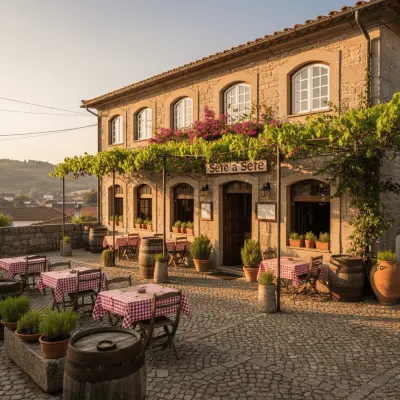
My recommendation is Restaurante Sete a Sete, in the centre, for an unceremonious lunch with food cooked the way it should be. Order the daily special, drink the house wine (which here, of course, is Alvarinho), and stay a while. If you're in a group with serious appetites, share an arroz de cabidela or a cozido. Walking out feeling light is not an option.
For dinner after the baths, go lighter: one of the tascas around Praça Deu-la-Deu serves quality petiscos, with boards of cured ham, alheira sausage, Chaves cheese, and Alvarinho by the glass. I won't pretend to know which one is in best form right now: try one or two, listen for where the locals sit, choose where the atmosphere feels real. In Monção it's hard to go badly wrong.
Breakfasts worth the morning
Coffee in Monção is taken seriously. Old bakeries, well-tuned machines, croissants still warm at eight. For travellers who care about this daily ritual (and it is a serious ritual in any Minho town), our Barcelos coffee guide serves as a mental map for understanding what separates a good Minho coffee from any old café. The rules apply in Monção: small cup, milk on the side if you want it, and never after eleven in the morning unless you want sideways looks.
Alvarinho: where, how much, how
Monção and Melgaço are the home of Alvarinho, with their own subregion since 1908. The difference from the rest of the Vinho Verde region is audible from the first sip: body, complexity, the capacity to age. Drinking Alvarinho here, at the gate of the estate, with the producer explaining where each grape came from, is a different experience from drinking the same bottle in Chiado.
Our pre-packaged option is the Alvarinho wine route with estate visits and tastings, which organises trips to three or four producers in a single day with transport included. If you arrive in your own car, pick one or two estates and call ahead: drop-ins sometimes work, but during harvest forget it.
Tasting prices run roughly fifteen to thirty euros per person, depending on how many wines and what snacks come with them. If you stay for lunch at an estate, count on forty to seventy euros a head. Buying at the gate is usually cheaper than buying from the wine shop in town, but the difference is not enormous.
Combining baths and wine: is it a good idea?
No. I mean: you can, but not on the same day. Thermalism is treatment, it requires hydration and rest. Alvarinho at fifteen degrees demands a nap. Spread the two activities across two or three days and your body will thank you. Bath in the morning, light lunch, siesta, wine tasting at the end of the afternoon: that is a well-designed day in Monção.
Crossing the river: Galicia five minutes away
One of the absurd advantages of being in Monção is that Spain sits just across the bridge. Salvaterra do Miño, on the Galician bank, has a Thursday market, notable octopus restaurants, and a vibe that shifts subtly the moment you cross. The euro is the same, the clock too, but the body language changes. Worth a morning, especially if you like markets.
If you're travelling with family and want a wider Minho itinerary, our honest family guide to Barcelos has ideas for combining Monção with Barcelos, Ponte de Lima and Viana, all under an hour by car.
When to go: the honest calendar
January to April: lamprey season, restaurants full on weekends, baths on normal hours. Book a table.
- May: ideal weather, green landscape, no crowds yet. A good time for walking and for combining with Barcelos for the Festa das Cruzes.
- June and July: Alvarinho Festival on the first weekend of July, with concerts, tastings and the town in full movement. Baths operate normally but book early.
- August: serious heat, the river busier, accommodation pricier. Locals are on holiday, some restaurants may close.
- September and October: my favourite window. Harvest is on, temperatures are right for the Ecovia, restaurants are running properly, the spa offers everything. Go now.
- November and December: Monção shrinks into itself, morning mist rolls over the river, and prices fall. For travellers who appreciate productive melancholy, this is the secret of Minho winters.
Getting there and getting around
By car from Porto, count an hour and forty minutes via the A28 and A3. By train, the most practical route is to Valença, then bus or Uber to Monção (about half an hour). There are direct buses from Porto run by regional operators, with schedules that shift: confirm before you travel.
Once in Monção, the historic centre is entirely walkable. For the river trails and the Alvarinho estates, having a car helps, but the organised wine route solves that problem. Bicycles can be rented locally; ask at the tourist office or your accommodation.
What to take with you when you leave
A bottle of producer Alvarinho (not the supermarket version). A flask of thermal water, sold at the spa, for skin treatments at home. A kilo of Melgaço ham, if you can find a good source (ask locals). And the memory of a town that doesn't shout about itself but that, taken slowly, offers more than many places that shout louder. That's the thing about Monção: it doesn't need to sell itself. The water keeps flowing, the river keeps moving, and travellers who arrive figure it out.