Mirandela in July: Surviving the Trás-os-Montes Heat
In July, Mirandela hits 38 degrees in the shade and the streets empty at noon. The trick isn't fighting the heat, it's sidestepping it: dawn at the viewpoints, the Tua at dusk, and alheira only after nine.
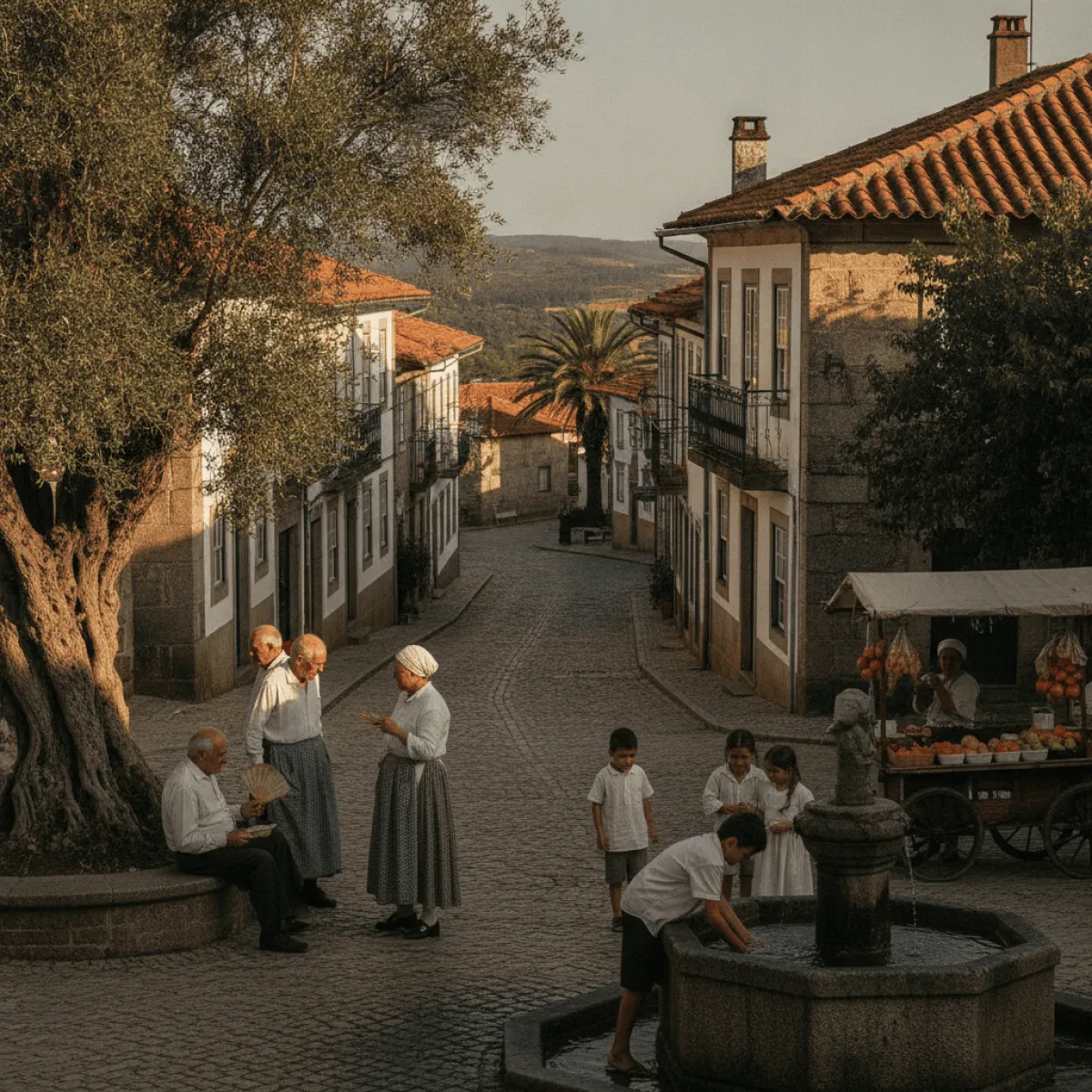
There is a saying in Trás-os-Montes that everyone repeats and few take seriously until it is too late: nine months of winter, three of hell. In Mirandela, hell has a name and a schedule. It is called July, and by three in the afternoon the thermometer in the market square can read 38 degrees in the shade, assuming there is any shade to be found. The air settles over the Tua valley like a lid. Shutters come down. The streets empty out. And anyone who hasn't learned the rhythm of the place ends up melting on the asphalt, wondering why everything is closed.
The answer is simple. The people of Trás-os-Montes don't fight the heat, they sidestep it. They live at the edges of the day, retreat during the bad hours, and treat the siesta as an institution rather than laziness. If you want to enjoy Mirandela in July without earning yourself a heatstroke, the rule is singular: do as they do.
The golden rule: rise early or give up
Forget eleven o'clock strolls. In July, the useful day for anyone wanting to see landscape ends around half past ten. The rest of the morning is for hiding. So the best thing you can do is get up at an indecent hour, around seven, when the valley still holds the cool of the night and the light is golden rather than white and violent.
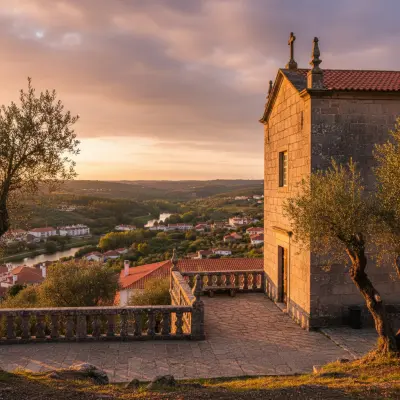
That is the hour for the viewpoints. The Miradouro da Igreja de São Bento is my early-morning favourite: the city at your feet, the Tua snaking below, and at seven in the morning completely empty. Bring coffee in a flask, sit on the wall, and watch Mirandela wake up before the heat forces it to close its eyes again.
If you'd rather have a higher, wider vantage, the Miradouro do Paço dos Távoras opens onto the plateau and the olive-grove slopes that ring the town. And for anyone who wants to escape the bustle entirely, it is worth driving out to the Miradouro de Franco, further out, where the only thing breaking the silence is the cicadas warming up their engines for another loud day.
The same logic applies at the end of the afternoon. After seven, when the sun drops and the stones begin to give back the heat they spent the day soaking up, it is worth returning to one of these viewpoints for sunset. If you develop a taste for chasing the late light, the principle is exactly the one I lay out in the guide to the sunset viewpoints of Mogadouro, a good hour away across the plateau: the best hour of a Trás-os-Montes summer is always the last one.
Water is salvation, and the Tua is right there
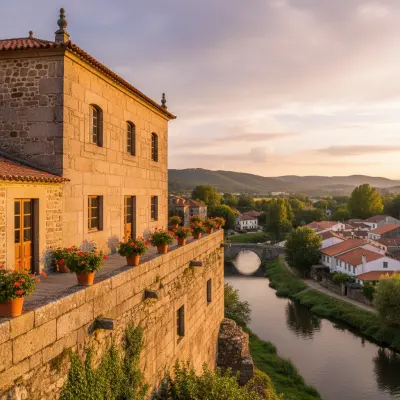
Mirandela's great advantage over half a dozen higher villages of the interior is simple: it has a river running through its centre. The Tua crosses the town, the pedestrian bridge is the postcard shot, but what matters in July is the water. The river beach area along the Tua is where half the town takes refuge in the late afternoon, whole families spreading towels on the grass and kids hurling themselves in. Check locally for the bathing area's hours and whether there are lifeguards, since that changes from year to year, but the practical rule holds: the Tua is the town's natural air conditioning.
My counter-intuitive advice: don't go at the peak of the heat. Go around half past six, when the sun no longer hits you head-on but the water is still good, stay until dusk, and have dinner with a cooled body. It's a different town.
What to eat when it's 40 degrees
Mirandela is the capital of alheira, and this is not tourist folklore: it is historical fact. The alheira was born here, and the local version, smoked the way it should be, is one of the best in the country. But let's be honest: fried alheira with potatoes and a runny egg is a winter dish. Eating that for lunch under 38 degrees is an act of self-sabotage.
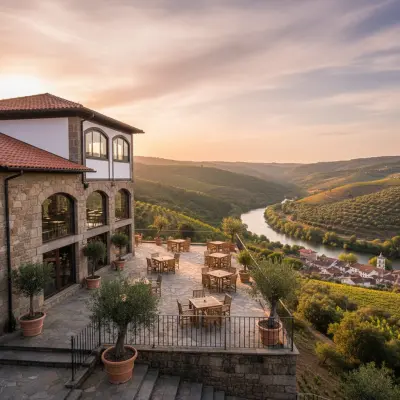
The Trás-os-Montes solution is to eat heavy at the end of the day and light at lunch. At midday, escape to a shaded terrace, order a cold soup if the house has one, or a plate of local presunto with melon, and drink water like it's your job. Save the alheira, the posta and the heavy meats for dinner, after nine, when the air finally cools and a terrace becomes a civilised place again. And eat olive oil without guilt: the oil of Trás-os-Montes is among the best in the world and knows no season.
Another practical tip for the heat: the region's full-bodied red wine is magnificent, but at lunch in July it is a dangerous soporific. Order a well-chilled white, or a light red served slightly cool. In fact, if you want to understand what happens in the vineyards on these slopes, the wine tasting at Quinta das Corriças is the best way to do it, with the obvious advantage of unfolding between cellar and glass, away from the midday sun. Book it for early morning or late afternoon and the scheduling problem solves itself.
The dead hours: what to do between 11 and 5
Here's the secret nobody tells tourists: the bad hours aren't for suffering in the sun, they're for resting with method. The locals close the shutters, eat lunch slowly, and sleep the siesta. It isn't laziness, it's homemade thermal engineering. Do the same. Find lodging with proper shutters and a decent fan, and use the bad hours to recover from the early starts.
If you genuinely can't sit still, seek out cool interiors. Churches with thick stone walls stay several degrees below the street. An air-conditioned café and a book is a perfectly legitimate way to spend one o'clock in July. And if you want to turn the forced slowness into something deliberate, the meditation walk in Mirandela is an honest exercise in slowing the pace, as long as you do it at the cool edges of the day and not in the middle of the furnace.
Hydration, shade and common sense
- Always carry water. Seriously. A litre bottle per person per outing, minimum. Public fountains exist, but don't count on them.
- Hat and sunscreen are not optional. The plateau sun in July is merciless and the dry wind deceives, because it cools the skin while the sun burns it.
- Closed, comfortable shoes for the morning viewpoints: dirt and loose stone don't forgive flip-flops.
- A car with working air conditioning. The distances between viewpoints and villages are made by car, and a closed car in the sun becomes an oven in minutes. Always park in the shade, even if it means walking further.
When the heat is too much, climb the mountain
There are days when Mirandela simply gives no quarter. For those days, keep an escape plan at altitude. The Barroso and the Montalegre plateau, further west and higher up, run several degrees cooler and offer a serious alternative to anyone melting in the Tua valley. To understand the region outside its winter context, it's worth reading the guide to Montalegre beyond Barroso, between castle, castro and mountain kitchen, and even the winter photography itinerary of Montalegre, which shows the other extreme of the thermometer and helps you grasp how different the climate is up there.
It isn't cheating. It is the oldest way to beat the heat in Portugal: when the valley boils, you go up to the hills. The shepherds have done it for centuries.
The calendar of a perfect July day in Mirandela
If you want a real itinerary, here it is. Seven in the morning: coffee and a viewpoint, the town waking up cool. Nine to eleven: a riverside walk or whatever errands you have, before the oven switches on. Midday to five: light lunch and shade, siesta, cool interiors, shutters down. Half past five: the river beach on the Tua. Half past seven: sunset at a viewpoint. Nine: a dinner of alheira and posta on a terrace that is finally breathable, glass of wine in hand, the day's heat already a memory.
Mirandela in July is not conquered chest-out in the sun. It is conquered with cunning, with schedules, and with respect for the land. The people of Trás-os-Montes have known this for generations. Do as they do and the town opens up. Insist on charging around at two in the afternoon and the only interior you'll get to know is that of your own sweat. The choice, like the heat, is entirely yours.