Miranda do Douro: The Sacred Ritual of Posta Mirandesa
Forget Wagyu. In Miranda do Douro, beef is a dogma served with coarse salt and oak embers. Discover the ritual of Posta Mirandesa and the plateau where time still speaks Mirandese.
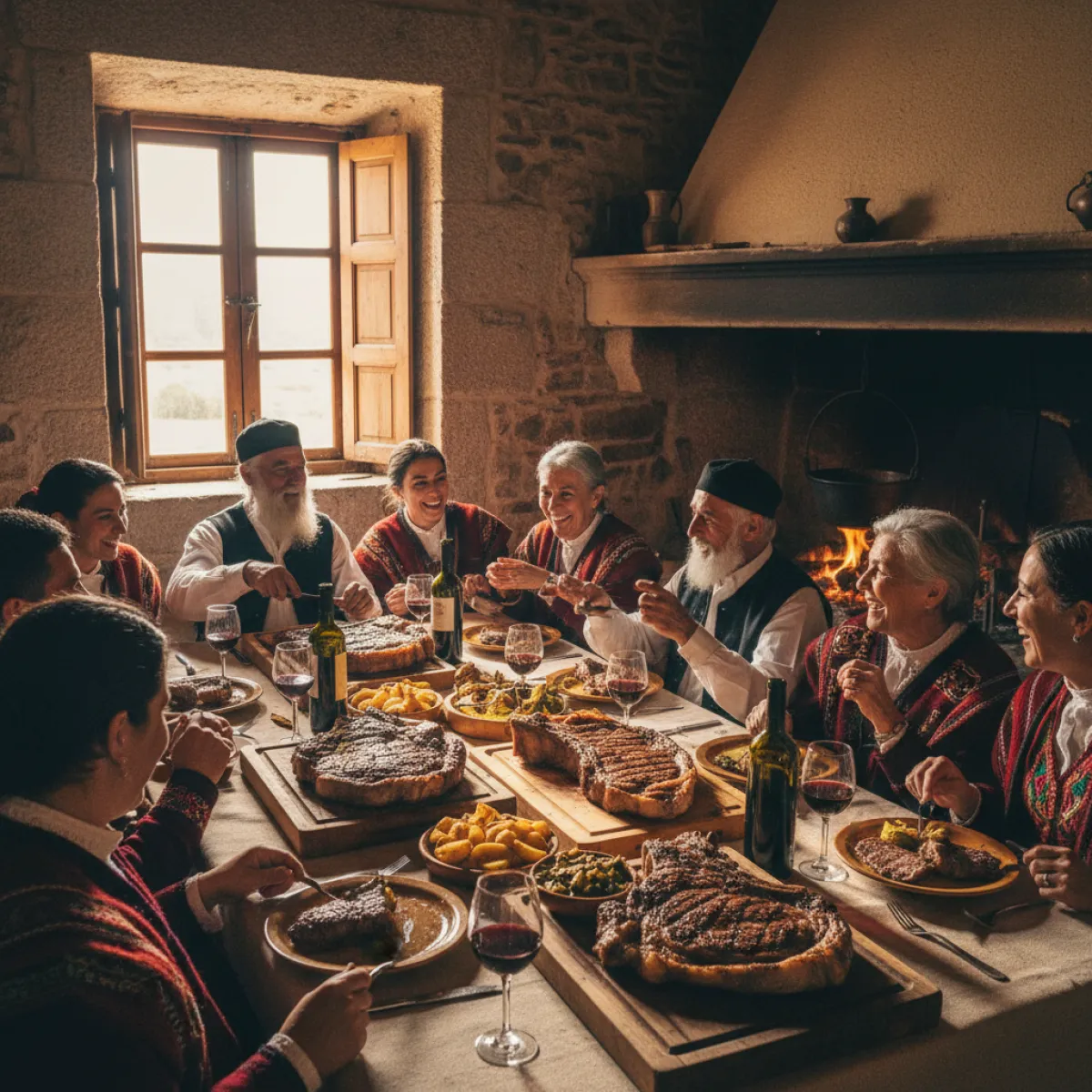
The Plateau Where Time is Measured in Embers
Reaching Miranda do Douro requires a certain amount of grit. You don't just happen upon this place; you cross the Mirandese Plateau with the sun beating on your windshield or fog clinging to the granite houses, depending on your luck. But as soon as you park near the Largo do Castelo, the scent of burning oak and seared iron tells you the journey was worth every kilometer of the A4. Here, Posta Mirandesa isn't just a dish; it’s a dogma. It’s the reason hundreds of people cross the Spanish border or drive up from the coast every weekend to sit at long tables, armed with sharp knives and a hunger that only the border air can trigger.
Miranda do Douro has that frontier quality: a city that looks at the Douro not as a valley of gentle wine estates, but as a brutal canyon, the Arribas, where golden eagles set the rules. In this landscape of raw beauty, the Mirandese cattle breed is born. Forget Wagyu or supermarket Angus. What we have here is a robust animal, raised in the plateau pastures, whose meat has a deep ruby color and a fat marble that makes no apologies for existing. If you want to understand Miranda, you have to start with the plate, but you can't stop there.
The Anatomy of the Perfect Posta
Let’s get practical: an authentic Posta Mirandesa must be at least four centimeters thick. If they serve you something that looks like a cafeteria steak, send it back. The traditional cut comes from the rump or top round, but the secret lies in how the fiber is respected. At institutions like O Mirandês or Balbina, the ritual has remained unchanged for decades. The meat goes onto the iron grill over oak embers that crackle with an authority gas could never replicate. Coarse salt is thrown on with the confidence of someone who knows the meat has the structure to handle it.
The doneness? Rare or medium-rare, always. Ordering a well-done Posta is a mortal sin that should be in the Transmontano penal code. The goal is for the exterior to be caramelized, a salty, intense crust, while the interior remains succulent, almost sweet. It is served with "batata a murro", potatoes roasted in their skins and then smashed to soak up the region's virgin olive oil, and turnip tops (grelos), which provide the necessary bitterness to cut through the richness of the fat. If you're lucky, the house wine will be a full-bodied red from Mogadouro or the Douro Superior, served in a clay jug.
Beyond the Plate: Lhéngua and Pauliteiros
Miranda is more than a gastronomic destination; it’s a cultural island. While you chew your steak, you’ll likely hear a strange sound from the tables next to you. It’s not Spanish, nor is it the Portuguese of Lisbon. It’s Mirandese, Portugal’s second official language, a linguistic survivor that refuses to fade away. This identity is so strong it manifests in everything from street names to ritual dances. For those who want a deep dive, I highly recommend the Mirandese Language and Pauliteiros Dance Workshop in Miranda do Douro. It’s the best way to realize that those men dancing in pleated skirts and clashing sticks with military precision aren't performing a show for tourists; they are keeping alive a warrior tradition that dates back centuries.
Walking through Rua da Cidadela after a heavy lunch is mandatory. Stop by the Cathedral and look for the "Menino Jesus da Cartolinha" (the Little Jesus in a Top Hat). Legend says he appeared during a Spanish siege to embolden the local troops. Today, he has a wardrobe that would make many influencers jealous, with outfits gifted by the faithful for every occasion. It’s this kind of detail, the mix of the sacred and the almost pagan, that makes this city fascinating.
The Transmontano Context: Chaves, Mirandela, and the Silence
Miranda do Douro is part of a larger ecosystem. If you’re road-tripping through Trás-os-Montes, geography forces choices. About an hour and a half northwest, you’ll find The Silence of Montesinho: A Winter Retreat in the Last Frontier of Portugal, where time seems to have stopped in schist villages like Rio de Onor. It’s a compelling contrast: if Miranda is the open, windy plateau, Montesinho is the seclusion of the mountains.
On the way back to the coast, a stop in Mirandela is almost inevitable. But be selective. Many stop only for a quick alheira by the roadside, but there is much more to explore, as detailed in Beyond the Alheira: Mirandela’s Culinary Resilience. And if your body starts asking for a break from all the protein and the road, consider a detour to the city of Trajan. The Roman Legions' Legacy: Exploring the Ancient Thermal Springs of Chaves offers the perfect antidote to fatigue: 73-degree waters that cure almost anything, even the remorse of eating one too many chestnut desserts in Miranda.
Practical Tips for the Beef Pilgrim
Don't show up in Miranda without a reservation, especially between October and May, the peak season for the Posta. Restaurants are family-run institutions and tend to fill up early. The average price for a full meal with Posta Mirandesa is around €25 to €35 per person, an absurd value considering the quality of the raw material. If you want to take a bit of Miranda home, look for the "Bola Doce" (a sweet bread with layers of cinnamon and sugar) and the local charcuterie, but always confirm the source; the best sausages aren't in the cheap souvenir shops but in the grocery stores where locals shop.
As for transport, a car is essential. The drive from Porto takes about three hours, but the landscape as you enter the Bragança district makes up for it. Avoid the hottest hours in summer, as the plateau turns into a granite oven. Autumn is undoubtedly the best time: the air is crisp, the embers feel better, and the colors of the vineyards and chestnut groves along the way are unbeatable.
Table Summary:
- What to order: Posta Mirandesa (rare/medium-rare) and batata a murro.
- Where to go: Restaurant O Mirandês or Balbina.
- For dessert: Chestnut pudding or sheep cheese with pumpkin jam.
- Don't miss: The Little Jesus in the Cathedral and the views over the Douro Arribas.
