Manteigas in Summer: Glacial Swimming Holes Locals Use
In August, the Zêzere river still runs at 12 degrees while Lisbon is melting. Where the locals of Manteigas actually swim, without tourists, drones, or queues at Poço do Inferno.
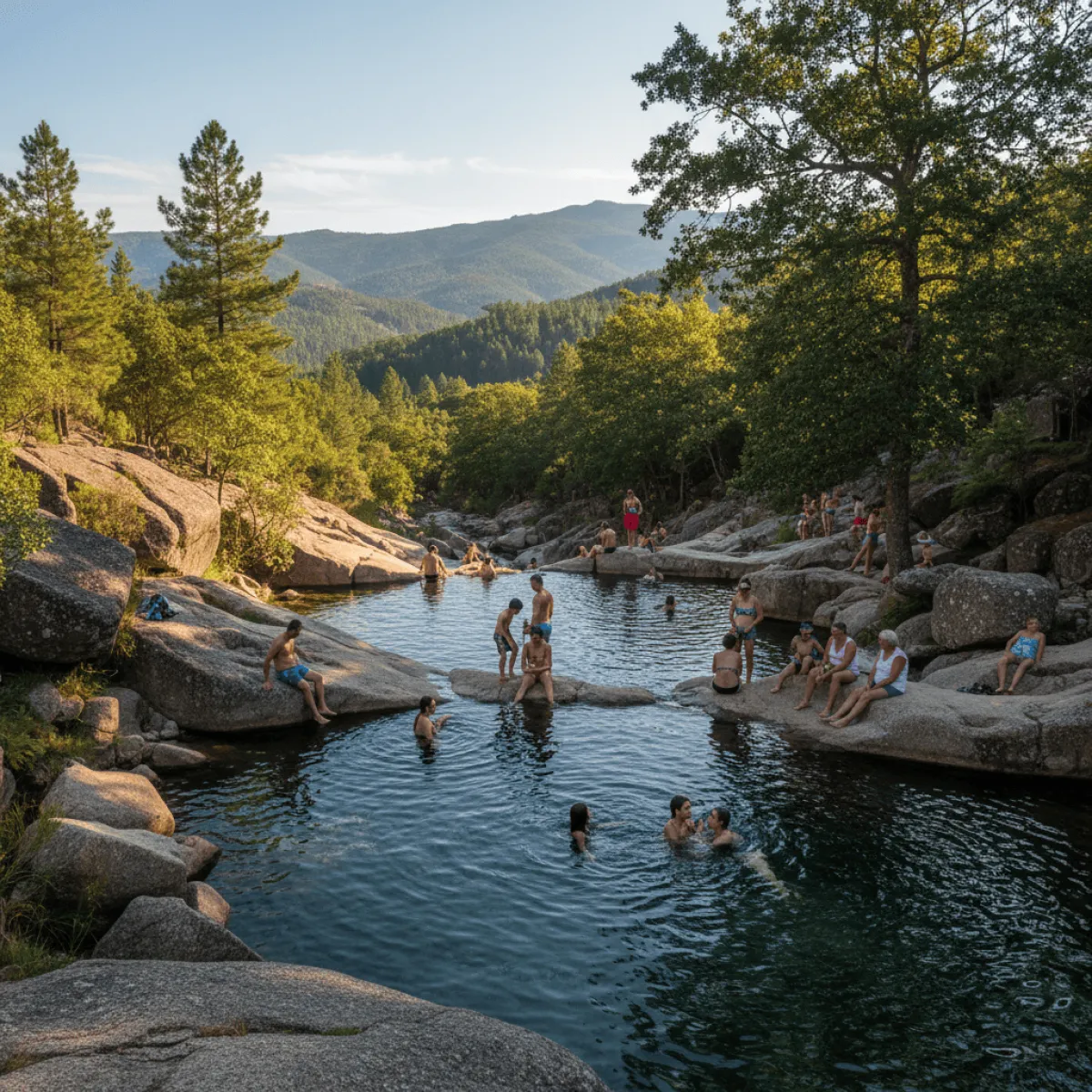
In July, when Lisbon is melting at 38 degrees and the Algarve is charging seven euros for a warm beer on the beach, there is a town at 1,100 metres altitude where the river water barely passes 12 degrees and the locals still complain that it is too warm. Manteigas, tucked into the bottom of the Zêzere Valley, is Portugal's best-kept summer secret, and the people who live there would prefer to keep it that way.
Let me be direct: this article is not about Lagoa Comprida, or about Torre, or about the swimming holes that show up in every travel blog. Those places are so crowded in August that they look like the queue at IKEA on a Saturday. I am going to tell you where the people of Manteigas actually go when they want to swim without hearing a drone buzzing overhead.
Why Manteigas in Summer (and Not the Beach)
The geography does all the work. The Zêzere Valley is the only perfectly preserved glacial valley in Mediterranean Europe, carved into a U-shape by a glacier that retreated around 20,000 years ago. What that means in practice: the Zêzere river is born at 1,900 metres, at Torre, and drops almost in free fall for 13 kilometres down to Manteigas. By the time it reaches the town, it is still frigid. In August. In the middle of summer.
Add the altitude of the village itself (775 metres), the dry mountain air, and nights when you sleep under a blanket while Castelo Branco is still at 30 degrees at midnight. It is a microclimate that no other inland region in Portugal can replicate.
A practical warning before we go further: the water sits at 12 to 14 degrees in July and August. It is not refreshing, it is a thermal shock. Enter slowly, start with your feet, and if you have any heart condition, talk to your doctor before doing diving stunts. Locals laugh at people who run in and run out screaming five seconds later. Do not be that person.
The Swimming Holes Locals Actually Use
Poço do Inferno: The Obvious One, But Go Early
Yes, I know. Poço do Inferno is on every tourist map. It is on every Booking itinerary. It comes up first when you search for "Manteigas natural pools". And yes, in August, it is rammed.
But. But. If you arrive before 9:30am, particularly on a weekday, you still get that ten-metre waterfall all to yourself. The access road (M1003) is narrow and winding, takes around 20 minutes from the centre of Manteigas, and you park on the side of the road. There is no entry fee, no staff, no café. There is just a spectacular waterfall dropping into a blue-green pool around four metres deep.
Local tip: go in the morning, bring coffee in a flask, and leave before 11:30am when the coaches and families start showing up. Returning in the afternoon is a waste of time.
Covão da Ametade: Families, Shade, and Trout
Halfway between Manteigas and Torre, Covão da Ametade is a natural amphitheatre of green meadows, poplar trees, and a stretch of the Zêzere where small natural pools form, perfect for children. There are picnic tables, proper shade, and in the barbecue area you almost always see a family grilling chops on a Sunday.
This is not the place for heroic dives. This is the place to spend a Sunday. There is a trout farm nearby where you can eat trout straight from the water (ask at the counter, they will point you).
The Natural Pools Before You Reach Town
This is where local knowledge kicks in. If you arrive on the N338 from Belmonte, before entering Manteigas, there are several points where the river widens and forms stone pools. They are not signposted. They are not on Google Maps. Park where you see other cars parked, climb over the stone wall, and walk the 50 metres down to the river.
The best pools are between Albergaria do Vale do Zêzere and the entrance to the village. Look for places where ropes are already hanging from trees, that means the local kids use them to launch themselves into the water. If you see rope, more cars than people, and you can hear laughter, you have found it.
Vale do Rossim: For Those With Time
Twelve kilometres from the village, climbing towards Torre, sits the Vale do Rossim reservoir. Technically it is a dam, but it functions like an altitude lake. The water is warmer than the river (it gets up to 18 degrees in deep August, which is a sauna compared to the Zêzere), there is a campsite next door, and the sunset over the water with Cântara in the background is one of the best you will see in mainland Portugal.
It is also where locals go to kayak. There is rental during summer months, ask at the tourist office.
Getting There and Where to Stay
Manteigas has no train station. It never did, and probably never will. Access is by car: take the A23, exiting at Belmonte or Covilhã, or come down the IP5 from the north. From Lisbon it is around 3h30 without traffic. From Porto, around 3 hours. Do not try to come by public transport in summer. It is a frustration not worth the effort.
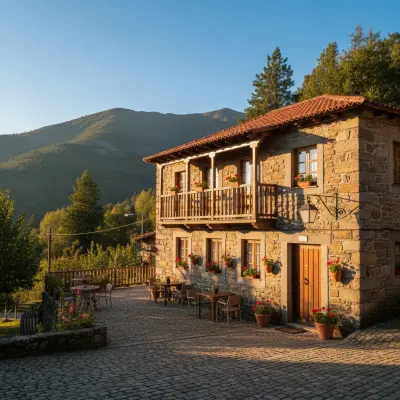
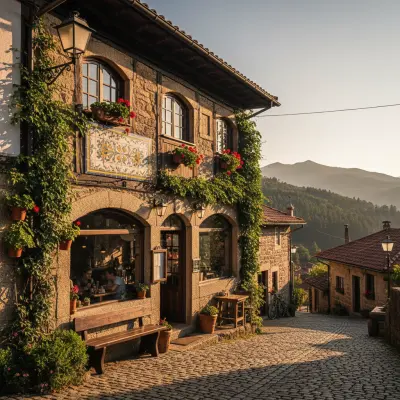
For accommodation, my recommendation is clear: stay inside the village. Casa da Vila, in the old quarter, is the kind of stay you want when you intend to walk out the door at 7am to hit the trail without getting in a car first. Stone house, simple decor, none of the overcooked "charming tourism" aesthetic that has ruined Óbidos and Marvão. It is a Manteigas house, full stop.
Some prefer to stay at the inns and hotels further up towards Torre (São Lourenço, Vale do Rossim), but you lose the experience of waking up in the village and walking to the café before anything else opens.
Café Caramelo and the Morning That Changes Everything
Here is the best-kept secret in Manteigas in summer, and it has nothing to do with water: breakfast at Café Caramelo. It opens early, the bread is fresh, and the toast with melting Serra cheese is one of the most honest breakfasts you can eat in inland Portugal. It costs almost nothing (go and see, I am not quoting prices that change).
The café is also where you overhear the conversations that matter. Who is fishing where, which road is closed for works, and which trail is particularly good this week. Sit at the bar, order a galão, and listen. In Manteigas, real information moves this way.
Trails to Earn the Swim
Plunging into 12-degree water makes more sense after three hours of hiking under the sun. Then the thermal shock has logic. And the glacial valley has trails for every level.
The classic route is PR1 MTG (Glacial Valley Trail), 11 kilometres from Manteigas to Covão da Ametade, climbing the whole way up the valley. It is a linear route, which means you either walk back the way you came or organise a pickup. It takes 4 to 5 hours at a relaxed pace.
For those who want to take it seriously without getting tangled in maps and logistics, it is worth considering a guided hike with Estrela Outdoor. These are local people who know every stone in the valley, they know where the swimming holes that are not on the maps are, and they leave from the centre of the village. If it is your first time in the Serra, this is the investment that saves you a whole day of trying to figure out where everything is.
The Snow Wells Trail
For the more adventurous, there is a less-known trail that climbs to the area of the old snow wells, 17th-century stone structures where the people of Manteigas stored snow to sell to Lisbon during the summer. It is a fascinating story, it is a hard trail, and the panorama up there is among the best in the Serra. I have a detailed guide to the snow wells trail with maps, difficulty rating, and what to expect.
Eating Well Without Drama
Manteigas does not have Michelin restaurants, and thank God for that. It has honest tascas where you eat river trout, wild boar, kid roasted in wood-fired ovens, and Serra cheese with rye bread. On any weekday, lunch should cost between 12 and 18 euros per person with house wine.
Serra cheese is a local religion. The good one is buttery, almost liquid inside, with a firm rind. You buy it from private houses in the Sameirinha area (ask at the café, they will point you). Be careful with the cheese sold in supermarkets as "queijo da Serra": it is not the same product, full stop.
For dinner, I prefer to return to the village and eat early. Restaurants close relatively early, and in July and August it is sensible to book.
Itineraries to Stretch the Trip
If Manteigas is your base, two side trips will completely change your perspective on the region.
The first is to drop down to Covilhã and head into the Schist Villages. I have a one-day road trip guide from Covilhã to the Schist Villages that covers the essential without being exhausting. It can be done by car from Manteigas in half a day, but it is more rewarding to give it a full day.
The second, if you come in spring or early summer, is Fundão. In May the cherry trees turn the landscape red, and in July there is still cherry picking in some areas. I wrote a guide to the cherry blossoms in Fundão that also works for anyone who wants to understand the Serra da Gardunha, geographically the sister of Estrela but with its own personality.
When to Go (and When Not To)
June and September are the ideal months. June because the river still carries the snow that melted in May, the trails are green, and there are no tourists yet. September because the heat has eased, the kids have gone back to school, and the mountain is at peace again.
July is acceptable on weekdays. In August, especially around the 15th of August holiday weekend, avoid. The village fills up, the car parks are full by 9am, and Poço do Inferno looks like Costa da Caparica beach.
Weekends in October are also good, with the mountain starting to change colour, but the river water becomes genuinely impossible to bear. October swims are for people who do triathlons. Do not attempt.
One Last Thing
Manteigas is a small village where nearly everyone knows everyone. The people are welcoming but have little patience for visitors who treat the mountain like a theme park. Do not leave rubbish at the swimming holes. Do not light fires. Do not park on vegetation. Do not fly drones near houses (it is considered rude even when it is technically allowed).
In exchange, you get the most beautiful mountain in Portugal, water cold enough to kill the summer heat in a way no shower can, and that increasingly rare feeling of being somewhere that has not yet been entirely turned into a tourist product. Enjoy it while it lasts.