Lisbon's Spring Viewpoints: Where to Watch the City Bloom
Six viewpoints, six different perspectives on Lisbon, from Senhora do Monte at 7am without a tourist in sight, to Adamastor at sunset with a beer in hand. In spring, golden light and flowering bougainvillea turn these high points into the best thing to do in the city.
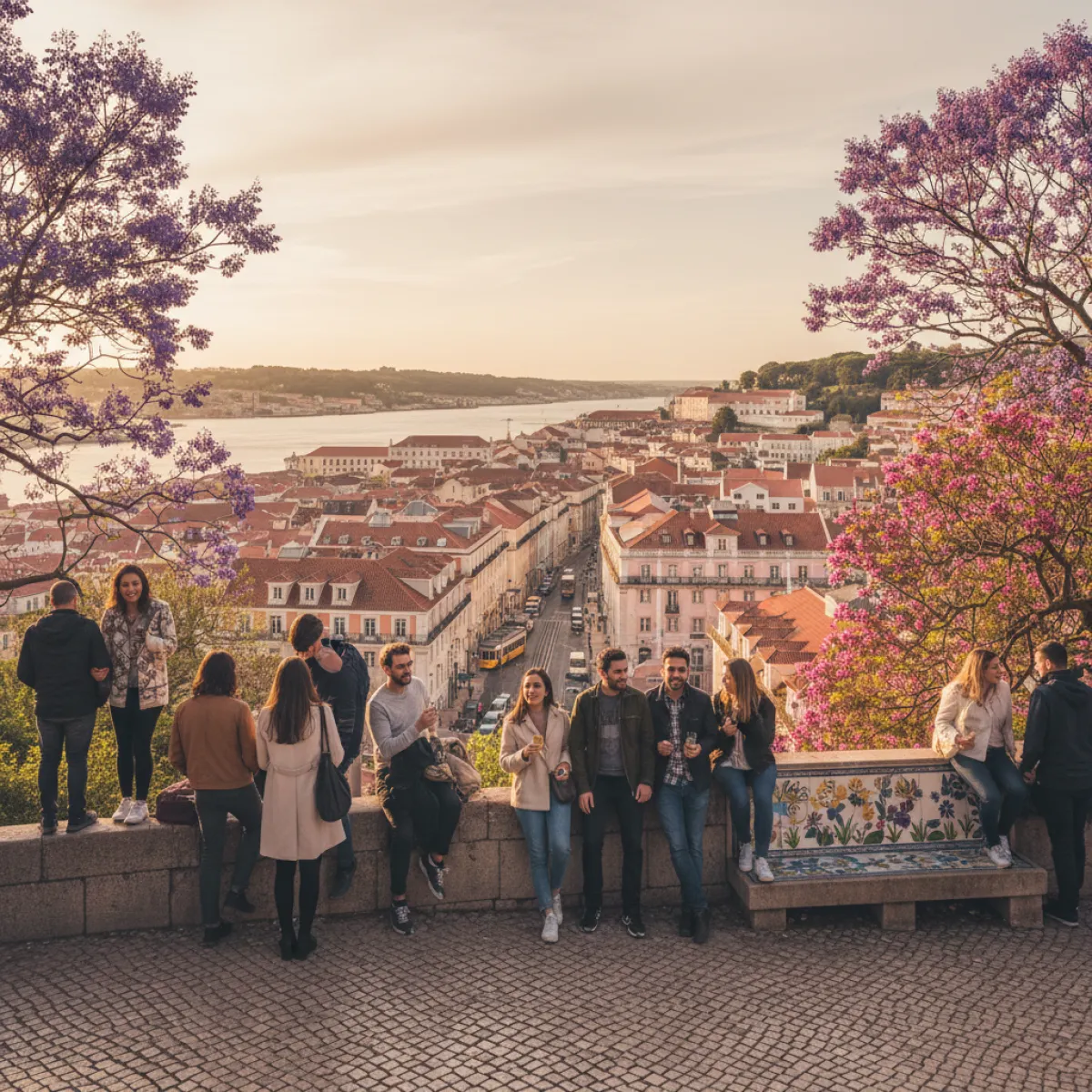
People say Lisbon has seven hills. It has more, depends on how you count, and how many beers you've had on the way up. But here's what matters: each hill has at least one miradouro (viewpoint), and in spring, when the city trades January's grey for purple bougainvillea and jacarandas about to burst, these high points become the best seats in Lisbon. Full stop.
I'm not talking about rushed selfies with the Tagus in the background. I'm talking about arriving early, coffee in hand, and staying long enough to understand why someone decided to build an entire city on steep hills. In spring, the light changes. It's softer in the morning, more golden in the late afternoon, and the miradouros stop being tourist checkpoints and become, without exaggeration, the best open-air living rooms in Europe.
Graça: The Viewpoint That Knows It's Good
Let's start with the obvious one, because it deserves it. Miradouro da Graça, next to the Igreja da Graça, has that panoramic view you've seen on every postcard: Castelo de São Jorge to the right, the Baixa straight ahead, the Tagus stretching out endlessly. Early morning, before ten, it's surprisingly calm. The neighborhood regulars are already on the benches, the kiosk is open, and you can hear birds, yes, birds in Lisbon, that's what spring does.
The trick is going on a weekday. On weekends, especially from April on, it fills up fast. If you want a shaded seat, arrive before 9:30am. The kiosk serves decent coffee and toast, nothing remarkable, but enough to justify staying an hour.
Just above, a five-minute walk away, sits Miradouro da Senhora do Monte, the highest point in the city. Less touristy, less polished in terms of infrastructure (some benches, not much else), but the view is unbeatable. You can see the 25 de Abril Bridge, Cristo Rei, and on a clear spring day, even the Serra da Arrábida in the distance. It's where Lisboetas go when they want space from the noise.
Santa Luzia and Portas do Sol: The Heart of Alfama
Heading down toward Alfama, there are two viewpoints practically attached to each other that are worth distinguishing. Miradouro de Santa Luzia is the most photogenic, it has those azulejo tile panels, a pergola draped in bougainvillea (spectacular in April and May), and a view over Alfama's rooftops to the river that looks like something from a Wim Wenders film.
Miradouro das Portas do Sol, right next to it, is more open and has a kiosk-bar with a terrace. In spring, late afternoon, the light hits Alfama's terra-cotta rooftops in a way that makes everyone stop. It's also the natural gateway to descend into Alfama's lanes, where at night you can hear fado drifting through half-open doors. If you want a proper fado night, no tourist traps, O Faia in Bairro Alto is a benchmark, expensive, yes, but authentic. Book ahead, especially in spring when the city fills up.
The walk down from Portas do Sol to the Sé cathedral is one of Lisbon's most beautiful strolls in March and April. The narrow streets shelter you from the wind, laundry strung across windows adds color, and there are always one or two cats supervising from a wall. If you want to understand the logic behind Lisbon's neighborhoods, the guide on Lisbon's traditions and neighborhoods gives good context.
São Pedro de Alcântara: The Most Civilized Viewpoint
In Bairro Alto, Miradouro de São Pedro de Alcântara is a different animal. It has a well-kept garden with large shade trees, comfortable benches, and a view pointing straight at Castelo de São Jorge and the Graça hill. In spring, the garden is immaculate, it's maintained by the city and it shows.
It's also the most accessible. You can reach it via the Elevador da Glória from Restauradores (check the schedule locally, it's had intermittent closures for maintenance), or simply walk up Rua de São Pedro de Alcântara. Nearby cafés and restaurants in Príncipe Real, a ten-minute walk, make it ideal for pairing with a late lunch.
A practical note: on weekend nights, the Bairro Alto area transforms completely. If you want the viewpoint in peaceful mode, go in the morning or early afternoon.
Jardim do Torel: The Worst-Kept Secret
This one's my personal favorite, and it's not exactly secret anymore, but it remains less visited than it should be. Jardim do Torel sits on the Santana hill, above Avenida da Liberdade, and has a swimming pool in summer, but in spring what matters is the garden itself: century-old trees, flower beds in bloom, and a view over the Avenida and the rooftops toward Marquês de Pombal.
There's no kiosk, bring your own coffee. There are iron benches in the shade and, on weekday mornings, you can be nearly alone. The climb from Martim Moniz or Restauradores is steep but short (10 minutes). In spring, when the wisteria is flowering, it's hard to believe you're in the center of a European capital.
Santa Catarina: The Twenty-Somethings' Viewpoint
Miradouro de Santa Catarina, also known as Adamastor, after the statue, is Lisbon's most social viewpoint. In spring and summer, late afternoon, it fills with people holding beers from the shop next door, guitars, and that atmosphere that hovers between relaxed and mildly chaotic.
The view faces Almada and the river, with the 25 de Abril Bridge to the left. It's not Lisbon's most sweeping vista, but it might be the most cinematic, the wide river, boats passing, the sun going down. If you're in your twenties, this is where you'll end up. If you're over forty, go before five.
From here, it's not far to the Museu Nacional de Arte Antiga in Santos. If after the viewpoint you want to trade sunshine for an extraordinary painting collection, the Panels of São Vicente, the Belém monstrance, it's a fifteen-minute walk down Rua de São Paulo. In spring, the museum garden, overlooking the river, is another hidden viewpoint in its own right.
What Spring Changes
Spring in Lisbon isn't just about temperature, though swapping February's windy 12°C for April's 18-22°C is reason enough. It's about light. The city gains a luminosity that doesn't exist the rest of the year, a golden, clean light that makes the azulejo tiles gleam and turns viewpoints into theater stages.
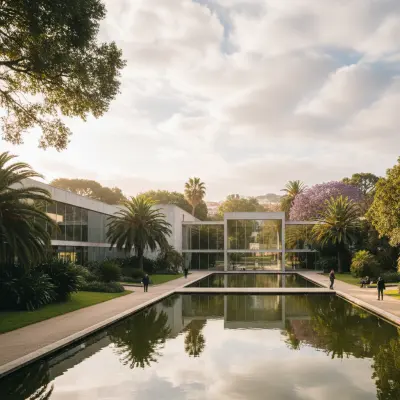
It's also when the city's gardens peak. The gardens at the Calouste Gulbenkian Foundation, for instance, are among Lisbon's most beautiful spaces in spring, not a viewpoint per se, but essential for anyone who likes green spaces mixed with art. And the museum inside is worth every minute.
March and April have rainy days, true. But when the sun returns after a grey morning, the city washes itself clean and the light gets even better. Lisboetas know this, it's why the terraces fill at the first ray of sun.
Beyond the Viewpoints: How to Explore Spring
If your legs can handle it (and in Lisbon, the question isn't "if" but "when" they give out), the viewpoints can be connected in a full-day walking route. Start at Senhora do Monte in the morning, descend to Graça, continue to Santa Luzia and Portas do Sol, cross the Baixa, climb to Torel, descend to São Pedro de Alcântara, and finish at Santa Catarina for sunset. That's a solid 8-10 km, but with stops.
If you'd rather save your knees, there are alternatives. The downhill cycling route from Lisbon to Belém is a smart way to see the city, you start high and coast down, which in a city of hills is the only sensible approach. Or for something flatter, the Bike a Wish riverside tour follows the river and gives a different perspective, Lisbon seen from below rather than above.
And if spring gives you the urge to leave Lisbon for a day? Sintra is half an hour by train and in spring it's something else entirely, lush green, fog that drifts in and out, fewer crowds than summer. If you're visiting around Easter, consider a detour to Mafra, where the tradition of Easter sweets is worth the trip.
Practical Notes
Lisbon's miradouros are all free and open to the public. Most have kiosks with coffee and drinks (expect €1-3 for a coffee, €3-5 for a beer), but not all open early morning. Bring water, especially from April onward.
Comfortable shoes are non-negotiable, Portuguese cobblestones are beautiful but treacherous, especially when wet. The climbs are real and steep. If you have mobility issues, tram 28 passes near several viewpoints, and the elevators (Glória, Bica, Santa Justa) help with the toughest ascents, though queues in spring can be long.
The best time for photography is between 7am and 9am (soft light, few tourists) or from 5:30pm onward (golden light, end-of-day atmosphere). The ideal months are April and May, early March can still be cool and windy, and from June you're entering the dry summer heat.
Lisbon in spring doesn't need grand plans. It needs good shoes, a mental map of the miradouros, and the willingness to get lost once or twice. The best moments will be the ones you didn't plan.