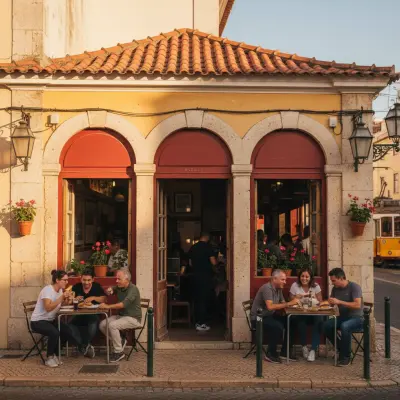
Lisbon's Santo António: Sardines, Basil Pots, Street Parties
On June 12th, Lisbon smells of grilled sardines and crushed basil. An opinionated, hour-by-hour guide to surviving (and enjoying) the best night of the year in the city, from Alfama's street parties to the cathedral weddings.
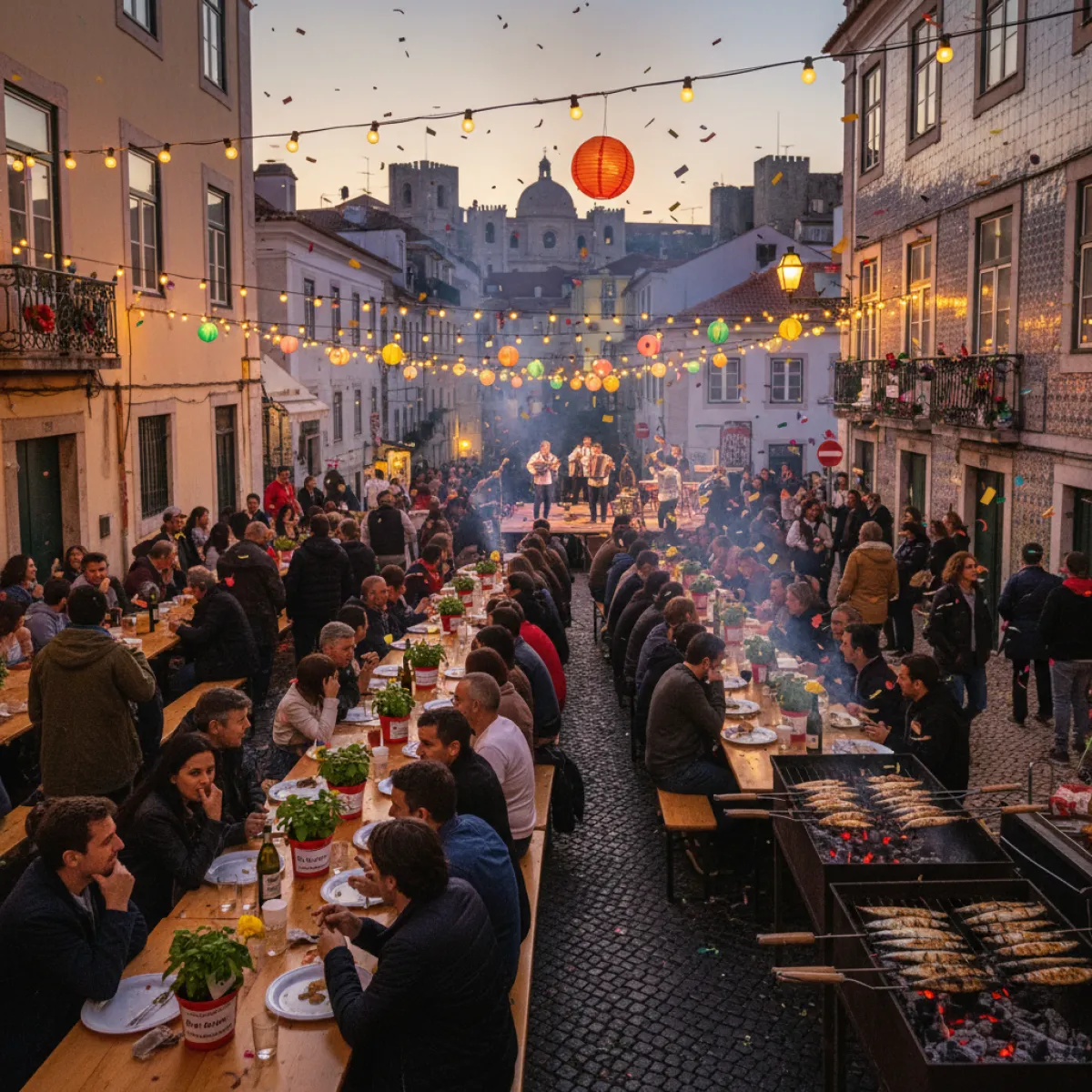
On June 12th, around seven in the evening, Lisbon smells of one thing only: grilled sardines. The smoke rises from courtyards in Mouraria, from improvised terraces in Alfama, from the back of buildings in Madragoa where someone has set up a grill in a halved oil drum. It's a smell that stays in your clothes for three days. Fair warning: if you're planning to wear your nicest white shirt to the street parties, you're making a strategic error. Wear black, or accept your fate.
Santo António isn't a single festival. It's dozens of festivals layered on top of each other, in narrow streets, with music coming out of speakers far too small for the volume being demanded of them. To the tourist who arrives the afternoon of the 12th without a plan, Lisbon can look like a perfumed riot. To anyone who shows up prepared, it's probably the best night of the year in the city. This guide is for the second category.
What is actually being celebrated
Saint Anthony of Lisbon, better known abroad as Saint Anthony of Padua, was a Lisbon native before he was an Italian. He was born around 1195 in a house attached to the Cathedral, and the city has never quite let go of him. On the night of June 12th (the eve) and on June 13th itself (his feast day, a city holiday), Lisbon turns into a giant popular festival, with mass weddings at the Sé, the Marchas Populares parading down Avenida da Liberdade, and entire neighborhoods going into party mode.
Three things you'll see sold everywhere, worth explaining up front:
- Sardine on bread: a half or whole grilled sardine on top of a slice of broa (corn bread) that soaks up the oil. That's it. No sauce, no trick. Around five euros depending on the neighborhood and your level of desperation.
- Manjerico: a tiny pot of basil (Ocimum minimum) with a paper quatrain stuck in on a small skewer. You give it to someone you fancy. You don't sniff the plant, you rub it with your hand and smell your hand. Sniffing the leaves directly marks you as a tourist.
- Caldo verde and bifanas: the rest of the menu. Caldo verde (kale and potato soup) shows up in plastic cups, the bifana (marinated pork sandwich) in a soft white roll with mustard or piri-piri.
Where to go, hour by hour
Afternoon of the 12th: warming up
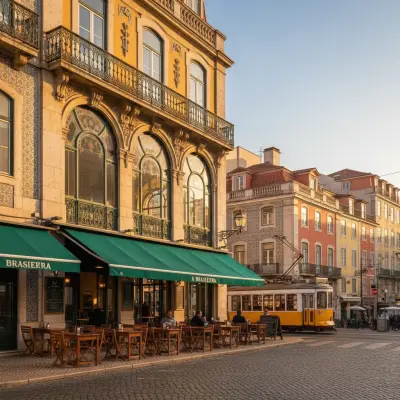
Don't head straight to Alfama at six in the evening. It's a mistake I see every year. At this hour, start in Chiado, calmly. Sit on the terrace of A Brasileira, order a small beer and a salt cod fritter, and watch Lisbon getting ready. The paper bunting has been hanging for weeks, but on this afternoon it finally makes sense. Reckon on around eight euros for the exercise, plus tolerance for tourist crowds.
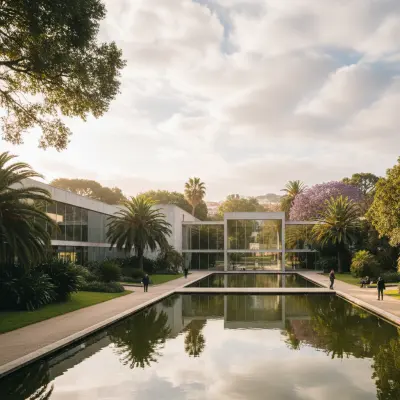
If you have the time and the headspace, go up to the Museu Calouste Gulbenkian and spend an hour in its garden. It might feel counterintuitive on a day like this, but it's the exact opposite of what's coming at night, and it gives you perspective. The Gulbenkian gardens in mid June, with their ducks and the shade of the plane trees, are the best antidote I know to a hot Lisbon afternoon. Check opening hours on the day itself: museums sometimes close earlier on city holidays.
If you'd rather not move much, the Museu Nacional de Arte Antiga, in Santos, offers the best late afternoon spot in the city: the café terrace looks out over the Tagus and the container ships heading into Lisbon's port. Have a glass of white wine there before walking down to the street parties. It's not poetic, it's practical. From there to Madragoa is ten minutes on foot.
Seven in the evening: pick your neighborhood
This is the strategic decision of the night. Don't try to do all of them. Pick one and stay.
Alfama is the prettiest and the most crowded. If you've never done Santo António, it's a once-in-a-lifetime experience. Enter via Santa Apolónia, walk slowly up Rua dos Remédios, and prepare to move at one meter per minute from nine onwards. The Marchas Populares parade down Avenida da Liberdade, but the echo reaches Alfama via TV sets propped on tasca counters and via collective humor.
Mouraria is, in my opinion, the more interesting alternative. More multicultural, with Indian and Bangladeshi kitchens mixed in among the sardine grills, it's a Santo António that better reflects the Lisbon of today. Walk along Rua do Capelão, peek into Largo da Achada.
Bairro Alto and Bica: younger, louder, less typical, more wine spilled per square meter. If your idea of a party is dancing until four, this is your place.
Madragoa and Santos: where Lisboners go when they want a party without the tourism. Less photogenic, more authentic in feel. The street parties here usually have better live music and slightly more civilized prices.
Nine in the evening: eat on your feet
Sitting down to eat in a restaurant on the night of the 12th is a way of misunderstanding the city. Eat standing up, with a paper napkin, and switch stalls between courses. The rules are simple:
- Sardine only where there's a queue. No queue means something is wrong.
- Caldo verde only after ten, when it starts to cool down.
- Bifana always, any hour. And if you swing past Baixa before or after the festivities, take a detour to As Bifanas do Afonso, on Rua da Madalena. It's not a Santo António tradition, but it's the best bifana I'm willing to defend in public.
- House red wine, plastic cup, three euros. Don't ask for white, don't ask for rosé, don't try to be clever.
For anyone who wants a more seated alternative, O Faia, Casa de Fados, in Bairro Alto, keeps its fado program running through Santo António week. It's not a street party, it's the opposite: a quiet dinner, career fado singers, bills landing somewhere between 60 and 80 euros per person with wine. A solid call for the night of the 13th, when the collective hangover has taken over the city and Alfama is being cleaned up by heroic municipal crews.
The detail nobody explains: the Marchas Populares
The Marchas Populares, the parade down Avenida da Liberdade on the night of the 12th, are a televised spectacle that very few foreigners actually understand. Each Lisbon neighborhood, or close to it, fields its own marcha: about 50 people, full custom uniforms, choreography rehearsed for months, an original song, decorative arches. They march down the Avenida and Lisboners watch it on RTP at home, the way other countries watch a cup final.
If you want to see it live, there are two options: buy a seat in the grandstand (around fifteen to twenty euros, sells out fast, get on the EGEAC website in time) or stand on the sidewalks of the Avenida. If it's your first time, I recommend the grandstand; the parade lasts hours and your left foot will start to ache early. If it's your fifth time, stay home and watch on television, with a beer and some mortadela, like a sensible adult.
The Santo António weddings
Another little understood detail: on the morning of June 13th, dozens of people get married in bulk. The "Casamentos de Santo António" are a tradition in which the City of Lisbon pays for the wedding and the reception of a few dozen selected couples, in the cloister of the Sé. You can't crash mid-ceremony, but you can hang around Largo da Sé between nine and eleven to see the cars, the dresses, the families turning up en masse. It's one of the most distinctly Lisbon things you'll ever witness.
After the wedding, a procession links the Sé to the small Church of Santo António right next door, before going down towards Madalena. If you can grab a terrace seat on Rua Augusta, you'll get a lazy view of it all.
Surviving the logistics
Where to sleep
Book three months ahead if you want to stay in Alfama, Mouraria, Bairro Alto or Baixa. Anyone who books later pays double and still sleeps with music going until five in the morning. My counterintuitive suggestion: stay in Marvila or in Belém. You're 15 minutes by metro or train from the epicenter, the room costs half, and you'll actually rest. When you wake up on the 13th, go discover the rest of the city while Alfama recovers.
Getting around
The metro adds extra service, but the Blue and Green lines become impossible from eight onwards. The Rossio escalators jam to a halt under the weight of bodies. Taxis and Ubers won't go into Alfama no matter how much you beg: traffic is closed off. Accept that you'll walk a lot. Comfortable shoes, not flip-flops, because stepping on a flattened sardine in flip-flops is a sensory experience nobody needs.
What it'll cost
Realistic per-person budget at a neighborhood arraial: 5 euros on sardines, 5 on bifanas, 3 on caldo verde, 3 or 4 wines at 3 euros each, plus 3 or 4 beers. You'll exit the festivities having spent 35 to 50 euros on food and drink. Add the dinner if you also do fado at O Faia. Add a kidney if you also book a hotel in Alfama.
Extending your trip past the 13th
People who come for Santo António almost always stay on, with enough days for other things. I'd suggest three extensions.
First: rent a bike and see the other Lisbon, the river one. There are two curated experiences worth considering, both of which spare you having to climb Avenida Almirante Reis in June. Cycling the Lisbon waterfront with Bike a Wish is the obvious choice: from Cais do Sodré to Belém along the riverside cycle path, with stops at Santo Amaro and the MAAT. More ambitious is the downhill cycling route from peak to pier, which starts in Monsanto and goes downhill the whole way, designed for people who don't want to sweat twice.
Second: deepen the anthropology. To understand why on earth a 13th-century saint stops a city in 2026, read our essay on local culture in Lisbon, traditions and neighborhoods before you arrive. It's the difference between being at a party and understanding the party.
Third: leave the city for 24 hours. June in Lisbon is hot, and Sintra is 40 minutes away. If you go, take our Sintra neighborhood guide and focus on São Pedro de Penaferrim instead of the usual overcrowded palace circuit. For anyone still hungry for tradition after the sardines, our guide to traditional sweets in Mafra is also useful: Easter is over, but the bakeries keep many of the recipes year-round.
What nobody tells you
Honestly: from eleven onwards in Alfama, sardines cost fifty cents more than they should. There's tacit coordination between stalls. Don't bother getting indignant.
The manjerico you buy on June 12th will die on your balcony within three weeks, no matter what you do. It's a short-lived plant. Not your fault. Don't water it twice a day even though you'll want to.
And, finally: the best sardine I ever ate in my life was at seven in the morning on the 13th, on the terrace of a tasca in Madragoa, surrounded by people who hadn't gone home. The grill was dying out, three sardines were left, half-cooked by ambient heat alone, and every bit of smoke smell from the night had concentrated into that one last plate. It cost three euros. You won't be able to replicate it, but you could try.