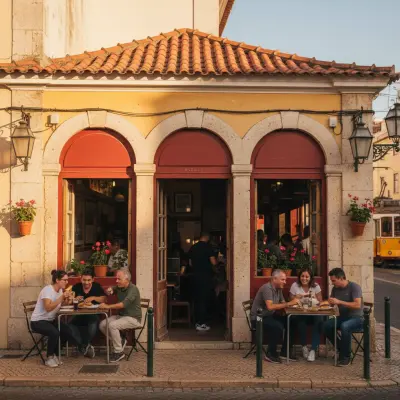
Lisbon's Marchas Populares: Tradition, Neighborhoods and Where to Watch
On the night of June 12th, Lisbon drops the cosmopolitan act and turns back into a village. An honest guide to the Marchas Populares: where to watch, which neighborhood to pick, what to eat for 2 euros and what to avoid paying 18 for.
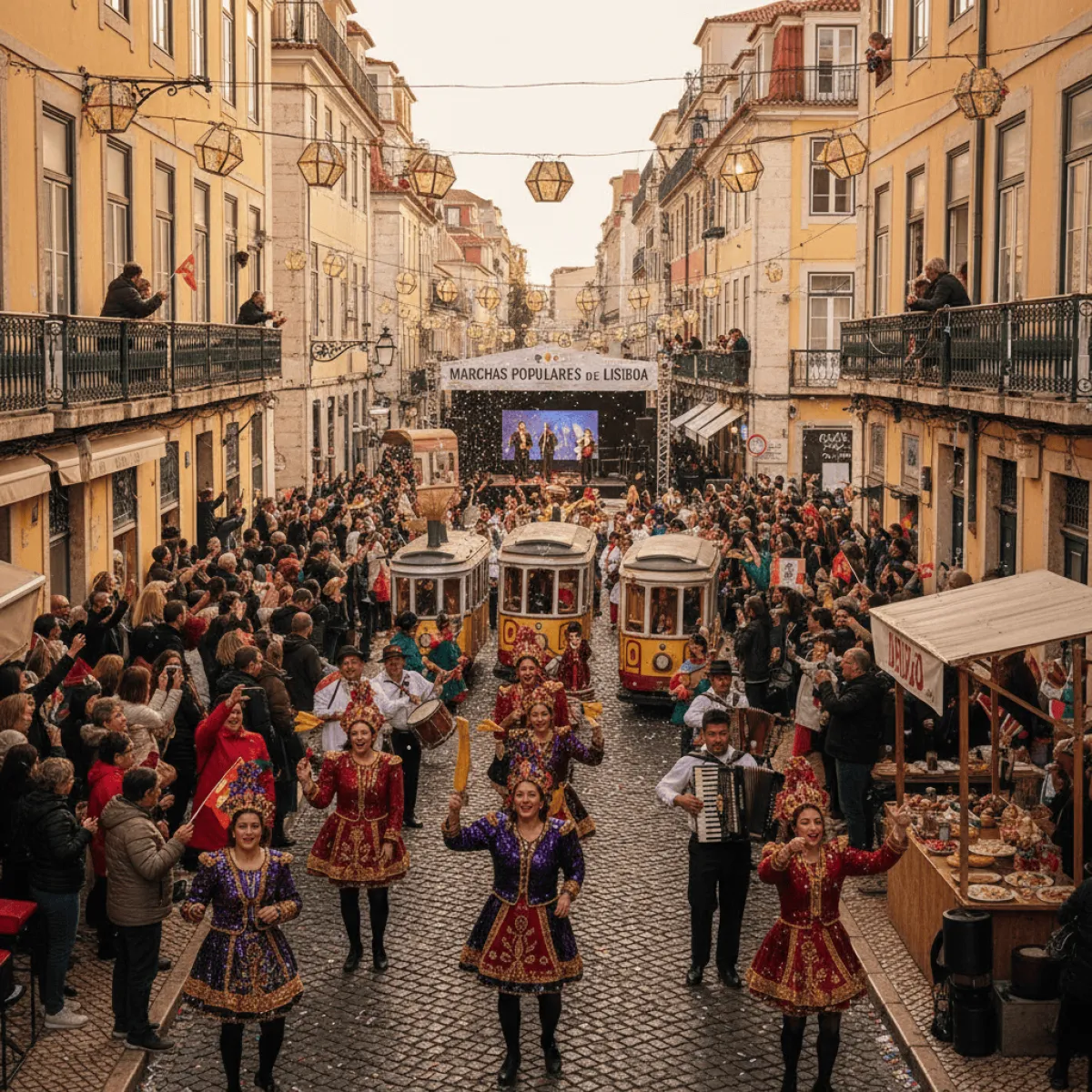
There's a night in June, usually the 12th, when Lisbon drops any pretense of being a cosmopolitan capital and becomes a village again. More accurately, it becomes twenty-something villages at the same time, each with its own uniform, its own anthem, and absolute conviction that it is the best. They call it Marchas Populares, and if you've never seen one come down Avenida da Liberdade at 10pm, a thousand people singing slightly off-key and clapping in syncopation, you haven't quite understood how this city works once it takes off its good shoes.
Forget the pastel de nata route and the queue at the miradouro. The Marchas are the moment of the year when Lisbon stops being a backdrop and goes back to being a neighborhood. And it's worth planning your trip around it, because catching a European capital in extended-family mode is rare.
What the Marchas actually are
Technically, they're parades of Lisbon neighborhoods that march down Avenida da Liberdade on the night of June 12th into the 13th, the eve of Santo António, the city's patron saint. Each neighborhood fields around a hundred marchers (give or take), with coordinated costumes, flowered arches, basil-pot-shaped balloons, and choreography rehearsed for months in pavilions and garages scattered across the city.
The tradition as we know it, with a jury and competition and the whole production, was launched in 1932 by the journalist José Leitão de Barros. There had been spontaneous marches before, but that's when the chaos got professionalized: each neighborhood with its own colors, lyricist, composer, choreographer, starting marchers and substitutes. It is essentially an amateur sports league, except nobody scores goals and everyone drinks beer between sets.
The historic neighborhoods are the usual suspects: Alfama, Mouraria, Bairro Alto, Madragoa, Castelo, Bica, Graça, Alto do Pina, Ajuda, São Vicente, Marvila, Boavista, Campo de Ourique, among others. There are occasional rotations, children's marches, an LGBT march (the Marcha do Orgulho joined the official calendar in recent years), but the core stays the same: traditional neighborhoods competing for the city prize.
Where to watch: the honest options
There are basically three places to see the Marchas, and each gives you a completely different experience. There's no right answer, only the honest answer for the kind of night you want.
Avenida da Liberdade, the night of June 12th
This is the official event, broadcast live by RTP, with paid grandstand seats and free standing areas. Grandstand tickets typically run between 25 and 60 euros (check prices and dates on the EGEAC website, which organizes the event), and they sell out fast. If you want a guaranteed seat with a clear view of the jury, this is the option. If you'd rather stand, leaning against the barriers with the crowd, go early, very early, bring a folding chair if you're that kind of traveler, and don't expect to leave before 2am.
Practical advice: eat before, well away from the avenue. Restaurants in that zone are impossible that night and prices go full-tourist. Have a proper bifana at As Bifanas do Afonso in late afternoon, drink a standing beer, and walk up to the avenue on a full stomach. Anyone who tries to eat between marches ends up paying 18 euros for a reheated plate of bacalhau.
In the neighborhoods themselves, before or after
The secret most tourists miss: every neighborhood throws its own party at home, usually in the days before and after June 12th. That's where you see the march without the TV makeup, in the small squares, the narrow streets with paper lanterns and improvised street parties. Kids weaving between marchers' legs, grandmothers sitting on kitchen chairs dragged into the street, sardines smoking on charcoal at the corner.
Alfama and Mouraria are the obvious ones, and therefore the most packed. For something less trampled, climb up to Graça, drop down to Madragoa, or head to Campo de Ourique. In any of these, during the week of Santo António, there's a street party every night: live music, sardines, roasted peppers, broa, bifanas, house wine in a plastic cup for 1.50 or 2 euros.
Marches inside their own neighborhoods
Before they go to the avenue, and often after, the marches parade through their home neighborhood. Ask locals, or watch the arches being assembled, and the schedule will reveal itself. Watching the Alfama march leave Alfama, with marchers' families in tears at the windows, is worth more than three hours in a grandstand.
The neighborhoods, with opinions
Let me be direct: not all neighborhoods carry the same intensity. Some live for the Marchas all year, others just show up. If you're picking where to spend the night before or after, pick well.
Alfama
The archetypal neighborhood. Over-photographed, but for a reason. The lanes become party corridors, there's a street party in every square (Largo de São Miguel, Largo do Chafariz de Dentro, Pátio de Dom Fradique), and the Alfama march is historically one of the strongest. The downside: by 10pm you can't move. The upside: you don't need to, just let the current take you.
Mouraria
The most interesting neighborhood of the last few years, in my opinion. More multicultural than Alfama (Bangladesh, China, Mozambique, all next to each other around Largo do Intendente), and the march has been getting stronger. Eat on Rua do Benformoso, drink in Mouraria, and if you want to understand what's actually happening to real Lisbon, instead of the postcard, this is where you need to be.
Bairro Alto and Bica
Bairro Alto on Marchas night is an amplified mirror of normal Bairro Alto: people in the street, plastic cups, music at full volume. Bica is more intimate, with the funicular still and the steep streets turning into stages. You need to like crowds to enjoy either.
Madragoa
Underrated. A traditional neighborhood near Estrela, with serious old tascas and street parties that are still relatively local. A good pick if you want Marchas without the heavy tourist layer.
Castelo and Graça
Here you get the view. The Miradouro da Graça on street-party night is one of the prettiest spots in the city, castle lit up, sardines smoking. Go early if you want a table.
What to eat and drink, without the myths
There's a canonical list that repeats everywhere and works: grilled sardine, caldo verde (green soup), bifana, roasted pepper in coarse salt, corn broa, fartura (a kind of churro), ginja in a chocolate cup. Stray too far from this and you'll look like you don't know what you're doing.
Some inconvenient truths:
- The best sardines aren't quite peaking in June. The peak is July and August. What you eat at the street parties is good, not great. That's fine, it's part of the ritual.
- A fair price for a grilled sardine with broa and pepper, at a neighborhood street party, is 2 to 3 euros each. If they charge you 5, you're in a tourist zone. Walk one block.
- A beer in a plastic cup is 1.50 to 2.50 euros. House wine the same. Fancy cocktails do not exist at the street parties, and that's a feature, not a bug.
- Ginja com elas (with the cherries floating in the chocolate cup) is great for one. By three, you've booked your hangover.
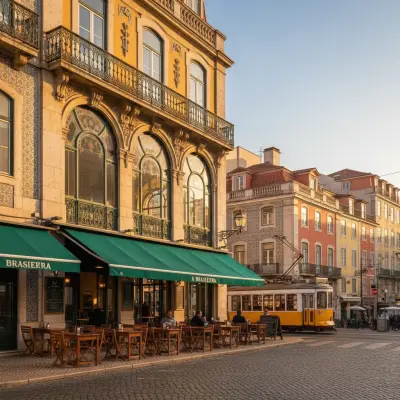
For the day after, or the afternoon before, if you want to eat with your brain instead of burning your fingers on roasted peppers: the bifana is Lisbon's queen of the standing meal, and As Bifanas do Afonso makes one of the most serious in the city. Another option, more clichéd but honest: a coffee and a pastry at A Brasileira in Chiado, sitting at the counter, before walking up into Bairro Alto.
The week around the Marchas: how to build a trip
Coming to Lisbon only for the night of June 12th is a waste. The city stays in street-party mode for almost two weeks, and the days are easy to fill.
Mornings
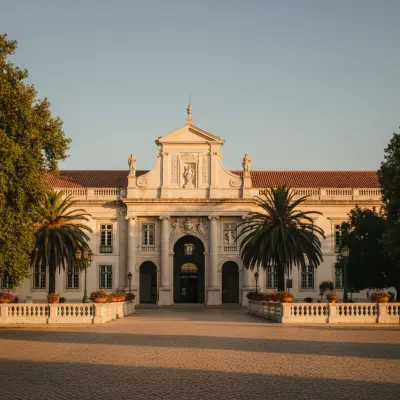
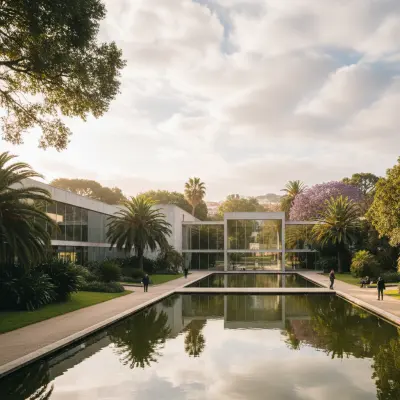
Use mornings for serious culture, before the heat and the noise. The Museu Nacional de Arte Antiga, in Santos, is one of Europe's most underrated museums: Nuno Gonçalves, Bosch, Portuguese silver, and a garden over the Tejo where you can have a quiet lunch. The Museu Calouste Gulbenkian, further north, is worth it for the founder's collection (Egyptian, Eastern, European) and the garden, which in June is in full shape. If you only do one, pick the closer one to your hotel; neither disappoints.
Afternoons
Afternoons call for the street. If you're up for it and want to see the city in a different rhythm, get a bike: the downhill cycling route from Lisbon to Belém is the smartest itinerary for anyone who doesn't want to climb hills but wants to actually see the city. Or, more relaxed, the riverside tour with Bike a Wish, which follows the Tagus on flat ground and lets you photograph everything without sweating.
If you'd rather read, read: our local culture guide to Lisbon goes deeper into neighborhood habits, and if you're stretching out to Sintra (you should, it's a twenty-minute train), the Sintra neighborhood guide helps you avoid the classic mistake of only seeing Pena.
Evenings other than the 12th
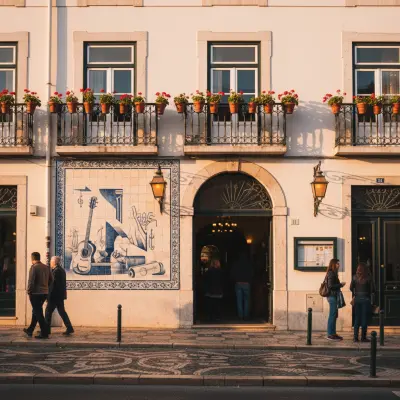
For the other nights, fado. June isn't fado's peak tourist season but the houses stay open, and at O Faia, in Bairro Alto, you'll hear the real thing with dinner included. It runs expensive, but it's one night, not a week.
Logistics without romance
A few practical things nobody puts in the pretty guides:
- Hotel. Book three to four months ahead for the Santo António week. Prices rise 30 to 60% above May. If you can, stay in Santos, Estrela, or Campo de Ourique: close to everything, outside the night-noise epicenter.
- Transport on the night of the 12th. Avenida da Liberdade closes to traffic from early afternoon. The metro runs late (check the special schedule), and walking back to your hotel is often the fastest option. Taxi and Uber, forget it between 11pm and 3am, unless you walk ten minutes out of the party zone.
- Footwear. Portuguese cobblestones, wet with beer and sweat, are a skating rink. Trainers, always. Nice sandals, never.
- Cash. Street parties increasingly take MB Way and cards, but bring 30 to 50 euros in small notes. Some stalls are still cash-only, and a queue at the ATM at 11pm is the clinical definition of a wasted night.
- Manjerico. The basil pot with a paper flag and a short rhyme is the official souvenir. It costs 3 to 5 euros at a street party. Don't try to take it on a plane: TAP is understanding, the American TSA is not.
What you take home
What sets the Marchas apart from other European festivals, and the reason they're actually worth the trip, is that they weren't made for you. There's no marketing, no invasive sponsorship, no logo flashing at the back of the stage. They are neighborhoods celebrating themselves, in a format that has stayed strangely intact since the 1930s, and tourists get to watch from the side because they happened to land on the right night.
If the principle appeals, and you're in Portugal longer, there are regional equivalents worth the detour: the Santos Populares in Porto (São João, June 23rd, with plastic hammers tapping heads), the bonfires of São João in Braga, or, in a sweeter and daytime register, the route of Easter sweets in Mafra, which shows how Portuguese tradition keeps living outside the Instagram set.
The rest, honestly, is improvisation. Show up in a square, order a beer, lean against a wall, let the march go by. Don't take out your phone. You'll remember it better.