Guimarães Market Crawl: What to Buy, Taste and Skip
Seven in the morning, vinho verde flows from the tank at three euros a litre and the cheese ladies know exactly who has the best cured cod. An honest guide to the Mercado Municipal in Guimarães: what to buy without hesitation, what to taste first, and the wicker basket you should not take home.
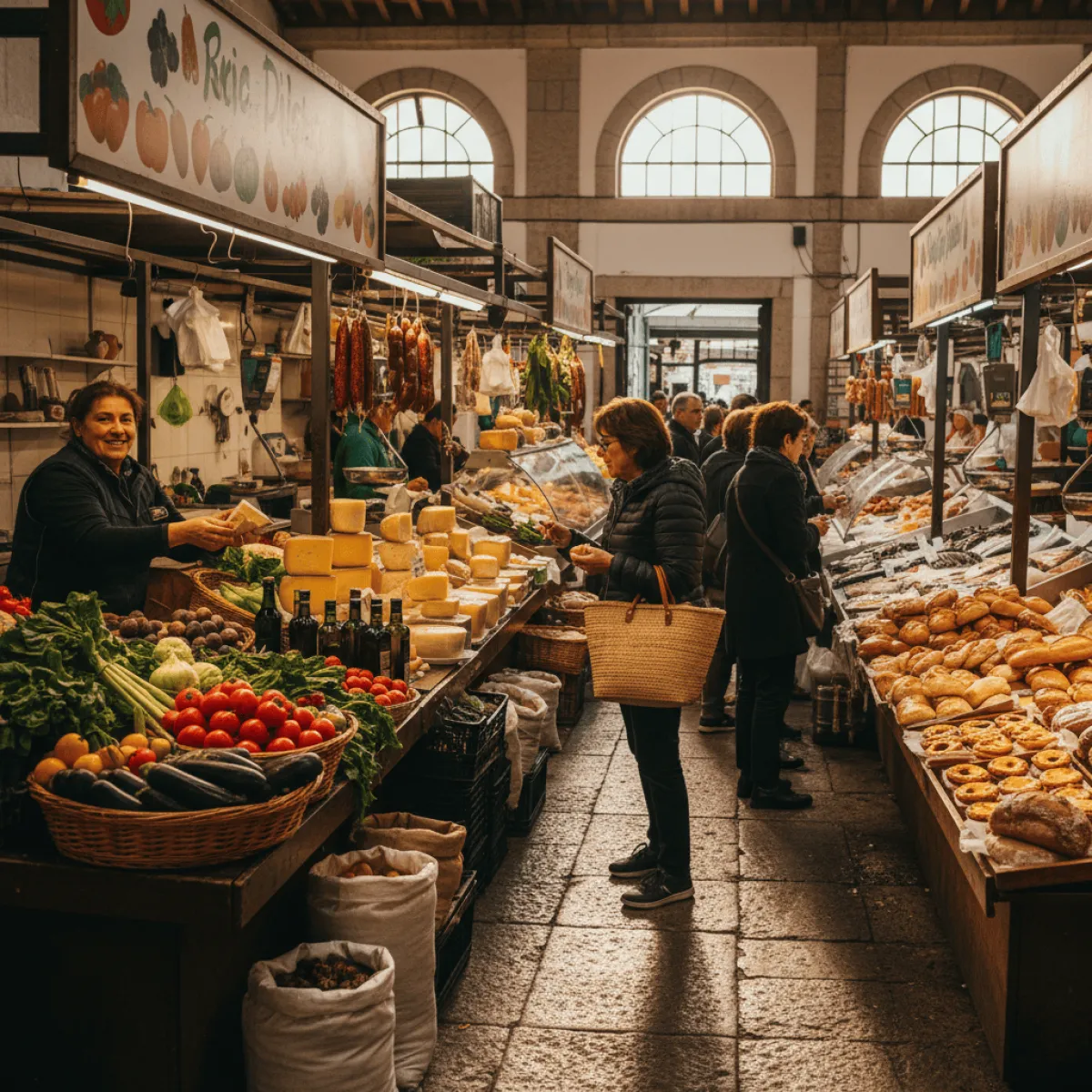
At half past seven in the morning, at the Mercado Municipal in Guimarães, the light is still cold and the stalls are being set up with the quiet choreography that only vendors who have been there for thirty years can pull off. A woman in a blue apron unloads crates of Trás-os-Montes cabbage with soil still clinging to the roots. A man with his cap pulled low arranges baskets of Fundão cherries at three euros a kilo. The smell of rosemary and fresh fish arrive at the same time, and for a second it is hard to decide where to look first.
This is not an Instagram market. It is a cooking market. And that is exactly why it is worth spending a whole morning here, with an empty cloth bag, a wallet with cash (many vendors still prefer it that way), and the patience to understand that anyone who arrives after ten has already missed the best of it.
The golden rule: arrive early, leave late
The Mercado Municipal de Guimarães opens at seven in the morning, and the rhythm shifts completely by the hour. Between seven and nine it belongs to professional cooks, to the restaurants that source there, and to the women who know exactly who has the best cured cod. After ten the tourists appear, and prices, while not officially raised, become less negotiable.
Saturday is the big day. Stalls double in number, producers come down from the villages of Penedo Gordo, Briteiros, Donim. There are cheeses cured in a garage in Sande, eucalyptus honey from Fafe, eggs from hens that still have proper names. If you can only choose one day, choose Saturday morning. But if you want to actually talk to the vendors, go on a Tuesday or Thursday, when there is time for a conversation between weighing potatoes.
What to buy without hesitation
Vinho verde by the litre
You do not buy bottled vinho verde at a market. You buy it by the litre, in five-litre demijohns, from the producers who fill them right there from a stainless steel tank. It costs between two and three euros a litre, and it is honest stuff: slightly cloudy, with natural fizz, sharp enough to wake your tongue up. Bring a clean empty bottle from home, or buy one at the hardware shop next door. If you want to understand where this comes from, it is worth pairing the visit with an afternoon of wine tasting at Casa de Sezim, where the same region presents itself with silver and stemware. The two experiences tell different stories about the same product.
Broa de milho
Good Minho corn bread is heavy. If you lift a loaf and it feels light, put it back. Look for broas with a dark, almost burnt base and a cracked top. A large loaf costs no more than four euros and serves two dinners. Eat it warm, cut thick, with salted butter and tinned sardines. This is the meal most tourist restaurants do not serve, and it is one of the best things you can eat in Portugal.
Cured mountain cheese
There is one specific stall, always the same one, where a family sells cured sheep cheeses that age in damp cellars near Cabeceiras de Basto. Ask to taste before you buy (it is normal, nobody will be annoyed). The oldest cheese, six months or more, has a salt crystallisation that cracks between your teeth. It costs around twenty-five euros a kilo, and half a wheel is more than enough for a trip.
Cured meats: alheira and salpicão
The certified alheira from Vinhais is here. Do not confuse it with the industrial alheiras from supermarkets, it is something else entirely. Take one to grill (in a pan, with a fried egg on top) and one salpicão to slice thin and eat with bread. About six to eight euros each, depending on size.
What to taste before deciding
There is a small stall, no visible name, where a woman cuts wafer-thin slices of home-cured presunto and offers them on a toothpick. Do not buy on the spot. Walk the whole market, taste in three different places, and only then decide. The best presunto is not necessarily the most expensive, but it is almost always the one that comes with an excuse: "this one is a bit lean this year, the cold did it".
Taste also the convent sweets that appear in homemade packaging: proper tortas de Guimarães, with egg yolk cream and almond, sold by women who made them in their own kitchens. They cost less than they do at a bakery in the historic centre, and they are, plainly, better. Two tortas for about five euros will see you through the next breakfast.
What to skip, guilt-free
There are always one or two vendors who turn up with "artisanal" products that have clearly come from somewhere far away: olives in jars with suspiciously professional labels, jams with fake handwritten tags, "olive oil" soaps that smell like synthetic perfume. These vendors exist in every market in the country, and the rule is simple: if the seller cannot tell you who made the product, walk past.
Avoid exotic fruit too. Mango, avocado, pineapple. This is not what you come to a market in Guimarães for. Focus on what is regional and seasonal: in May and June, strawberries from Lousã and cherries; in September, figs and grapes; in winter, Algarve citrus and Portuguese cabbage.
And, however pretty it looks, do not buy the decorative wicker basket for twenty euros displayed at the entrance. It is not traditional craft. It is mass-produced decoration for tourists. If you want real basketwork, ask a vendor where the basket lady goes on Saturday, and look for her the following weekend.
The midday ritual: stop to eat
By noon, with bags full, it is time to stop. The taverns around the market serve the kind of lunch that justifies the morning: bacalhau à minhota, rojões with chestnuts, papas de sarrabulho served in a bowl that is always too full. Count on nine to twelve euros for the dish of the day with soup, house wine, and coffee. Do not order from the tourist menu anywhere, even if they insist. Ask for the prato do dia, the one written in chalk on the board.
If you prefer to eat standing up, there is a stall inside the market making suckling pig sandwiches from Bairrada that justify the trip on their own. Four euros, with a glass of red wine for a euro fifty. Eat standing at the counter, with your shopping bag leaning against your leg.
Where to stay to do this properly
To make the most of the market you need to sleep nearby. Ideally somewhere you can walk back to with bags, no car required. The Hotel da Oliveira, right in the historic centre, is the obvious choice: five minutes on foot to the market, unpretentious rooms, and a solid breakfast that sets you up for the morning.
If you want something more ambitious, the Pousada Mosteiro de Guimarães, set inside the former monastery of Santa Marinha da Costa, sits on a hill overlooking the city. It is less practical for the market (you need to walk down and back up, or take a taxi), but it makes more sense if your trip includes several nights and you want to vary the experience. The Hotel de Guimarães is the middle option: modern, near the centre, without much architectural charm but functional.
At the end of the day, with tired feet and the shopping already put away, the rooftop bar at the Eurostars Santa Luzia offers the view that justifies a gin and tonic before dinner. It is not cheap, but the perspective across the city's red roofs makes up for it.
How to get there
From Lisbon, the Alfa Pendular train to Porto, followed by the urban service to Guimarães, takes about three and a half hours. From Porto, there are direct urban trains from São Bento, one hour ten minutes, around three euros forty. It is the cheapest and most civilised option. If you drive, there is underground parking near the market for three to five euros a day, but reserve early on Saturday morning: it fills up.
This visit fits well into longer itineraries through the Minho. If you are planning something more ambitious, see the best day trips from Porto, where Guimarães appears from different angles. For those who already know this city and want to keep exploring the north, it is worth reading our guide to Braga, twenty-five minutes by train, with a very different market: more baroque, more theatrical.
When to go, and when not to
The best month for the market is September. Summer is over, the tourists have thinned out, and the first figs arrive, along with grapes and late mountain cherries. May is also excellent: strawberries, broad beans, tender peas. January and February are tougher: less variety, but excellent prices on cured meats and new olive oil.
Avoid August if you can. The heat is heavy, the best vendors are on holiday, and the city fills with coach tours. Avoid the weeks around the Festas Gualterianas in August too, unless you like crowds. If you go in April, consider combining the trip with Holy Week in Braga, which is right next door and deserves a full day.
One last thing
Portuguese markets are changing. The older vendors are disappearing, and their children do not always continue the business. The Mercado Municipal de Guimarães is still a real market, but in ten years it might not be. Go now, with time. Buy too much. Take home things you do not quite know how to cook. Ask the women how to do it, they will explain.
And when you come back, bring bigger demijohns.