Guimarães from Above: Viewpoints and the Right Light
An honest guide to the best viewpoints in Guimarães, with the right hour for each one. Spoiler: Penha is a morning viewpoint, not a sunset one. The best place to watch the sun drop is the Eurostars rooftop.
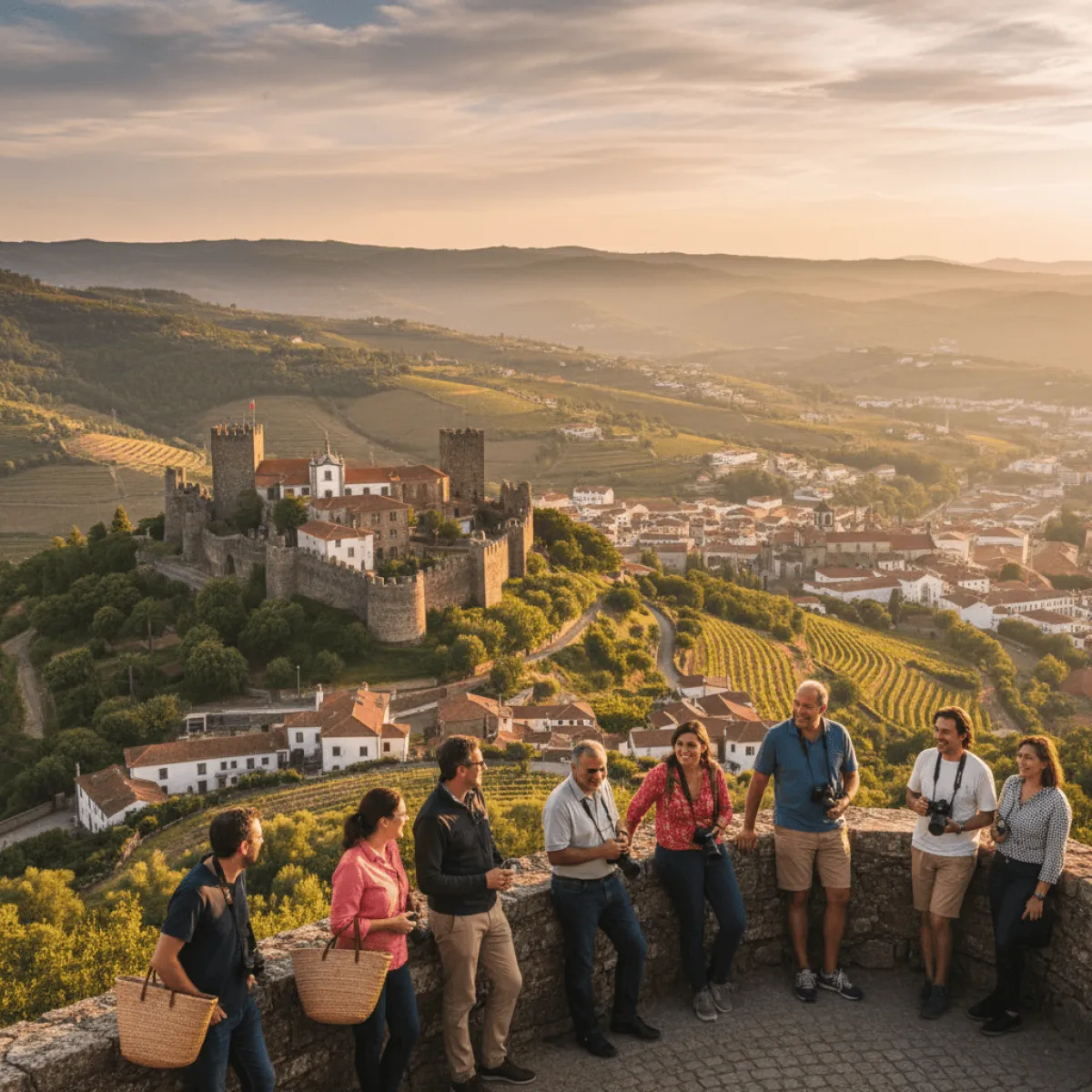
In Guimarães, light keeps a schedule. This isn't pretentious photographer talk, it's geography: the town sits in a low valley, with Monte da Penha to the east and the Castle on a spur to the north, which means the sun rises late over the historic centre's rooftops and disappears early behind the mountain. Whoever arrives at Largo da Oliveira at eight in the morning expecting golden light on granite will find blue shadow and grey. Whoever climbs to Penha at five in the afternoon in October will discover the sun is already on the other side and the valley has gone flat. Good photography in Guimarães is a matter of knowing where to be at what time, and this guide is exactly that: an honest list of viewpoints worth the trouble, with the right hour for each one.
First, a warning: if you're coming to Guimarães just for the obligatory photo of the "Aqui Nasceu Portugal" sign on the wall, you're wasting your time. That photo takes three minutes, has millions of Instagram versions, and the light on that wall is awful after ten in the morning because the sun hits it directly and burns everything out. Go, fine, but go early, and then climb higher.
Monte da Penha at sunrise (not sunset)
Everyone will tell you to climb Penha at sunset. Everyone is wrong. At sunset the sanctuary is backlit, the Guimarães valley sits in shadow, and what you photograph is a flat silhouette with an orange sky behind it. Pretty for fifteen seconds, forgettable forever.
Penha is a morning viewpoint. The cable car (Teleférico de Guimarães) opens around ten, but if you want the good light you need to arrive earlier, which means driving or taking a taxi up the road that winds through the pine forest. Between seven and nine in the morning, the sun comes in from the valley side, lights up the sanctuary granite, and the town below appears with long shadows that draw the rooftops. The official Penha viewpoints are signposted, but the best spot is to the left of the sanctuary, on a dirt path that passes the giant granite boulders. Bring a jacket even in June, because at 617 metres the breeze is fresh before the sun warms things up.
After the photo, have breakfast at the sanctuary café. It's not gastronomy, it's buttered toast and a milky coffee for about one euro fifty, but the terrace looks out over the mountain and at eight in the morning it's empty. By the time you come down, the cable car will be running, and the ride down (around five euros return, check locally) is a different photograph altogether: the town seen in motion, rooftops slowly approaching.
The Castle walls: arrive before nine
The Castle, Ducal Palace and Igreja de São Miguel complex is the postcard image of Guimarães, and rightly so. But most visitors only arrive after ten in the morning, when the buses drop off groups, and by then the light is harsh and the place is crowded.
The trick is simple: the castle interior opens around ten, but the outer esplanade, the wall you walk along to reach the Ducal Palace, is always open. Between seven and nine, in any season, it's one of the most photogenic spaces in Portugal and it's completely empty. The rising sun hits the stone of the east-facing towers, and there's a window of maybe fifteen minutes when the light is golden, low, and draws out every granite block (and yes, real granite here, the stone of the walls, not a metaphor).
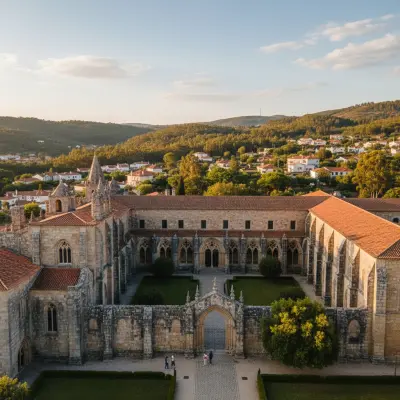
To get there early without hassle, the best bet is sleeping inside the historic centre. The Pousada Mosteiro de Guimarães sits in a former convent a few minutes' walk from the castle, which means you can leave at half past six in the morning without hunting for parking. The Hotel da Oliveira is literally on Largo da Oliveira, at the heart of the pedestrian zone, and it's the most practical base for anyone wanting to photograph the centre at blue hour. For something more conventional but equally central, the Hotel de Guimarães has the advantage of serving breakfast early.
Largo da Oliveira and the Padrão do Salado: blue hour
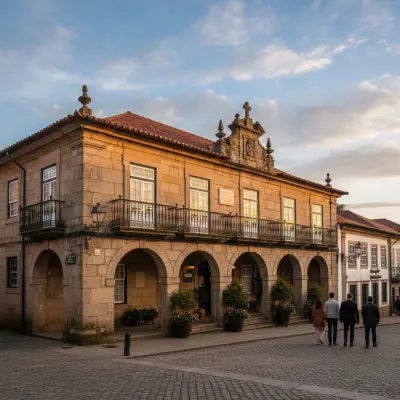
There's a moment, about forty minutes before sunrise, when the sky turns deep blue and the yellow streetlamps are still lit. It's called blue hour, and Largo da Oliveira is the place to catch it.
Position yourself under the Padrão do Salado, that small Gothic canopy in the centre of the square, and frame the Igreja de Nossa Senhora da Oliveira behind it. The contrast between the blue sky and the yellow lamps on the medieval facades is what makes this photograph different from every other one you'll take during the day. In June, this means being in the square around half past five in the morning. In December, around half past seven.
What follows, naturally, is breakfast. The cafés on the square open around eight, but Casa Costinhas (on the parallel street) opens earlier and serves a decent milky coffee. Don't be talked into the toasties and pastries: order a simple buttered toast and a fresh orange juice if available. You'll spend three euros and be awake for the rest of the morning.
Rua de Santa Maria at noon (yes, at noon)
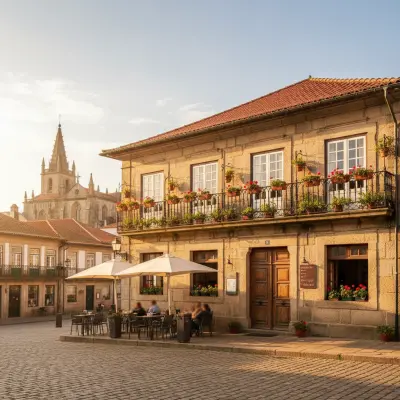
Here's an unpopular opinion: Rua de Santa Maria, the narrow street linking Largo da Oliveira to the castle, looks better at noon than at sunrise. The reason is geometry: the street is so narrow and the buildings so tall that in the morning it sits in complete shadow, and at noon the sun hits the cobblestones directly and creates a corridor of light with dark granite walls on either side. It's an effect that only works for about forty minutes a day, between half past eleven and one in the afternoon during summer months. It's worth planning your day around it.
Use the trip to have lunch. Cor de Tangerina, on the same street, is vegetarian and has an inner terrace in an old courtyard. For something more traditional, head to Bar dos Lavadouros, where a decent stone-grilled steak goes for under fifteen euros.
Rooftop at sunset: the Eurostars secret
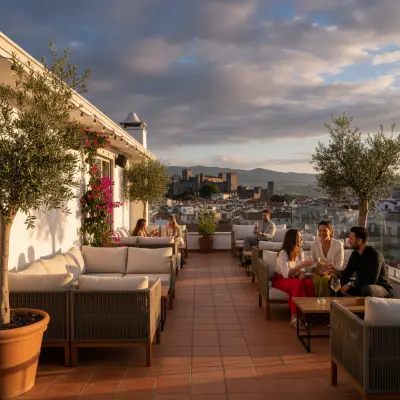
We've established that Penha at sunset is a trap. So where do you photograph an orange sky over Guimarães? The answer is the Rooftop Bar at the Eurostars Santa Luzia, and if I had to pick a single viewpoint in Guimarães for end of day, this would be it. The bar sits atop the hotel, slightly removed from the historic centre, which means you photograph the castle, the Ducal Palace and the rooftops of the centre with Penha as a backdrop. The sun sets on the opposite side, which lights up the historic complex rather than turning it into a silhouette.
Go an hour before sunset, order a gin and tonic (about eight euros, but you're paying for the view, not the mixology), and wait. The golden light will hit the castle granite between twenty and fifteen minutes before the sun disappears, and that's the photo worth the trip. Then stay for the evening blue hour, when the city lights come on and the sky still has colour.
Beyond the obvious: three viewpoints nobody mentions
Jardim do Carmo
A small terraced garden near Rua de Camões, almost no one knows about it. It has a side view of the historic centre that's different from anything you'll find in the guidebooks. Works best mid-afternoon, with soft winter light.
The Penha road, halfway up
If you drive up to Penha, stop halfway at one of the unsignposted viewpoints. There's one in particular, after the second tight bend, with a head-on view of Guimarães and the northern mountains. No tourists, no fences, and the advantage of being lower than Penha, which makes the town more legible in the photograph.
The Centro Cultural Vila Flor terraceLittle known, free, and with a modern perspective on the town. It sits opposite the historic centre, and works well in late afternoon when the light hits the white facades of the modern buildings.How to fit all this into a weekend
To photograph Guimarães properly you need two nights. Arrive Friday evening, have dinner in the centre, and sleep. Wake up Saturday at five for blue hour at Largo da Oliveira, photograph the castle walls at seven, climb Penha at eight, come down for lunch around one. Free afternoon to wander or visit Casa de Sezim, the Vinho Verde estate a few kilometres outside town, which is one of the best wine tasting experiences in Guimarães and works well as a pause between photo sessions. Sunset at the Rooftop at Eurostars, dinner, and Sunday morning to pick up whatever you missed.
If you're planning a longer trip through the North, Guimarães pairs naturally with Braga (half an hour by train) and Porto. For the former, our guide to Braga does the work. If you arrive via Porto, it's worth looking at the best day trips from Porto to see how to fit everything together. And if you happen to travel in March or April, consider adjusting your dates to catch Holy Week in Braga, which adds an extraordinary visual layer to the North.
Gear and practical details
You don't need an expensive camera to photograph Guimarães. A decent phone does more than the job, especially from the high viewpoints. But bring a small tripod if you want to do blue hour seriously, because long exposures only work with a stable camera. For Penha, skip the tripod: there's enough light.
Clothing: comfortable shoes are obvious, but bring an extra layer for the castle mornings. Even in July, half past five in the morning on the walls is cold. If you're climbing Penha on foot (just over an hour by trail), take water and sun protection for the way down.
Transport: the historic centre is entirely pedestrian, forget the car. If you stay at the central pousadas or hotels, you don't need it for anything. For Penha use the cable car (morning) or a taxi. For Casa de Sezim, around twenty euros one way by taxi.
A final note on Portuguese light
Guimarães isn't a city of dramatic light. It doesn't have Lisbon's Atlantic blue or the whitewashed glare of the Alentejo. It's a granite town, of warm brownish tones, and it works best with low, oblique light, at dawn or end of day. In winter months, oddly enough, the light is more beautiful: the low sun on the horizon lights the facades instead of burning them out. January and February are the worst times for comfort and the best for photography.
If you're only spending a day in Guimarães, choose between sunrise at the castle or sunset at the Rooftop. Don't try to do everything, you'll come away with mediocre photographs of everything. Pick one moment, do it well, and come back another time. Guimarães will still be here, and the light returns tomorrow.