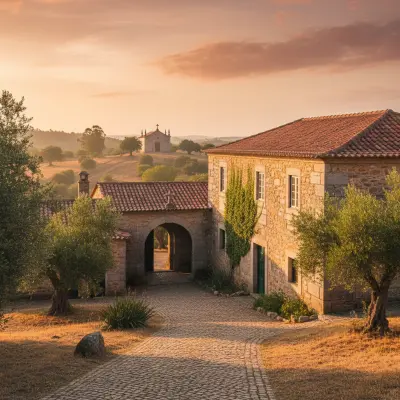
Gouveia: Where Locals Actually Eat in the Serra
In Gouveia, you eat kid goat with wild mushrooms at prices from another era, Serra da Estrela cheese by the spoonful, and mountain rodízios for 20 euros in Folgosinho. This is where the locals actually eat on the northern slope of Serra da Estrela.
Gouveia doesn't show up on listicles about Portugal's best restaurants. There are no starred chefs here, no tasting menus at 120 euros, no dishes served on schist slabs with foam drizzled over anything. And that's exactly why you eat so well.
We're on the northern slope of the Serra da Estrela, where altitude changes everything: the grass the cattle eat, the milk the ewes produce, the time it takes for meat to develop flavour. The food in Gouveia is not sophisticated. It's direct, generous, and honest. And if you want to understand what that means in practice, you need to sit where the locals sit.
Folgosinho: O Albertino and the mountain rodízio tradition
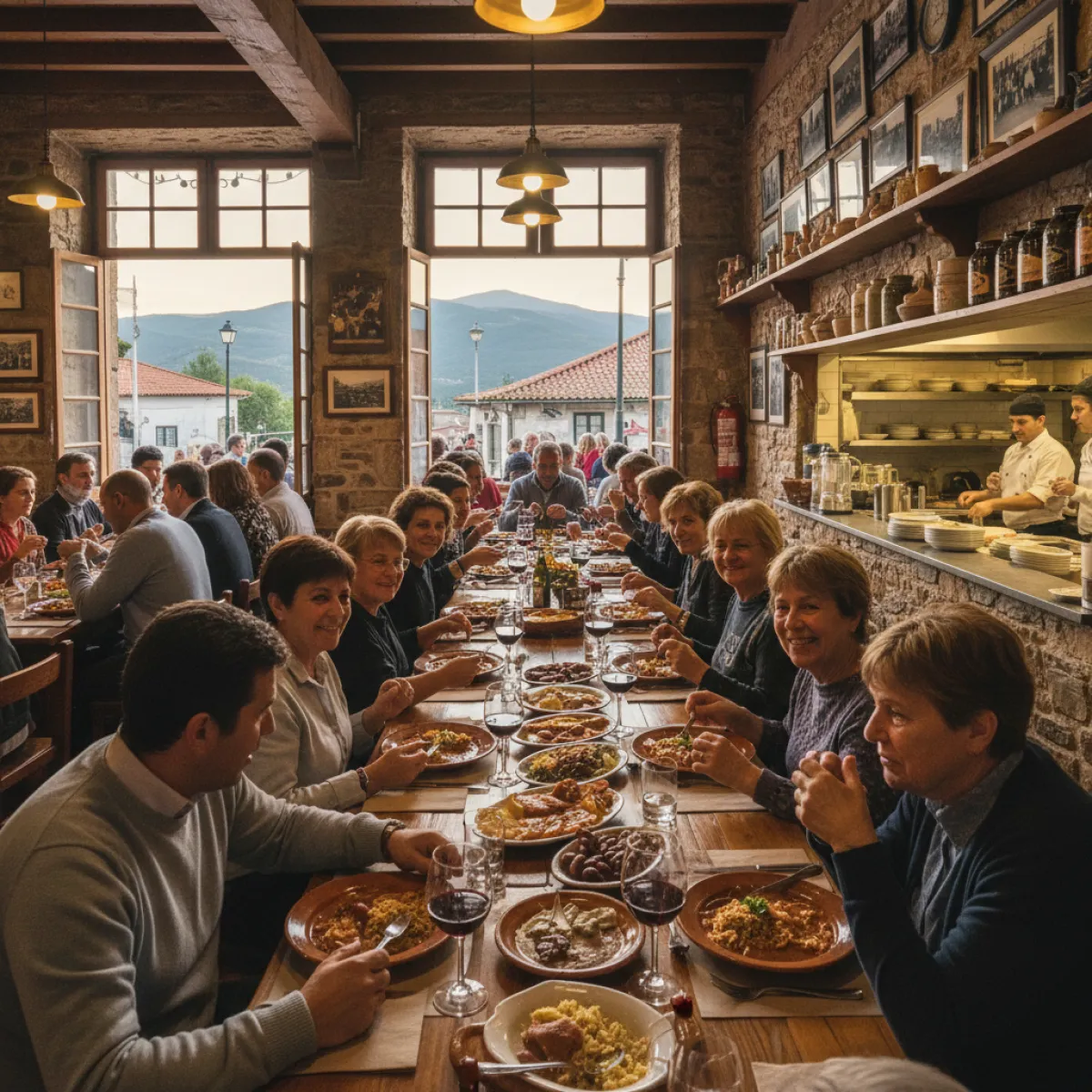
Let's start outside the town centre, because the best meal in the Gouveia municipality is about 15 minutes away by car, in the village of Folgosinho. O Albertino is the kind of place that defies urban logic: a former grocery store and tavern turned restaurant, where the menu doesn't exist in the conventional sense. You sit down, and the food starts coming.
The concept is simple: a rodízio of mountain food. Rabbit arroz de cabidela, wild boar feijoada, braised Folgosinho veal, oven-roasted lamb, suckling pig. The dishes arrive at the table in generous platters, and the goal is to try everything. The price is around 20 euros per person, wine included. Read that again: twenty euros for a three-hour meal with half a dozen dishes, homemade bread, and regional wine.
O Albertino is closed on Mondays. On Sundays and Tuesdays, it only serves lunch. The rest of the week, it's open for both lunch and dinner. The address is Adro de Viriato 8, Folgosinho. Book ahead, especially on weekends, because the place has a reputation and its 72 seats fill up fast.
Folgosinho, by the way, is a village worth exploring. Narrow streets, granite houses, folk verses painted on the walls, and wide views over the serra. They say it was the land of Viriathus, the Lusitanian warrior chief. If you can still move after lunch at O Albertino, take a walk through the village before heading back to Gouveia.
O Júlio: the kid goat worth driving for
Back in Gouveia, on Rua do Loureiro no. 11A, Restaurante O Júlio is a different proposition. It's quieter, more discreet, the kind of place you discover because someone who lives here told you about it. Senhor Júlio has been running this kitchen for over 40 years, and the cooking is regional without compromise.
What to order? Cabrito (kid goat). Full stop. The oven-roasted cabrito is the benchmark, but order the cabrito com míscaros (wild mushrooms from the serra) if they're in season. The feijoca à pastor da Serra da Estrela, a hearty stew of beans with cured meats, is also worth ordering. And there's a dish called "batatinhas do céu" (little potatoes from heaven) that, despite the corny name, is surprisingly good.
O Júlio has granite walls, understated table linens, and a visible kitchen with a wood-fired oven. The wine list is dominated by Dão wines, which is exactly as it should be in this part of the country. Closed on Tuesdays. Prices are reasonable; check locally as they may vary.
The cheese that rules the table
You can't talk about eating in Gouveia without talking about cheese. Queijo Serra da Estrela is the undisputed ruler of the table, and Gouveia sits within the DOP production zone. This cheese is made exclusively with raw milk from Bordaleira ewes, curdled with the flower of the wild cardoon (Cynara cardunculus), a thistle that grows spontaneously across the serra.
The result, when it's good, is a semi-soft cheese, creamy inside, with a washed rind and an intense flavour that balances salt, acidity, and clean fat. When it's very good, you cut the top off with a knife and eat it with a spoon, scooping it onto rye bread with a glass of Dão red.
You'll find Queijo Serra da Estrela on practically every restaurant menu in Gouveia, but to buy a whole one, look for local producers at markets or regional cheese shops. Quality varies enormously. A good aged Serra da Estrela isn't cheap (it can exceed 20 euros per wheel), but it's a completely different experience from what you'll find at a supermarket.
Cured meats and bread: the foundation
Before any main course, the mountain table almost always starts with enchidos: chouriça, farinheira, and morcela (blood sausage). They're eaten "dry", sliced and served with regional bread, while you wait for the rest. It's the local aperitif, and it works better than any elaborate starter.
The bread here is rye or corn. Dense, dark, with a thick crust. It's not pretty bread, it's serious bread. And it's the perfect accompaniment to everything that follows, whether that's kid goat, lamb, or simply cheese with marmelada (quince paste), the classic serra pairing.
Restaurante O Gouveia: tradition in the town centre
For those who prefer to stay in town, Restaurante O Gouveia is a solid option. Traditional Beira cooking with dishes like secretos, lagartos, and regional soups. Prices are accessible and the service is no-nonsense. It's not the kind of restaurant that inspires magazine features, but it's where a lot of Gouveia locals eat lunch regularly, and that tells you something.
Cova da Loba: for those ready to go further
If you're up for a slightly longer drive, Restaurante Cova da Loba in Linhares da Beira is worth the detour. Linhares is one of Portugal's 12 Historic Villages, and Cova da Loba offers a more creative reading of serra gastronomy: caramelised duck breast with cherries, grilled lamb with mushroom rice, almond pudding with olive oil and honey. It's not grandmother's cooking, it's mountain food with ambition. Prices are higher than at O Albertino or O Júlio, but the setting and quality justify it.
When to go and how to get there
Gouveia is roughly 3.5 hours from Lisbon and 2 hours from Porto, via motorway to Celorico da Beira and then national roads. A car is essential. Don't try to do this on public transport unless you have infinite patience and nowhere to be.
The best time to eat in the serra is autumn and winter. Míscaros (wild mushrooms) appear between October and December, the cured cheese hits its peak between January and March, and the cold makes a kid goat stew or a feijoca feel like exactly what your body needs. You eat well in summer too, but you lose some of the context.
If you're planning a trip to the Serra da Estrela, it's worth combining Gouveia with a climb to Monte do Calvário for the views, or extending the trip to Manteigas and the snow wells trail. If you're coming from the Covilhã side, consider doing the one-day Schist Villages road trip. In spring, you can also swing by Fundão to catch the cherry blossoms in the Gardunha hills.
The essentials
- Go to Folgosinho for lunch at O Albertino. Book ahead. Expect to spend 20 euros and leave unable to walk.
- In Gouveia town, O Júlio is the pick for cabrito. Order the cabrito com míscaros if they're in season.
- Buy Queijo Serra da Estrela from local producers, not the supermarket. Ask at restaurants who they'd recommend.
- Drink Dão. Red in winter, white in summer. It's the wine region that pairs with this food.
- Bring your appetite. Food in the serra is not served in tasting portions.