Fundão in June: Cherry Festival and the Red Route of Cova da Beira
Three days of festival in June, cherries at €5/kg straight from the grower, and a route of villages on the Gardunha slope that transforms in fifteen days. An honest guide to Fundão's Cherry Festival and the Cova da Beira, with none of the rural-Portugal clichés.
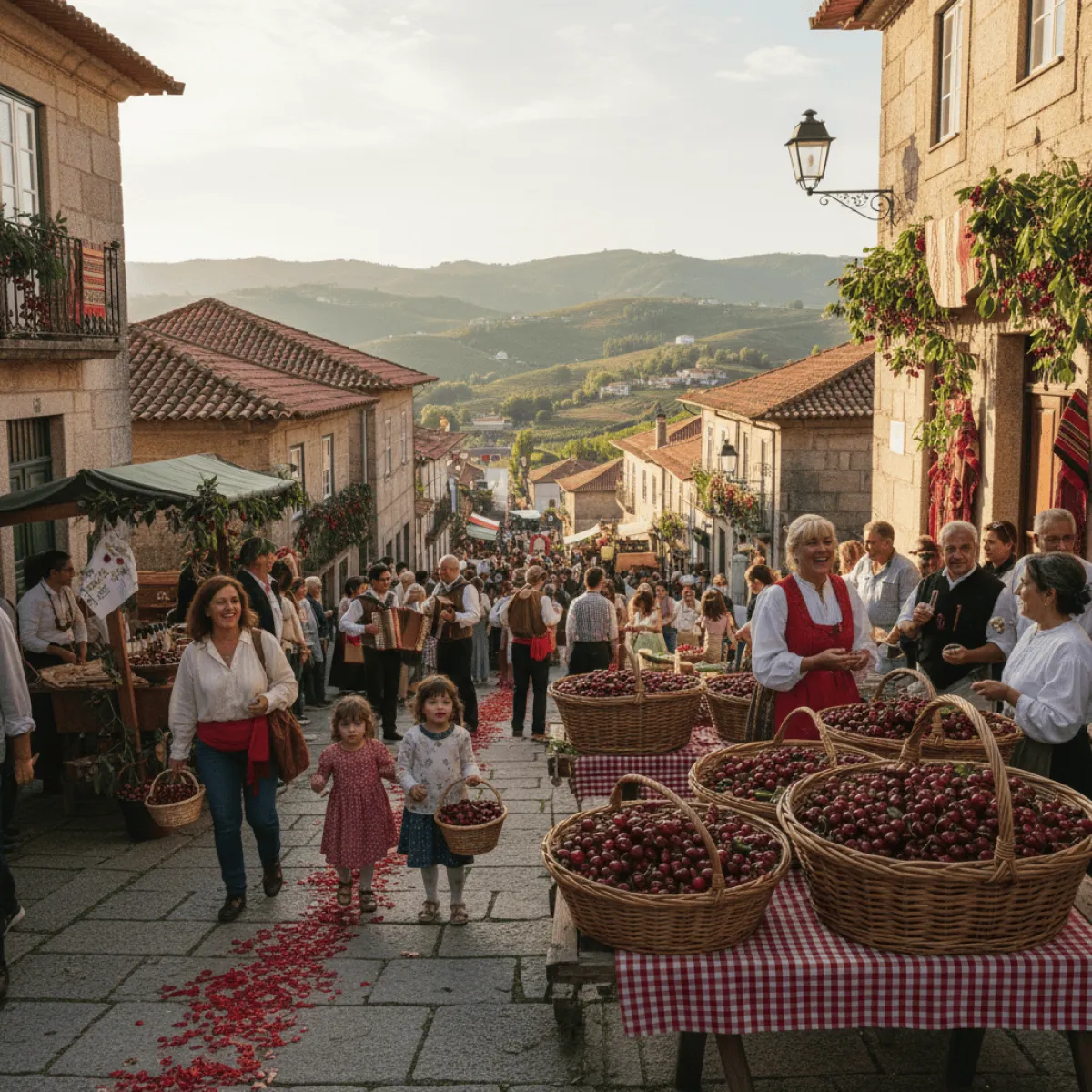
There is a very precise moment, usually between the second and third week of June, when the road climbing from Fundão up to Alcongosta stops being a road and becomes a corridor of baskets. Tractors idling on the shoulder, women in aprons grading lots by hand, kids with their mouths stained purple. If you have never driven this stretch in June, do it once in your life. Not for the cliché of a "rural experience", but for the much more prosaic pleasure of watching an entire local economy turning on a fruit that lasts three weeks.
Fundão's Festa da Cereja, the Cherry Festival, takes place every June, usually timed to the peak of harvest. The programme changes, the stages change, the sponsors change, but the structure is always the same: three days of concerts, agricultural fair, regional food tastings, a cherry competition, and a disproportionate amount of people walking around eating cherries directly from paper bags. Confirm the exact dates on the municipality website before booking, because they shift slightly each year depending on when the fruit ripens.
Why Fundão cherries actually matter
Let us be honest: cherries grow in many places. What makes these different is microclimate and geography. The Cova da Beira, the broad valley between the Serra da Estrela and the Serra da Gardunha, has a cold winter that hits the chill hours cherry trees need, and a warm spring that develops sugars without making the fruit watery. The local varieties are Saco, Burlat, Sweetheart, Lapins, and Summit. If you want to learn something on a single trip, ask any farmer at the fair to let you taste three side by side. The difference between a ripe Saco and a Burlat is the difference between two good wines.
These orchards are the result of a deliberate agricultural shift that began in the 1960s, when growers realised the Gardunha slopes were tailor-made for cherry trees. Today there are more than 1,500 hectares planted across the Cova da Beira, and "Cereja da Cova da Beira" carries a Protected Geographical Indication. It is one of those rare Portuguese cases where the bureaucratic stamp and the actual flavour line up.
The three days of the festival, decoded
Friday afternoon: arrive early
The main festival grounds usually set up around the old Convento area and the Praça Velha. Friday afternoon is the best window to walk the producer stalls without elbowing through crowds. Use it to talk to the farmers, ask which village they are from, how many hectares they work. You will learn more in half an hour than from any documentary. Buy your cherries to take home now, because by Sunday what is left tends to be the lesser lots, and the prices do not drop as much as you would expect: demand during the festival is national, not local.
Reference prices during the festival: a 1kg box of mid-grade cherries runs €4 to €7, premium calibres can hit €10/kg. Buy directly from the growers, not from the stalls with cute branding.
Saturday: the big day
Saturday is the day Fundão doubles in population. There are concerts at night, usually featuring Portuguese headliners, and dinner is a logistical problem if you have not booked. Practical suggestion: have lunch late, around 2:30 pm, when the restaurants are emptying out. For dinner, either reserve weeks ahead, eat at the festival grounds, or do what locals do and eat at 7 pm before the rush.
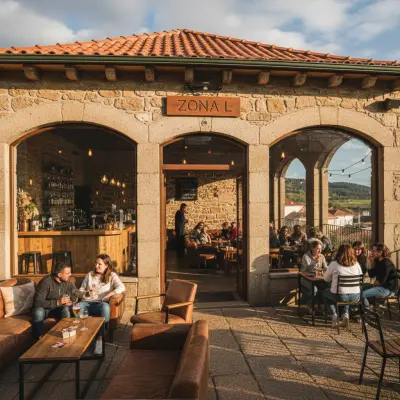
After the concerts, the night continues. Zona L Bar is, year after year, where the people who are not ready to go home at 2 am end up. It is not a sophisticated place: it is a small-town bar with music at a sensible volume, a clientele who all seem to know each other, and a certain tendency for conversations to run until daybreak. Exactly what you want on a festival night.
Sunday: a slow morning
Sunday morning is for a long breakfast, ideally at a pastry shop with a packed display case. After that, skip the festival and head out for the Rota das Cerejas, the Cherry Route.
The Cherry Route: the actual itinerary
The Rota das Cerejas is not a road with branded signposts. It is more a constellation of villages on the southern slope of the Gardunha where the good cherries concentrate: Alcongosta, Souto da Casa, Donas, Alcaide, Soalheira. Drive it with patience, stop wherever there are handwritten "vende-se cereja" boards. That is the system.
Alcongosta
This is the mother village of Fundão cherry country. Narrow streets, traces of the harvest everywhere through June, and a view over the Cova da Beira that justifies the climb on its own. In the centre, order coffee wherever you see local farmers seated. Alcongosta is also a village of wicker basket weavers, still, and now and then you catch one working in their doorway. It is not staged: it is what remains of a once-universal craft that has become residual.
Souto da Casa and Donas
Continue to Souto da Casa, where the landscape opens up. In Donas, lower down the slope, the rhythm is already that of the plain: flatter ground, larger orchards, more commercial operations. This is where you buy in volume.
Alcaide and Soalheira
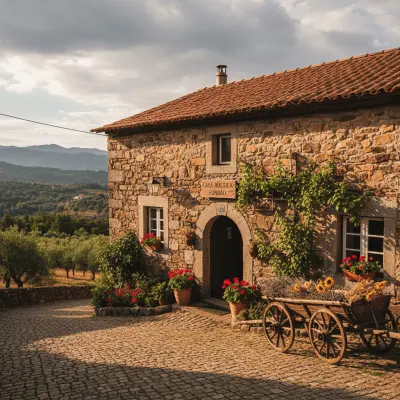
Alcaide is probably the prettiest village on the route. Low houses, exposed granite walls, an end-of-the-world atmosphere. Soalheira is also cheese country, and here is a detail few guides mention: a fresh goat cheese paired with ripe cherries on a hard Beira loaf is one of the simplest and best things you can eat anywhere in Portugal in June. Do it in late afternoon with a cold glass of regional white wine.
Where to sleep, no mystery
Book weeks in advance. During the festival in June, Fundão sells out. Three options in town do the job well:
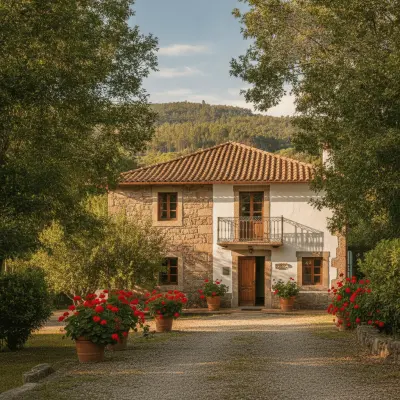
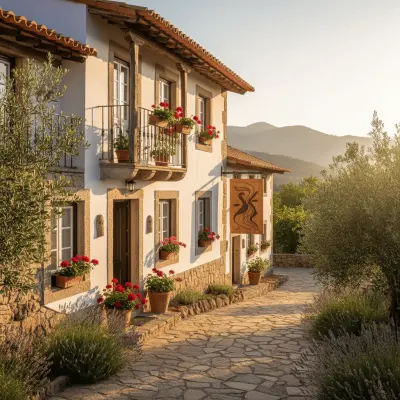
- Rustic House Fundão is your best pick for two or three people who want a place with character. Exposed stone, careful styling, a kitchen equipped enough that you can make breakfast with the cherries you bought at the fair.
- Gardunha Apartments are the safe bet for families or longer stays. Self-catering, more space, better value if you are travelling as three or four.
- Casas da Mina Hostel is the option for backpackers, solo travellers, or anyone prioritising price over privacy. Social atmosphere, ideal for meeting other travellers during festival weekend.
If everything is full (and in June it often is), expand your search to Covilhã, twenty minutes by car, or to villages around Fundão like Soalheira or Donas, where local guesthouses keep multiplying.
Eating in Fundão: what to order, what to skip
The food here is pure Beira: bucho, roasted kid goat, lamb, regional sausages, Serra cheese. Do not come looking for fine dining, come looking for slow-cooked pots. In any decent tasca, order cabrito (kid goat) when it is on the board. In any pastelaria, order a cherry pastry in season, and be suspicious of cherry pastries in midwinter. Obvious things, easy to forget while travelling.
During the festival there are food stalls on the grounds. The longest queues are usually the right ones. Not a scientific rule, just observation.
Beyond the cherry: the rest of Fundão
Fundão is one of those towns that wins precisely by not being pretentious. It has small but decent museums, a historic centre worth one slow morning, and brutal proximity to the mountains. If you stay longer than the weekend, it is worth doing the museum marathon we put together to pull Fundão out of its "cherries only" reputation: you start to see that this was a town with a network of Jewish merchants, a deep history of crypto-Judaism, a wool industry, and a layer of modernist architecture that most visitors walk past without noticing.
At day's end, if the weather plays along and you are feeling romantic (or pretending to be), I seriously recommend the sunset sailing trip on the Marateca Dam. It is not the picture most people associate with interior Portugal, which is exactly why it works. The reservoir is big, the silence is real, and the light at this time of year, when it hits the water around nine in the evening, is a colour that justifies the drive.
What if you come outside June?
Cherries are a June thing, full stop. But the Cova da Beira has another remarkable window: March and early April, when the trees blossom. The show is brief, seven to ten days, and you need to catch the right moment. We have a dedicated piece for that, with a map and precise tips to see the cherry blossoms without getting trapped in the tourist circuit.
In summer, after the cherries and before the wine harvest, Fundão is an excellent base for excursions: into the mountains, towards the schist villages reachable from Covilhã in a relaxed one-day road trip, or up to the higher reaches, the glacial valleys and snow wells around Manteigas, where the Serra da Estrela gets serious.
Getting there and getting around
From Lisbon: about 2h45 by car via the A23, Fundão exit. From Porto: about 2h30 via A25 and A23. By train: CP runs services to Fundão on the Beira Baixa line, but check timetables because frequencies are limited. For the Cherry Route, a car is non-negotiable. There is no useful public transport between the villages, and the schedules, where they exist, do not match any sensible day-trip itinerary.
Final advice
The Festa da Cereja do Fundão is exactly what it looks like: a well-run provincial festival, with music, people and fruit. It is not a sophisticated food event, it is not going to change your life. It is better than that: it is a rare chance, in 2026, to watch a Portuguese agricultural region celebrate itself without irony, without staging, without trying to be an Instagram destination. Go in June, buy cherries from the people who picked them, eat well, sleep badly, drink moderately. Come back in September for the chestnut, in March for the blossom, in January for the snow. The Cova da Beira works in every season, but June belongs to it, and it is hard to beat.