From Castelo Branco to Madeira's Levadas in July
In July, Castelo Branco turns into an oven and everyone dreams of running water and real shade. Madeira's levadas deliver, but only if you rise early, climb high and flee the scorched south. An honest guide, with the head torch you will need and the trails actually worth your time.
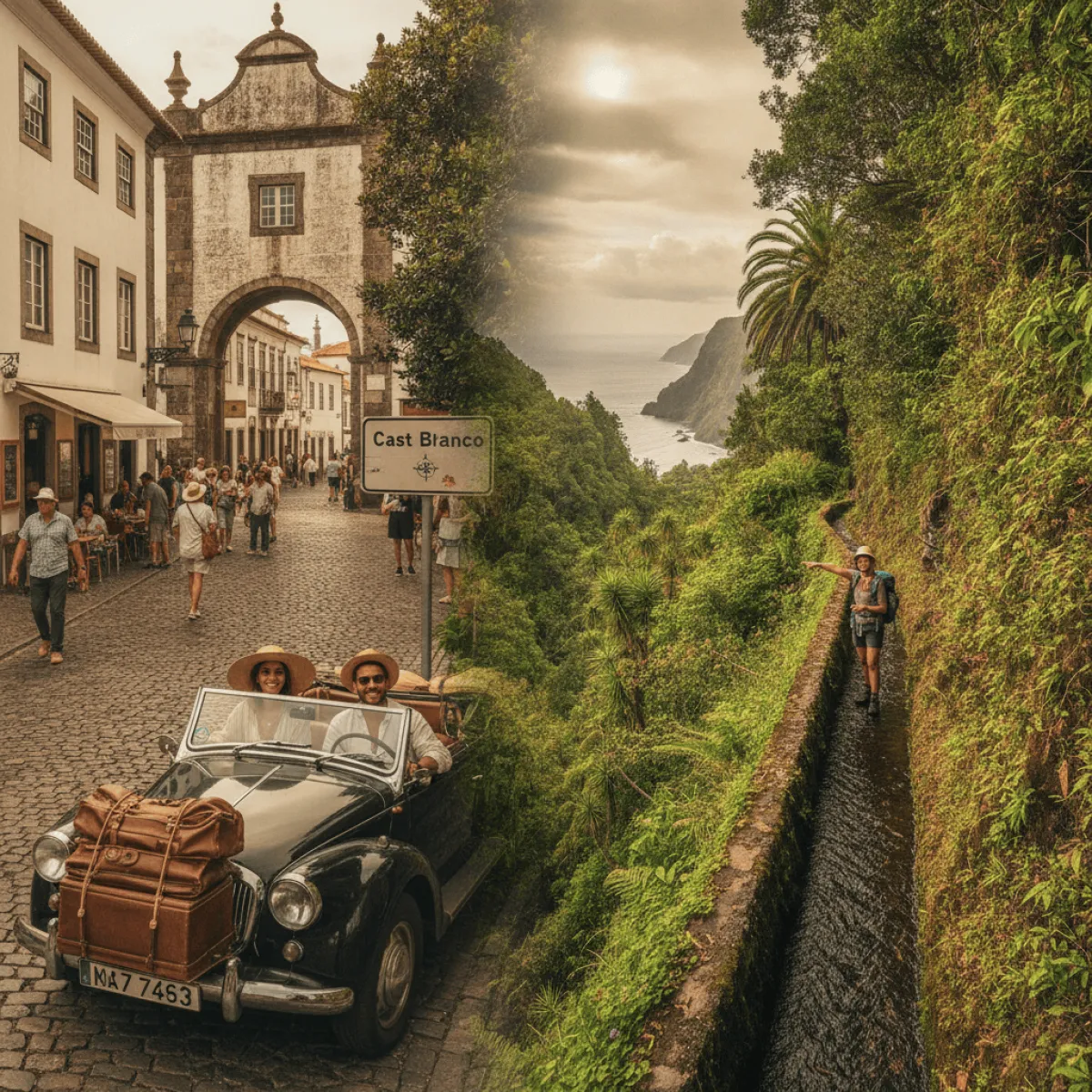
There is a moment, somewhere in mid-July, when Castelo Branco stops being a city and turns into an oven. The car thermometer reads 39 degrees at four in the afternoon, the asphalt on Avenida Nuno Álvares shimmers, and even the cicadas sound like they are complaining. That is the exact moment when everyone in the Beira Baixa has the same thought: there has to be a place with running water and real shade. There is. It sits 1,000 kilometres away in the middle of the Atlantic, and it is called Madeira.
This is not a romantic guide to the levadas. It is an honest guide to doing the thing everyone tells you to do (walking the levadas in summer) without falling into the obvious traps: heat where you least expect it, parking that does not exist, and trails so crowded they feel like the queue at the butcher on a Saturday morning. July in Madeira is high summer, and that changes everything.
Why July is the best and worst month at the same time
The best part: rain is unlikely, the levada tunnels are not flooded, and the high-altitude trails, which close in winter due to fog and rockfall, are usually open. The worst part: it is peak season, the car parks at the famous trailheads fill up before nine in the morning, and the dry south of the island can be every bit as hot as Castelo Branco. The difference is that in Madeira you climb 800 metres in twenty minutes of driving and suddenly you are at 18 degrees with mist dripping off the heather.
July's golden rule fits in one sentence: start early, climb high, and flee the dry coast. Do that and you will have one of the best walks of your life. Roll up at Rabaçal at noon in flip-flops and you will come back sunburnt and sorry.
Getting out of Castelo Branco (the boring but necessary part)
Castelo Branco has no airport, and there is no point pretending otherwise. The real logistics go like this: take the Beira Baixa railway line to Lisbon, or drive the A23 and A1 to Humberto Delgado airport, and fly from there to Funchal. The flight is about an hour and a half. In July, which is peak season, fares spike if you leave it late, so book weeks ahead and fly midweek if you can.
On the island, rent a car. No debate. Public transport reaches Funchal and the main towns, but the trailheads sit on mountain roads no bus runs often enough. A small car is plenty, but pick one with an engine that can handle the climbs, because Madeira's roads have never heard of the word "flat".
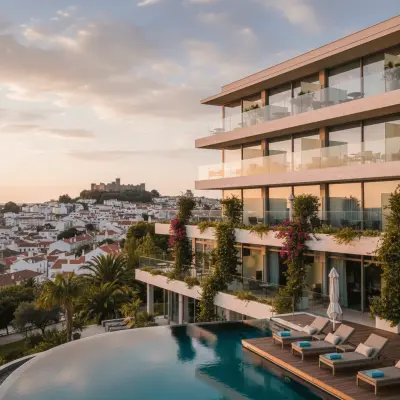
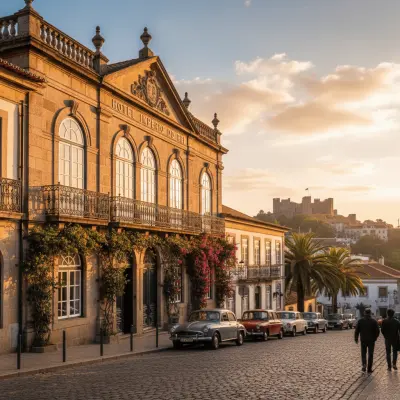
Before you leave, it is worth spending your last night in Castelo Branco near the station so you catch the morning train without stress. The Meliá Castelo Branco is the obvious choice if you want predictability and breakfast on schedule, while the Hotel Rainha D. Amélia, Arts & Leisure sits right by the old town, handy if you want to walk to dinner. And if the trip runs the other way, landing back from Madeira late at night, have your last cold beer on the terrace at Repvblica before the city starts to boil again the next day.
The levadas actually worth your time in July
There are hundreds of kilometres of levadas on the island. Do not try to do them all. Do these three properly, and pick a fourth as a reward if your legs hold up.
Levada das 25 Fontes and Levada do Risco (Rabaçal): the star, with an asterisk
This is the walk on every postcard: the 25 Fontes waterfall spilling into a green pool deep in the Laurissilva forest. It is genuinely beautiful. It is also the busiest trail on the island. The full loop from the Rabaçal car park runs about 11 kilometres round trip, with an opening descent you feel on the way back, all uphill.
The practical detail most people miss: the access road down to Rabaçal is closed to private cars in high season, and you make the descent on a shuttle minibus from the car park at the top. It is not expensive, but check the timetable and price locally because they change. The alternative is walking down the road, which adds a good hour each way under full sun. For July, get to the car park before half past eight. Seriously. By one in the afternoon there is nowhere to park and the trail looks like a motorway of people.
Pair the 25 Fontes with the short Levada do Risco, which starts from the same point and reaches another waterfall in under half an hour. It is the best effort-to-reward ratio on the whole island.
Levada do Caldeirão Verde (PR9): bring a head torch, no excuses
If you only do one serious levada, make it this one. It leaves from the Queimadas forest house near Santana, on the north coast, and follows a ledge carved into the rock through primary forest. It is about 13 kilometres round trip with almost no climbing, which is deceptive: the distance adds up and there are several tunnels bored into the mountain, some tens of metres long, pitch black and constantly dripping.
You will not get through without a head torch. Your phone is not enough, because you will need both hands to steady yourself along the narrow edge. Wear footwear you do not mind soaking and pack a windbreaker, because the tunnels are cold even in July. At the end, the reward is a waterfall of nearly 100 metres dropping into an amphitheatre of green stone. The north of Madeira is wetter and cooler than the south, which makes this exactly the levada you want on a hot day.
Levada do Rei (PR18): the alternative for crowd-avoiders
When the 25 Fontes is unbearable, this is the smart escape. It starts at the São Jorge water treatment station and plunges into one of the densest, best-preserved stretches of Laurissilva on the island. It is about 10 kilometres round trip, with a single short tunnel near the end and, at the finish, the source of the Ribeiro Bonito. It is one of the shadiest, coolest levadas, and in July it usually has a fraction of the crowds at Rabaçal. If you value silence and the song of chaffinches over the perfect shot for your feed, this is where you should be.
What to skip in July: Ponta de São Lourenço
An honest warning. Ponta de São Lourenço, the eastern tip of the island, is spectacular, with red and ochre cliffs falling into the sea. But it is not a levada and it has not a single tree. It is total exposure to sun and wind. Walking it at noon in July is a recipe for heatstroke. If you really want it, do it at sunrise or late afternoon, with two litres of water and sunscreen. Otherwise, save it for spring.
Honest rules for surviving (and enjoying) the levadas in July
- Start at dawn. No exaggeration. Between the heat and the parking, the first hour of the day decides the quality of the whole walk.
- Too much water, not too little. At least a litre and a half per person, even on the cool levadas. Forest humidity tricks you and you dehydrate anyway.
- Closed shoes with good grip. Levada paths are narrow, uneven and often wet. Flip-flops are an invitation to an accident.
- Head torch for any levada with tunnels. Caldeirão Verde, Caldeirão do Inferno, Furado: none of them work with a phone.
- Dress in layers. You can leave the hotel at 25 degrees and reach the trailhead at 14 degrees in fog. A thin windbreaker saves the day.
- Respect the drop. Many levadas have the channel on one side and a sheer fall on the other, sometimes with no railing. This is no place for distraction.
Where to base yourself, without overcomplicating it
To do the northern levadas (Caldeirão Verde, Levada do Rei), it makes sense to sleep a night or two in Santana or São Vicente rather than crossing the island at dawn every day. For Rabaçal and the southwest, Funchal or Calheta work well. Do not lock in accommodation without checking the real distance to the trailheads, because in Madeira 30 kilometres can mean an hour of switchbacks.
And if the heat wins? A plan B in the interior
Let us be realistic: not everyone will pull off the flight-and-rental-car logistics in the middle of July. If Madeira has to wait, the Beira Baixa and the Centre have water-fed trails that hold up in summer, as long as you walk early. We have written about this before: our honest guide to walks around Caldas da Rainha applies the same philosophy of "start early, carry water, ignore the hype".
And if what you want is to escape the sun without leaving the city, Castelo Branco has a card few tourists know about: embroidery. A morning shut inside a workshop with silk and linen is a surprisingly good way to spend the hottest hours, and the story behind the symbols is worth your attention. Our Castelo Branco silk embroidery workshop proves that not all of summer happens outdoors, and that sometimes the best decision is to let the sun scorch the streets while you learn something that lasts.
The verdict
Madeira's levadas in July deliver on the promise, but only for those who play by the season's rules: rise early, climb high, and seek the humid north instead of the scorched south. Do the 25 Fontes for the postcard, the Caldeirão Verde for the adventure, and the Levada do Rei for the silence. Bring a torch, bring water, and bring the humility to accept that the easy October trail is a different trail in July. Then, when you get back to Castelo Branco and the thermometer reads 39 again, you will understand why every kilometre of train, every flight and every switchback was worth it.