Castelo Branco Silk Embroidery: A Workshop Worth Your Time
At Castelo Branco's Embroidery Interpretation Centre, skilled artisans work daily on genuine silk pieces using roughly 50 different stitches. The visit covers the full journey from linen cultivation to finished embroidery, with periodic hands-on workshops available. Entry is just €1.50.
Castelo Branco embroidery uses roughly 50 different stitches, natural silk thread, and the kind of patience most of us lost somewhere around 2015. A single bedspread can take months to complete. But at the Centro de Interpretação do Bordado de Castelo Branco, you can understand why anyone would bother, and that understanding takes about an hour.
What the Embroidery Interpretation Centre actually is
Housed in a 16th-century building on Praça de Camões that once served as the district courthouse and later the municipal library, the centre operates as a museum, shop, and working embroidery school. It is run by the Castelo Branco municipality and is home to some of the region's most skilled embroiderers, who work on-site daily creating certified, genuine pieces.
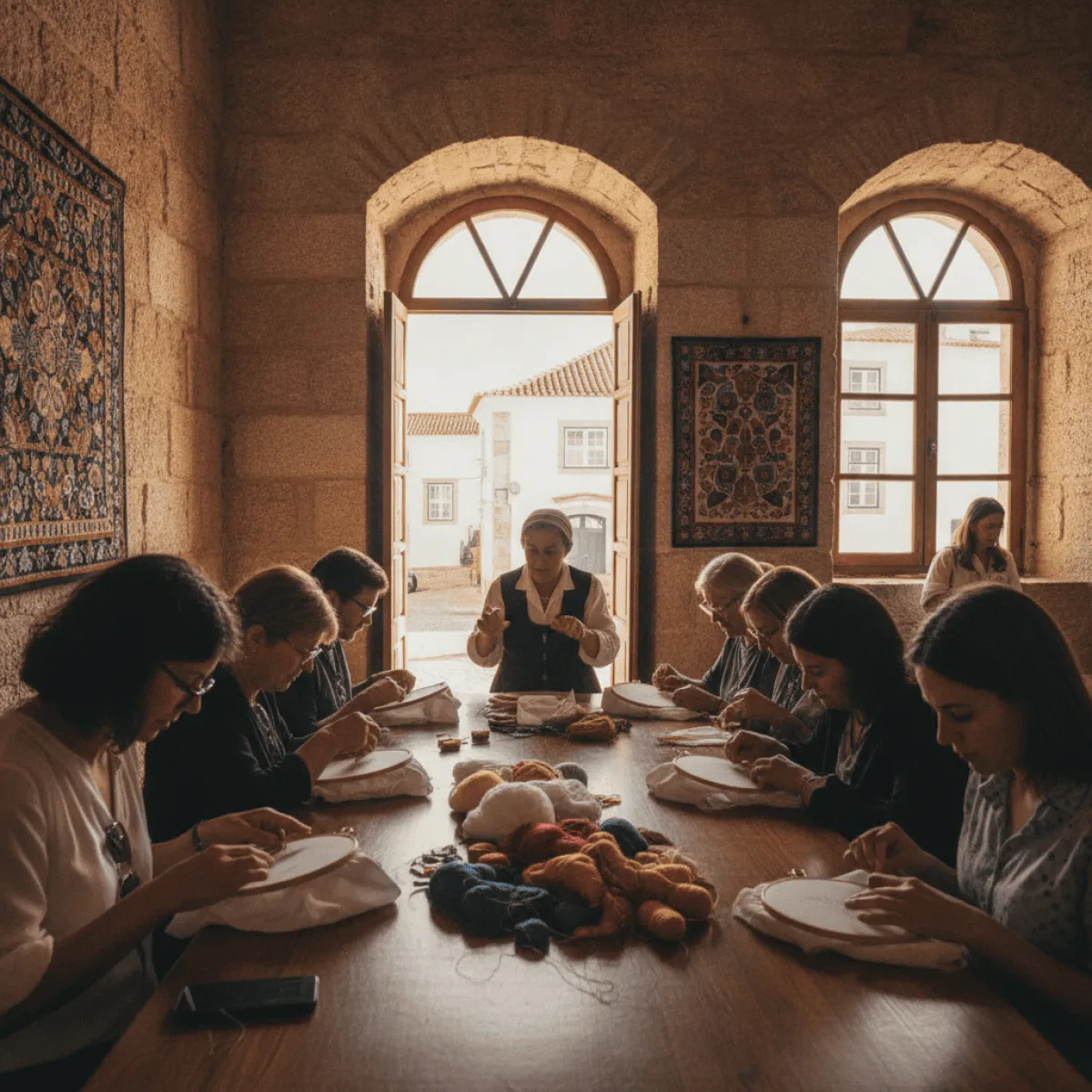
The visit takes you through the full journey of Castelo Branco embroidery: from linen cultivation to weaving, through silkworm rearing and raw material extraction. There are multimedia displays, historical and contemporary pieces, and a screening room. But the part worth your time is the workshop floor itself, where you can watch the embroiderers at work. This is not a performance. These are artisans doing their actual job. If you ask questions (and you should), they will walk you through each stitch with the kind of patience that mirrors their craft.
The exhibition route
The centre is organized around an exhibition path that begins with the history of linen and silk in the Beira Baixa region. You will pass through rooms displaying mantles, towels, quilts, and dresses decorated with the naturalist floral motifs that define this embroidery tradition. The technique carries Chinese and Indian influences, which surprises anyone expecting a purely European craft.
The second section focuses on technique: the stitches, the materials, the visual grammar. This is where the complexity hits. The Castelo Branco stitch, the satin stitch, the feather stitch: each has a specific function and visual effect. When you stand in front of a hand-embroidered bedspread representing hundreds of hours of work, your relationship with the price tag changes entirely.
The school-workshop is the final stop, and the best one. The embroiderers work on horizontal frames, silk passing through their fingers with a fluidity that looks deceptively simple. Ask them to show you the basic Castelo Branco stitch and you will quickly understand that mastering even the fundamentals would take weeks of practice.
Hands-on workshops
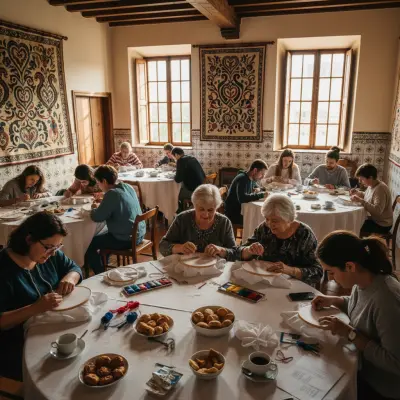
The centre periodically organizes practical workshops where visitors can embroider a traditional motif using the three basic stitches of Castelo Branco embroidery. No previous experience is needed and materials are included. For dates and availability, confirm directly with the centre, as workshops depend on a minimum number of participants and are scheduled based on demand.
For a deeper dive, embroiderer Catarina Tudella of the brand Seda & Companhia teaches regular workshops through Retrosaria Rosa Pomar. These 4-hour sessions cost from €65 and include all materials plus a handbook on the embroidery tradition. Note: these workshops typically take place in Lisbon rather than Castelo Branco, but they are taught by a specialist in the Albicastrense technique.
Practical information
- Address: Praça de Camões, 6000-116 Castelo Branco
- Hours: Tuesday to Sunday, 10am to 1pm and 2pm to 6pm. Closed Mondays
- Entry: €1.50 (free for students). Free admission on the first Sunday of each month, 10am to 1pm
- Phone: +351 272 323 402 / +351 926 043 546
- Email: oficinaescola.bordado.cb@gmail.com
- Website: bordado.cm-castelobranco.pt
Getting there
From Lisbon, it is roughly 2 hours 15 minutes via the A1 and A23 motorways. By bus, Rede Expressos operates line 850 with a direct connection. The centre is a short walk from Praça do Município, right in the historic core.
What to combine it with
The Interpretation Centre is a short walk from the Episcopal Gardens, the other essential stop in the historic centre. Visit both on the same day: the garden first thing in the morning when the light is better and the crowds thinner, then the embroidery centre after lunch.
Speaking of lunch: Castelo Branco's convent-influenced cuisine is reason enough to spend a full day here. The tigeladas (a baked egg custard) and the region's DOP sheep cheese are not optional. If you are staying for dinner, try Repvblica for something different.
Castelo Branco was designated a UNESCO Creative City of Crafts and Folk Art in 2023, largely on the strength of this embroidery tradition. The city takes that designation seriously, and it shows. This is not a museum where you stare at glass cases. It is a place where the tradition is alive, where you can hear silk passing through linen, and where you understand that some things simply cannot be done by machines.
If you have extra time, check our spring guide to Castelo Branco's heritage and traditions for planning a fuller visit to the region.