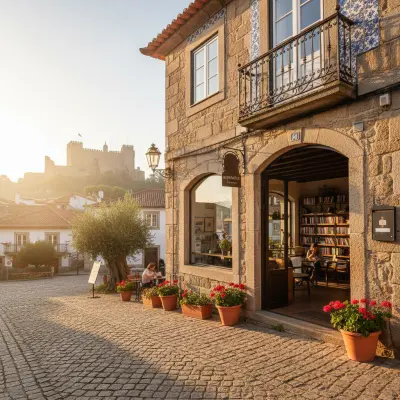
Castelo Branco: Episcopal Gardens and Silk Embroidery in One Day
The Episcopal Palace Garden hides a diplomatic insult in stone: the statues of Spanish kings are deliberately smaller than the Portuguese ones. It's that kind of detail that makes Castelo Branco a mandatory stop between Lisbon and Serra da Estrela, with silk embroidery recognized as Intangible Cultural Heritage and slow-cooked kid goat worth the detour.
Castelo Branco has a marketing problem. It sits halfway between Lisbon and Serra da Estrela, and most travelers fly past on the A23 without slowing down. That's a mistake. The city holds one of Portugal's most extraordinary baroque gardens and a silk embroidery tradition recently recognized as Intangible Cultural Heritage. In one well-planned day, you can see both, eat well, and still have time for a late afternoon drink.
The Episcopal Palace Garden: Start Early
Go early. At nine in the morning, when the Jardim do Paço Episcopal opens, the light cuts between the boxwood hedges and the statues of kings cast long shadows across the flowerbeds. It's the best time for photographs and for having the space nearly to yourself, especially outside August.
The garden was created in the 18th century by Bishop João de Mendonça and functions, in practice, as an open-air catechism. The statues of the Apostles, Virtues, and Kings of Portugal are arranged across terraces descending the hillside with precise theological logic. Notice the statues of the Spanish kings from the Philippine period: they're deliberately smaller than those of the Portuguese monarchs. Three centuries later, the resentment is still readable in stone.
The Stairway of the Kings is the most photographed element, but don't stop there. The tiled ponds, geometrically trimmed boxwood beds, and baroque fountains deserve at least an hour of attention. There are shaded benches where you can simply sit.
Admission is €3 for adults and €1.50 for over-65s. On the first Sunday of each month, entry is free until 1pm. Summer hours are 9am to 7pm; in winter, it closes at 5pm.
From the Garden to the Embroidery Interpretation Centre
Leaving the garden, walk downhill through the old town. It's a ten-minute stroll to Praça de Camões, where the Centro de Interpretação do Bordado is housed. The route takes you through narrow streets with granite houses and painted facades, and it's as interesting as the destination.
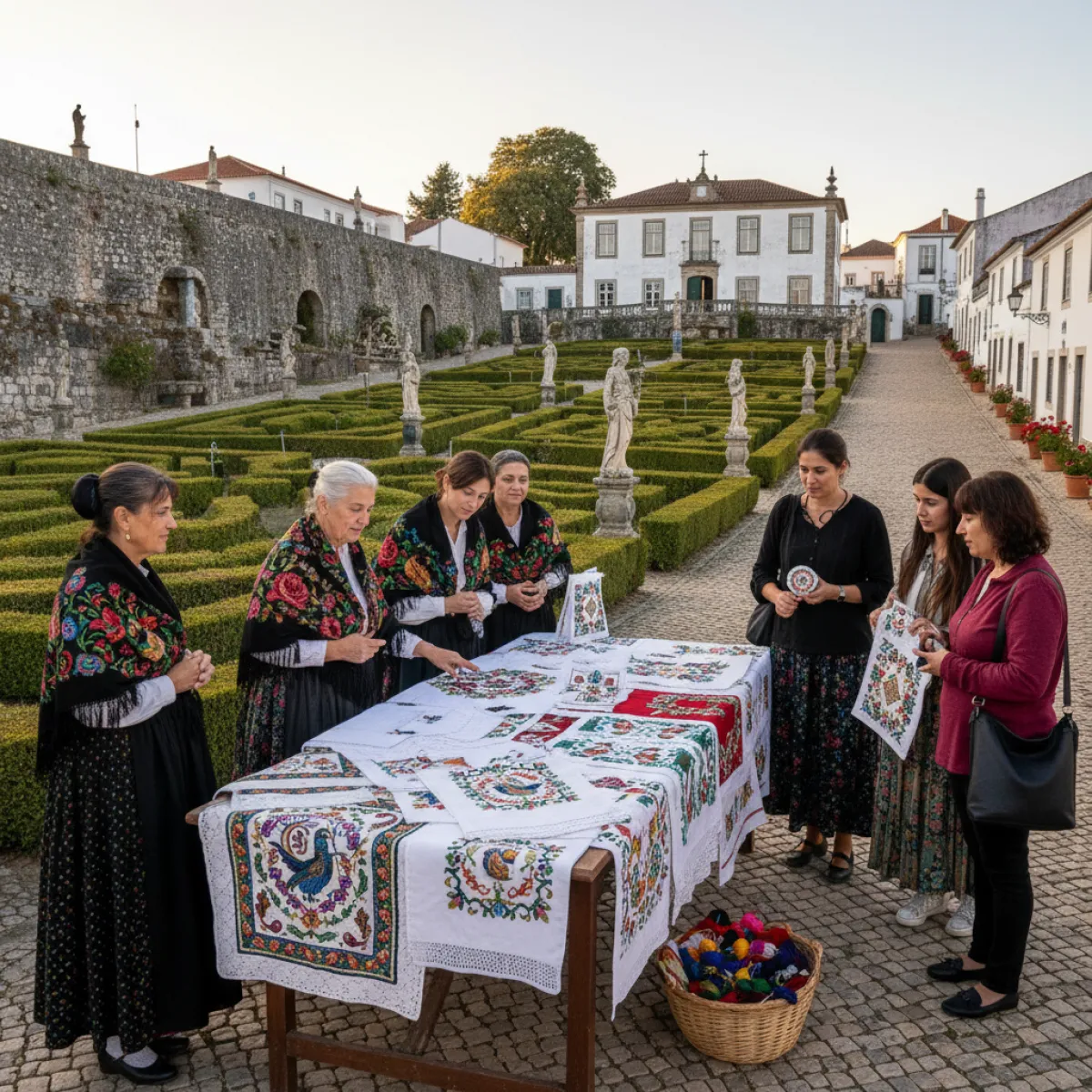
Castelo Branco's embroidery isn't a mere artisanal curiosity. It's meticulous work in silk on linen, with motifs encoding themes of love, fertility, and nature. Each bedspread told a story, and local women embroidered their own trousseau as proof of patience and skill. A complete bedspread can take years to finish.
The Interpretation Centre occupies the former Casa dos Magistrados, an 18th-century building tastefully restored. Beyond the museum space, there's a Workshop-School where you can watch embroiderers working in real time. This isn't a tourist performance: these are real artisans keeping alive a tradition that nearly disappeared. If you want to understand the symbolism behind Castelo Branco's silk embroidery, this visit is worth your time.
The Centre is open Tuesday to Sunday, 10am to 1pm and 2pm to 6pm. Closed Mondays. Admission is €3, with discounts for students and seniors at €1.50.
The Shop
The Centre's shop sells authentic pieces, from small bookmarks to full bedspreads. Prices reflect the labour involved: a small piece starts around €20-30, while a bedspread can cost thousands. If you want a genuine Castelo Branco souvenir, this is the place. Forget the industrial imitations you'll find elsewhere.
The Silk Museum: The Perfect Complement
A few minutes from the Interpretation Centre, the Museu da Seda explains where the raw material that makes the embroidery possible comes from. Castelo Branco once had a significant silk industry, and the museum traces the silkworm's life cycle, the history of the Silk Road, and local production techniques. It's small but well done, and it completes the embroidery narrative in a way that makes sense.
Lunch: Where to Eat in the Historic Centre
For lunch, Restaurante Praça Velha is the most interesting choice. It occupies a former Order of Christ granary in the medieval quarter, restored in the 1990s, and serves Beira Baixa recipes drawn from the region's rural parishes. Order the cabrito estonado if it's available. It's the signature dish of the area: kid goat cooked slowly until the meat falls off the bone, with an intensity no Lisbon restaurant can replicate.
Tigeladas are the mandatory dessert. This conventual sweet, made with eggs, sugar, and cinnamon, baked in small clay bowls, is simple and completely addictive. If Praça Velha is full, try Encosta da Muralha, near the castle, known for fresh bread and kid goat.
For cheese, don't skip the Queijo de Castelo Branco, a PDO cheese. Aged, intense, slightly sharp. Order it as a starter with a drizzle of local olive oil.
The Afternoon: Castle and Viewpoints
After lunch, climb up to what remains of the Templar castle. The walls are partially in ruins, but the viewpoint justifies the walk. From there you can see the Alentejo plains stretching south and, on clear days, the Serra da Gardunha to the east. It's a good place to digest the kid goat.
On the way down, pass by Largo da Sé, where the old Cathedral of Castelo Branco (now the Church of São Miguel) is worth a stop. The interior is austere, as befits a border town that spent centuries between attacks and rebuilding.
Late Afternoon: A Coffee or a Drink
If you're looking for a spot with personality to close out the day, Repvblica is the answer. It's the kind of place that gives a city character: more than a bar, it's a gathering point with a life of its own.
Getting There and Logistics
Castelo Branco is roughly two and a half hours from Lisbon via the A23 and ninety minutes from Coimbra. CP trains run from Lisbon (Entrecampos) with reasonably frequent connections, though the journey takes about three hours.
A full day is enough to see the Garden, the Interpretation Centre, the Silk Museum, and eat well. If you prefer a slower pace, consider staying overnight. The city has varied accommodation, from the Meliã (with panoramic views) to more modest options in the centre.
Suggested Itinerary
- 9am: Jardim do Paço Episcopal (1h-1h30)
- 10:30am: Walk through the historic centre to Praça de Camões
- 11am: Embroidery Interpretation Centre (45min-1h)
- 12pm: Silk Museum (30-45min)
- 1pm: Lunch at Praça Velha or Encosta da Muralha
- 3pm: Templar Castle and viewpoint
- 4pm: Largo da Sé and medieval streets
- 5pm: Coffee or drinks at Repvblica
Castelo Branco in the Context of Central Portugal
If you're planning a longer trip through Portugal's interior, Castelo Branco fits perfectly into a week-long itinerary through the heart of the country. The city works as a stopping point between Serra da Estrela and the Alentejo, and pairs well with a visit to Coimbra, where the street art murals in the Alta offer an interesting contrast to Castelo Branco's baroque character.
If you're traveling in spring, the region takes on another dimension. The fields around Castelo Branco fill with wildflowers, and the Jardim do Paço becomes particularly photogenic. For those who enjoy walking, it's worth exploring spring walking routes further north as a complement to your visit.
Castelo Branco doesn't need two days. But it deserves a full one, taken slowly and on an empty stomach. Most travelers regret not having stopped. Don't be one of them.