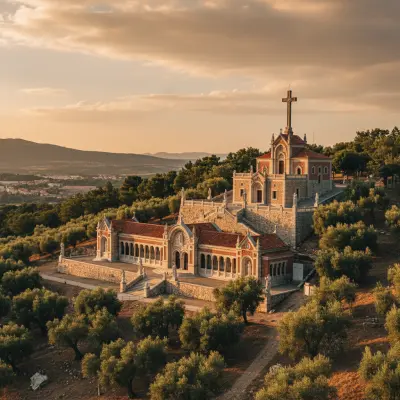
Fátima in May: A Practical Pilgrim's Guide
The Candlelight Procession on May 12 draws thousands of pilgrims into a sea of light across the Sanctuary's Prayer Esplanade. This practical guide covers schedules, how to get there, where to eat, and what to explore in Fátima beyond the obvious.
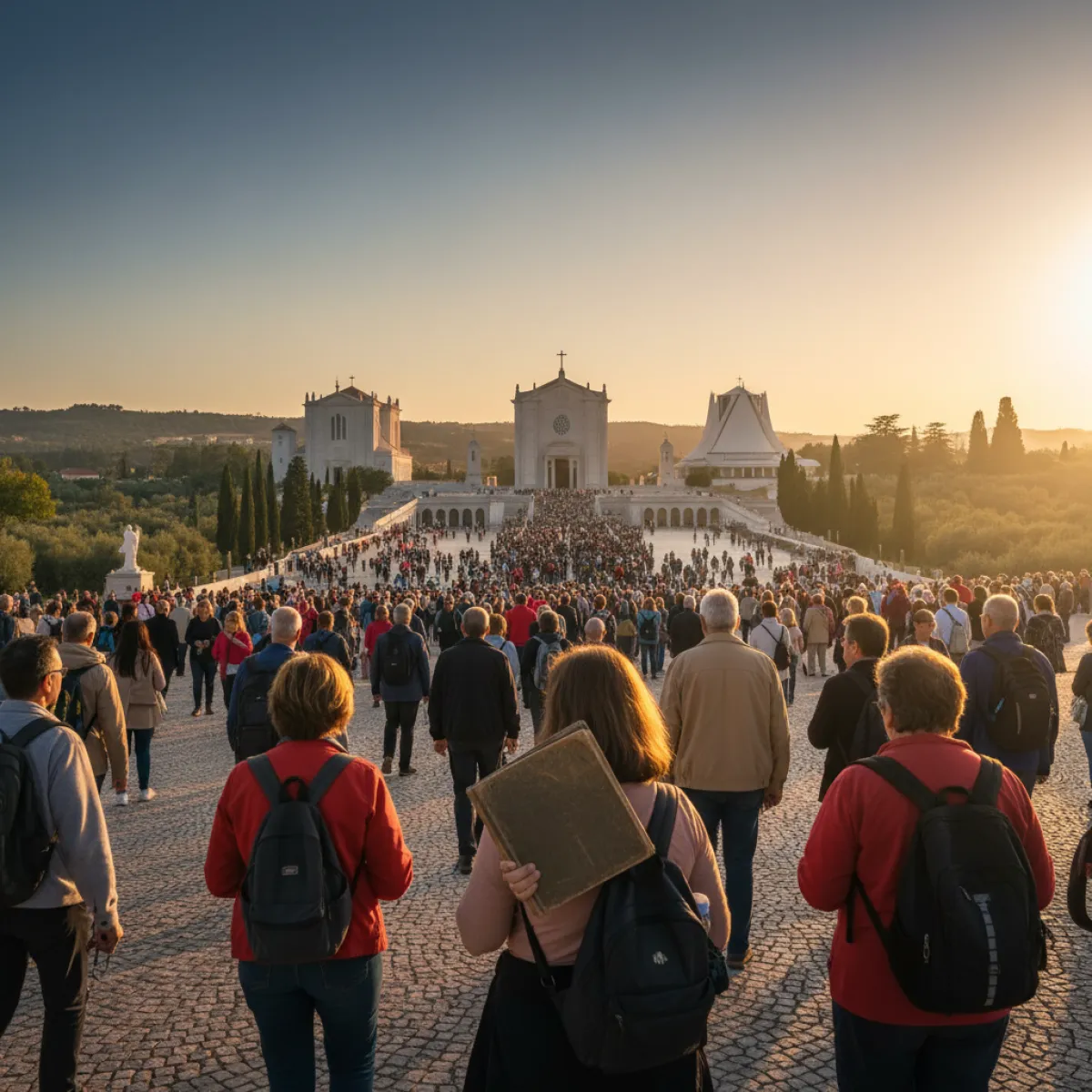
May in Fátima is not a subtle experience. Half a million people converging on a single point in central Portugal, candles lit at eleven at night, and that impossible silence that falls over the Prayer Esplanade when the statue of Our Lady leaves the Chapel of the Apparitions. You can be a believer or a skeptic, but the scale of this is hard to ignore.
And yet, most visitors arrive without knowing exactly what to expect, when to show up, or what to do with the rest of their time. This guide exists to fix that.
What happens on May 12 and 13
The anniversary pilgrimage in May is the biggest of the year, the main celebration of the 1917 apparitions. The program follows a structure that repeats every year, and it's worth knowing before you turn up.
On May 12, masses run throughout the day at the Basilica of the Holy Trinity: at 7:30am, 11am, 3pm, and 4:30pm. At 6:30pm, the Rosary begins at the Chapel of the Apparitions. But the central moment of May 12 is the Candlelight Procession at 9:30pm. This is when the esplanade transforms. Thousands of pilgrims holding candles, a wash of light filling the entire square. If you're coming to Fátima in May for one reason alone, make it this.
On May 13, the Rosary starts at 9am, followed by the solemn mass at 10am in the Prayer Esplanade, ending with the Farewell Procession. This is the goodbye: the statue of the Virgin returns to the Chapel, and white handkerchiefs wave in the air. Masses continue through the afternoon, and in the evening there's another Rosary and Candlelight Procession at 9:30pm.
My honest advice
Arrive at the esplanade at least two hours before the Candlelight Procession if you want a decent spot. The areas near the Chapel fill up early. If you don't mind watching from further back, the zone near the Basilica of the Holy Trinity still offers reasonable visibility. Bring a jacket: May nights in Fátima are cool, and you'll be standing for hours.
Walking in: the real pilgrimage
Walking to Fátima is another world entirely. Every year, thousands of Portuguese make the journey on foot from Lisbon, Porto, Viseu, or wherever they live. If you're considering it, know that there are four official routes marked on the ground: the Tejo Way (from Lisbon, about 141 km), the Northern Way, the Nazaré Way, and the Carmelite Way.
Practical rules nobody tells you until it's too late: don't walk more than 30 km per day, avoid the hottest hours (between noon and 3pm in May it's already noticeable), wear seamless cotton socks, and apply cream between your toes and on your heels before each stage to prevent blisters. If you walk at night, wear a reflective band. And please, don't use headphones on the road.
On arrival, the Sanctuary provides the Pilgrim's Hostel, next to Car Park 2, with a welcome post for those arriving on foot. It operates from May to October.
Beyond the Sanctuary: what else Fátima has
Fátima doesn't end at the Sanctuary grounds, and that's the mistake most visitors make. They stay two hours, light a candle, and drive to Lisbon. If you have half a day to spare, the surroundings are worth exploring.
The Hungarian Calvary is a stop few people know about. It's a short distance from the Sanctuary, donated by the Hungarian Catholic community, and it's one of many international monuments scattered around the area. It's the kind of place that puts Fátima's global dimension into context, something you miss when you stay on the main esplanade.
For those who want a more peaceful walk, the Valinhos olive groves walk is one of the best ways to understand the original setting of the apparitions, away from the crowds. The route passes through the sites where the shepherd children reportedly saw the August 1917 apparition, and the olive groves retain a rural character that contrasts sharply with Fátima's urban development.
And if history is what moves you, the journey through Ourém Castle and its medieval village is a perfect complement. Ourém is only 12 km from Fátima, and the contrast between the Sanctuary's religiosity and the castle's military and political history is stimulating. Ourém's medieval village, with its narrow streets and the Count's palace, is worth visiting on its own merits.
Where to eat
Dining in Fátima is functional. This is not a gastronomic city, and expectations should be managed accordingly. Most restaurants near the Sanctuary serve honest but unsurprising food, designed to feed tired pilgrims.
That said, Tia Alice is a local institution. A family-run restaurant with dishes like duck rice and roasted octopus that represent traditional Portuguese cooking well. The atmosphere is rustic and the service attentive. Don't expect sophistication, expect flavor.
O Convite, also near the Sanctuary, offers a more polished version of Portuguese cuisine, with dishes that revisit classic recipes. If you want a more composed meal, it's a good pick.
For quick, cheap meals, the classic bitoque (steak with egg, rice and fries) costs between 7 and 10 euros at most restaurants in the area. And don't leave Fátima without trying the local queijadas, a conventual pastry you'll find at several bakeries near the Sanctuary.
Logistics: getting there and where to stay
Fátima is in the municipality of Ourém, Santarém district, about 130 km from Lisbon and 200 km from Porto. By car, the A1 and A23 motorways serve the area well, but in May, traffic on the 12th and 13th is chaotic. Parking near the Sanctuary on these days is a fantasy. Use the peripheral car parks and walk, or arrive the day before.
By bus, Rede Expressos connects Lisbon to Fátima in about an hour and a half, with tickets between 10 and 15 euros. There are also frequent connections from Coimbra and Leiria. The nearest train station is Caxarias, on the Linha do Norte, about 10 km from the Sanctuary. From there, you'll need a taxi or local transport.
As for accommodation, book well in advance for May 12 and 13. Hotels in Fátima sell out early, and prices rise. Alternatives: Ourém, Leiria, and Batalha are close by and usually have availability when Fátima doesn't.
If you're staying longer in the Centro region
Fátima works well as a starting point for exploring Portugal's Centro region. If you have more days, consider a week-long itinerary in the heart of the country, which pairs well with cities like Tomar, Batalha, and Coimbra.
Coimbra, in particular, has been changing in recent years. The university city has a growing street art scene, and the murals reshaping the Alta district are a surprise for anyone who associates the city only with Coimbra fado and the University.
For those who prefer nature, the walks around Caldas da Rainha, a little over an hour away, offer a rural and tranquil counterpoint to Fátima's intensity.
The essentials at a glance
- Dates: May 12 and 13 (main anniversary pilgrimage)
- Don't miss: Candlelight Procession, 9:30pm on the 12th
- Arrive: at least 2 hours before major events
- Temperature: cool nights in May, bring a jacket
- Eating: between 7 and 15 euros per meal, depending on the restaurant
- Bus from Lisbon: about 1h30, 10-15 euros
- Accommodation: book early, consider Ourém or Leiria as alternatives
- Always check updated schedules on the official Sanctuary website: fatima.pt
Fátima in May isn't for everyone, and it doesn't need to be. But if you're going, go prepared. And stay long enough to see what exists beyond the esplanade.