Elvas With Kids: The Honest Family Guide
Elvas has no aquariums or water parks, but it offers a UNESCO fortress, an eight-kilometre aqueduct, and streets where kids can actually run free. The honest guide for families, with the logistics, the tricks, and the mistakes to avoid.
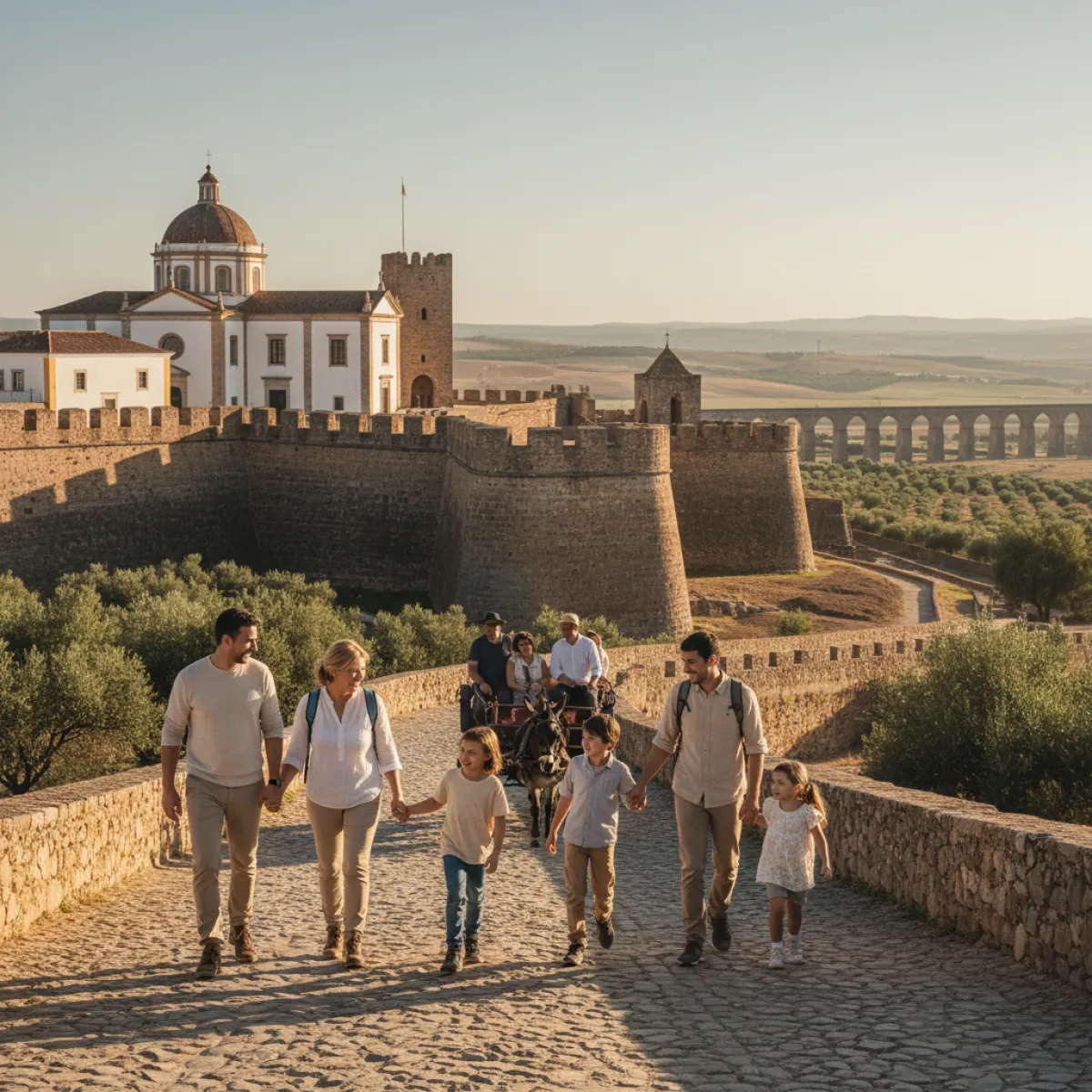
Let me be straight with you: Elvas isn't Lisbon and it isn't the Algarve. There are no giant aquariums, no water parks, no interactive museums full of buttons for kids to slap. What it has is a UNESCO-listed star-shaped fortress, an aqueduct that looks like it walked off the page of a history book, and narrow streets where children can run without you having a panic attack every time a car appears. For a family, that's more valuable than any theme park, even if no tourist brochure will tell you so.
I've spent three weekends in Elvas with nieces and nephews ranging from 4 to 11 years old, and I learned the hard way that some things work brilliantly and others turn into a logistical disaster before lunch. This guide is the result of that field research, with everything I wish I'd known before my first visit.
Where to stay without the headache
First rule with kids: don't pick accommodation inside the historic centre unless it has its own parking. You'll regret it. The streets within the walls are narrow, the cobblestones destroy any stroller, and finding a parking spot is a contact sport.
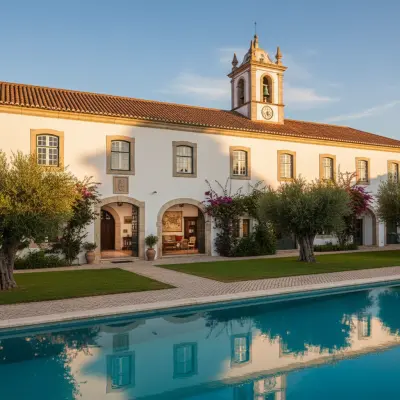
For families with younger children, Vila Galé Collection Elvas is the safe bet. There's a pool, which in July and August is worth its weight in gold, space for kids to roam, and rooms big enough that you don't end up sleeping with an elbow in your face. It's housed in a former convent, which gives you something to talk about with kids over 7 or 8, and breakfast is generous, with fruit, boiled eggs and yoghurts for the less adventurous palates.
If you prefer something more characterful and your children have outgrown the urge to destroy antique lamps, consider Alojamento Escola do Fado in Vila Fernando, a few minutes by car from Elvas. It's rural tourism in a converted primary school, with that genuine charm that makes adults sigh and kids spend a solid five minutes processing the fact that this was once an actual classroom. Much quieter than staying inside the city, and the starry night sky from the courtyard is worth the detour alone.
Getting to Elvas: the logistics, plainly
From Lisbon, it's about two and a half hours by car along the A6. From Spain, Badajoz is just 15 minutes away, which makes Elvas a perfect pit-stop for travellers heading to or from Madrid and Seville. There are trains from Lisbon, but they're neither frequent nor fast: assume you're driving, because once in Elvas and the surrounding area, you'll need a car.
Park near the walls, close to Praça da República, or at the lot beside the Amoreira Aqueduct. From there, walk everywhere. That's how it should be done. Warn the kids they're going to be on their feet a lot. Promise ice cream as fuel. Deliver.
The Amoreira Aqueduct: the first jaw-drop
Start your day here. The Amoreira Aqueduct stretches for eight kilometres, with arches reaching over 30 metres high, and it took nearly a century to build. For a child, it's simply impossible not to be stunned. For a cynical pre-teen who swears nothing impresses them, even better: it's the kind of monument that doesn't fit into a single Instagram shot, and that alone is half the battle.
Take the chance to explain that this thing brought water to the city for centuries. Kids love practical stories, the kind that go "without this, no one drank water". It's infinitely more memorable than dates and the names of kings.
Inside the walls: how to keep your sanity
Elvas is a fortress inside a fortress inside another fortress. There are medieval walls, 17th-century star-shaped bastions, and outlying forts like Santa Luzia and Graça. Will you see all of it? No, and you shouldn't try.
My honest advice: pick two stops within the walls and leave the rest for a future visit. With kids, Praça da República, with its pillory and the old cathedral (now the Church of Our Lady of the Assumption), is essential. The square is big, they can run, you can sit at a café, and everything works.
The second stop should be the Castle. The climb is tiring, but the views from the top pay off, and there's always that magical moment when a child peers through an arrow slit and asks "is this where they used to throw stones at the enemies?". Yes, it is. Good question.
Fort of Santa Luzia or Fort of Graça?
If you have time and energy for one outlying fort, pick one. Santa Luzia is smaller, closer, and houses a military museum that kids over 8 usually find interesting (rifles, uniforms, cannons, the kind of thing teenagers pretend to despise and secretly love). Fort of Graça is monumental, awe-inspiring, but the visit is long and demanding. For a first time with kids, stick with Santa Luzia.
Eating with kids: realism wins
Here's a truth most guides won't tell you: most Alentejo restaurants serve heavy, shareable dishes, and they take their time. Migas, lamb stew, pork with clams, sericaia for dessert. All delicious, all slow. With hungry, tired children, this can be a problem.
Strategy: lunch early, around noon. Order a shareable starter immediately, like sliced cured sausage or local cheese, to stave off the rebellion while the main course makes its way out. The portions are usually enough for two adults, so I either order half-portions for the kids or just share my plate with them.
Dishes that tend to work well with children: bacalhau with cream (essentially a Portuguese fish gratin), pork with clams (yes, it comes with fries), duck rice (generally well received), and anything grilled and simple. Avoid migas if they've never had it, because the texture is unfamiliar to first-timers.
For dessert, sericaia with Elvas plums is non-negotiable. Elvas plums, in syrup or candied, are a regional treasure. Even if the kid wrinkles their nose, you try it.
What to do when the weather turns
If you get a rainy day, and February delivers them, you have two decent options inside the city. The Military Museum (already mentioned, inside the Fort of Santa Luzia) and the Museum of Contemporary Art of Elvas, known as MACE. MACE may sound risky with kids, but it's small, intense, and lasts about an hour if you guide them well. If they're 9 or 10 and like bold colours and odd shapes, they'll come out surprised.
For younger kids, the strategy is to take refuge in a pastry shop. Elvas has several classic pastelarias in the centre. You order a coffee with milk for yourself, a hot chocolate for the little one, share a cake, and you've bought yourself an hour.
An evening that isn't boring
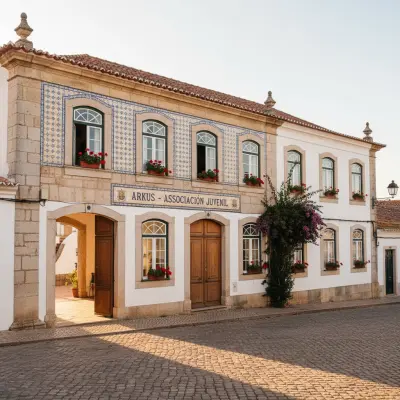
Elvas has a livelier cultural scene than first impressions suggest. Arkus, Associação Juvenil, is a space hosting concerts, fado sessions and cultural activities with a youthful energy that pleasantly clashes with the standard Alentejo stereotype. Worth checking the programme before your trip, because there are events for varied audiences, families included.
For a memorable night, assuming kids over 8 who can stay up until eleven, consider A Night of Fado and Tradition at the Old School of Vila Fernando. Yes, it's fado, and yes, they may grumble at first. But it's fado in a small, intimate setting, with a traditional dinner included, and the experience of seeing parents moved by live music is, for a child, one of those lasting memories. Confirm the calendar and prices directly, since they vary by season.
Day trips from Elvas: worth widening the radius?
Yes, but with judgment. Elvas is a solid base for exploring the Alto Alentejo, and Portalegre is about 50 minutes away. If you're staying three or more days, dedicate one to Portalegre.
To prepare that side trip, our honest weekend guide to Portalegre gives you a clear sense of what's worth the time and what you can skip. If you enjoy walking through neighbourhoods with real character, also check the walking guide to Portalegre's neighbourhoods. And for the most kid-sensitive part, which is where you'll feed them, the Portalegre food guide steers you away from the touristically obvious and toward places where the kids won't wait three hours for a plate.
Pacing, heat, and summer survival
In July and August, Elvas can hit 40 degrees Celsius. That's not an exaggeration. If you're coming during this period, plan your day in two halves: explore from 9 to 1, have a long lunch, rest until 5, then head out again until dinner. Trying to do everything between 11 and 4 with kids under that sun is a guaranteed recipe for epic meltdowns.
Bring hats, sunscreen, refillable water bottles (there are public fountains in the centre, though it's wise to confirm before drinking), and light clothing. In May, June, and September, the climate is perfect. In January and February, expect dry cold, wind, and skies that are often surprisingly blue and generous.
Costs: what to expect
By European standards, Elvas is affordable. Lunch for two adults and two kids at a decent restaurant, with drinks and dessert, rarely passes 70 euros. Breakfast outside your hotel, at a café, comes to around 15 to 20 euros for the whole family. Monument entries, where charged, run from 3 to 5 euros per adult, with discounts or free admission for children.
Accommodation varies a lot. In low season, you'll find hotel rooms or rural tourism spots for 70 to 100 euros. In August and festival weekends, prices climb sharply. Book ahead if you're coming during May (Easter, public holidays, long weekends) or August.
What NOT to do
- Don't try to see everything in one day. Elvas deserves two or three, even with impatient kids.
- Don't think you'll climb up to the castle at noon in August. You'll suffer.
- Don't expect everything to be open on Mondays. Several monuments and museums close that day.
- Don't buy Elvas plums at the first place you see. The genuine ones, in syrup, are sold in specific pastelarias and grocers. Ask before buying.
- Don't drive inside the walls if you can help it. Streets are narrow, fines are real, and the stress isn't worth it.
To wrap up: why it's worth it
Elvas with kids isn't an easy destination in the sense of "taking the children somewhere preprogrammed to entertain them". It's a destination that asks adults to lead, to tell stories, to use their imagination. The walls are a stage; the aqueduct is a wonder; the streets are an open history book. What you do with that depends on your patience and the kids' mood.
But there's an advantage here few cities offer: human scale. Elvas is small. Kids don't get lost, traffic isn't crazy, there are no crowds. They can play in a square while you finish your coffee, without you having to track every single movement. For parents who know the exhaustion of Lisbon in August or the Algarve at peak season, this is genuine luxury.
They'll go to bed tired. They'll wake up asking for ice cream. Years from now, they'll remember a city where they walked along walls and looked up at the sky through an aqueduct. It may not be as Instagrammable as Sintra, but it's, without a doubt, more memorable.