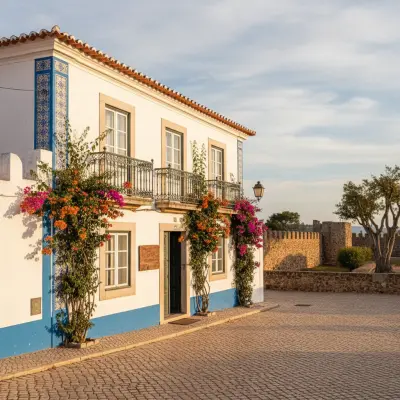
Elvas in May: Fado, Fortress Walls and Alentejo Quiet
Elvas has the largest bastioned walls in the world, fado in a converted schoolhouse, and DOP crystallized plums. In May, at 24°C with no crowds, it's the Alentejo at its best.
There are towns in the Alentejo that sell themselves. Évora has the Roman Temple, Monsaraz has the photogenic castle, Marvão has the view that makes your knees buckle. Elvas doesn't sell itself. Elvas just sits there, massive and fortified, a stone's throw from Spain, and couldn't care less whether you visit. That's exactly why you should go in May, before the brutal summer heat turns the stone streets into an oven and before the handful of tourists who pass through here figure it out.
Why May, why Elvas
May in the Alentejo is the perfect month. Temperatures hover around 22-26°C, the fields still have traces of green before the dry yellow of summer takes over, and the evening light stretches until nearly nine. In Elvas, that means you can walk along the bastioned walls, the largest in Europe, without feeling like you're melting. The city has been a UNESCO World Heritage Site since 2012, but it still gets a fraction of Évora's visitors. Good for you.
Getting there is straightforward: from Lisbon it's about two hours on the A6, from Faro roughly three hours. There's no direct train worth taking, so a car is the sensible option. If you're coming from Spain, Badajoz is literally 10 km away.
What to do before breakfast
Wake up early. At seven in the morning, Praça da República is empty and the low light on the white and yellow facades is something special. Walk up to the Castle of Elvas and stay there for a few minutes. The view over the Alentejo plain and, to the east, over Spain, is one of the best you'll find in the region. No ticket, no queue. Just you and the sparrows.
Walk down through the historic centre, past the Cathedral of Elvas, which doesn't impress from the outside but has an 18th-century organ inside worth stopping for. If the Church of Nossa Senhora da Consolação is open, go in. It's a 16th-century octagonal church covered floor to ceiling in tiles that will stop you in your tracks. Entry is free but hours are irregular, check locally.
Where to stay: the decision that shapes the trip
You have two options worth considering, and they're completely different.
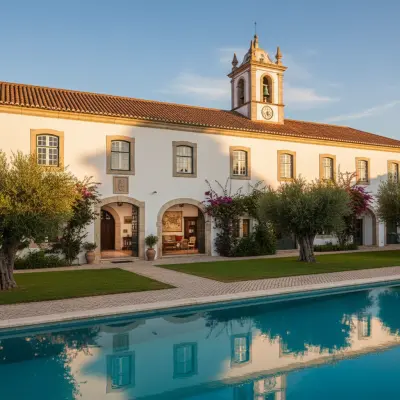
Vila Galé Collection Elvas occupies a former convent and is the kind of hotel where breakfast justifies half the stay. Pool, spa, all the comfort. If you want to treat yourself after a full day of climbing up and down fortress walls, this is it.
But if you're looking for something with more character, Alojamento Escola do Fado is the right call. Set in a former school in Vila Fernando, on the outskirts of Elvas, this rural tourism accommodation has a story that makes it unique: it's tied to the region's fado tradition, and the house itself breathes that culture. It's more intimate, more authentic, and significantly cheaper. For a May weekend, this is my pick.
Fado in Elvas: yes, you read that right
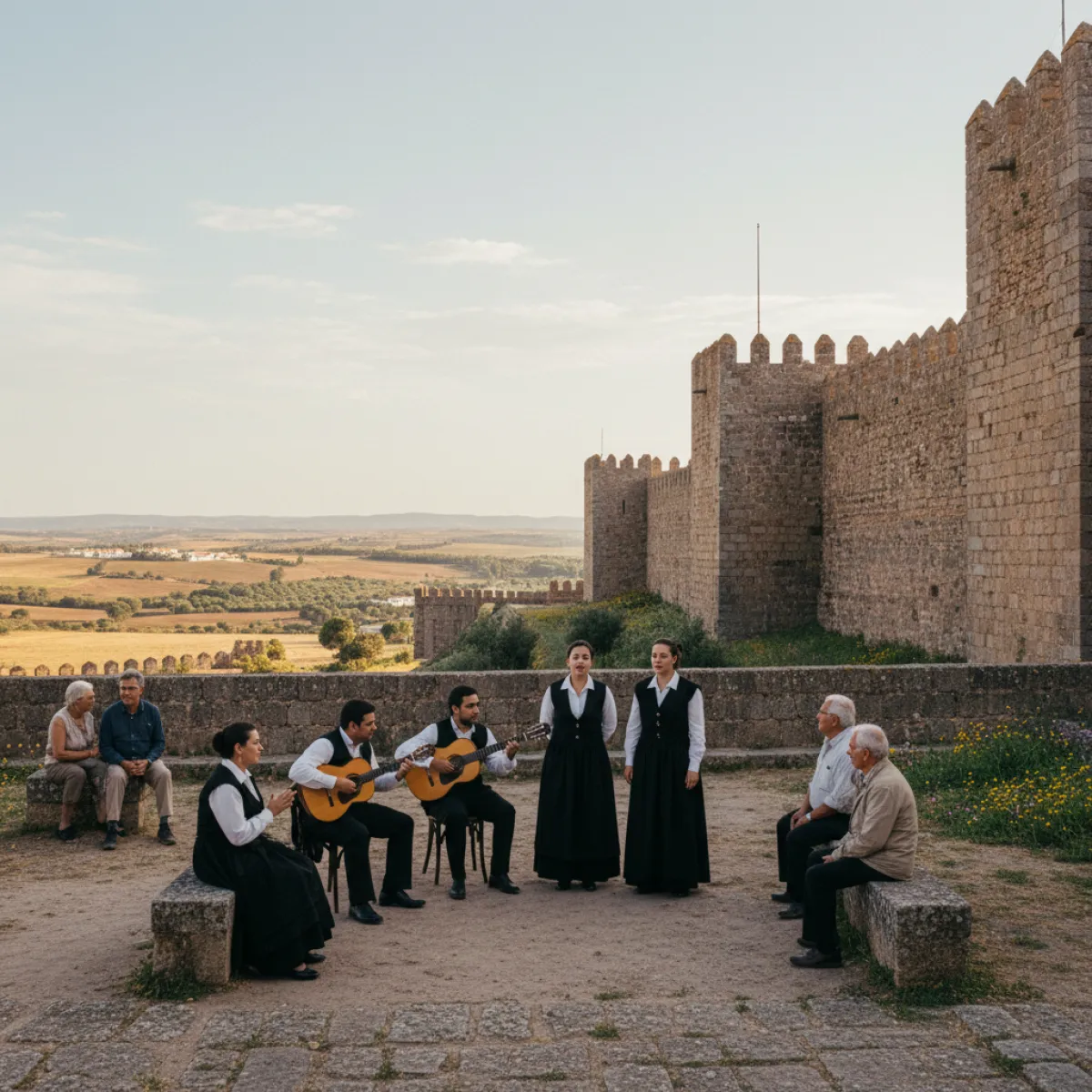
Most people associate fado with Lisbon or Coimbra. Few know that the Upper Alentejo has its own fado tradition, different, more rural, more raw. In Elvas, it's alive.
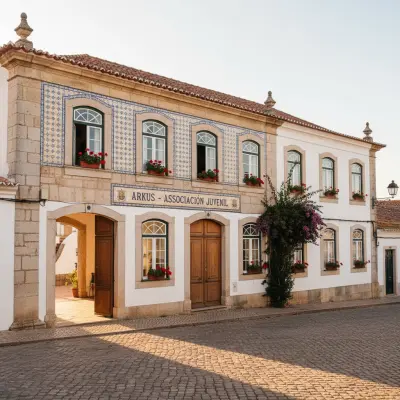
Arkus, Associação Juvenil is one of the places where you can hear fado in Elvas. This isn't a show staged for tourists at Lisbon prices. It's fado as it should be: in a small room, with people who sing because they want to sing.
And if you want the full experience, A Night of Fado and Tradition at the Old School of Vila Fernando combines music, history, and that rare feeling of being somewhere nothing was manufactured to impress you. It happens in the same space as Alojamento Escola do Fado, which means you can have dinner, listen to fado, and walk to your room without touching the car. In May, with the evenings already warm, it's the kind of night that stays with you.
What to eat in Elvas
Don't come to Elvas without eating the plums. Ameixas de Elvas, crystallized plums preserved in sugar syrup, carry DOP certification and are one of the most deliciously excessive things in Portuguese confectionery. You'll find them in several shops around the centre. Buy a jar. It'll last the trip.
For meals, the Alentejo kitchen here is what you'd expect: açordas (bread soups), migas, black pork, lamb. Look for small restaurants in the historic centre, away from Praça da República. Sopa de cação (shark soup) is common on menus and excellent when done well. The Alentejo bread, dense with a thick crust, is the mandatory companion to everything.
I'm not going to invent restaurant names I don't know. Ask at your hotel or guesthouse reception. Locals always know where the best food is, and in small cities like Elvas that information is gold.
The walls: the real show
The fortifications of Elvas are the main reason the city is a World Heritage Site. The bastioned wall system, built between the 17th and 19th centuries to defend the border with Spain, is the largest in the world. Read that again: the largest in the world.
You can walk along much of the walls. The full circuit takes about two hours at a relaxed pace. In May, with the right temperatures, it's one of the best walks you can do in the Alentejo. Bring water, a hat, and decent shoes.
Fort Santa Luzia and Fort da Graça are the two highlights. Fort da Graça, on a hilltop north of the city, was closed for decades and only recently restored and opened to the public. The view from up there is absurd. Check opening hours before you go, as they can vary.
Day trip to Portalegre
If you have more than two days, Portalegre is about 45 minutes away and is another of those Alentejo destinations that deserves more attention than it gets. Our guide to a real weekend in Portalegre covers the essentials without the usual tourist traps.
The city has historic neighbourhoods best explored on foot, and our guide to Portalegre's neighbourhoods worth the walk is the best starting point. And when hunger hits, check our guide on where locals actually eat in Portalegre.
Costs and logistics
Elvas is cheap. This is the Upper Alentejo, not Comporta. A decent meal with wine costs between €15 and €25 per person. Rural tourism accommodation runs €60-90 per night. Vila Galé prices are higher, as you'd expect, but still competitive compared to Lisbon.
Parking in the centre is relatively easy, especially outside the summer months. In May you won't have problems.
The city is small. Two days is enough to see everything at a comfortable pace. Three days lets you include Portalegre and perhaps a stop in Campo Maior, 20 minutes away and famous for its flower festival, though that typically happens in September.
The verdict
Elvas isn't for beach people. It's not for nightlife people. It's for people who want to walk along monumental fortress walls practically alone, listen to fado in a converted schoolhouse, eat crystallized plums while looking at Spain, and feel like they've found something 95% of tourists in Portugal will never see. In May, with the right warmth and long days, it's perfect.