Elvas Beaches: The Caia Reservoir, Without the Crowds
Elvas is two hundred kilometres from the sea and the only salty thing around here is the cured ham. But there is the Caia reservoir, twenty minutes from the centre, and a clear manual for enjoying it without the crowds. Plus where to sleep, where to eat, and when to push on to Portalegre.
Let's be honest before we start: if you came to Elvas looking for a beach, someone misled you. Elvas sits two hundred kilometres from the nearest sea, pressed up against the Spanish border, and the only salty thing around here is the cured ham. This is not the Costa Vicentina, this is not the Algarve, and anyone who arrives expecting white sand and waves will leave with their shirt stuck to their back and a certain mild rage.
But if you are reading this, it is either because you have already made the trip or because you landed in Elvas in the middle of a forty-degree heatwave, with the Praça da República boiling, and you want to know where, exactly, you can get into water. Good question. Short answer: the Caia reservoir. Long answer, with where to sleep, what to eat when you get back, and how to avoid the Spanish day-trip buses on Saturdays, is what follows.
Caia Reservoir: The Beach Elvas Actually Has
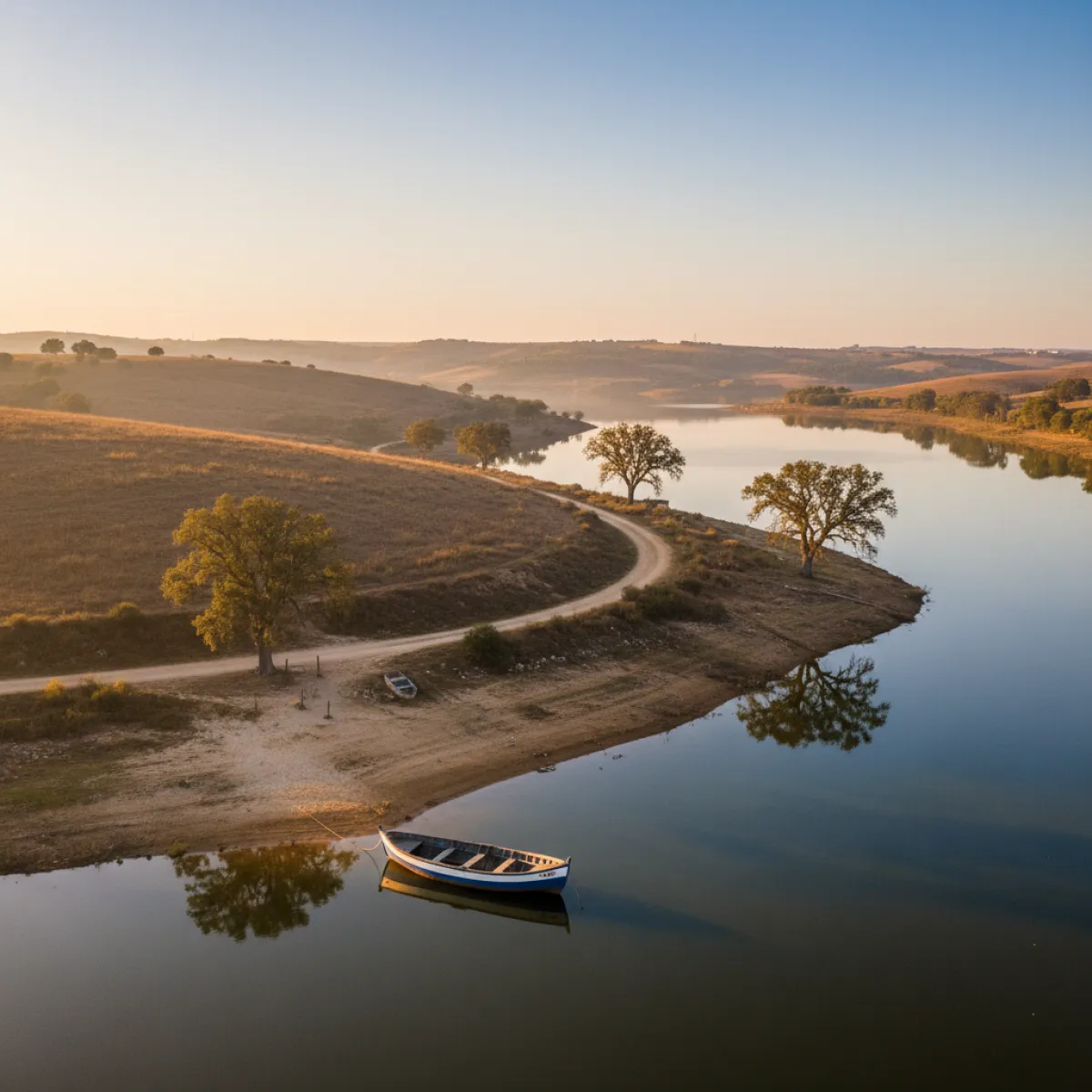
The Albufeira do Caia is about twenty minutes by car from the centre of Elvas, in the direction of Campo Maior. It is a dam, not a natural lake, and it shows: the shoreline is irregular, there are stretches of pine forest sloping down to the water, and in August the level drops enough to expose rocks you do not want to find while diving in head first.
That said, the water is clean, it is fresh, and in the good months (June, July, the first half of September) the temperature is perfect for an afternoon. There is a designated swimming area with picnic tables, pine shade, and basic facilities. Confirm locally about lifeguard hours and the official bathing season, because they shift from year to year.
The big advantage? It is not the Algarve. On August Saturdays you might find families from Elvas and Campo Maior, plus a few visitors from Spanish Extremadura, but never the density of checked towels that turns Praia da Rocha into a claustrophobic experience. Midweek, outside school holidays, you can often have an entire stretch of shore to yourself, with the sound of water against children's rubber tubes and not much else.
How to Avoid Even the Small Crowd That Exists
Three simple rules:
- Go midweek whenever possible. Tuesday or Wednesday morning, the reservoir belongs to you.
- If you go on the weekend, arrive before ten in the morning. By noon, the parking closest to the water fills up and you are left with the spots that require walking with a cooler.
- Avoid the August 15th holiday. It is not a massive crowd, but it is the worst day of the year there.
And, important: bring your own shade. There is pine forest, but the best stretches of sand are open, and the Alentejo sun in July does not play. Hat, two litres of water per person, factor 50 sunscreen, no excuses. People arriving from Lisbon systematically underestimate the dry heat of the interior, and the mistake is paid for at eight in the evening, with a headache and the feeling that your face has aged two days.
Other Waters, More Honest
If the Caia disappoints you (it happens, especially to people coming from the coast), there are alternatives within an hour by car.
The area around the Lucefécit dam, on the way towards Alandroal, is a wilder choice. No tourist infrastructure, no cafés, no supervision, but with open cork-oak landscape and a silence that in August is almost unreal. Only go if you swim well and have company: it is deep from the shore and there is no one to pull you out. Bring everything you need and, more importantly, take everything home with you. The number of plastic bottles abandoned on that kind of shore is the main reason I still hesitate to recommend such places.
On the Spanish side, fifteen minutes from the border, there are bathing spots on the Guadiana used by locals when the Caia is full. Take your ID, pay everything in euros, and remember that in Spain lunch happens at four in the afternoon, so if you plan to eat across the border, plan accordingly or grab a sandwich at noon.
Where to Stay So You Wake Up Near Water
If the plan is to base yourself in Elvas and visit the reservoir on different days, there are two options I recommend without reservations, depending on what you want.
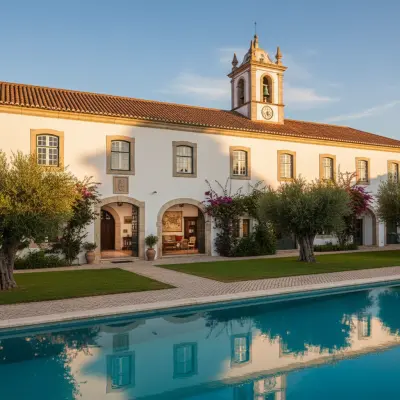
For comfort, a swimming pool, and the logistics of a serious hotel, the Vila Galé Collection Elvas is the obvious choice. It occupies a historic building inside the city walls, has an outdoor pool (essential on days when you cannot face driving to the Caia), and the breakfast is genuinely good. It is not cheap in August, but the value off-season is among the best in the city. In May or October you can sometimes find rooms at prices that make the stay indecently comfortable.
For something smaller, more personal, and if you do not mind being outside the centre, look at the Alojamento Escola do Fado, in Vila Fernando. It is about fifteen minutes from Elvas, a converted old primary school, and has the kind of quiet that lets you hear cicadas at siesta time. The hosts know the region, and if you are heading to the reservoir you are practically halfway there already. It is the kind of place you arrive at for one night and stay for three without quite understanding how.
What to Eat When You Come Back Burnt and Starving
Returning from the reservoir to Elvas at the end of the day, with salt on your eyelashes and sand in your shoes, and having to decide where to have dinner, is one of the small cruelties of holidays. Here are three rules I always apply.
First: do not go to the restaurant closest to the Praça da República just because you are tired. There is an obvious tourist trap in some places in the upper town, with plasticised menus in four languages and photos of the dishes. Walk five more minutes uphill or down towards the area near the Aqueduto da Amoreira and you will eat better for less money.
Second: order ameixas de Elvas (Elvas plums) for dessert, but only at a place that does them well. They are convent sweets, made with real candied plums, and when they are good they are memorable. When they are bad, they are just sugar with a shape. Ask the waiter if they make them in-house or buy them in. It is a perfectly legitimate question.
Third: do not throw yourself at the bacalhau dourado. It is on every tourist menu, but it is rarely the best thing. In Elvas what works is what comes from the land: black pork, lamb stew, açorda alentejana (bread and garlic soup), migas with pork ribs. If you like cheese, ask for Nisa or Serpa cheese with bread and olive oil, and you have the best possible starter for five euros.
Beyond Water: What to Do When the Sun Goes Down
If you are in Elvas in August, the afternoon belongs to the reservoir, but the evening belongs to the city. Temperatures drop, the streets inside the walls become walkable again, and there is more nightlife than you might think.
For an evening genuinely worth the effort, A Night of Fado and Tradition at the Old School of Vila Fernando in Elvas is a different experience from what you usually find in the region. It happens at the same old school that serves as accommodation, and combines a traditional dinner with live fado in an intimate setting, without the staged-for-cruise-bus performance that ruins so many fado houses in Lisbon. Book ahead, especially in the summer months, because the room is small and fills up.
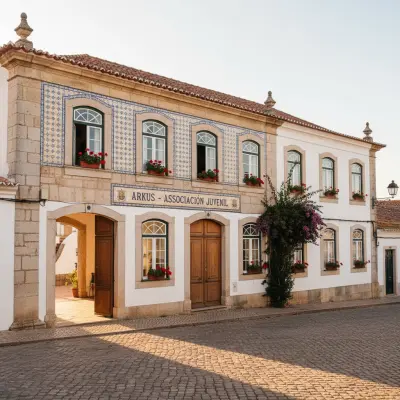
For something younger, or for those looking for a less formal vibe, it is worth checking what Arkus Associação Juvenil has on the programme. It is a community cultural space with variable programming, from fado to other kinds of music, and it works as the meeting point between younger Elvas and local tradition. Check the schedule before going, because it depends very much on the week.
If You Are Thinking of Stretching the Trip to Portalegre
Many people who go to Elvas combine the trip with a couple of nights in Portalegre, further north, on the way to the Serra de São Mamede. It makes complete sense: they are different realities of the same Alto Alentejo, and a little over an hour by car gets you from one to the other. Portalegre also offers swimming options in mountain streams that are a genuine alternative to the flat surface of the Caia.
If you are on that plan, three preparatory reads will save time. The guide Portalegre Without the Tourist Traps: A Weekend gives the basic structure, with opinions on what is worth doing and what to skip. Portalegre on Foot: Neighborhoods Worth the Walk is useful if you like walking and want to escape the castle circuit. And Portalegre's Real Food: Where Locals Actually Eat solves the dinner problem with judgement.
A Small Note on Honesty
Back to the start: Elvas is not a beach destination. Anyone coming from Lisbon looking for a substitute for Costa da Caparica will leave disappointed. What Elvas offers is a UNESCO-listed fortified town, a monumental aqueduct worth the trip on its own, honest Alentejo restaurants, regional wines at prices that are still reasonable, and a reservoir twenty minutes away where you can spend a decent afternoon without the logistical exhaustion of an Atlantic beach.
If that is enough for you, you will like it. If not, do not force it. There are beach towns further south, and there are more spectacular interior towns to the north. Elvas is Elvas, with its aqueduct, its cheese trucked in from the surrounding villages, and its modest reservoir doing the job of the sea. And in August, with the light falling on the walls at nine in the evening and a cold beer in front of you, that is almost enough.