Eating Arrábida: Cuttlefish, Cheese and Moscatel
In Arrábida, choco frito is a religion, Queijo de Azeitão is eaten with a spoon, and Moscatel de Setúbal deserves far more than a tiny post-lunch glass. A route through the dishes that define the region, from Setúbal to Sesimbra.
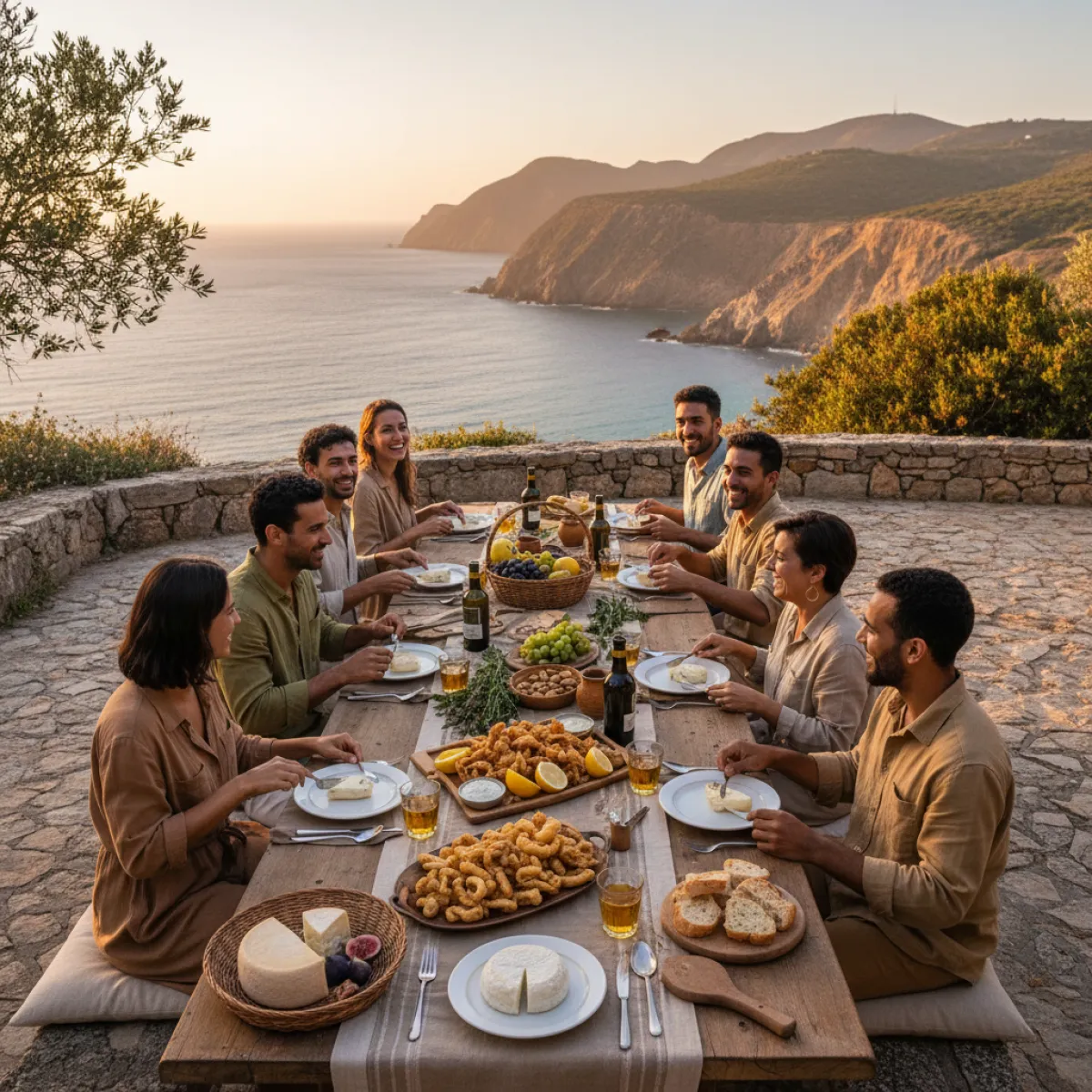
People come to Arrábida for the beaches. Fair enough. But if you spend a whole day between Praia do Portinho da Arrábida and Praia do Creiro without eating choco frito, you've missed half the point. The mountains and the Atlantic have shaped a cuisine here that doesn't need gimmicks. It needs good ingredients, tradition, and someone who knows what they're doing.
Choco Frito: Setúbal's Defining Dish
Let's get to it. Choco frito, fried cuttlefish, is the single most important dish in this region. Not calamari, not squid. Cuttlefish, cut into thick strips, dredged in flour, and fried in olive oil until the outside crackles and the inside stays tender. It sounds simple. It is. But the gap between a decent plate and a great one comes down to how fresh the cuttlefish is and how hot the oil gets.
In Setúbal, nearly every restaurant near the harbour serves it. The fishermen's quarter around Doca dos Pescadores is the obvious spot. Don't expect refined décor. Expect paper tablecloths, jugs of house wine, and portions that feed two. Choco frito usually comes with tomato rice or fried potatoes, and prices hover around 12 to 16 euros per serving, depending on the place.
A tip: order it as a main course, not as a petisco (starter portion). The starter portions tend to be smaller and proportionally more expensive. And if you see choco grelhado (grilled cuttlefish) on the menu, try it too. Less famous than the fried version, but when it's done right, with a drizzle of olive oil and lemon, it's a different kind of revelation.
Queijo de Azeitão: the Cheese Worth Crossing a Mountain For
A few kilometres from the serra, the town of Azeitão produces one of Portugal's finest cheeses. Queijo de Azeitão is a sheep's milk cheese with protected designation of origin. You cut the top off and eat it with a spoon. When it's properly ripe, the interior is almost liquid, with an intense, slightly peppery flavour that lingers.
Several small producers in Azeitão sell directly. A small wheel costs between 5 and 8 euros. The most established names include Queijaria da Simões and various artisanal makers you'll find at the local market. Buy one, grab some Alentejo bread, and have a picnic in the hills. Or better yet, save it for late afternoon with a glass of Moscatel.
If regional food traditions interest you, the Easter sweet traditions of Mafra are another deep cut into Portugal's edible heritage.
Moscatel de Setúbal: the Wine That Deserves More Respect
Moscatel de Setúbal is often treated as a grandparent's wine. A digestif served in tiny glasses after Sunday lunch. That's reductive. The best Moscatéis from this region, especially the aged ones with 20 or 30 years of barrel time, are wines of remarkable complexity. Bitter orange, honey, caramel, warm spice. They reward attention.
José Maria da Fonseca, based in Azeitão, is the most historic producer and offers guided tours with tastings. Worth the visit, not just for the Moscatel but for their full range of Setúbal Peninsula wines. Bacalhôa, another major producer nearby, also runs wine tourism programmes with cellar visits and an art museum.
If you'd rather just drink, any local restaurant will have Moscatel on the list. Order a glass alongside Tortas de Azeitão, the local pastry, and you have the perfect pairing.
Tortas de Azeitão: the Pastry You Can't Fake
Tortas de Azeitão are thin rolls of delicate pastry filled with egg cream and dusted with cinnamon. They're simple, fragile, and when fresh, the texture practically dissolves. The pastry is paper-thin, almost translucent, and the cream hits that exact sweet spot between sugar and egg that Portuguese conventual baking perfected centuries ago.
Buy them at the pastry shops in Azeitão, and here's the one rule: eat them the same day. Fresh, they're exceptional. Next day, they're merely good. A single torta costs around 2 euros.
Caldeirada and Grilled Fish: the Coast on a Plate
Arrábida's coastline supplies fish and shellfish of outstanding quality. Caldeirada, a slow-cooked fish stew made with whatever species came in that day, is a staple at the more traditional restaurants, particularly in Sesimbra and Setúbal. It's a patient dish: potato, onion, tomato, and pepper, with the fish cooking in its own broth. Every restaurant has its own version, and opinions about which is best are held as passionately as football allegiances.
Grilled fish is another safe bet. Sea bass, gilt-head bream, and sole are the common choices. In Sesimbra, the tradition of grilled black scabbardfish holds strong. It's not the most photogenic fish, but the flavour is deep and the flesh firm.
After a lunch like that, your body will thank you for a walk. The hike to the Arrábida Convent is the perfect excuse to burn calories while exploring the Franciscan history of the serra.
Where to Eat: Practicalities
The region breaks into three distinct food zones. Setúbal is the capital of choco frito and harbourside fish restaurants. Azeitão is cheese, pastry, and Moscatel territory. And Sesimbra is the fishing village where grilled fish and caldeirada rule.
Getting here from Lisbon, take the A2 towards Setúbal and exit onto the N379 for Azeitão or the N10 for Sesimbra. Allow 40 to 50 minutes without traffic. On summer weekends, the beach roads jam up badly. Leave early.
A suggested food route: start in Azeitão in the morning with a visit to José Maria da Fonseca and a torta at the local bakery. Head to Setúbal for a choco frito lunch. In the afternoon, drive down to Praia da Figueirinha to digest with a sea view. At the end of the day, crack open the Queijo de Azeitão you bought that morning with a glass of Moscatel.
If you have more days in the Lisbon region, Lisbon's neighbourhood culture and the hidden corners of Sintra pair well with a trip that mixes nature, history, and food.
What Actually Matters
Arrábida's cooking doesn't try to impress with technique or plating. It tries to feed you well, with ingredients that come from the sea visible through the window or the fields surrounding the serra. The choco frito doesn't need a balsamic reduction. The Queijo de Azeitão doesn't need artisanal jam. The Moscatel doesn't need a sommelier's commentary to be enjoyed.
What it needs is time. Time to sit down, to eat slowly, to mop the caldeirada broth with bread, to order one more glass. In this region, the meal isn't a pit stop between activities. It is the activity. Once you understand that, you understand Arrábida.