Easter in Aveiro: Processions, Sweets and Real Tradition
On Good Friday, the Procissão dos Passos winds through Aveiro's narrow streets in a silence that isn't staged, it's an entire city standing still. But Easter here goes far beyond processions: there are ovos moles with Protected Geographical Indication, folares exchanged between neighbours, and a Holy Saturday where the city seems to hold its breath.
Here's what you need to know about Easter in Aveiro: this city doesn't put on a show. The processions have no dramatic lighting, no multilingual audioguides, no branded merchandise stalls. The ovos moles that appear in pastry shop windows from March onwards aren't packaged in minimalist boxes designed for Instagram. And that's precisely why you should be here in the week leading up to Easter Sunday.
Lent Begins on the Canals
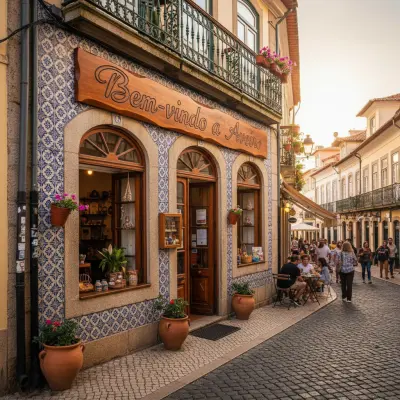
Aveiro observes Lent quietly but sincerely. From mid-March, the central churches, the Igreja da Misericórdia, with its blue azulejo tiles you've already seen in photographs, and the less photographed but equally beautiful Igreja do Carmo, begin organizing their liturgical programmes. Don't expect tourist leaflets: information travels by word of mouth, in the grocery shops of the Beira Mar neighbourhood, between neighbours who know exactly what time Friday's Via Sacra begins.
If you want to understand the city before it fills with visitors on the Easter weekend, take the Art Nouveau and Beira Mar walking tour. It's not an Easter walk, but it gives you the architectural and social context that turns Aveiro's Easter from "yet another procession" into something you genuinely understand. The Art Nouveau facades along Rua João Mendonça and Rua Barbosa de Magalhães are the very backdrop for the processions, and knowing why they were built helps you understand why this city celebrates the way it does.
Good Friday: The Day That Matters
I'll be direct: if you only have one day for Easter in Aveiro, make it Good Friday. Sunday is lovely, family-oriented, full of children in new outfits and interminable lunches, but Friday has a different intensity.
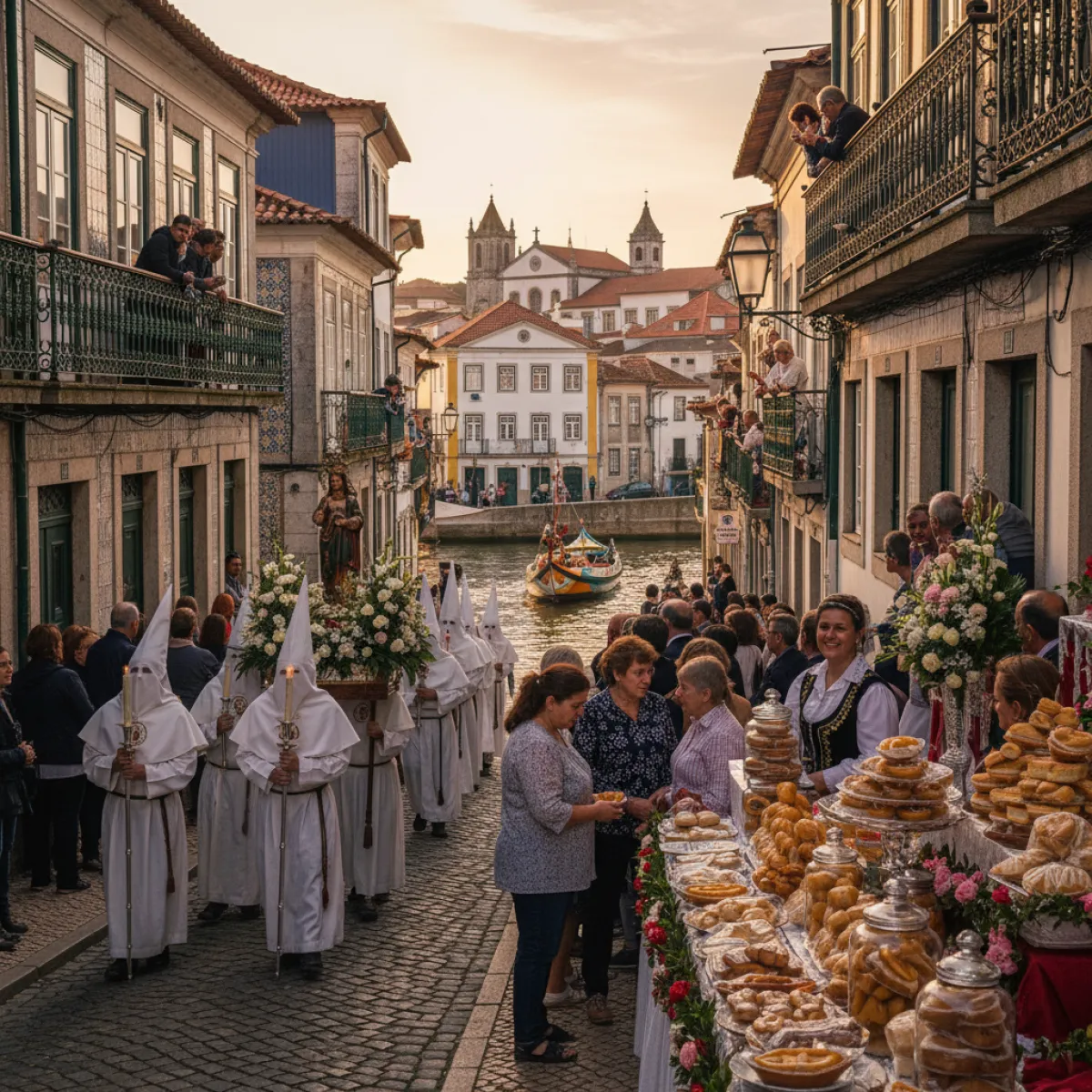
The Procissão dos Passos, which winds through the historic centre, is the central moment. The religious floats leave from the Igreja da Vera Cruz and follow a route through narrow streets to Praça da República. The silence is genuine, not staged, not curated, just an entire city respecting a tradition that goes back centuries. The religious figures, many of them polychrome wood from the 17th and 18th centuries, are carried by members of local confraternities. This isn't folklore: it's real faith, with all the weight and solemnity that implies.
Arrive early. Rua de Coimbra and the side streets near the central canal fill up quickly. The best spot to watch without being crushed is near the Cojo bridge, where you get good visibility and room to breathe. If it rains, and in April in Aveiro, it rains, bring an umbrella and patience. The procession doesn't stop for weather.
Easter Sweets: Beyond Ovos Moles
Everyone associates Aveiro with ovos moles, and rightly so. But reducing Aveiro's Easter pastry tradition to ovos moles is like saying Lisbon is just pastéis de nata. During Lent and Easter, the pastry shops and former convents of the region produce a range of sweets that rarely appear in tourist guides.
Ovos moles, of course, are mandatory. The crispy communion wafer shell with its egg yolk and sugar filling holds Protected Geographical Indication status, meaning that, by law, they can only be made in the Aveiro region using the traditional recipe. The most common shapes are shells, barrels, and fish, all tied to the city's maritime identity. Buy them from a pastry shop with its own production, if the window displays fifty varieties of cake but the ovos moles all look identical and suspiciously perfect, they're probably factory-made.
But also seek out rabanadas, which at Easter get a more elaborate treatment than their Christmas version, soaked in sugar syrup with cinnamon and sometimes doused in Port wine. Folares, sweet bread with whole boiled eggs pressed into the dough, are another essential Easter tradition. Every family has their own recipe and every family believes theirs is the best. Don't argue: accept the slice you're offered and agree politely.
For those interested in convent sweets, it's worth knowing that many of these recipes were born in the region's female convents, where nuns used leftover egg yolks from wine clarification and habit starching. Ovos moles are the most famous example, but barrigas de freira, trouxas de ovos, and pastéis de Santa Joana belong to the same tradition, and they're easier to find during Easter than the rest of the year.
Sunday Lunch: Kid Goat or Cod
Easter Sunday lunch in Portugal is serious business, and Aveiro is no exception. The two stars of the Easter table are roast kid goat and bacalhau, not the bacalhau com natas you find in every tourist tavern, but more elaborate preparations like bacalhau com broa or bacalhau à Gomes de Sá, which despite originating in Porto has a guaranteed place at any table in the Centro region.
If you're not lucky enough to be invited to a family lunch (the best way to experience Easter anywhere in Portugal), restaurants in central Aveiro usually offer special Easter menus on Sunday. Book well in advance, this is one of the busiest days of the year for restaurants, and the good ones sell out weeks ahead.
An alternative I recommend: buy ingredients at the Mercado do Peixe, near the São Roque canal, and cook at your accommodation. The market operates in the morning, and on the Saturday before Easter you'll find fresh fish and seafood at reasonable prices. If you're staying at Cais do Pescador, you're a short walk away and have a properly equipped kitchen.
Where to Stay at Easter
Easter is high season in Aveiro, not summer levels, but enough that the best accommodation books out weeks in advance. Reserve early.
For a comfortable central stay, Welcome In Aveiro is a solid choice, well located for reaching processions and pastry shops on foot. If you prefer more independence, Aveiro Rossio Bed & Breakfast has the advantage of being right by the Rossio, the main square, which is the natural starting point for exploring the city.
Avoid staying in Costa Nova or Praia da Barra during Easter, unless your primary goal is the sea rather than tradition. The drive to the centre is short, but at night, after a full day walking through processions, the last thing you want is a fifteen-minute drive back to your hotel. Save the coast for another day, and if you have time, surf lessons at Praia da Barra are an excellent way to shake off the excess folar.
Traditions the Guidebooks Miss
There are aspects of Easter in Central Portugal that guides rarely mention. One is the compasso pascal, the visit the priest makes, house by house, in the days before or after Easter, blessing families and homes. In Aveiro, this still happens in the more traditional neighbourhoods. If you're staying in a local house and your host asks if you'd like to receive the compasso, say yes. It's a genuine experience, even if you're not religious.
Another custom that persists: the exchange of folares between families, neighbours, and friends. It's a form of reciprocity that predates Christian Easter and has pagan roots in the celebration of spring. If someone offers you a folar, etiquette demands you reciprocate, even if it's just with a box of ovos moles.
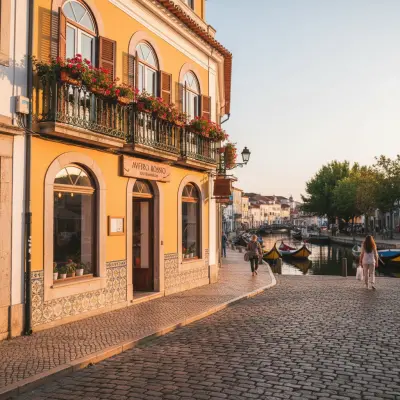
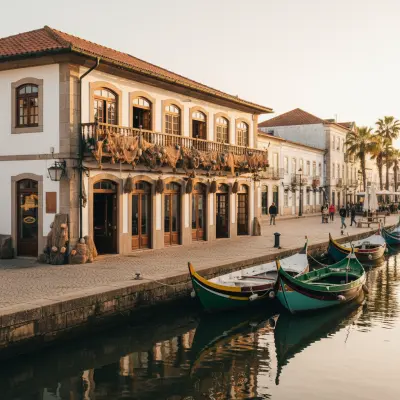
And then there's the silence of Holy Saturday. If you walk the streets of Aveiro on Saturday morning, you'll find a strangely still city. Shops open late, cafés sit half empty, there's a collective restraint before Sunday's explosion. It's a good day for aimless wandering through the Beira Mar neighbourhood, watching the moliceiro boats tied up at the quay, letting the city breathe.
Beyond Aveiro: Easter in the Centro Region
If your Easter trip includes more than Aveiro, and it should, the Centro region has some of the country's finest Easter celebrations. Braga, further north, is the undisputed capital of Holy Week in Portugal, with processions that draw tens of thousands. But there are quieter, equally rich options.
If you're planning a week in the heart of the country, consider combining Aveiro with a stop in Coimbra, where Easter carries the solemnity of a university city, and where you can take time to discover the street art murals that have reshaped the Alta.
For those who prefer nature to cities, the region's walking trails offer another perspective on Portuguese spring. It's not Easter in the religious sense, but walking through green, flowering landscapes in April is a form of renewal any pagan would approve of.
Practical Information
Aveiro is about one hour from Porto by train (urban line from Porto to Aveiro, with frequent departures). From Lisbon, count on two and a half to three hours on the Alfa Pendular. The train station is a ten-minute walk from the centre, no taxi needed.
At Easter, many museums and monuments have reduced hours or close on Good Friday. The Museu de Aveiro (the former Convento de Jesus, home to the tomb of Santa Joana) usually maintains its schedule, but check locally. Moliceiro boat tours on the canals run throughout Easter, yes, it's touristy, but if you've never done it, do it once. It costs between €10 and €15 per person and takes about 45 minutes.
Final note: don't try to park in central Aveiro on Easter Sunday. Use the peripheral car parks or, better yet, leave the car at your hotel and walk. The city is small enough to do everything on foot, and on Easter the central streets are partially closed to traffic for the celebrations.