Cycling Guimarães: Routes for Every Level
From the Ave River Greenway to the mountain loop with 2000 metres of climbing, Guimarães has topography for every level. An honest guide to where to ride, where to rent, and where to eat rojões after eight hours in the saddle.
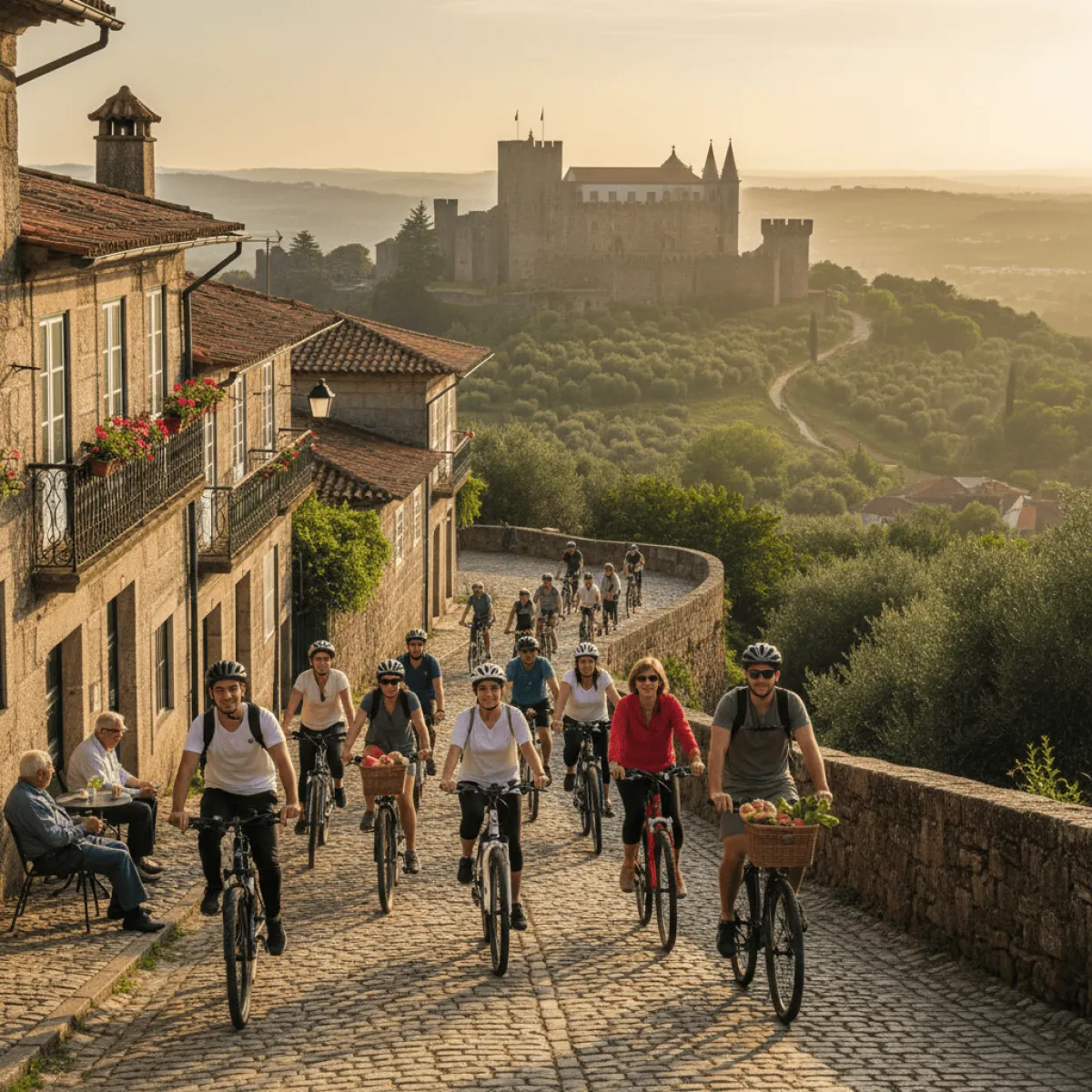
There's a way to see Guimarães that most tourists completely miss: on a bicycle. While the tour buses dump visitors at Praça de Santiago for the obligatory castle photograph, there's an entire country of rural lanes, greenways and back roads beginning just a few kilometres from the historic centre. The birthplace of Portugal has topography for every taste, and that's a rare advantage: river-flat stretches along the Ave for those who like to pedal with coffee in the bottle, brutal climbs up Penha for those who need to prove something to themselves, and paved greenways for families who want to hear their kids complain without the noise of traffic drowning them out.
This guide won't sell you fairy tales. Guimarães is not Amsterdam. There are urban sections where the cycle lane vanishes halfway down the block and dumps you into the traffic of Avenida Conde Margaride. There are climbs your Strava will rate as category 3 and your legs will rate as betrayal. But there are also mornings when you leave at eight along the Vinho Verde Greenway, cross three parishes before breakfast, and realise you've covered more of the Minho in two hours than many tourists do in three days.
Before you start: rentals and expectations
No bicycle? Not a problem. Guimarães has rental options for road bikes, mountain bikes and e-bikes. Prices typically run between 15 and 25 euros per day for a standard bike, up to 40 euros for a decent e-bike. Check locally for availability, especially on spring weekends when demand spikes. Helmet is included. Lock usually too, but always ask, because bringing a fresh supermarket lock is a better plan than discovering yours can't reach a lamppost.
Unsolicited advice: if you're only here for a day, get the e-bike. It's not cheating, it's energy management. The climbs toward Penha or the valleys to the south will leave you too wrecked to appreciate where you are. Save your pride for the summit photograph.
When to come
April, May, September and October are the prime months. Minho summer isn't Alentejan hell, but from midday in July and August there are exposed sections where the heat punishes you. Winter is workable, but expect rain: the Minho is not a dry region, and rural paths turn to mud with surprising efficiency. The shoulder seasons give you long daylight, decent temperatures and the added bonus of catching the landscape still green, before late summer yellow takes over.
Easy level: the Ave River Greenway and surroundings
If your last bicycle had training wheels, this is your starting point. The Ave River Greenway is the most civilised way to begin, with paved stretches, minimal gradients and the priceless advantage of no cars passing you at 80 km/h. The route follows the Ave, a river with personality: wide in some places, gentle in others, always punctuated by old mills and weirs that betray centuries of agricultural use.
Make a morning of it: leave Guimarães around nine, cover 15 to 20 kilometres to wherever you feel like turning around, stop for coffee at a roadside casa de pasto (you'll find several, all honest, none photogenic), and come back for lunch. Total: about three hours, manageable effort, no excuse not to do it.
For those who want to extend the experience without raising the difficulty, you can pair a morning ride with an afternoon dedicated to other regional discoveries. Wine and food types can chain the morning pedal with a visit to a wine tasting at Casa de Sezim, one of the oldest vinho verde estates in the region, where you can sample the local production after having earned the calories to justify it.
What to pack
- Water: at least a litre per person, more in summer.
- Sunscreen: greenways have exposed sections and Minho sun is treacherous.
- Small cash: many rural taverns don't take cards.
- Phone with offline maps: signal drops in some valleys.
Medium level: the Penha circuit through rural parishes
This is where things start to warm up. Penha is the mountain that watches over Guimarães, with its sanctuary at the summit and the cable car that climbs up from the city. For cyclists, it's an honest test. There are several ways to approach it, and the smartest isn't the direct road. It's to skirt it through the rural parishes, gain altitude gradually, and reach the top via a route that shows you the agricultural side of the municipality.
Head out through Mesão Frio, pass through Costa, cross Briteiros (yes, the same Briteiros of the citânia ruins, but that's for another trip) and find your way back along the eastern flank of the mountain. About 40 kilometres with 700 to 900 metres of elevation gain, depending on the variations you choose. It's a full day if you want to stop for lunch, and you should want to.
Lunch, in fact, is where this route earns real value. There are rural taverns along the circuit where you eat rojões, veal or bacalhau à minhota for under 12 euros, with house wine served by the half-litre. You won't find these places on Tripadvisor, and you don't need to. Ask anyone you pass. The goats won't answer, but the men in the café will.
The final climb to the sanctuary
If you decide to push all the way to the top of Penha, brace for a sequence of switchbacks with gradients that can hit 10 percent. Local cyclists climb it with the regularity of a ritual, and you should approach it with the same respect. At the summit, there's a café with a terrace, a view that justifies everything, and the option to descend by cable car if your legs decide to go on strike.
Advanced level: the Minho mountains loop
This one is for those with training and ego to burn. An 80 to 100 kilometre circuit that leaves Guimarães, crosses part of the Marão range, drops into the Tâmega valley and returns along the northern foothills. Reckon on 1500 to 2000 metres of climbing depending on options, and a realistic duration of six to eight hours. This isn't a route to tackle solo without prior experience on Portuguese mountain roads, where signage is optimistic and GPS sometimes invents shortcuts that don't exist.
The reward? Landscapes you won't see from a car because nobody stops to look. Villages where time appears to have halted in 1965, with women hanging laundry on wires strung between stone balconies. Secondary roads with decent surfaces and non-existent traffic. And the private pride, at the end of the day, of knowing you covered more ground by pedal than most people manage in a motorised weekend.
To prepare this route, it pays to understand the broader regional touristic ecosystem. Travellers arriving in Northern Portugal by air usually base themselves elsewhere before discovering Guimarães; our guide to day trips from Porto helps contextualise the geographic position and transport connections that let you combine several cycling bases. And for those who also want to explore the neighbouring ecclesiastical capital, our guide to Braga offers a useful companion for weekends when you decide to swap two wheels for two feet.
Where to sleep: cyclist strategy
If you're only here for a day, this isn't a problem. But if you're planning a stay of three or four days to do multiple routes, accommodation choice matters. It's not just a question of comfort: it's a question of logistics. Where do you store the bicycle? Is there a place to wash it after a day in the rain? Does breakfast start early enough to let you leave before the heat?
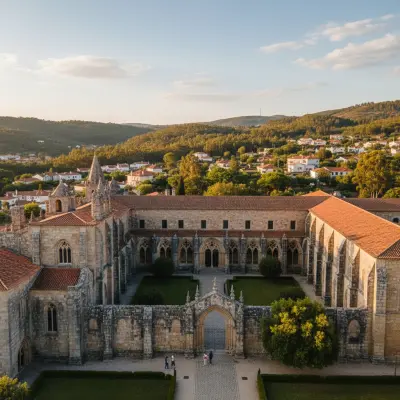
The Pousada Mosteiro de Guimarães is the most cinematic option: sleeping in a former monastery with views over the city, in a setting that justifies the prices. For cyclists, it has the advantage of secure storage space and a location slightly removed from the centre, which makes early-morning starts easier without having to navigate the narrow streets of the historic core before coffee.
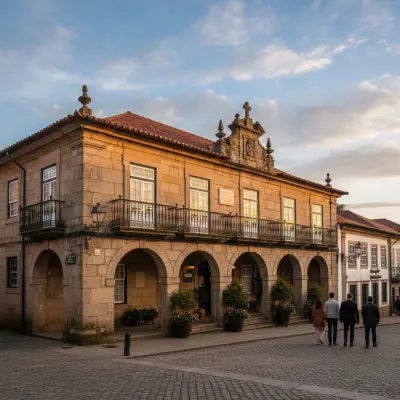
The Hotel da Oliveira, right in the heart of the historic centre, is for those who prioritise urban experience over practicality. Small, beautiful, with Praça da Oliveira at the front door. Not ideal if you have an expensive bicycle you want to stash somewhere comfortable, but perfect for a shorter, more touristic stay. The Hotel de Guimarães offers an effective middle ground: reasonable location, solid comfort, sensible price, and the basic infrastructure a cyclist needs without paying the premium tariff of monument-hotels.
Where to eat (and drink) after pedalling
Calories burned are calories earned. Universal cyclist rule. In Guimarães, this means you have a free pass to attack the heavy plates of the Minho with no guilt at all. Rojões, papas de sarrabulho, duck rice, Lafões-style veal (not local but it's served), bacalhau with broa. Everything you'd normally do three push-ups to offset, you can eat without a second thought after eight hours in the saddle.
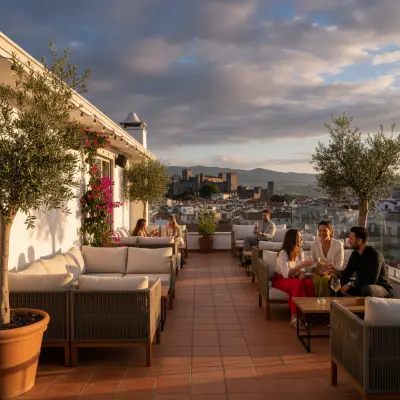
For the end of the day, when the shower is done and tiredness turns into slow hunger, the Rooftop Bar at Eurostars Santa Luzia gives you the view you deserve after hours staring at tarmac. Cocktail in hand, city at your feet, and the private satisfaction that you know that side of the landscape the other guests only saw from a car.
What not to expect
Don't expect Nordic cycling infrastructure. The Portuguese are making progress, but bicycle culture as a means of transport is still under construction. Some drivers give you space, and some drivers seem offended by your existence. There are excellent greenways and non-existent signage. All of this is part of the deal. Adapt or stay home.
Don't expect Alpine landscapes either. The Minho is green, but green of oak woods and vineyards, not high pasture and snowy peaks. The beauty is different, smaller-scale, more domestic. The photographs won't win prizes, but the experience sticks.
Combining with other experiences
If you're in the region for more than a week and want to alternate physical effort with something completely different, it's worth considering weekend breaks elsewhere in the country. Those wanting the North in intensive cultural mode can chain in Holy Week in Braga if dates align. For a radically different experience, more adventure and less pedal, there's the option of an island escape to watch whales in Ponta Delgada, though that already implies an air-travel logistic that takes cycling out of the equation for a few days.
Practical summary
- Best time to come: April to June, September and October.
- Bike rental: 15 to 25 euros per day standard, up to 40 euros e-bike.
- Easy level: Ave River Greenway, 20 to 30 km, no significant climbing.
- Medium level: Penha circuit through parishes, 40 km, 700 to 900 m climbing.
- Advanced level: Minho mountains loop, 80 to 100 km, up to 2000 m climbing.
- Lunch at a rural tavern: 10 to 15 euros with wine.
- End-of-day cocktail: 8 to 12 euros at the Rooftop Bar.
Guimarães by bicycle isn't a postcard experience. It's an experience of details: the smell of woodsmoke from the villages mid-morning, the taste of house wine after lunch, the oblique afternoon light hitting the terraces. It's also an experience of genuine effort, where you pay for the right to the landscape with sweat. But that's exactly what makes it memorable. Tourists come by bus and leave with photographs. You come by bicycle and leave with muscle memory.