Costa Vicentina in August? Try São João da Pesqueira Instead
At 10:30 on an August morning, the parking queue above Odeceixe beach already stretches around the bend. The Costa Vicentina's beaches remain wild; getting onto them does not. Here is how to survive the southwest, plus the alternative nobody considers: São João da Pesqueira, where August is the countdown to harvest.
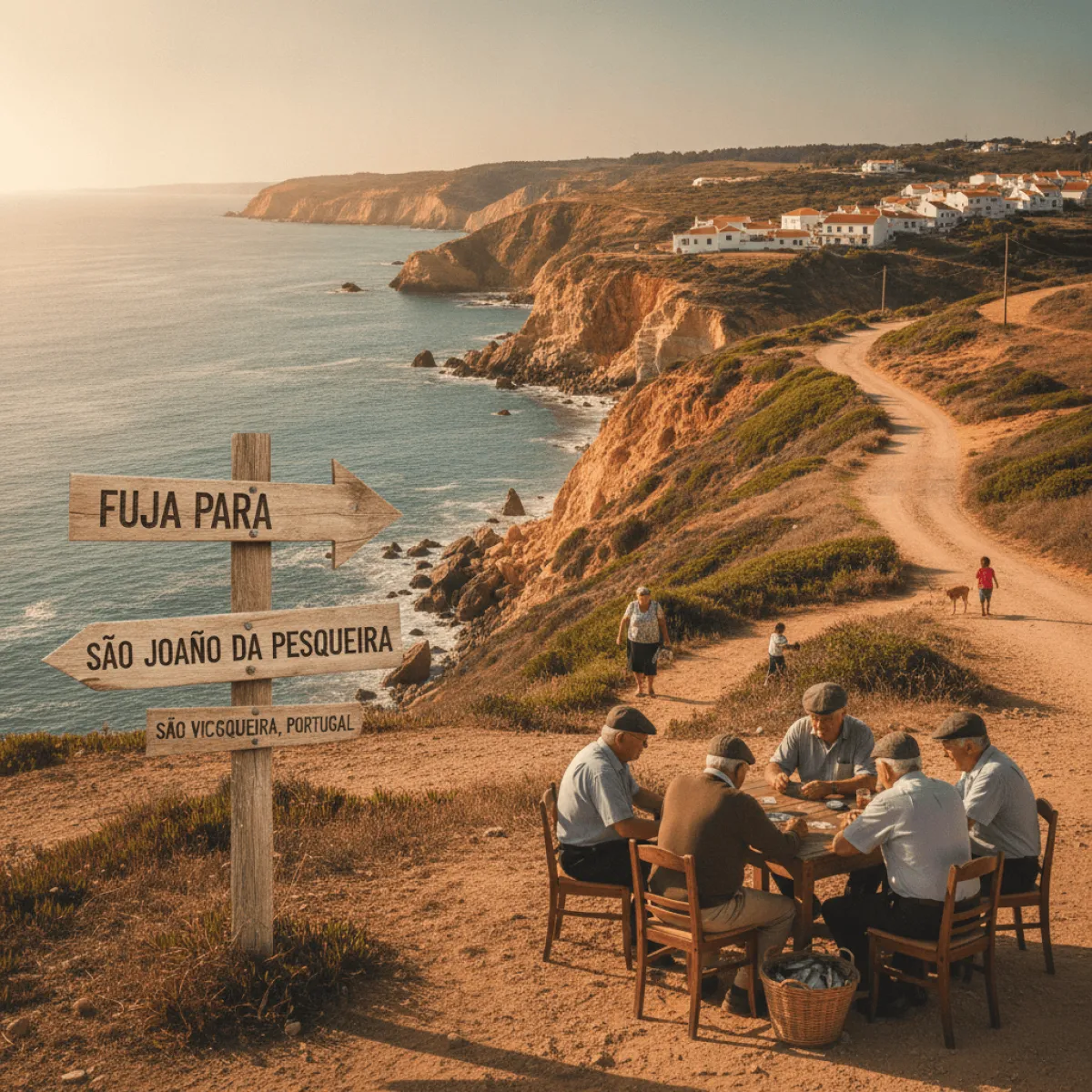
Every year the same ritual repeats itself. In July, half of Lisbon swears this is the year they finally do the Costa Vicentina properly: the wild beaches, the whitewashed villages, goose barnacles eaten with their fingers at sunset. By August, that same half of Lisbon is idling in a parking queue above Odeceixe beach at 10:30am, the car thermometer reading 34 degrees. The beaches are still wild. Getting onto them is anything but.
This article was supposed to be a straightforward itinerary: Odeceixe, Zambujeira do Mar, Carrapateira, freezing swims, grilled fish dinners. And it partly is, because the Costa Vicentina in August still rewards anyone who plays the game correctly. But it is also something else: a contrarian pitch. Because while the entire country points southwest, there is a corner of the Douro, São João da Pesqueira, where August is the countdown to harvest, the wine estates have pools facing the terraced vineyards, and nobody fights you for a sunbed. Read to the end before you load the car.
What August does to the Costa Vicentina
First, the facts. The coast between Porto Covo and Sagres sits inside the Sudoeste Alentejano e Costa Vicentina Natural Park, which is why there are no concrete seafront developments and no resorts perched on the cliffs. It is the most beautiful stretch of mainland Portuguese coastline for exactly that reason. It is also why capacity is finite: small villages, small car parks, small restaurants. In August, all of it strains at the seams.
Add the festival factor: in early August, the Sudoeste festival fills the area around Zambujeira do Mar with tens of thousands of festival-goers. If your idea of a wild beach involves silence, avoid that zone in the first half of the month, or surrender to the chaos entirely. There is no middle ground.
That said, some rules reliably work:
- Arrive at the beach before 9am or after 5pm. The 6pm light on this coast is the best of the day anyway.
- At Odeceixe, the beach has two sides: open Atlantic on one, the mouth of the Seixe river on the other. With kids, the river side is the obvious play, warmer water and no swell.
- At Carrapateira, choose between Bordeira, vast and windswept, and Amado, the surf-school beach. If you want to learn to catch a wave, Amado is your spot; check school prices and times locally.
- The Fishermen's Trail of the Rota Vicentina is spectacular, but in August walk it only in the early morning. There is no shade on those clifftops, and that is not a figure of speech.
- Percebes, goose barnacles: you eat them on this coast or you do not eat them at all. Order them simply boiled and do not argue about the price, which moves with the sea. Harvesting them is dangerous work and priced accordingly.
The workable itinerary: three beaches, two villages
Odeceixe
The village sits on the hilltop, the beach three kilometres below at the mouth of the Seixe, right on the border between the Alentejo and the Algarve. The amphitheatre of cliffs wrapping the sand justifies every bit of the hype. In August a small tourist train runs between village and beach; use it and spare yourself the parking ordeal.
Zambujeira do Mar
A white village perched on the cliff edge with its beach directly below. Outside festival week, it recovers a certain calm by late afternoon, when families climb up from the sand and the terraces fill. Nearby, on the cliffs around Cabo Sardão, white storks nest on rock stacks above the ocean, a rarity in Europe and a good excuse for a detour.
Carrapateira and Aljezur
Carrapateira is the rawest of the three, a small settlement between two enormous beaches. Aljezur, with its hilltop castle, deserves a stop for the old town and for its sweet potato, a matter of genuine local pride here, complete with its own autumn festival. In August, eat it fried or in dessert form wherever you find it.
The contrarian pitch: swap the Atlantic for the river
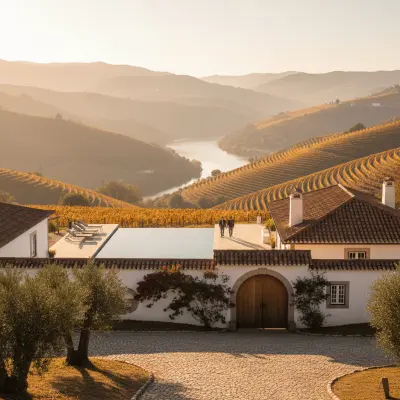
Now for the part where we tell you to do the exact opposite of everyone else. While the coastal roads clog with vans carrying surfboards, the Douro wine country drifts through August nearly empty. Yes, it gets seriously hot, days of 38 to 40 degrees are unremarkable. But August in the Douro is played in the mornings and evenings, with a pool and a glass of something good in between, and São João da Pesqueira, the self-styled capital of Port wine, is the perfect base for that game. It sits just under two hours from Porto and a whole world away from any parking queue.
August is also the month when the entire region holds its breath before harvest. The grapes are finishing their ripening on the terraces, the estates are readying their lagares and logistics, and there is a particular charge in the air that no other month carries.
Where to stay: an estate with more hectares than guests
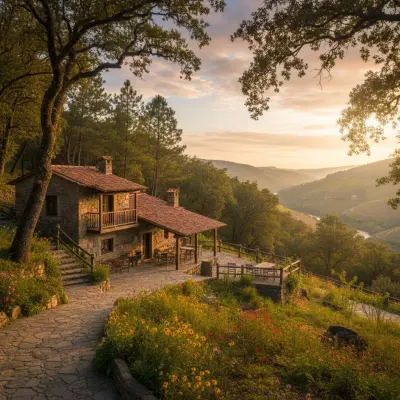
The short answer is Ventozelo Hotel & Quinta in Ervedosa do Douro, within the São João da Pesqueira municipality. It is one of the largest and oldest estates in the region, and the scale shows: instead of a hotel with a garden, you get an entire working property of vineyards, olive groves and walking trails to explore before breakfast, while the temperature still allows it. It is the anti-August of the Vicentina coast: too much space, too few people. Book ahead anyway, because people who discover this place tend to come back.
Eating without reservations or foams
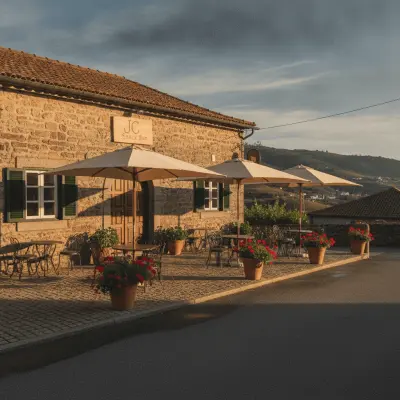
For your everyday lunch, do as the locals do and take a seat at JC Snack Bar in town. No tasting menus, no tweezers: direct cooking, small-town atmosphere, bills that will not frighten you. It is the kind of place where the dish of the day is always the correct decision, and where you can tell within minutes who is local and who is just passing through. Hours and dishes vary, so check locally.
Wine, obviously, plus shade for the siesta
You do not come to São João da Pesqueira without tasting what this land does best. The wine tasting at Quevedo is the right way in: a family producer based in town, relaxed tastings, and the difference between a tawny and a ruby explained by people who actually make them rather than recite a script. In August, book the tasting for late afternoon and keep your morning for the river.
Between tasting and dinner, two options. The first is the São Salvador do Mundo viewpoint, its chapels perched on granite above the Valeira gorge, a stretch of river once so dangerous it had to be blasted open in the eighteenth century, and where Baron Forrester, the Englishman who mapped the Douro, drowned in 1861. The second, far lazier, is the Parque da Mata do Cabo, the town's public patch of shade: bring fruit, water and a book, and do what August in the interior demands, which is absolutely nothing between 2pm and 5pm.
And if you can stretch into September
Here is the real masterstroke of this plan: whoever trades the Costa Vicentina for São João da Pesqueira in August is positioning themselves for harvest. Come September, you can sign up for the grape harvest at Quinta da Gricha and stomp grapes in a granite lagar with must up to your knees, an experience no beach, however wild, can match. Dates depend on how the grapes ripen, so confirm in advance.
And if this corner of the Douro whets your appetite, the region does not end here. Across the river, the Sabrosa estates nobody talks about deserve a full day, and anyone planning a year ahead should mark Santos Populares in Sabrosa for the following June. For spring, save Torre de Moncorvo in bloom, when the almond trees and gardens turn the northeast into something else entirely.
How to decide
If what you want is the ocean, go to the Costa Vicentina, but go by the rules above: wake early, dodge festival week, accept that August there is paid for in patience. If what you want is a holiday in the old sense of the word, sleeping well, eating well, drinking better and seeing no crowds, point the car at the Douro. In São João da Pesqueira, the only bottleneck you will meet comes with a cork in it. And that one, we promise, is worth the wait.