Coimbra: The Vertical Soul of Portugal’s Intellectual Heart
Coimbra is a city of hierarchies and rituals, where a centuries-old university dictates the rhythm of narrow streets and Fado sings of academic longing. Discover how to navigate between the erudition of the Upper Town and the commercial pulse of the Lower Town.
The Geometry of Knowledge
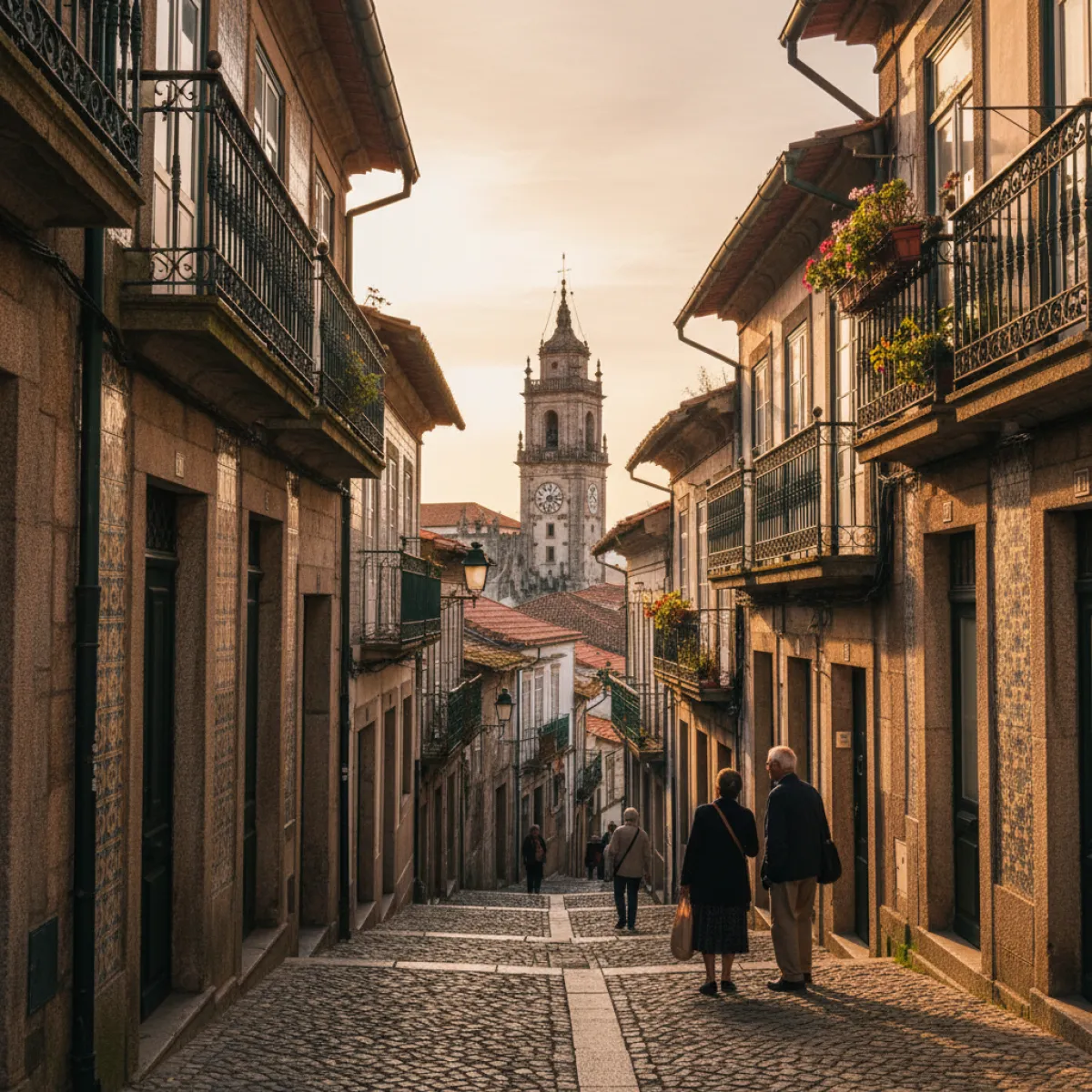
Coimbra does not surrender to the first glance. Unlike Lisbon, which spills over its hills with Mediterranean warmth, or Porto, which clings to granite with commercial tenacity, Coimbra is a city of hierarchies and heavy silences. It is the "Portuguese Athens," yes, but it is also a city of long shadows and rituals that survive time with a nearly liturgical stubbornness. For those arriving, the impact is vertical: the university, perched atop the hill, watches over the Mondego River with the authority of an institution that has dictated the nation’s rhythm for over seven centuries.
Many travelers make the mistake of treating Coimbra as a mere technical stop between the two major coastal metropolises. This is an unforgivable oversight. As we detail in our Portugal Itinerary: A Week in the Heart of the Country, central Portugal demands a deceleration, and Coimbra is its emotional epicenter. Here, gravity feels different; the stones of the Pátio das Escolas seem to absorb the weight of centuries of theological, legal, and scientific thought forged within these walls.
The Pátio das Escolas and the Joanina Library
Ascending the Couraça de Lisboa or the Rua Larga is an act of elevation. At the Pátio das Escolas, the nerve center of the University of Coimbra, the horizon opens over the river, but one’s gaze is invariably drawn to the Joanina Library. Forget the idea of a library as a simple repository for books. This is a temple of power and Joannine propaganda, where Brazilian gold and exotic colonial woods merge into a Baroque style that borders on excess. The air is thick with the scent of old paper and beeswax, and the silence is interrupted only by the echo of footsteps on the wooden floors. It is a space that demands respect, not because of protocol, but because of the magnitude of its intent.
Curiously, the survival of this collection is due to a colony of bats that inhabits the library, devouring insects that would otherwise destroy the paper. It is this kind of detail, the coexistence of the sublime and the biological, that defines the city. When planning your stay, Coimbra: The Grammar of Time in Portugal’s Intellectual Capital is an essential guide for navigating these historical layers without getting lost in the superficiality of mass tourism.
Baixa and the Dialectic of Commerce
Descending from the Alta (Upper Town) to the Baixa (Lower Town) is to change centuries and social classes. While the Alta is the domain of the "doctors" and black capes, the Baixa is the territory of merchants, taverns, and noisy daily life. Rua Ferreira Borges and Rua Visconde da Luz form the backbone of this neighborhood, where traditional commerce still resists global homogenization. Here, one should seek out Pastelaria Briosa for a Pastel de Santa Clara or an Arrufada, conventual sweets that are, in fact, edible history lessons.
For lunch, avoid the tourist traps near Largo da Portagem. Look for the small establishments in the narrow streets adjacent to the Santa Cruz Monastery. Order chanfana, an old goat stew braised in red wine and cooked slowly in black clay pots from Molelos. It is a dish that requires patience and a robust stomach, reflecting the austerity of the Beira region. If you prefer something more contemporary, Fangas Maior offers an intelligent interpretation of Portuguese petiscos in a space that was once a fine grocery store.
Fado de Coimbra: The Song of Academic Longing
At night, the city transforms. Fado de Coimbra is not meant to be heard in noisy restaurants; it is a serenade of the streets or concert halls, sung exclusively by men and inextricably linked to academic life. Unlike Lisbon’s fado, which speaks of fate and life in working-class neighborhoods, Coimbra’s fado sings of farewells, fleeting youth, and idealized love. Attending a performance at Fado ao Centro is both a pedagogical and emotional experience, where the tuning of the Coimbra guitar and the importance of the black cape as a symbol of student equality are explained.
Crossing the River: The Inverse Perspective
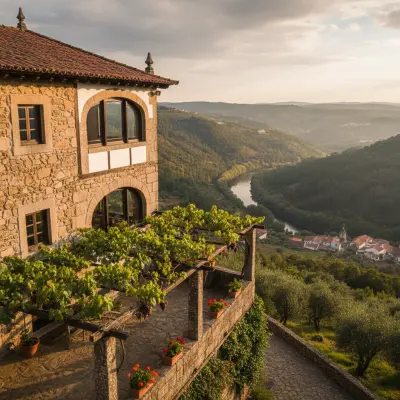
To understand Coimbra in its entirety, one must leave it. Crossing the Santa Clara Bridge to the left bank offers the classic view of the city’s amphitheater-like layout. But for a truly memorable experience, move away from the historic center and climb up to the Miradouro do Vale do Inferno. From here, the city reveals itself as an organic whole, nestled between the hills and the river, allowing for a contemplation that the proximity of the narrow streets prevents. It is the ideal spot for sunset, when the limestone of the university takes on a golden hue that justifies the epithet "City of Light."
This left bank is also home to the Monastery of Santa Clara-a-Velha, a monument to the struggle against the Mondego's floods, and the Quinta das Lágrimas. The latter, though shrouded in an aura of tragic romance due to the legend of Pedro and Inês, is today an example of how luxury hospitality can coexist with historical preservation. As suggested in The Measured Pace: A Seven-Day Passage from Lisbon to Porto via the Ria, this area of the city provides the perfect counterpoint to the intellectual density of the opposite hill.
Practical Guide: The Rigor of the Stay
- When to go: May is the month of Queima das Fitas. The city explodes in euphoria, but prices double and mobility becomes difficult. For a more authentic and tranquil experience, choose autumn (October or November), when the city lights reflect in the Mondego’s mist.
- Budget: Coimbra is significantly cheaper than Lisbon or Porto. A dinner for two in a mid-range restaurant will cost around €45-€60. Entrance fees to major monuments (University and Museums) are approximately €12-€15.
- How to get there: The Alfa Pendular train from Lisbon (1h30) or Porto (1h) is the most civilized option. Coimbra-B station connects to the central station (Coimbra-A) via a frequent shuttle.
- What to avoid: Do not attempt to drive in the historic center. The streets are labyrinthine and parking is almost non-existent. Leave your car on the left bank or in peripheral lots and use your legs, Coimbra is a city meant to be walked, step by step.
Coimbra is not a city for quick consumption. It is a place that demands reading, silence, and a certain disposition for melancholy. After two or three days, when the sound of the "Cabra" (the university tower bell) becomes familiar, you will begin to understand why so many poets could never truly bring themselves to leave. It is a city that infiltrates the memory not through its grandeur, but through the rigor with which it preserves its intellectual and emotional identity.