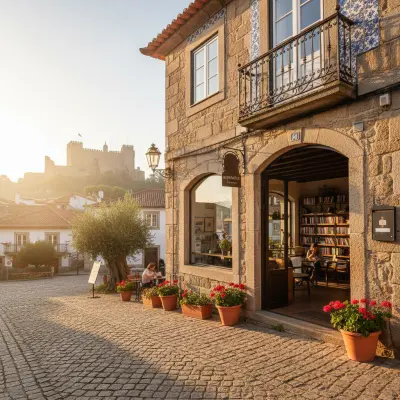
Castelo Branco's Sephardic Trail: A Jewish Heritage Route
On the doorframes of Rua Nova, rectangular grooves betray mezuzahs ripped out five centuries ago. Castelo Branco's Jewish trail has no spectacular museums, but it has something better: a city that reads completely differently once you know the Sephardic code.
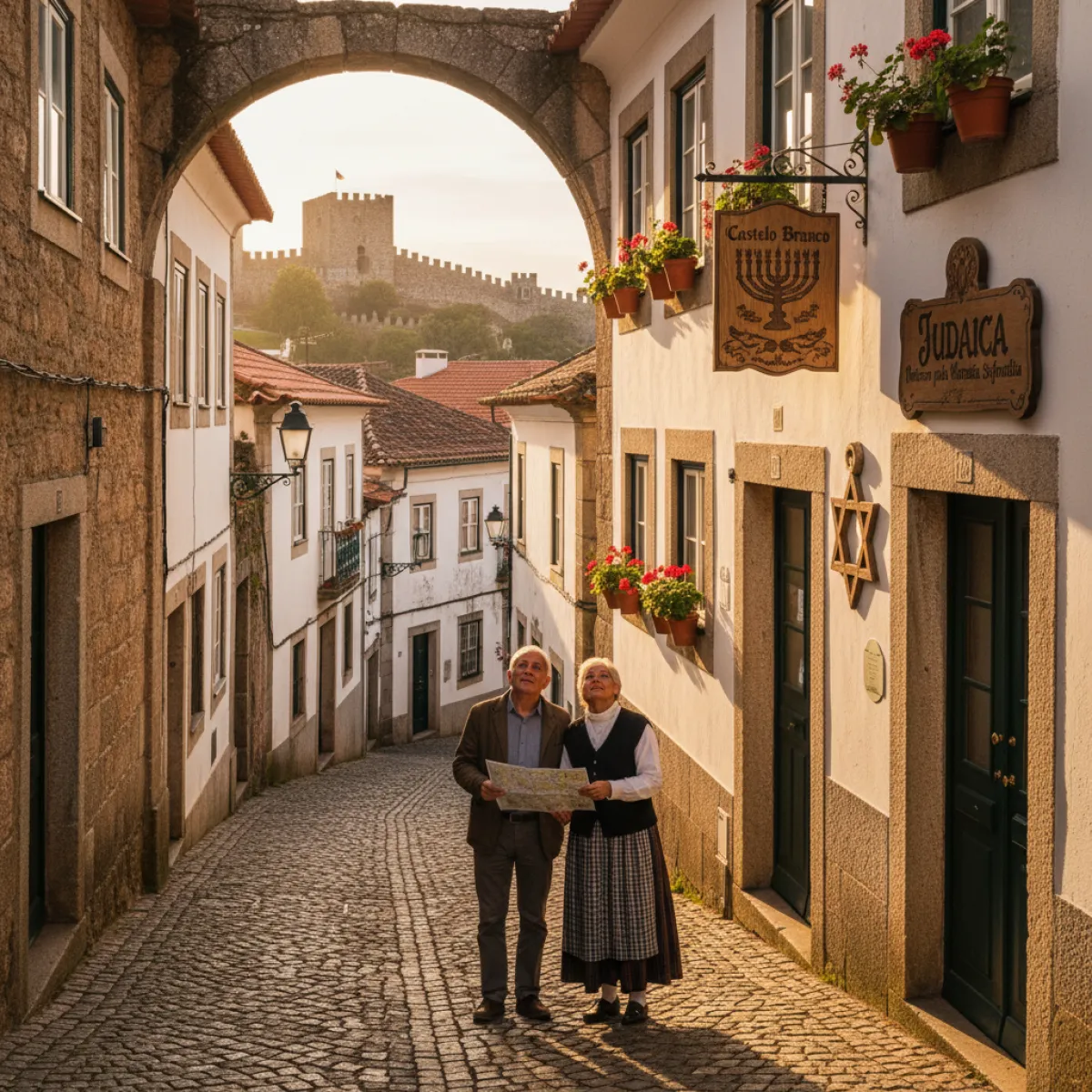
There's a cross carved into the bottom of a doorframe in Castelo Branco. It's not decoration. It's the trace of a mezuzah ripped out and hastily replaced with a Christian symbol when the Inquisition tightened its grip in 1496. This kind of detail, invisible to anyone who doesn't know what to look for, is what makes the Jewish heritage trail in this city so compelling. There are no spectacular museums or explanatory plaques on every corner. What there is: a reading of the city that changes completely once you know the code.
The Jewish Quarter: Streets That Keep Secrets
The old judiaria of Castelo Branco was concentrated on what are now called Rua Nova and Rua dos Cavaleiros, in the zone between Praça Velha and the Castle. The medieval layout remains almost intact: narrow streets, houses with low doors, passages connecting alleys to interior courtyards. This was survival architecture, designed for a community that needed to live close together and, when necessary, disappear quickly.
Look for the marks on the doorframes. On several houses along Rua Nova you can still see the rectangular grooves where mezuzahs once hung, the small cases containing Torah verses that Jews affix to their doorposts. Some have crosses superimposed, carved after the forced conversions. It's a palimpsest in stone.
The Synagogue was likely somewhere in this area, but the exact location has been lost. Some scholars point to a building on Rua Nova based on its orientation and internal structure, but there's no definitive archaeological confirmation. It's another of the ambiguities that make this trail honest: not everything is known, and the uncertainty itself tells a story of deliberate erasure.
The Cristãos-Novos and the Double Life
After the expulsion edict of 1496, Castelo Branco's Jewish community didn't disappear. It converted, officially. In practice, many families maintained Jewish rituals in secret for generations. They lit candles on Friday evenings, fasted on Yom Kippur claiming illness, cleaned their houses thoroughly before Jewish Passover.
The Lisbon Inquisition Tribunal prosecuted dozens of cristãos-novos from Castelo Branco throughout the 16th and 17th centuries. The trial records, available at the Torre do Tombo national archive, make brutal reading: denunciations by neighbours, confessions under torture, meticulous descriptions of domestic religious practices. Many were condemned to wear the sambenito, the penitential garment that publicly marked them as heretics.
This history has consequences reaching into the present. In the 1990s, researchers began documenting crypto-Jewish practices that still survived in the Beira Interior region. In Castelo Branco and nearby villages, they found families maintaining rituals without knowing exactly why: "my grandmother always did it this way" was the most common explanation. Tradition had survived centuries, reduced to gestures whose origins had been lost.
The Bishop's Palace Garden: Hidden Symbolism
The Jardim do Paço Episcopal is Castelo Branco's most visited monument, and rightly so. But few visitors notice a curious detail: the statues of kings on the Kings' Staircase are deliberately different sizes. The three kings from the Philippine period (1580-1640) are intentionally smaller than the others, an insult in stone that survived centuries. This kind of coded message in art was familiar to the cristão-novo community, accustomed to hiding meanings beneath innocent surfaces.
The garden is open daily and entry costs around €2 (check locally for current pricing). Go early in the morning, before 10am, when the tour buses haven't arrived yet. Take time to observe the baroque staircase details without rushing.
Food as Memory
The gastronomy of Beira Interior holds Sephardic traces that most people eat without questioning. Alheira sausages, originally created as camouflage (cristãos-novos who couldn't eat pork made sausages from bread, olive oil and poultry to simulate normality), are the best-known example. But there are others: the dry unleavened cakes that appear at certain times of year, recipes that avoid mixing meat with dairy.
In Castelo Branco, the best spot for dinner after a day walking the judiaria is Repvblica, in the historic zone. It's not a Jewish-themed restaurant, but it's a place with character where you eat and drink well, with a menu that values local produce. Order the regional cheese to start: Castelo Branco DOP cheese deserves your attention.
Embroidery: Another Heritage of Coded Symbolism
Castelo Branco's famous silk embroideries have a less obvious but equally interesting connection to Jewish heritage. The traditional motifs, with their profusion of fertility and nature symbols, use a visual language that some researchers associate with Sephardic influences. The Tree of Life, a recurring motif in the embroideries, is a symbol shared between Christian and Jewish traditions.
If this intrigues you, the experience decoding the symbolism of Castelo Branco's embroidery is an excellent way to deepen this reading. It's not a technique workshop: it's an immersion in the meanings hidden behind each stitch. For those who prefer to get hands-on with silk, there's also a practical workshop in the historic centre that teaches basic stitches and contextualizes the tradition.
Practical Route: Half a Day in the Judiaria
Start at Praça Velha (Praça Camões), the civic heart of the medieval city. Walk up Rua dos Cavaleiros toward the Castle. Go slowly, look at the doorframes. On Rua Nova, search for the mezuzah marks. Continue to the Templar Castle, from where you get views over the entire medieval urban fabric and understand how the judiaria fitted into the city's layout.
Descend through the Bishop's Palace Garden. Then lunch in the lower town. The full route takes two to three hours if you walk without rushing and stop to observe details.
Getting There
Castelo Branco has direct train connections to Lisbon (Intercidades service, approximately 2h30) and sits on the A23 motorway. From Coimbra by car, it's about 90 minutes via the A13 and IC8. The city works well as a stop on a week-long itinerary through central Portugal.
When to Go
Spring and autumn are ideal. Summer in Beira Interior is brutally hot (easily 40°C in July and August), and walking cobblestone streets in midday sun is not enjoyable. If you go in summer, do the route first thing in the morning. Winter is cold but dry, perfectly viable with proper clothing.
Going Deeper
The municipality occasionally organizes themed guided walks of the judiaria. There's no fixed schedule, so check at the tourism office on Praça Velha. If you have academic interest, Portugal's national archive (Torre do Tombo) in Lisbon has digitized Inquisition trial records from Castelo Branco's cristãos-novos available online.
The Broader Context
Castelo Branco doesn't exist in isolation. The Rede de Judiarias de Portugal (Portuguese Jewish Quarters Network) links several cities with documented Sephardic heritage: Belmonte (with the best-known community), Guarda, Trancoso, Tomar. But Castelo Branco has an advantage: it's less touristy, less staged, more authentic in its relationship with this history. There's no Jewish souvenir shop or giant menorah in the square. What there is: old stone and the memory it holds for those who know how to read it.
If you're exploring this region and want to combine with other interests, both Coimbra's street art scene and the walking trails of central Portugal are within reasonable distance. The Beira Interior rewards those who stay more than one night.