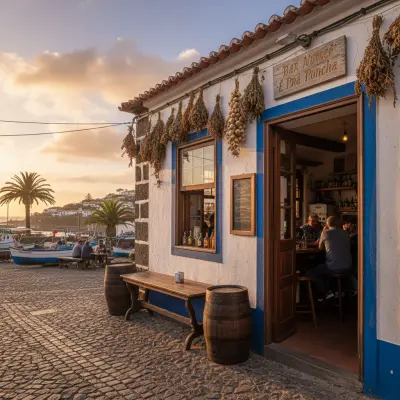
Câmara de Lobos: What Stays After the Tour Buses Leave
Most tourists give Câmara de Lobos thirty minutes: harbour photo, quick poncha, goodbye. But the village Churchill painted has terraced vineyards, freshly caught black scabbardfish, and one of Europe's highest sea cliffs, all waiting for anyone willing to stay the full day.
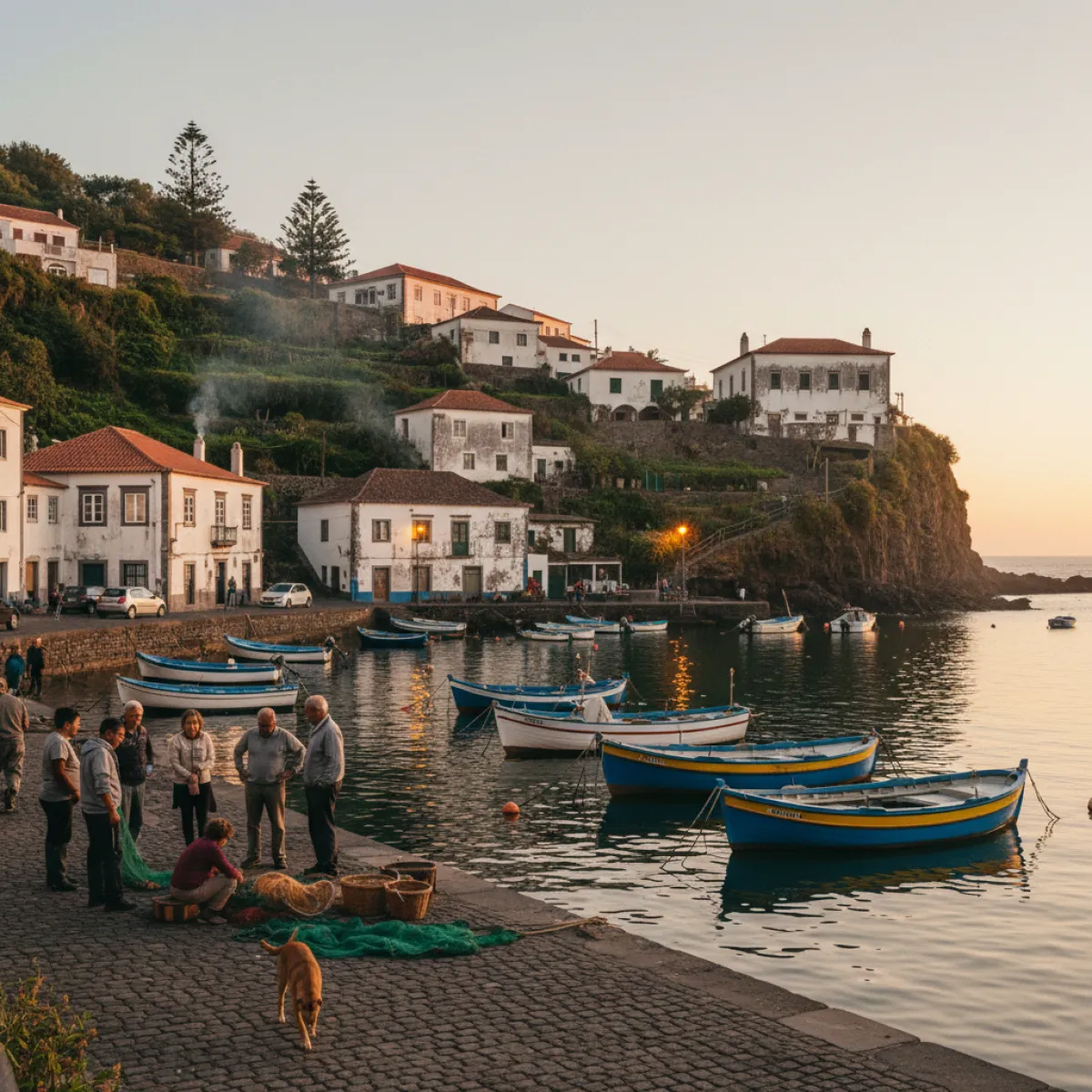
Everyone knows the scene: the picturesque harbour, the colourful fishing boats, the bay Churchill painted in 1950. Câmara de Lobos is probably the most photographed village in Madeira, and for good reason. The problem is that most visitors arrive by tour bus, take the photo from the viewpoint, drink a poncha at the first bar they see, and leave. Thirty minutes. That's all they give a place that deserves a full day.
I'll be direct: if you only know the marina, you don't know Câmara de Lobos.
Beyond Churchill's bay
The historic centre orbits around the harbour, yes, but it extends up steep lanes towards the church of São Sebastião and beyond. This is where it gets interesting. Early morning, before ten, the streets near the port still smell of fresh fish and salt. Fishermen who work with espada preta, the deep-water black scabbardfish that's a Madeiran obsession, come in with their catch. There's a real energy here, not one staged for visitors.
Walk up Rua de São João de Deus towards the upper village. The houses have weather-worn facades, laundry drying on balconies, geranium pots that nobody planted for the photo opportunity. It's a working village, not a set. There's a small chapel, Capela do Corpo Santo, by the harbour, worth peeking into if it's open.
What to eat (and what to skip)
Câmara de Lobos is espada preta territory. Black scabbardfish with fried banana. If you've never tried it, this is the place to do it. The fish is caught at great depth off the Madeiran coast and has a firm, almost meaty texture. The banana pairing sounds odd but works. Look for small restaurants with short menus and no photos on the door. That's almost always a better sign.
Espetada madeirense, beef on a laurel wood skewer, is another classic you'll find here. Estreito de Câmara de Lobos, the parish above the village on the hillside, is particularly known for it. On weekends, restaurants up there fill with local families, which is always a reliable indicator.
Avoid the restaurants with menus in five languages in the most touristy part of the harbour. They're not terrible, but they're average and charge extra for the view. If you want to eat with an ocean panorama, drive up to the Cabo Girão viewpoint instead, a few kilometres away, and have a picnic. The glass platform suspended almost 600 metres above the ocean is an experience in itself, and entry is free.
The right poncha in the right place
Poncha is the drink of Madeira. Sugarcane spirit, honey, and lemon juice, mixed with a special wooden stick called a caralhinho (yes, that's really what it's called). It's stronger than it seems and it's easy to lose count after the second one.
There are poncha bars all over Madeira, but Câmara de Lobos has one of the best. Bar Number Two, É Prá Poncha, is the kind of spot where you go for the drink and stay for the conversation. Order the regional poncha, which adds passion fruit to the lemon. If you want something less alcoholic, try nikita, a mix of beer and pineapple ice cream. It's a Madeiran invention that sounds ridiculous but works surprisingly well on hot days.
A poncha costs between €2.50 and €4, depending on where you go. Don't pay more than that.
The levadas: the other side of Câmara de Lobos
Most visitors don't associate Câmara de Lobos with hiking, but they should. The levadas, Madeira's irrigation channels that crisscross the island, pass through here and offer accessible walks with extraordinary views over the south coast.
Levada do Norte, which passes through Estreito de Câmara de Lobos, is a peaceful walk through terraced vineyards and laurel forest. It's not one of the most famous levadas, which is an advantage. If you want to explore the better-known trails in the region, our guide to Funchal's essential levadas is a good starting point, especially if you're visiting in spring.
For serious hikers willing to explore other parts of Portugal, the Rota Vicentina in the Alentejo is another experience worth every kilometre, though in a completely different register.
The wine nobody mentions
Madeira is famous for its fortified wine, but few tourists know that the Estreito de Câmara de Lobos area is one of the main production zones. The terraced vineyards, called poios, climb the hillsides and grow some of the island's most important grape varieties: mostly Tinta Negra, but also Verdelho.
In September, the Festa da Vindima in Estreito turns the parish into a grape-stomping, espetada-eating festival. If you happen to be around, it's one of the most genuine celebrations on the island, without much tourist staging. Check locally for exact dates, as they shift from year to year.
Outside harvest season, you can visit wineries in the area, but organised wine tourism is still limited compared to Funchal. The best strategy is to ask at local restaurants if they know anyone offering visits.
Cabo Girão and the suspended terraces
Cabo Girão technically sits within the municipality of Câmara de Lobos and is one of those obligatory stops that actually lives up to the reputation. The cliff stands at around 580 metres and the glass skywalk at the top makes you feel suspended over the Atlantic. It's free and open daily.
What's less known: down at the base of the cliff, there are agricultural plots, fajãs, accessible only by cable car. Farmers still grow banana and vine on these terraces by the sea. You can take the cable car down (check locally for schedules and prices, which change with the season), and it's worth it for the reverse perspective. Looking up from the base of the cliff is more impressive than looking down from the top.
How to get there and how to plan your day
Câmara de Lobos is about 10 minutes by car from Funchal, or 20 to 30 minutes by bus (Horários do Funchal lines, departing from Praça da Autonomia). The bus works perfectly well and costs just over €2.
My advice: arrive in the morning, walk the harbour and the upper streets, have lunch at a small local restaurant, visit Cabo Girão in the afternoon, and return to the village at the end of the day for a poncha. If you have time and enjoy hiking, add a levada walk early in the morning.
If you're exploring Madeira more broadly, combine Câmara de Lobos with a day in Santana, on the other side of the island. Our 24 hours in Santana itinerary helps you plan that, and if you like local crafts, the guide to Santana's artisan goods has solid suggestions for what to bring home.
A village that works without tourists
What I like most about Câmara de Lobos is that it functions perfectly well without us. The fishermen go to sea because it's what they do, not because someone's filming. The old men play cards at the café by the church because they always have. The poncha is served strong because that's how you drink it, not because it looks good on Instagram.
It's a working village that happens to be beautiful. And that combination, increasingly rare, is what makes it worth more than thirty minutes and a photograph.