Câmara de Lobos: A Hard-Nosed Guide to the Best Poncha Taverns
Forget the tourist traps. In Câmara de Lobos, poncha is a ritual of aguardente, honey, and lemon, mixed with surgical precision. Discover the taverns where fishermen still call the shots.
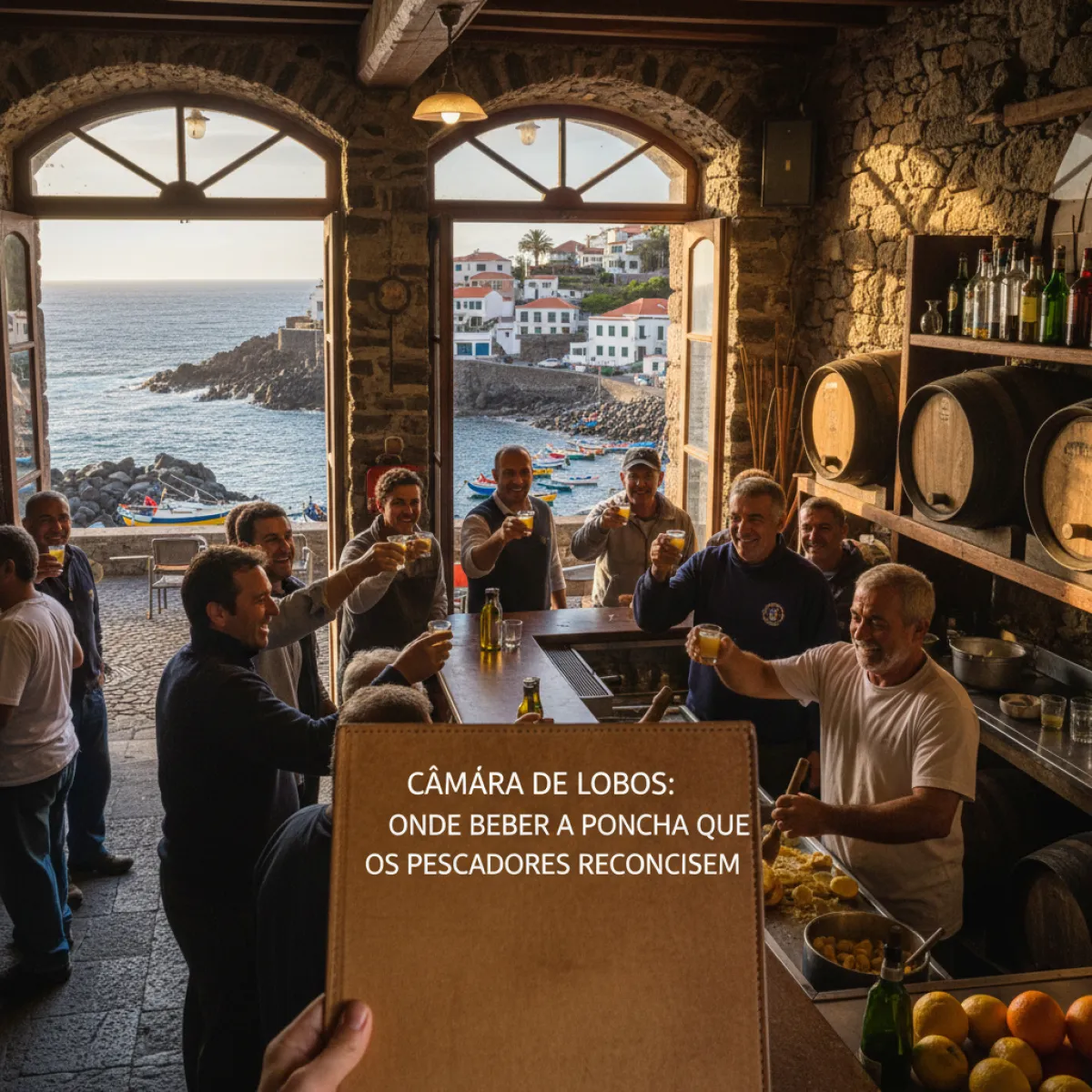
The Ritual of Madeira in a Glass
Arriving in Câmara de Lobos and not drinking a poncha is like visiting Rome and skipping the Pope, except the Pope won't give you a monumental headache if you overindulge. Forget the neon-colored passion fruit or kiwi versions you see on tourist menus in Funchal. Here, in Largo do Poço, poncha is a serious matter, a bar-top science involving sugarcane aguardente (rum), bee honey, and lemon. This is the fuel that, for decades, warmed the chests of fishermen before they launched their "xavelhas" into the Atlantic in search of the black scabbard fish.
If you're looking for the aesthetic and historical side of the village, you've likely read how Câmara de Lobos: The Fishing Port That Seduced Churchill became Madeira's quintessential postcard. But the former British Prime Minister came here to paint; we are here to drink. And to drink well, you must flee the front line of terraces where the ice is excessive and the honey is replaced by industrial syrups of dubious origin.
A Bica: The Temple of Tradition
We start at A Bica. It's not just a bar; it's an institution. Located right in the heart of the historic center, this is the place where the sound of the caralhinhothe wooden muddler used to emulsify the mixture, is the constant soundtrack. Here, the poncha is made to order. There are no pre-prepared pitchers gathering dust. The bartender slices the lemon with surgical precision, crushes the peel to release the essential oils, and mixes the honey with the energy of someone kneading bread dough.
Order the "Regional." It’s the original version. The aguardente used here is potent, distilled in copper columns, and the honey should be eucalyptus or wildflower from the mountains. The result is a balanced drink: the acidity of the lemon cuts through the sweetness of the honey, while the aguardente ensures you remember you’re alive. A glass costs about 3 euros and is mandatorily accompanied by a small plate of peanuts or salted lupini beans. This is called the "dentinho", the little bite that keeps the poncha from knocking you down before the second round.
Filhos d'Mar and the Tavern Spirit
If A Bica is the temple, Filhos d'Mar is the workshop. It’s a more rustic space, walls adorned with fishing nets and photographs of men who spent more time at sea than on solid ground. Here, the specialty is the "Fisherman’s Poncha" (Pescador). Unlike the Regional, the Fisherman’s uses sugar instead of honey and orange instead of (or alongside) lemon. It is drier, harsher, and for many locals, the only true way to consume the island's liquid neon.
In this tavern, the ritual of the dentinho is taken to another level. You might be lucky enough to catch "gaiado seco" (a type of small tuna, sun-cured) or a "picado" of wine and garlic beef. The atmosphere is loud, the floor might be slightly sticky, and no one is going to apologize for it. This is the authenticity missing from the design bars of Funchal. If you’re planning a quieter escape, perhaps to the north of the island, it’s worth comparing this rawness with the family-friendly vibe of São Vicente, where the pace is different and local wine often takes the place of aguardente.
The Geography of the Glass: From Harbor to Hillside
Câmara de Lobos stretches up the mountainside, and as you climb, the poncha changes personality. In the roadside bars of the Caldeira area, the mixture becomes more generous with the aguardente dosage. It’s here that you realize poncha isn't a cocktail; it’s a social survival tool. At Bar do Peixe, for example, the focus is on freshness. They pride themselves on using only organic lemons from the surrounding farms. The aroma coming off the glass is almost therapeutic.
For those who have explored the mainland and are familiar with Hiking the Rota Vicentina in March: Spring Blooms and Coastal Views, the contrast is fascinating. While in Alentejo the journey is made of silences and plains, in Câmara de Lobos, the journey is vertical and noisy. Poncha is the catalyst for conversations that start with the price of fish and end in international politics, all within three square meters of worn wooden bar space.
Golden Rules for Surviving the Route
- Never drink on an empty stomach: The dentinho is there for a reason. If they offer peanuts, eat them. If there are lupini beans, don't be shy about throwing the shells into the designated bowl.
- Avoid the "flavored" ponchas: Tangerine is acceptable in the right season. Passion fruit is for people who don't actually like poncha. Strawberry is a crime against regional heritage.
- Watch the caralhinho: If the bartender doesn't use the wooden muddler, leave discreetly. The emulsion of honey fat with alcohol requires manual motion, not a metal spoon.
- Timing: The best taverns open early (before noon) and fill up in the late afternoon. Avoid the peak tourist bus hours between 3 PM and 5 PM.
The Northern Contrast
After a day immersed in the humid and frantic south of Câmara de Lobos, crossing the tunnel toward the north is a necessary shock. If poncha is tradition and chaos, the north offers a cleaner aesthetic. In São Vicente, for instance, you can find The New Northern Brutalism: Contemporary Art and Design in São Vicente, a side of the island that feels like it belongs to another century, far from the fishing nets and the smell of honey and lemon. It is the perfect detox for the aguardente hangover that will inevitably visit you the next morning.
The poncha of Câmara de Lobos is not just a drink; it is physical proof that Madeira resists total gentrification. As long as there is a man with a caralhinho in hand and a bottle of 50-degree aguardente on the bar, the village will keep its backbone. Don't come looking for luxury; come looking for the truth, preferably served in a small glass with a peanut on the side.
