The New Northern Brutalism: Contemporary Art and Design in São Vicente
Discover how the São Vicente valley has become Madeira's epicenter for minimalist design and brutalist architecture, challenging the traditional aesthetics of the south.
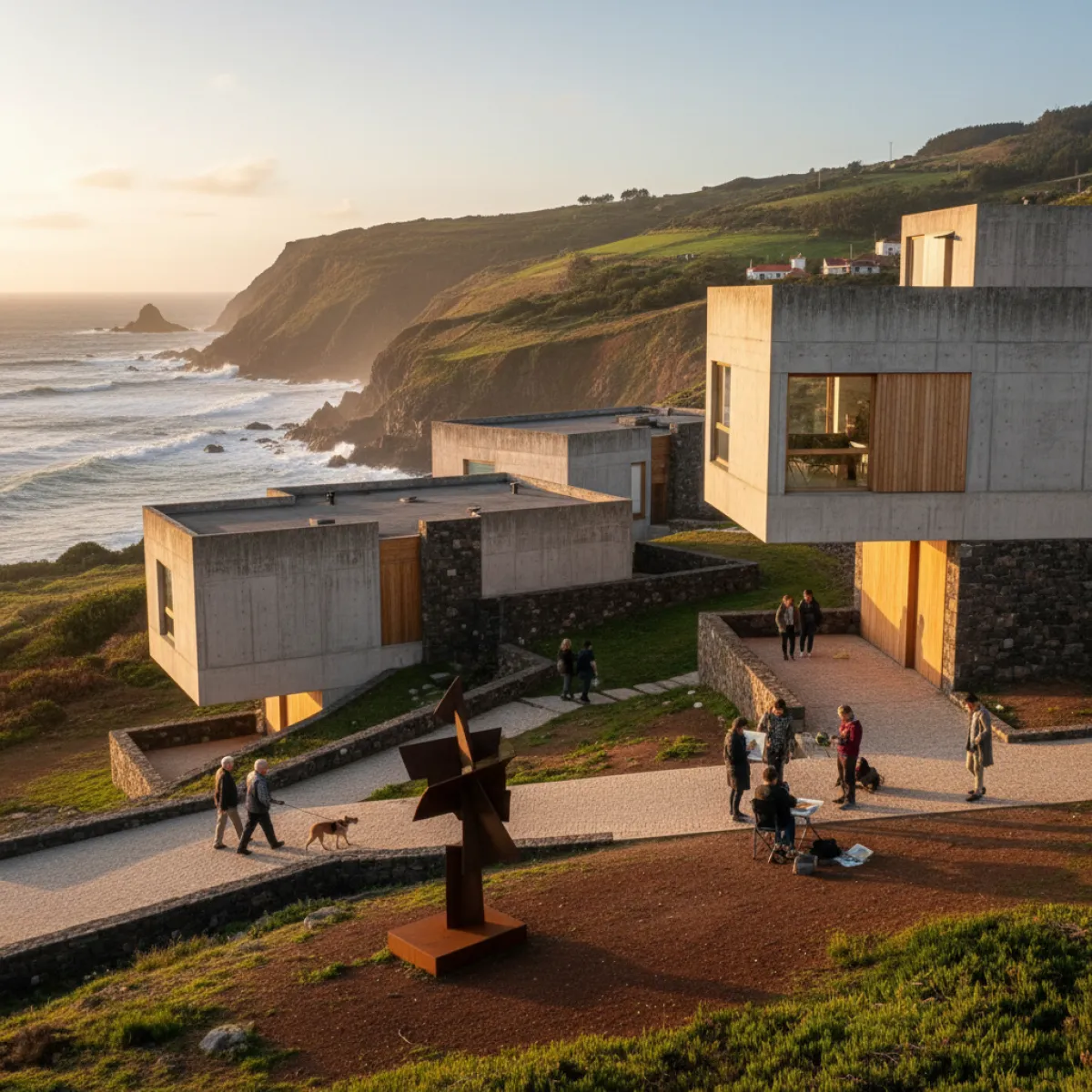
The Basalt Aesthetic: Where Nature Dictates the Line
São Vicente is not for those seeking the sun-drenched, polished sweetness of Madeira’s southern coast. Here, on the northern slopes, the island reveals itself in a state of absolute rawness, a succession of vertical cliffs and dense greens that seem to defy gravity. It is within this theater of geological drama that a contemporary art and design scene has flourished, moving away from obvious folklore to embrace minimalism, brutalism, and a reinterpretation of local craftsmanship. While the south is often guided by tradition, as seen in the iconic fishing port that seduced Churchillthe north challenges the eye with a modernity that emerges directly from the basalt.
Design in São Vicente is not an ornament; it is a tectonic response to the landscape. Walking through the valley, one notices that new architectural projects, whether small-scale boutique stays or cultural spaces, share an austere color palette: deep grays, volcanic blacks, and the warm browns of chestnut wood. This choice is more than aesthetic; it is a form of sophisticated camouflage. The Volcanism Centre, though established for some years, remains a benchmark for how architecture can mediate the human experience with the earth's interior, using concrete to emulate the textures of lava tubes.
Curating Space and Object
In the narrow streets branching off from the main church, small workshops and restored houses reveal a new wave of creatives. This isn’t about selling traditional embroidery to distracted tourists; it’s an exploration of form and function. Local and international designers, drawn by the valley’s relative isolation, are working with wicker in sculptural ways, creating furniture pieces that resemble art installations more than utilitarian objects. The light in São Vicente, often filtered through a persistent mist descending from the Encumeada pass, lends these pieces a cinematic aura, emphasizing shadows and organic textures.
For the traveler with a keen eye, pleasure lies in the details. It’s in the finish of a dry-stone wall integrated into a modern villa, or the choice of artisan ceramics in one of the village's new dining concepts. Art here is tactile. There is a renewed focus on pottery using local clays, resulting in pieces with a deliberate imperfection that mirrors the irregularities of the surrounding cliffs. Budgets for these pieces can range from €50 for a utilitarian bowl to €800 for a larger sculpture, reflecting their exclusivity and the time required for manual production.
Gastronomy as Visual Expression
The culinary scene in São Vicente has also been influenced by this design-led sensibility. Forget generic taverns; the focus is now on presentation that honors the raw material. What to order? Look for local trout, but skip the conventional fried version. The region’s new chefs are presenting it in dishes that are true chromatic compositions, using herbs from the Laurissilva forest and edible flowers to create a vibrant visual contrast with dark stone plates. A meal in one of these signature spaces will cost between €45 and €70 per person, including a selection of table wines produced on the steep northern slopes, known for their sharp acidity and extreme minerality.
The wine itself is a design object here. The vineyards, often planted in low trellises (latadas) to resist the Atlantic winds, create a geometric pattern in the valley that fascinates any photographer or enthusiast of repetitive forms. Visiting a winery in São Vicente in October, during the season of low light and long shadows, is a lesson in visual composition. The contrast between the electric green of the vine leaves and the black volcanic soil is one of Madeira’s most rewarding visual spectacles.
Logistics and Planning: The Rhythm of the North
To truly absorb this atmosphere, avoid a rushed day trip. The ideal approach is to book at least two nights in one of the boutique hotels that prioritize minimalist design. Budgets for this type of accommodation hover around €180 to €250 per night. The best time to visit is between September and November, when the tourist crowds thin out and the mist grants the village that productive melancholy that so attracts artists.
- Transport: Rent a car with decent power. The roads connecting São Vicente to the rest of the island are safe, but the inclines demand torque. Avoid public transport if your goal is to visit isolated studios on the slopes.
- Gear: High-quality lighting for photography is essential. Bring a wide-angle lens to capture the scale of the architecture and cliffs, and a macro lens for the details of volcanic textures.
- Attire: Design in São Vicente extends to what you wear. Opt for technical yet aesthetically clean layers. The weather changes in minutes; a well-cut waterproof jacket is a must.
In summary, São Vicente is positioning itself as Madeira’s intellectual retreat. While the south continues to celebrate historical legacy and classic beauty, the north is constructing a new visual narrative. It is a place for introspection and the appreciation of pure form, where design does not attempt to outdo nature but rather pays it a silent, rigorous tribute. For those seeking substance and an uncompromising aesthetic, this valley is undoubtedly the most interesting point on the island's contemporary map.
