Caldas da Rainha Cafés: Where to Stop and What to Order
Where to take your 8am espresso, your 4pm galão, and what to order in between: an honest route through the cafés of Caldas da Rainha, with real prices, unwritten rules, and the truth about industrial queijinho do céu.
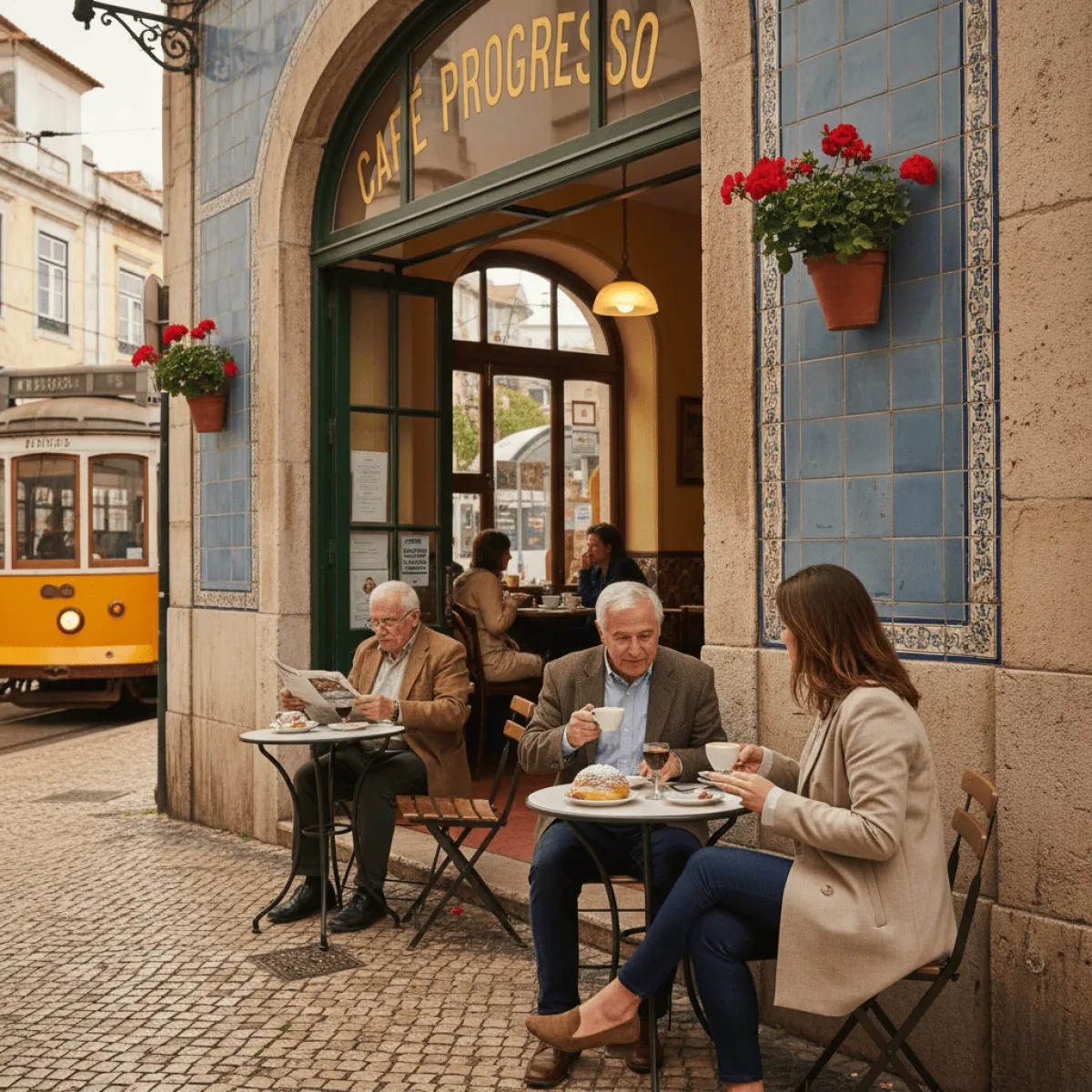
I have a theory I share with anyone who asks me about Caldas da Rainha: you can judge a town by how it drinks its coffee before nine in the morning. In Caldas, this happens on two fronts at once. On Praça da República, under the canvas awnings of the fruit market, retired men in flat caps order espressos for 70 cents and argue about the price of fish they haven't bought yet. Two blocks over, on Rua de Camões, there are people on laptops with oat-milk flat whites. Neither is wrong. And it's precisely this coexistence, without hostility or irony, that turns the cafés of this town into a cheap and delicious anthropology lesson.
I'm not going to pretend Caldas is a specialty-coffee capital on the level of Porto or Lisbon. It isn't. But it has something better: a human scale where you can have three coffees in one morning, in three different places, in three different moods, and go home feeling you've understood something about the place. This is the route I take when friends arrive, with honest warnings about what to order and what to skip.
Starting the day: the espresso and the toast nobody advertises
If there's a morning ritual in Caldas da Rainha, it's the market one. I'm not talking about the fruit market as a tourist attraction (although it is, every day from 8am to 1pm), but about what happens around it. The cafés orbiting Praça da República open early and live off the foot traffic of people buying turnip greens, parsnips and that Algarve orange that still exists in January because someone insists on bringing it.
My advice hasn't changed in five years: order a short espresso (a bica) and a slice of buttered toast. Toast, in Caldas, is taken seriously. Thick Alentejo bread, salted butter, full stop. It costs around 1.80€. If you see someone ordering a ham-and-cheese toastie at nine in the morning, they're either a tourist or hungover. Locals eat toast and read the newspaper folded in four because the table is small.
Another rule: don't order a cappuccino before 11am. Not out of snobbery, but because steamed milk in a café that mostly serves espressos tends to be tepid and sad. Wait. The cappuccino in Caldas is a mid-morning drink, ideally paired with a pastel de feijão from nearby Torres Vedras, which most local bakeries buy wholesale and which is, frankly, better than the local pastry they'll usually try to push first.
The pastel de feijão, the queijinho, and the naming problem
Here we arrive at the sensitive subject. Caldas da Rainha has its own pastry, the cavaca das Caldas, a dry biscuit covered in white royal icing that looks like it was designed to be eaten with linden tea at grandma's house. It's a real specialty, with history, and it should be served with more pride. The problem is that, in practice, what sells more is pastel de feijão, pastel de nata, and the dreaded queijinho do céu, which comes in industrial packaging and tastes of palm-oil margarine going up your nose.
My honest recommendation: if you see fresh cavacas (you can tell, they're opaque and almost crumbly, not shiny or spongy), order one. You'll pay 1.20€ and have a small geographic experience. If the cavacas look plasticky, skip to the pastel de nata, which is at least universal. Avoid the queijinho do céu unless the person behind the counter swears it was made on-site. It almost never is.
The mid-morning pause: where the town actually works
Around 10:30, the town changes character. Civil servants come down from their offices, shopkeepers on Rua da Liberdade close up for fifteen minutes, and the busiest cafés are the ones in the pedestrian zone between Praça 5 de Outubro and Parque D. Carlos I. This is where I tell visitors passing through to grab a sunny terrace seat and order a meia de leite with a croissant misto.
The meia de leite, for those who've never ordered one, is the Portuguese equivalent of a French café au lait: half coffee, half hot milk, in a large cup. It costs between 1.30€ and 1.60€ depending on the place. The croissant misto is the Portuguese brioche-style croissant (not the French flaky kind) with ham and cheese inside, pressed in a sandwich grill until it has black stripes. It is not gastronomy. It is affection. Eat it without guilt.
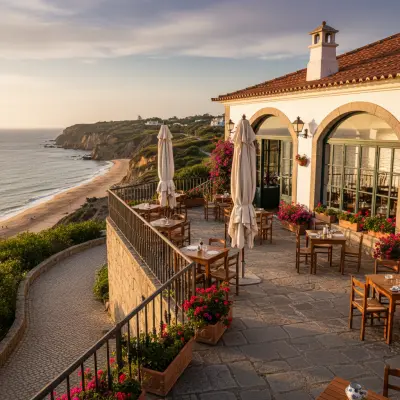
If the morning is pretty and you have time, this is the right moment to start planning a short escape. Caldas works well as a base. Within half an hour by car you have three viewpoints I recommend to everyone, and at each one you'll want to have brought a flask of coffee: Miradouro da Foz do Arelho, with its view over the Óbidos Lagoon opening to the Atlantic, is the most spectacular in late afternoon; Miradouro de Santa Catarina is what I choose when I want to think in silence; and Miradouro de Salir do Porto, with that giant dune to the west, is the move when out-of-town guests need to be impressed without effort.
Late lunch: the café that serves soup
There's a category of Portuguese café that deserves its own chapter: the café-casa-de-pasto, the place that serves coffee from seven in the morning and, at lunch, turns into a tasca with a daily special chalked onto a board by the door. Caldas has several, and what separates them from proper restaurants is the price (seven to nine euros for a full meal) and the speed (in, eat, out in 35 minutes).
My usual order: green-bean soup, bacalhau à brás or carne de porco à alentejana, a half-bottle of house wine, and an espresso to close. I don't get dessert because I know I'll be back drinking coffee at four, and I want the headroom. A small detail: soup in Caldas tends to arrive very hot. If you order a hearty broth, you'll wait two minutes before your first spoonful, and that's part of the contract.
For anyone who prefers a more cultural morning before lunch, it's worth looking at the museum marathon in Caldas da Rainha we put together as a route. It pairs well with this café rhythm: three museums in the morning, lunch at a casa de pasto, coffee in the park, second museum in the afternoon. The town can take it.
The four o'clock coffee: the civilized hour
If there's one hour when I urge visitors to stop and look around, it's between four and five in the afternoon. The cafés around Parque D. Carlos I fill up with grandmothers and grandchildren, ladies on an embroidery break, men who've finished their shift and aren't in a hurry to get home. This is the hour of the proper cavaca, or of an out-of-season Bolo Rei that shows up in a few bakeries like an inside joke between regulars.
Order a galão. A galão is a meia de leite served in a tall glass, leaning more on the milk side than the coffee side. It costs about 1.40€. Pair it with a plain bola de Berlim, no yellow cream, if the place makes them. The yellow cream, in 80% of shops, comes from an industrial bag and ruins the pastry. A plain Bola de Berlim, dusted in sugar, dough still warm, is one of the best things you can eat for under 1.50€ in this country.
This is also the hour when I often find people planning the next day with a map, and it's when I hand out suggestions: if it's spring, I recommend the April walks around Caldas da Rainha, which mix farmland and woodland without demanding serious hiking boots; if you're a bird watcher, or just someone who likes calm and cheap binoculars, bird watching at Óbidos Lagoon is done at dawn and perfectly justifies a double espresso at six in the morning at the only place open at that hour near the lagoon.
The evening coffee, and the decaf rule
Caldas is not a town of late-night cafés in the way Lisbon has A Brasileira open until one in the morning. Here, after nine, the cafés that are still alive are the ones also serving small draft beers, with the sports channel running silently on a TV mounted in the corner. It's a scene I've learned to surrender to. The espresso after dinner costs between 0.70€ and 0.90€, and the unwritten rule is you order at the counter, standing up, and drink it in three sips.
As for decaf: order the instant sachet. I know that sounds like heresy to anyone coming from cities where decaf is freshly ground, but the truth is that in almost no traditional Portuguese café is the machine decaf actually fresh, because nobody orders it often enough. The soluble sachet, weirdly, is more consistent. Pay an extra 20 cents and drink better.
Practical shortcuts and final warnings
Caldas da Rainha has a train station on the Linha do Oeste (from Lisbon Santa Apolónia, about 1h45, one-way ticket around 9€) and sits forty minutes off the A8 from Lisbon. You can walk the town from the park to the market in twenty minutes. There's no reason to rent a car unless you want to use Caldas as a base for the viewpoints, the Foz do Arelho beach, or to go further afield, for example up to Fátima if your trip happens to coincide with the famous May 13th in Fátima, which is a drive of under an hour and worth doing at least once in your life, even if you're a hardened skeptic.
If you're visiting in May and you like music in narrow streets, you're probably near the dates of Coimbra's Queima das Fitas, an hour and a half from Caldas, and that's also a valid excuse for a getaway, although I personally prefer the calm of the Caldas terraces to the chaos of Coimbra's Praça da República that week.
Final rules, in list form, because by now we've drunk enough coffee to earn the luxury of bullet points:
- Short espresso before nine, meia de leite mid-morning, galão at four. Don't reverse the order.
- Pay in cash for anything under five euros. Many cafés add a card surcharge below a minimum.
- Don't ask for coffee to go in a paper cup. You'll pay the same and lose the experience of standing still.
- If you spot an opaque cavaca with a slightly chipped edge, it's fresh. Buy two and take one to a viewpoint.
- Say "se faz favor" and "obrigado". In Caldas, politeness earns invisible discounts.
The last thing I've learned about the cafés in this town is that the best table is not the one in the middle of the terrace, with a panoramic view of the square. It's the corner table, pressed against the window, from which you can see who comes and goes without being watched yourself. Sit there, order whatever you feel like, and give yourself an hour. Caldas does the rest.