Caldas da Rainha at the Table: Regional Dishes and Where to Find Them
From the bola de Berlim with too many egg yolks to the hand-gathered donkey's hoof clams of the Óbidos Lagoon: an honest tour of the Caldas da Rainha table, with prices, tascas, and the golden rule of brothy seafood rice.
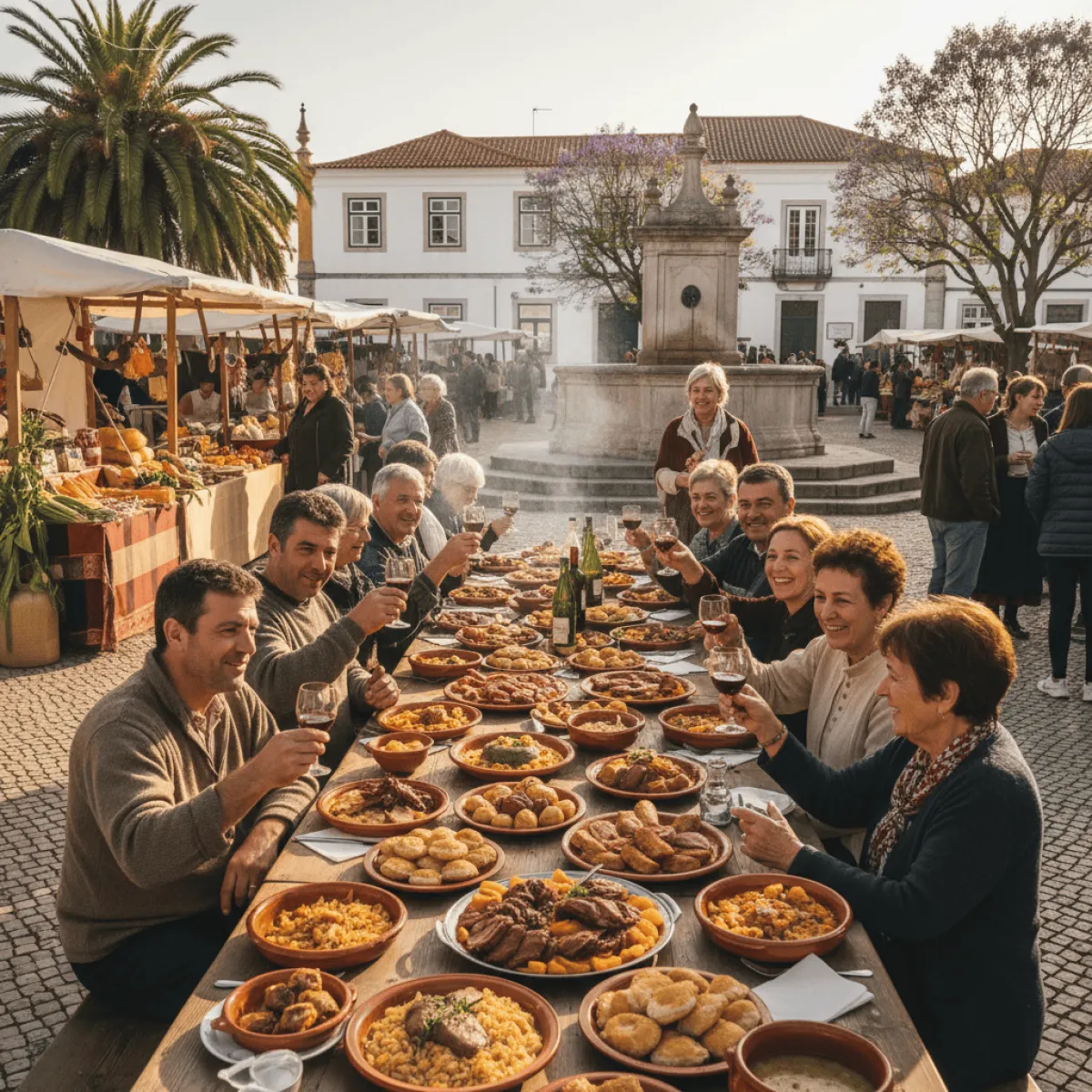
Here's something nobody tells you about Caldas da Rainha: the town eats well before nine in the morning. While tourists are still asleep in Óbidos, 15 minutes away, the covered market on Praça da República is already humming along in that civilised, mid-week way, with fresh fish from Foz do Arelho landing in styrofoam crates and vegetables from the west coast that look like they walked out of a 19th century still life. This wrought-iron market, designed at the end of the 1800s and still operating daily, is where any serious conversation about Caldas cooking begins.
This is not a town built on culinary spectacle. Nobody comes to Caldas da Rainha for Michelin stars. People come for a different reason: because the Oeste region is one of Portugal's most underrated pantries, and because the local dishes, from spider crab to fish stew, were built by people who live between the Óbidos Lagoon, the Atlantic, and the vegetable patch. The result is a cuisine with no complexes, too much butter for purists, and just enough salt for the rest of us.
Fish and shellfish: starting with the obvious
There are three things you can eat in Foz do Arelho and Salir do Porto that you won't find with the same honesty anywhere else: caldeirada (fisherman's stew), seafood rice, and clams. That's not hyperbole. The Óbidos Lagoon is, in practice, a natural shellfish farm, and local fishermen still gather clams by hand, knee-deep in the water, exactly as their grandparents did. The flavour is nothing like what you buy frozen. It is saltier, more oceanic, with a texture that dissolves on your tongue without going mushy.
My practical advice: go to Foz do Arelho mid-week, off-season, and look for a restaurant near the beach with fishermen's vans parked at the door. I am not going to invent the names of places that might close tomorrow, but the rule is simple. A short, handwritten menu with the catch of the day. If pizza is on offer, walk away. Seafood rice for two should cost around 35 to 45 euros, depending on how much lobster is in there, and it should always be loose and brothy, never dry. This is important: dry rice in Caldas is heresy.
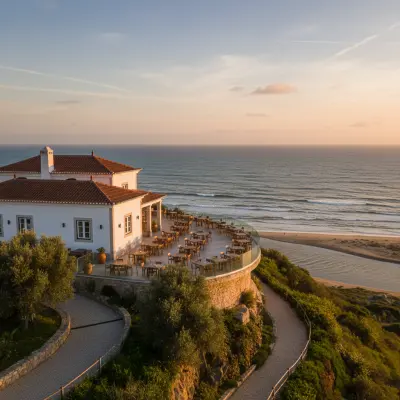
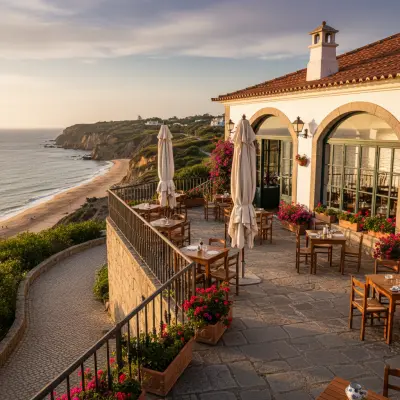
Before or after lunch, climb up to the Foz do Arelho viewpoint, especially if the wind is behaving. The view over the bar, where the lagoon meets the ocean, is the kind of thing you see once and start quoting in conversations. On the opposite side of the lagoon, the Salir do Porto viewpoint offers the other half of the picture: the giant sand dune that looks like it was borrowed from the Sahara by mistake, and which, some say, is the largest in Europe.
The caldeirada worth the trip
The Caldas fish stew is not the Algarve version. There is no sweet ripe pepper, no saffron. There is slow-cooked onion, potatoes hand-sliced with a knife, tomato, white wine from the Oeste region (probably from the Fernão Pires grape), and three or four kinds of fish depending on the day. Monkfish, skate, conger, sea bass: this is intelligent waste-not cooking, and that's exactly what makes it good. When you eat one of these, and forgive the village-bar advice, ask for Alentejo bread to mop up the broth. There is no argument to be had.
The Oeste vegetable patch and the meat dishes
Here things get a little more complicated. Caldas da Rainha is not a meat town, but around it, especially towards Cadaval and Bombarral, the tradition runs deep. The most serious dish is roast kid in the wood oven, basted with local wine and served with smashed potato and greens. It is a Sunday dish, a celebration dish, and rarely available in small portions. If you see roast kid on a menu, it's because someone roasted a whole animal that morning. Order without hesitation.
Another classic, more everyday, is the stone soup from nearby Almeirim, which technically isn't from Caldas but slides into the region without anyone noticing. And then there is the local version of bean and cabbage soup, simple, with chouriço and a thread of virgin olive oil from the Oeste on top. Ordered with home-style bread, it is a full lunch for under 8 euros at any self-respecting tasca.
For those who want to balance the table with some movement, I suggest a morning aperitif, lunch around midday, and a walk in the afternoon. The spring trails around Caldas are short, mostly flat, and cross pine forest and farmland. You can burn off lunch and come back hungry for dinner, which is, ultimately, the goal of any honest trip.
The Berliner of Caldas: the only one that matters
If there is one pastry that locals defend with the patience of a sommelier explaining a bad vintage, it is the bola de Berlim. The Caldas version is serious business: the dough is denser than the beach version (which is, frankly, a sponge), the yellow custard inside is made with too many egg yolks and real vanilla, and the sugar dusted on top is coarse. Eat it in the morning, with a short espresso, in one of the cafés in the historic centre, on Praça da República or the adjacent streets.
Other local sweets worth the detour: cavacas das Caldas (crunchy, with a white glaze that cracks when you bite), trouxas-de-ovos (egg-yolk parcels), and pastéis de feijão (bean tarts), though those last ones are more associated with Torres Vedras down the road. They all share one trait: too much yolk, too much sugar, and total honesty about that indecency.
Lamprey, shad, and what to eat by season
The Oeste has a clear food calendar. In January and February, some cooks still do lamprey western style, though that fish belongs more to the Minho up north. In spring, shad grilled over coals, dressed with lemon and olive oil. In summer, everything is fish and shellfish. In autumn come the pine forest mushrooms, the chestnuts, and the start of the kid season. If you're visiting in May, take your time and consider combining the trip with the May 13th pilgrimage to Fátima, an hour's drive away, which sets the religious pulse of the central region.
Where to eat: the logic of the tasca
Caldas da Rainha has three kinds of restaurant and it pays to tell them apart. There is the tasca, which opens for lunch, closes mid-afternoon, and posts the daily menu in chalk on a slate board. You pay between 8 and 12 euros for a full meal here, with soup, main, dessert, and coffee. This is where serious eating happens.
Then there is the beach restaurant, at Foz do Arelho and Salir do Porto, which marks up in summer but stays reasonable in low season. Expect to pay 20 to 30 euros per person, wine included. Finally, there are the restaurants in the historic centre, more weekend-oriented and aimed at the Lisbon crowd, with contemporary cooking and prices of 35 to 50 euros per person. They are good, some very good, but they rarely cook better than the tascas. They cook differently.
One tip that's worth ten others: always ask for the house wine before you look at the wine list. The wines of the Oeste, particularly the young Castelão reds and the Fernão Pires and Arinto whites, are surprising for their price-to-quality ratio. A half-litre jug rarely passes 6 euros and pairs with almost everything.
Back to the market
Let's return to the start: the market on Praça da República, the town's signature building, in wrought iron, designed at the end of the 1800s and still working every single day. Even if you have no kitchen to cook in, go there in the morning, buy a packet of cavacas, a big loaf of bread, some local fresh cheese and cherries (if in season, late April to June), and have a picnic. Who said eating well had to happen in a restaurant?
Mid-morning, after the market, makes sense for exploring the cultural side of the town. Caldas is, without much fanfare, one of the Portuguese cities with the most museums per square metre, and the museum marathon through the city is an honest way to combine art with lunch. The Bordalo Pinheiro Museum and the José Malhoa house-museum are a few minutes' walk from each other.
The bivalve question: clams, donkey's hoof, and mussels
We've talked about clams, but there's more. The pé-de-burrinho (literally "little donkey's hoof," a local bivalve whose shell does resemble a small hoof) is a rarity outside the Óbidos Lagoon region. Served boiled with a simple dressing of olive oil, vinegar, red onion, and coriander, it is a starter you learn to appreciate by the second bite. The mussels from the nearby Atlantic coast are bigger and meatier than southern ones, and work particularly well in the bulhão pato style, with garlic, coriander, and white wine.
If you want to combine the meal with an outdoor experience, I recommend bird watching at the Óbidos Lagoon, ideally in late afternoon, when the light is gentler and the pink flamingos (yes, flamingos) and herons come to fish closer to the shore. It is a way to understand that the lagoon is not just a pantry for humans. It remains, first and foremost, a living ecosystem.
Getting there and where to sleep
From Lisbon, Caldas da Rainha is about an hour up the A8. By train, the western line takes around two hours, with departures from Sete Rios station. From Coimbra, it's a comfortable 90-minute drive, and travellers coming from that direction can combine the trip with another of the central region's great festivals, like Coimbra's Queima das Fitas in May.
For accommodation, the offer splits between the town centre (small boutiques, some in restored 18th century buildings) and Foz do Arelho (beach hotels, more seasonal). For a night or two, I prefer the centre: you sleep better, you can walk everywhere, and breakfast tends to be more serious.
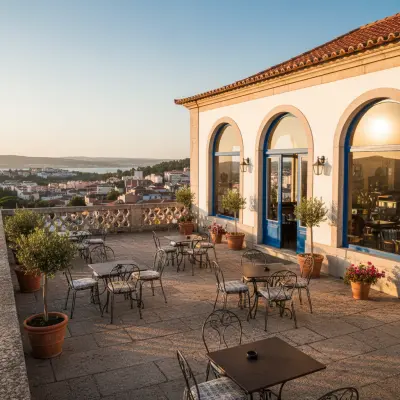
One last piece of advice, before you climb the viewpoint with a full belly: stop by the Santa Catarina viewpoint at sunset. It's not the most spectacular viewpoint in the region, but it is the most discreet and the breeziest. In July, when Óbidos is too hot and too crowded, this is where locals come to read the newspaper and pretend they have somewhere to be. Bring a bottle of Oeste wine and nothing else. The town looks better from a distance and with a glass in your hand. Like almost everything, really.