Best Restaurants in Braga: A Guide to Traditional Minho Cuisine
From rojões à minhota to pudim abade de Priscos, Braga delivers one of Portugal's most authentic gastronomic experiences. A guide to the restaurants, tascas, and pastry shops where Minho cooking stays true to centuries of tradition.
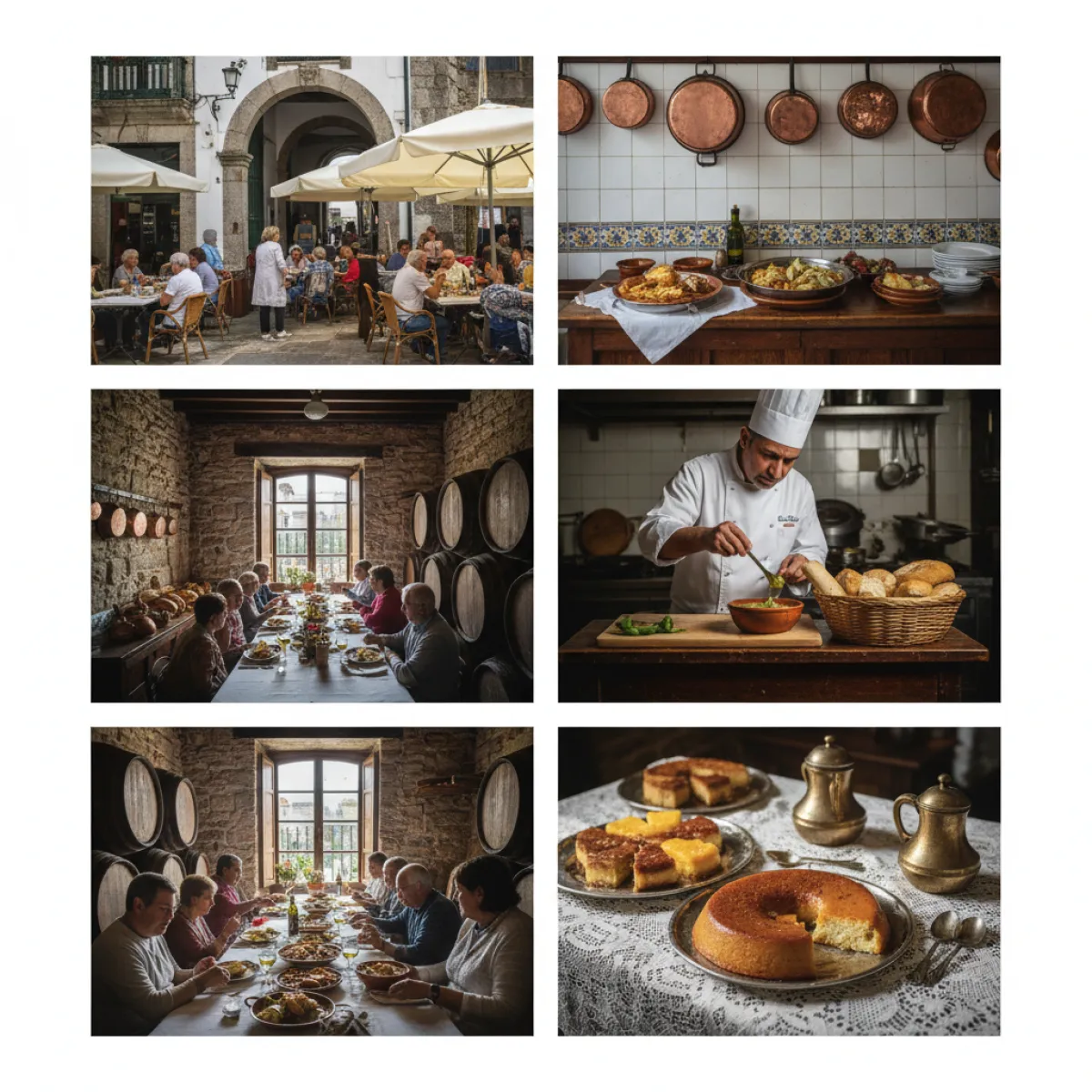
Braga is not a city you visit on an empty stomach. Arriving in the heart of Minho without an appetite means missing half the conversation, because here, the table is as central to the city's identity as Bom Jesus or the baroque churches that mark every corner. Bracarense cooking doesn't try to impress with molecular techniques or magazine-worthy plating. It does something harder: it repeats the same gestures it has practiced for centuries and continues to be right.
If you're planning to spend real time in Braga, set aside at least two proper lunches and two proper dinners. The city deserves that gastronomic investment. This guide doesn't aim to be exhaustive, it aims to be honest about the places where it's worth sitting down, ordering a bottle of vinho verde, and letting Minho's kitchen do the rest.
The Grammar of Minho Cooking
Before getting to the restaurants, it helps to understand the vocabulary. Minho cuisine rests on three pillars: the green, the pig, and the cornbread. Vinho verde, which here is not merely a drink but almost a seasoning, accompanies everything, from rojões to bacalhau. Pork appears in every incarnation: in papas de sarrabulho (a blood-thickened porridge), in rojões (braised pork cubes), in smoked presunto, in the ears and trotters that fuel winter stews. And corn, transformed into broa (dense cornbread), serves as the daily bread, slightly sour, heavy, and perfect for mopping sauces.
There's also bacalhau, naturally, this is Portugal, but here it takes on its own identity when cooked Braga-style, with smashed potatoes, generous onion, and a stream of olive oil that makes no apologies. And then there's cabrito (kid goat), especially around Easter, roasted slowly until the meat falls from the bone with the gentleness of someone who isn't in a hurry.
Where Lunch Is an Institution
Restaurante Inácio, The Monument That Isn't in Tourist Guides
On Campo das Hortas, Restaurante Inácio has operated for over a century and continues to serve exactly what it has always served: Minho food without filters. The dining room looks like a place that has watched many generations sit in the same chairs, white tablecloths, tiled walls, waiters who know regulars by name and by their usual order.
Order the rojões à minhota without hesitation. They arrive with sarrabulho tripe, potatoes cut into cubes and fried in lard, and a smell that is impossible to replicate outside of Minho. The bacalhau à Inácio, a local variation with a golden crust, is another safe choice. Budget 18 to 25 euros per person for a full lunch with wine. On weekends, book ahead, Braga's residents do not forgive missing Sunday lunch here.
Cozinha da Sé, Where Tradition Finds Its Balance
A few steps from the Sé Cathedral, this restaurant does something that sounds simple but is rare: traditional cooking with first-rate ingredients and an execution that neither rushes nor delays. The arroz de pato, made with locally raised duck, smoked chouriço, and a crackled top layer, is one of the best you'll eat in northern Portugal. The arroz de sarrabulho, served on Fridays as tradition demands, draws a loyal clientele that plans their week around this dish.
The space is intimate, seating perhaps forty, which means the kitchen gives individual attention to each table. Lunch with a starter, main, dessert, and wine runs between 22 and 30 euros. The pudim abade de Priscos, dense, sweet, with a trace of cured pork that confuses and delights, is mandatory.
Dinner in Braga: More Than a Meal
Brac, The Contemporary Response
For those who want to eat well in Braga without feeling trapped in the nineteenth century, Brac represents the generation of chefs who grew up eating rojões at their grandmother's house but studied technique in European kitchens. The tasting menu, five or seven courses, takes Minho ingredients into unexpected territory without ever losing the accent. A caldo verde that arrives as a dense foam over toasted cornbread. Confit bacalhau with broa crumbs and spinach sautéed in Trás-os-Montes olive oil.
The space, housed in a renovated building in the historic centre, has the kind of understated elegance that works for both a dinner for two and a celebration with friends. The tasting menu runs 45 to 55 euros, excluding wine. The vinho verde list is particularly well curated, featuring small producers who rarely appear outside the region. Book at least three days ahead, especially on weekends.
Centurium, In the Heart of the Old City
Set on Rua do Souto, the historic centre's main commercial artery, Centurium approaches Minho cooking with quiet confidence. The postas de vitela barrosã, steaks from an indigenous cattle breed of northern Portugal, grass-fed, arrive at the table with a simplicity that is, in fact, the result of rigorous supplier selection. The grilled octopus, served over potato purée with olive oil, is another dish that justifies the visit.
The atmosphere is more formal without being rigid, with considered lighting and service that strikes the right note between professional and welcoming. Budget 30 to 40 euros per person for dinner. The wine cellar has enough depth for those who want to explore Douro or Dão reds alongside local greens.
Tascas and Quick Lunches
Not everything in Braga requires a reservation and a tablecloth. Some of the city's finest food experiences happen in places that fit on a paper napkin.
A Brasileira, Not the Lisbon One
Braga's A Brasileira café is older than its Lisbon namesake and, locals argue, more authentic. It isn't strictly a restaurant, but it serves monumental bifanas, pork marinated in vinha-d'alhos, pressed into wheat bread and served with mustard, that constitute a perfect quick lunch between visits to Bom Jesus and Santuário do Sameiro. A bifana and a draught beer come to under five euros. Sit at the counter, as the rules demand.
Mercado Municipal, The Starting Point
Any serious food itinerary begins at the market. Braga's Mercado Municipal, recently renovated, maintains traditional stalls for fruit, vegetables, meats, and fish on the ground floor, with a food court upstairs where several operators serve quick dishes using market ingredients. It's the ideal place for a first encounter with regional products: the Padrón peppers that here are genuine, the Galician kale for caldo verde, the cured sausages from Ponte de Lima.
Go in the morning, between nine and eleven, when the stalls are fully stocked and the vendors have time to chat. On Saturdays the market takes on a different energy, with regional producers bringing products unavailable during the week.
The Sweets: A Living Convent Tradition
Braga is, along with Évora, the capital of Portuguese convent confectionery. The tradition of nuns who transformed egg yolks, sugar, and almonds into edible works of art continues to thrive in the city's pastry shops.
Pudim abade de Priscos deserves special attention. Originating from the parish of Priscos on Braga's outskirts, this pudding is made with egg yolks, sugar, port, and, the ingredient that distinguishes it from every other Portuguese pudding, pork fat. The result is a dense, unctuous texture with a flavour that oscillates between sweet and smoky. You'll find it in nearly every restaurant in the city, but the versions most faithful to the original recipe are served at Pastelaria Casa dos Doces Conventuais on Rua do Souto.
Fidalguinhos de Braga, small almond and egg cakes, and melindres, dry biscuits scented with lemon, are other local sweets worth seeking out. During festive seasons, Christmas, Easter, local romarias, the selection multiplies with seasonal specialities.
The Wine: Green Inside and Out
You don't eat in Minho without drinking vinho verde. And in Braga, proximity to the Cávado and Ave sub-regions guarantees access to wines of exceptional quality that rarely leave the region. Loureiro, the emblematic grape of the area, produces aromatic whites with citrus and floral notes that cut through the richness of Minho dishes with surgical precision.
If you want to deepen your wine knowledge, several quintas in the Braga region welcome visitors for tastings. Quinta de Santa Cristina and Quinta do Paço, both less than twenty minutes from the city centre, offer tours with tastings and, in some cases, lunch with estate-grown produce. Book directly by phone, the informality is part of the charm.
Practical Information
- Best time to go: September and October offer the ideal intersection of good weather, harvest season, and peak seasonal produce. Semana Santa (March/April) is spectacular but restaurants fill quickly.
- Average budget: A full gastronomic day in Braga, lunch at a tasca, afternoon pastry, dinner at a restaurant, runs between 50 and 80 euros per person, wine included.
- Reservations: For Sunday lunch and Friday or Saturday dinner, always book. During the week, most restaurants accept walk-ins.
- Getting there: Braga is one of the best day trips from Porto, just 50 minutes by train. But to do the food justice, stay at least one night.
- Combine with: Guimarães is 25 minutes away and offers a different gastronomic perspective, with more mountain influence. A three-day itinerary between the two cities is the ideal format.
A Final Note on Eating in Braga
Braga is not trying to reinvent Portuguese cooking. There isn't Lisbon's anxiety about chasing international trends here, nor Porto's tourist pressure that sometimes dilutes authenticity. What there is, is a city that eats well because it has always eaten well, where the neighbourhood restaurant serves food of a quality that in other cities would demand stars and prices three times higher.
The best thing you can do in Braga is trust. Trust the waiter who suggests the daily special. Trust the cook who doesn't need a menu because she knows what the market brought that morning. Trust the vinho verde that arrives in a clay jug, unlabelled, and is probably better than half the bottles you buy at the supermarket. Braga rewards those who arrive hungry and unhurried. The rest, the city handles.
