Belmonte Beyond the Castle: What Most Visitors Skip
For five centuries, a Jewish community survived in secret in Belmonte, convinced they were the last Jews on earth. Most visitors pass through in thirty minutes. Stay longer and you'll find one of inland Portugal's most extraordinary stories.
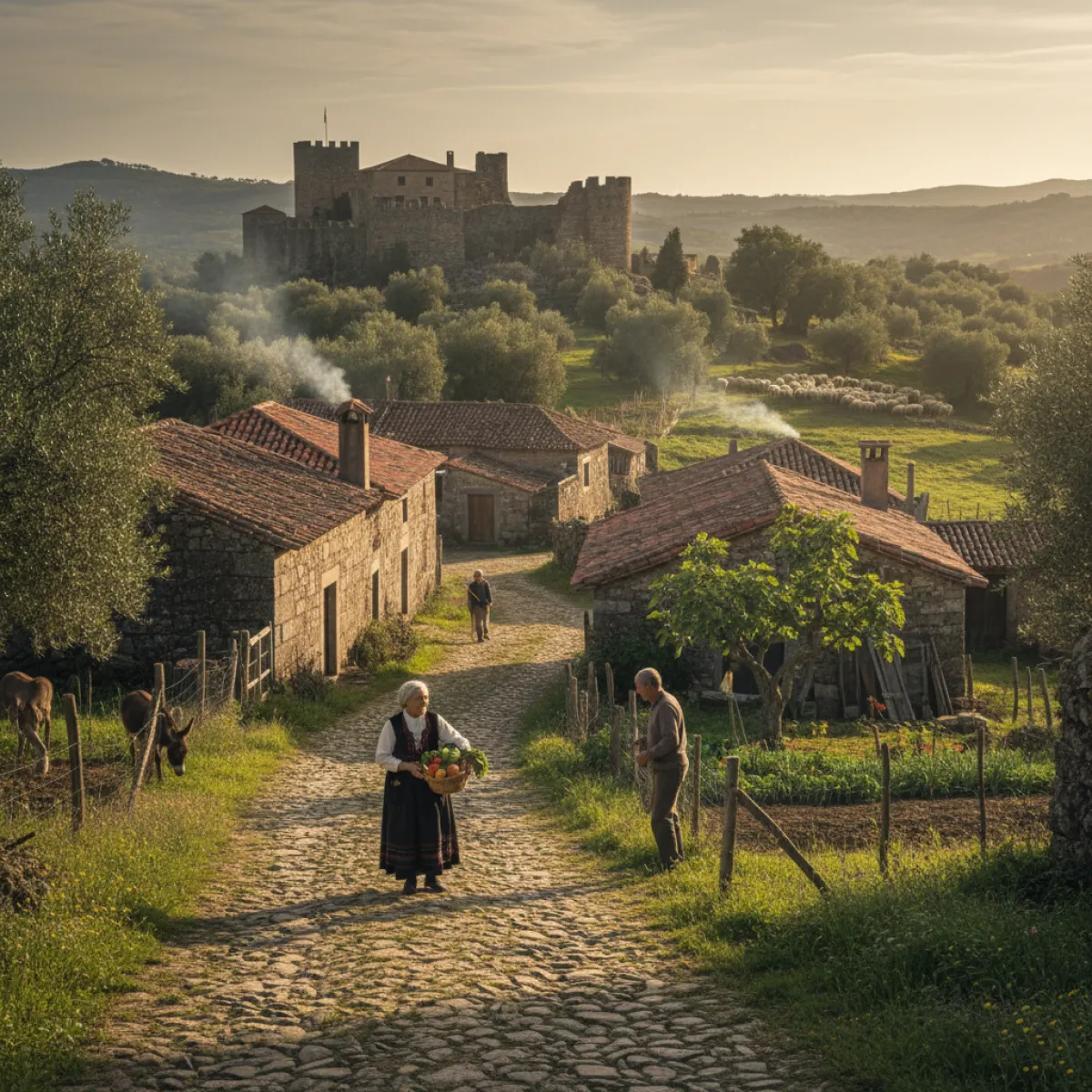
Most visitors pull into Belmonte, photograph the castle, read the plaque about Pedro Álvares Cabral, and leave within thirty minutes. That's a mistake. Belmonte is one of those Portuguese towns that only makes sense if you stay long enough to walk its quieter streets, and there's a lot hiding in those streets.
The story the castle doesn't tell
Yes, the castle is handsome. Yes, Pedro Álvares Cabral was born here in 1467 before sailing to Brazil with thirteen ships and fifteen hundred men. There's a statue, a Discoveries Museum, and all of that is worth a quick look. But Belmonte's most extraordinary story isn't inside the castle walls. It's in the lanes below them.
For over five hundred years, a community of Jews lived in Belmonte practising their faith in secret. After the forced conversions of 1497, when King Manuel I ordered all Jews to either convert to Catholicism or leave Portugal, Belmonte's Jews chose a third option: they stayed, converted officially, and continued practising Judaism behind closed doors. They prayed at home, always with the windows shuttered. Ceremonies were led by women, not rabbis. Sabbath candles were hidden inside clay pots so the light wouldn't be seen from outside.
Consider this: for five centuries, with no contact with other Jewish communities, these families believed they were the last Jews on earth. It wasn't until 1917, when a Polish mining engineer named Samuel Schwarz arrived in Belmonte, that anyone from outside discovered what had been going on. Schwarz published his findings in 1925, but the community only officially returned to Judaism in 1989. The Beit Eliahu synagogue, in the old Jewish quarter, was inaugurated in 1996.
The Jewish Museum of Belmonte, which opened in 2005 and was renovated in 2017, tells this story with impressive restraint. It's not a large museum, but the objects on display, from ritual instruments to everyday items, carry a rare intensity. For those who want to go deeper, a private tour of Belmonte's Sephardic community is one of the most singular experiences you can have in inland Portugal. This isn't tourist folklore. It's living history.
The tower nobody can explain
About five kilometres from the centre of Belmonte, on the slope of Monte de Santo Antão, stands one of Portugal's strangest structures. The Tower of Centum Cellas is a Roman ruin from the 1st century AD, twelve metres tall, built from granite blocks, with an almost unreal presence in the landscape. From a distance, it looks like the skeleton of a modern building. Up close, you realise it's nearly two thousand years old.
Nobody knows exactly what it was for. For decades, it was assumed to be a military fort, but excavations in the 1990s revealed it was part of a villa rustica, a Roman rural estate. The current theory is that it served as an inn on the road connecting Mérida to Braga. The block granite construction, with no visible mortar, is rare in Europe and resembles techniques found in Syria and North Africa.
The tower has been a national monument since 1927, but it remains lightly visited. There's no ticket office, no café, no gift shop. Just the tower, the Serra da Estrela in the background, and quiet. Free and always accessible. Bring water and sun protection in summer.
Eating without illusions
Belmonte isn't a gastronomic destination, and there's no point pretending otherwise. But the mountain cooking of the Beira Interior has its own merit, especially when it doesn't try to be more than it is. Look for roast kid, local cured meats, and Serra da Estrela cheese, which is in its home territory here.
In town, O Brasão, near the castle, is a reliable choice for traditional cooking. It's in an old stone building and serves dishes like wild boar stew. Not sophisticated, just honest. The Pousada Convento de Belmonte, set in a 13th-century convent, has a restaurant offering a more contemporary take on traditional dishes, including kid with cornbread and slow-roasted pork. Higher prices, naturally, but the setting earns it. Check hours locally, as they may vary outside peak season.
A note on alheiras: in Belmonte, this sausage carries special significance. Jews forced to convert made alheiras from chicken (instead of pork) and hung them in their windows to pretend they ate pork like their Christian neighbours. The alheira is, quite literally, an act of culinary resistance. Order it at any restaurant in the area.
Where to sleep, and why you should stay
The classic error is to do Belmonte as a thirty-minute stop between Covilhã and Guarda. If you stay one night, you gain the following morning: the castle empty at eight o'clock, the Jewish quarter without tour groups, the Tower of Centum Cellas all to yourself.
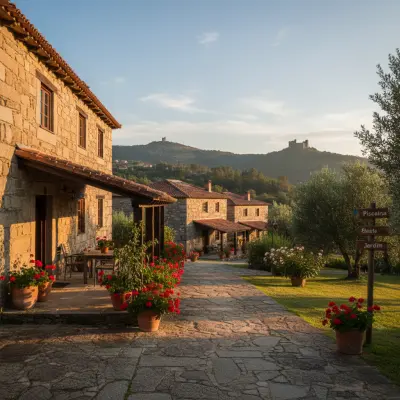
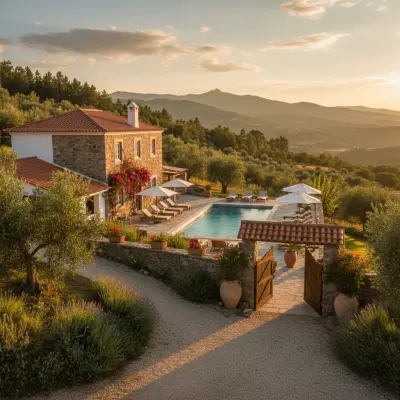
For rural accommodation with character, Kazas do Serado is an excellent choice in the countryside around Belmonte. If you prefer something more intimate, TheVagar Countryhouse offers the kind of quiet that's hard to find near larger towns. And Quinta do Rio has a riverside setting that, in summer, is hard to beat.
Any of these puts you minutes from town but far enough away to feel genuinely rural.
What to do with a full day
Morning: the castle, the Church of São Tiago (with the Cabral family pantheon and a painted 14th-century granite pietà), and the Jewish Museum. Lunch in town. Afternoon: drive to the Tower of Centum Cellas, then back with a coffee stop.
If you have two days, spend the second exploring the surroundings. The Serra da Estrela is right there. You could head to Manteigas to hike the snow wells trail, one of the most rewarding walks in the whole mountain range. If you're visiting in spring, the Gardunha hills are less than half an hour away, and that's where Fundão's cherry trees bloom spectacularly between late March and mid-April.
Belmonte sits in the middle of a region that most tourists drive through on their way somewhere else. That's simply an opportunity for anyone patient enough to stop.
Getting there and practical details
Belmonte is in the Castelo Branco district, roughly three hours from Lisbon and two and a half from Porto via the A23. There's no direct train: the nearest station is Covilhã, about 20 km away. From there, you'll need a car. In fact, you'll need a car for almost everything in this region.
The town is small and easily walkable. The historic centre, from the castle to the Jewish quarter, takes under an hour on foot. The Jewish Museum and the Discoveries Museum charge admission (check current prices locally). The Tower of Centum Cellas is free.
Summer is hot and dry, winter is cold. The best times are spring and early autumn, when the light is good and temperatures are comfortable. If you come in spring, combine Belmonte with a road trip to the Schist Villages from Covilhã for a more complete journey through the region.