The Hidden History of the Sephardic Community: A Private Tour of Belmonte
Discover the heroic resilience of the crypto-Jews of Belmonte on a private tour through the secrets of the Jewish Quarter and the Jewish Museum. Explore how a community survived 500 years of the Inquisition in total clandestinity.
The Unbreakable Legacy of the Crypto-Jews of Belmonte
Belmonte is not merely a historic village at the foothills of the Serra da Estrela; it is the custodian of one of the most extraordinary chapters in human history. For over 500 years, a community of Sephardic Jews lived here in absolute secrecy, preserving their faith and traditions under the watchful eye of the Inquisition. This private experience dives into the roots of this spiritual resistance, exploring how the families of Belmonte managed to maintain their Jewish identity through centuries of isolation and persecution.
Historical Context: From the Edict of Expulsion to Clandestinity
To understand the significance of this tour, it is essential to look back to 1496, when King Manuel I of Portugal issued the Edict of Expulsion. Unlike Spain, where Jews were forced to leave, many in Portugal were prevented from departing and forced to convert to Christianity. These 'New Christians' became the primary targets of the Inquisition, established in 1536. In Belmonte, the remote geography and social cohesion allowed a specific group of families to simulate Catholic practice while, in the privacy of their homes, keeping alive the rituals of Shabbat, Passover, and ancestral prayers.
Itinerary: Steps Between History and Faith
The tour typically begins at the Jewish Museum of Belmonte, the first of its kind in Portugal. Here, the guide details the chronology of the Jewish presence in the Iberian Peninsula and the artifacts that survived centuries of silence. The museum is not just a repository of objects; it is a testament to adaptation. One can observe how prayers were translated into Portuguese and passed down orally from mothers to daughters, the true guardians of the faith in Belmonte, as women were less scrutinized by external authorities.
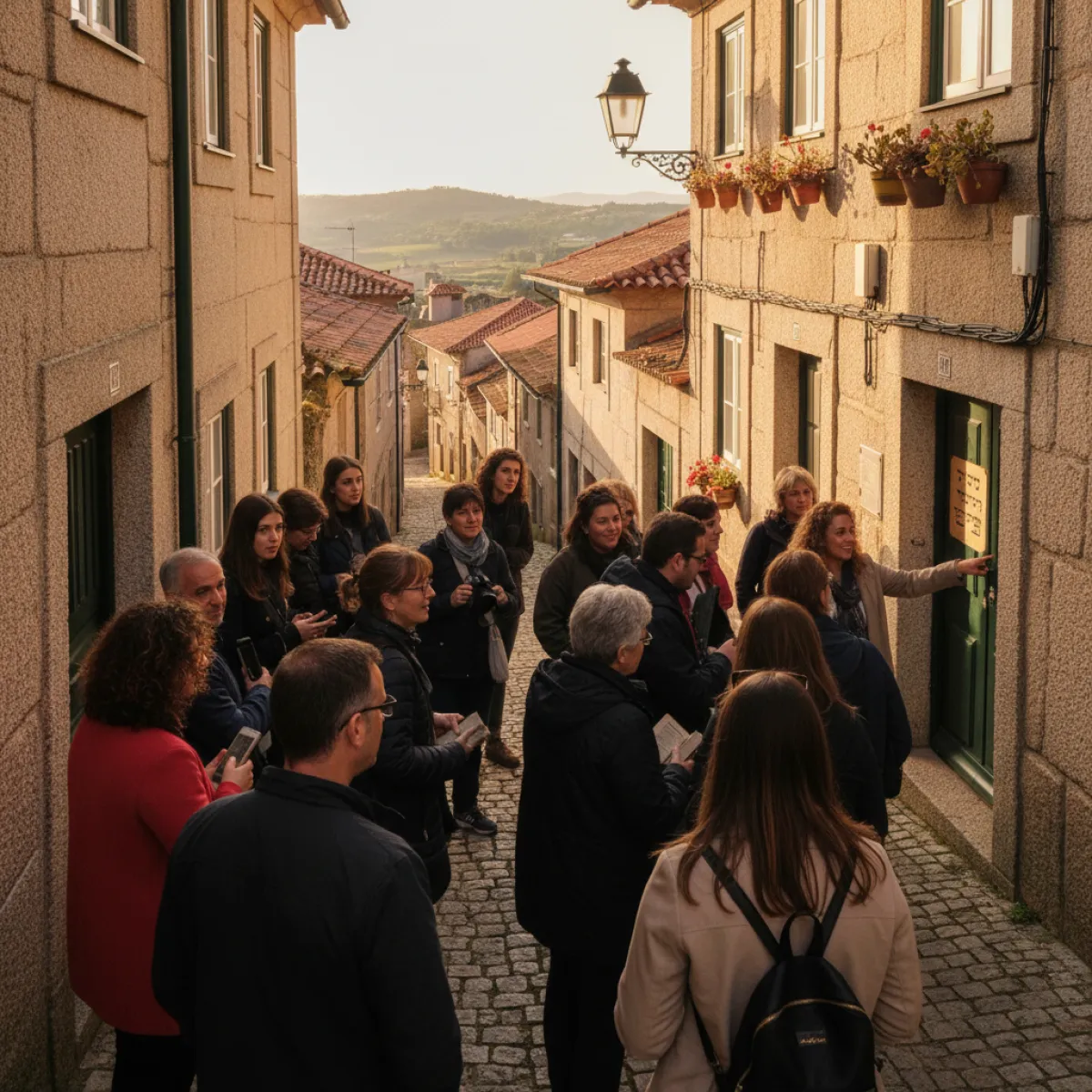
The walk continues into the old Jewish Quarter (Judaria). On the granite doorposts of several houses, one can still identify small engraved crosses. These marks served a dual purpose: to the outside world, they declared the inhabitants' Christian faith; to the community, they indicated where it was safe to gather or perform rituals. The guide helps decipher these silent signs that go unnoticed by the casual visitor.
The Beit Eliahu Synagogue and the Rebirth
One of the most impactful moments of the visit is the stop at the Beit Eliahu Synagogue, consecrated in 1996. This building symbolizes the end of five centuries of secrecy. After the 'discovery' of the community in 1917 by Polish engineer Samuel Schwarz, the process of returning to official Judaism was slow and complex. The synagogue represents the victory of perseverance over intolerance. It is a space of sobriety and light where the community now gathers openly.
Practical Tips for the Traveler
For those planning to take this tour, it is recommended to avoid Saturdays if you wish to visit the interior of the synagogue, as this is the community's day of rest and worship. Comfortable footwear is essential for navigating the steep, cobbled streets of the village. The best time to visit is during the spring or early autumn when temperatures in the Beira Interior region are milder.
Booking Details and Provider
This experience is operated by Portugal Magik Tours, specialists in Jewish heritage itineraries in Portugal. The tour is accompanied by historian guides who have a deep connection to the local narrative.
- Provider Name: Portugal Magik Tours
- Website: https://portugal-magik.com
- Price: From €650.00 per person (private tour for two participants)
- Meeting Point: Typically includes pickup in Lisbon or Porto, but can be arranged directly in Belmonte.