Arrábida Market Crawl: What to Buy, Taste and Skip
Between the fresh cuttlefish at Mercado do Livramento and the oozing Queijo de Azeitão at the monthly fair, the Arrábida region offers one of the best food days near Lisbon. An opinionated guide to what's worth buying, tasting, and leaving behind.
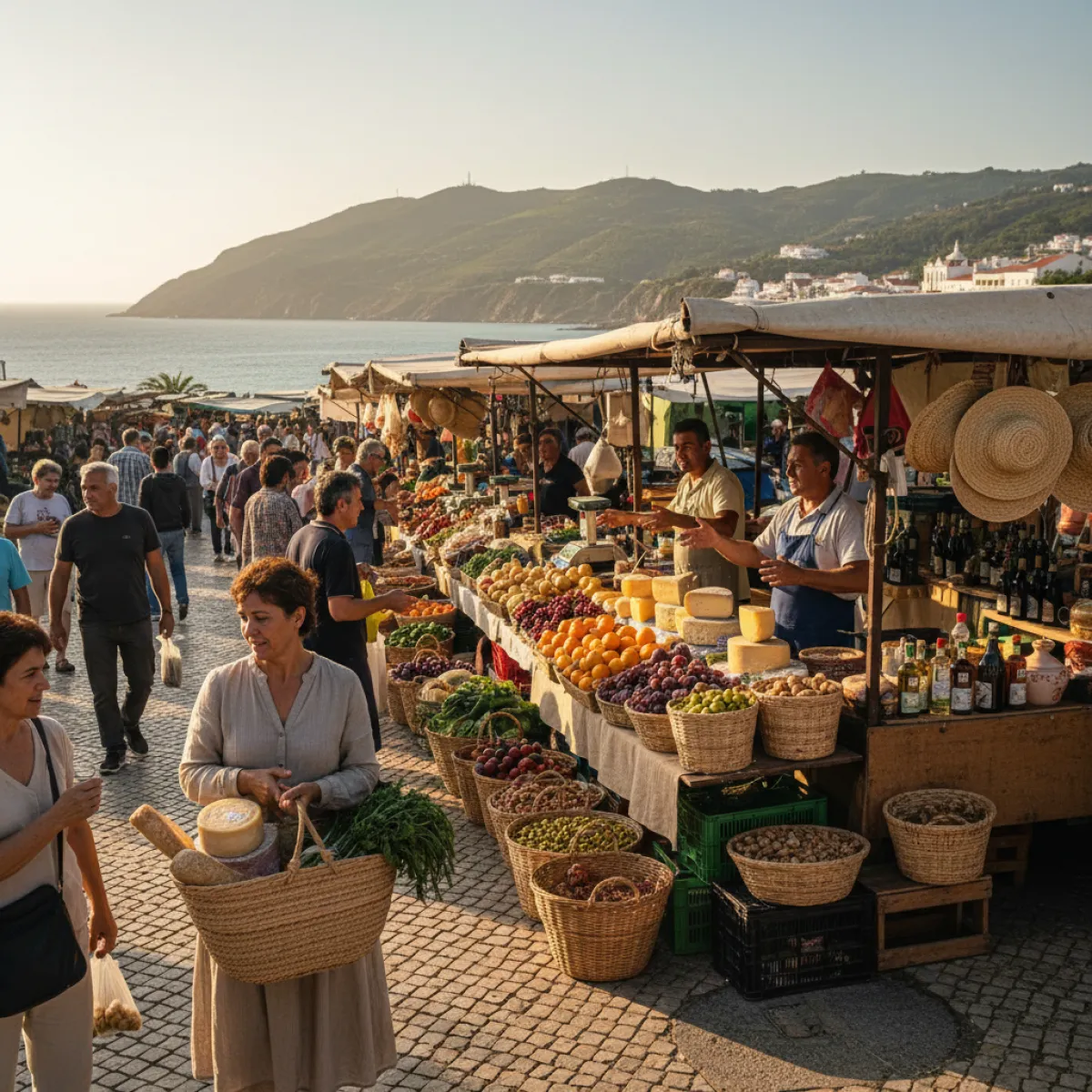
Most people come to the Arrábida region for the beaches. Fair enough. But if your idea of a good day involves plunging your thumb into a cheese so ripe it oozes like warm butter, sipping a fortified wine older than your relationship, and leaving a market with bags three times heavier than planned, this is your kind of itinerary.
The stretch between Setúbal and Azeitão holds two of the best markets in the greater Lisbon region, and each has its own character. Mercado do Livramento in Setúbal is the fish spectacle. The Feira de Azeitão, on the first Sunday of each month, is the cheese-and-pastry festival where you might also find someone selling handmade honey from their back garden. Together, they make one of the best food days you can have without booking a single restaurant.
First stop: Mercado do Livramento, Setúbal
Arriving at the Livramento after 10am is like showing up to a party at 3am: technically still open, but you've missed the good part. Get there early. The market opens around 7am, and between 8 and 10 is when the fish stalls are at their peak. USA Today once called it one of the best fish markets in the world, and for once, the American hyperbole was justified.
The fish stalls occupy the centre of the market and are run by women who know more about the sea than any Michelin-starred chef. Ask for advice. Ask what's good today. If they tell you the cuttlefish is fat, believe them. Setúbal is Portugal's capital of choco frito (fried cuttlefish), and buying it here, fresh from the boats, is a different experience from any restaurant plate.
What to buy
- Fresh cuttlefish: the absolute speciality of the area. If you buy one thing at the Livramento, make it this.
- Percebes (gooseneck barnacles): when available, they're extraordinary. When they're not, don't push it. Prices fluctuate with the sea, but expect 30 to 60 euros per kilo.
- Sardines and horse mackerel: obvious, but it needs saying. Here they're from today, not from a freezer.
- Regional cheeses: some stalls carry Queijo de Azeitão, but save the serious cheese shopping for Azeitão itself.
What to taste on the spot
Inside the market there's a snack area with petiscos and bifanas (pork sandwiches). Don't expect fine dining, but the quality of the product makes up for the plastic chairs. A bifana and a glass of regional wine for a few euros is one of the best breakfasts Setúbal offers. If you have a sweet tooth, you'll spot Tortas de Azeitão at some stalls, but hold that thought.
What to skip
The souvenirs. Some stands sell generic crafts that could be from any market between Minho and the Algarve. Fridge magnets with painted sardines, aprons with cod jokes. Walk past. Also not worth it: imported fruit. The market has excellent local produce, but it's mixed in with supermarket stock. Always ask where it comes from.
Important note: don't go on Mondays. Fishermen don't go out on Sundays, so the fish stalls on Monday are either empty or carrying yesterday's stock. Tuesday to Saturday, without fail.
Second stop: Feira de Azeitão
About twenty minutes by car from Setúbal, Vila Nogueira de Azeitão holds its monthly fair on the first Sunday of each month, from 9am to 5pm. It's a different market from the Livramento: less fish, more earth. Cheese, honey, jams, plants, wine, convent pastries, and a bric-a-brac section that oscillates between treasure and junk with no warning.
What to buy
- Queijo de Azeitão DOP: the main reason you're here. This sheep's milk cheese, with its washed rind and creamy interior that flows when properly aged, is one of Portugal's great cheeses. Buy directly from the producers who sell at the fair. A whole cheese typically costs between 5 and 10 euros depending on size and age. Ask to taste before buying. Nobody minds.
- Moscatel de Setúbal: the region's sweet fortified wine, made from Muscat grapes. The big names are José Maria da Fonseca and Bacalhôa, but at the fair you sometimes find small producers with bottles that never reach shops. If you enjoy traditional Portuguese sweets like those in the Easter sweets trail in Mafra, moscatel is the perfect pairing.
- Arrábida honey: the serra has rich flora and local beekeepers sell rosemary and wild honey. Good and honest.
What to taste
Tortas de Azeitão are non-negotiable. A thin layer of sponge cake rolled with egg yolk jam, dusted with cinnamon. The original recipe comes from Pastelaria Regional Cego, a bakery with over a century of history. Buy a whole roll to take home, but also get a slice to eat standing up, with a coffee. It costs almost nothing and tastes like everything.
Beyond the tortas, there's a lesser-known local speciality: Esses de Azeitão, S-shaped biscuits that are crispy and buttery. Less photogenic than the tortas but equally addictive.
What to skip
The unlabelled table wines. Some vendors sell jugs of homemade wine at the fair, and the low price is tempting. The problem is that quality is unpredictable, and sometimes what looks like a bargain is vinegar in disguise. If you want regional wine, invest in reds made from the Castelão grape (locally called Periquita) from identified producers. You don't need to spend much: between 5 and 15 euros gets you excellent bottles.
Also avoid cheeses that have been sitting in the sun too long. Queijo de Azeitão is delicate and needs refrigeration. If the stall has no cooling and the cheese is already running everywhere by noon, either buy early or move on.
After the markets: what to do with your day
Your bags are full. Now the dilemma: beach or hills?
If the weather cooperates, Praia da Figueirinha is the most accessible of the Arrábida beaches, with reasonable parking outside of August. If you prefer calmer water and a more dramatic backdrop, Praia do Creiro sits right next to it, more sheltered from the wind. And if you want the full postcard, with the serra plunging into the sea and emerald water that justifies every Mediterranean comparison, Praia do Portinho da Arrábida is the one. But beware: in summer, access is restricted and parking fills early. Go in the morning or late afternoon.
If you'd rather have hills than salt, the hike to the Arrábida Convent is one of the most rewarding experiences in the region. The Franciscan convent, perched on the hillside with views over the ocean, has a stillness that makes you forget Lisbon is forty minutes away.
Practical notes
The ideal itinerary: leave Lisbon or Setúbal early, start at Mercado do Livramento between 8 and 10am, then drive to Azeitão for the fair (if it's the first Sunday of the month) or simply to buy cheese and pastries at local shops any day of the week. Have lunch in the area, spend the afternoon at the beach or in the hills.
By car, Lisbon to Setúbal takes about 45 minutes via the A2. By public transport, Fertagus trains reach Setúbal, but to explore the region freely, a car helps enormously. If you're based in Lisbon, this itinerary pairs well with a day exploring Lisbon's neighbourhood culture before or after.
Budget for the day: count on 30 to 50 euros for generous market shopping (cheese, wine, fish, pastries). The beaches are free, though in summer parking at Portinho may carry a fee. An informal lunch in Setúbal or Azeitão runs 10 to 20 euros per person.
This isn't a guide to reservation-only restaurants or curated tasting menus. It's a day of smells, flavours, and impulsive decisions made in front of market stalls. The kind of day where you leave the house with a list and come back with double. In Arrábida, the markets aren't a tourist attraction. They're local life, with or without visitors. And that's precisely why they're worth your time.