Fátima After Dark: Wine and Petiscos in the Countryside
Fátima has no street lined with wine taverns, but it has farmhouses where dinner follows the rhythm of the house. A late-afternoon route through century-old olive groves, an almost empty calvary, and tables where the wine is local.
At six in the evening, when the last pilgrim buses pull out of Cova da Iria and the religious souvenir shops around the Sanctuary start rolling down their plastic shutters, Fátima changes shape. By day it is a town organized around a single purpose: pray, light a candle, fulfil a promise. By night, that machinery slows down. And that is when the other Fátima, the rural one, with century-old olive trees and vineyards planted out of family stubbornness, starts to make sense.
Be honest with yourself: Fátima is not the Douro, it is not even Tomar. You will not find a street lined with taverns serving cheese boards and glasses of red wine poured to the ounce. What you will find, if you know where to look, is something rarer: home-cooked petiscos, served by the people who grew them, in a landscape most pilgrims never see because they leave before dinner.
Before dinner: the landscape nobody photographs
The most common mistake visitors make in Fátima is staying locked inside the Sanctuary's perimeter. The real town starts a few minutes' drive away, among olive trees and dry-stone terraces. Two stops are worth the trip, and both make sense in the late afternoon, when the light drops and the heat eases off.
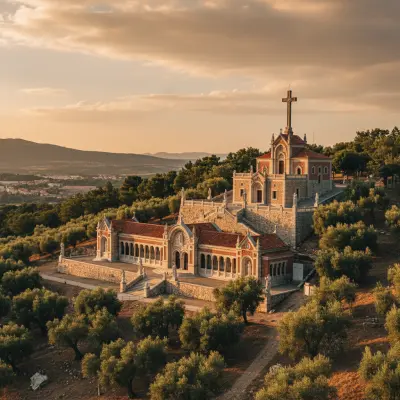
The first is the Calvário Húngaro, an open-air sculpture complex built by the Hungarian community on elevated ground, overlooking the surrounding countryside. It is not large, you don't need more than twenty minutes there, but it is the right place to watch the sun go down over the fields before heading to the table. At this hour it's practically empty, which already tells you something about the town's real rhythm outside Cova da Iria.
The second, if you have more time and a car, is spending the whole afternoon understanding where your dinner actually comes from. Walking the Valinhos olive groves shows exactly that: the same olive trees that still produce the oil turning up on petiscos boards across the region, among trees older than any building in central Fátima. It's a simple walk, no big production, but it changes how you look at the bread and olive oil you'll order later that evening.
For anyone wanting to stretch the afternoon toward history, the journey through Ourém Castle and its medieval village pairs archaeology with a commanding view over the valley, about twenty minutes from Fátima. There's no wine or petiscos involved, but it puts the whole region into context: this corner of central Portugal has lived among castles, monasteries and farming estates for centuries, long before Fátima existed as a shrine.
The real dinner happens away from the center
Here's the advice nobody gives you when you search "where to eat near the Sanctuary": the restaurants clustered around the basilica exist to feed pilgrims quickly and efficiently, not to make anyone linger at the table. That's not a criticism, it's simply function: they serve thousands of people a day, with Mass schedules dictating everything. That is not where you sit down slowly with a bottle of regional red.
The real dinner happens on the farms and rural houses scattered across the county, where owners still grow part of what they serve. These aren't restaurants in the conventional sense, they're rural tourism houses that, with advance notice, welcome guests and visitors to the table. That's where it's worth concentrating the evening.
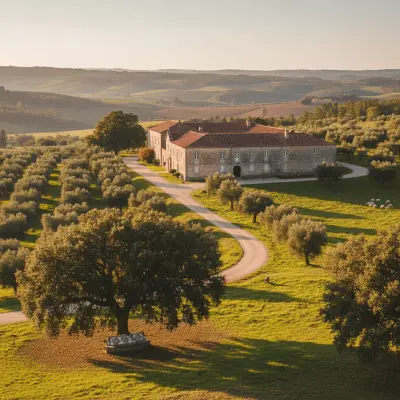
Quinta da Alcaidaria-Mór is the clearest example: a traditional working farm in the region, surrounded by cultivated land, away from the noise of the center. It's the kind of place where dinner follows the rhythm of the house rather than the rhythm of tourism, and where it's worth asking hosts directly what's available that particular night rather than assuming a fixed menu.
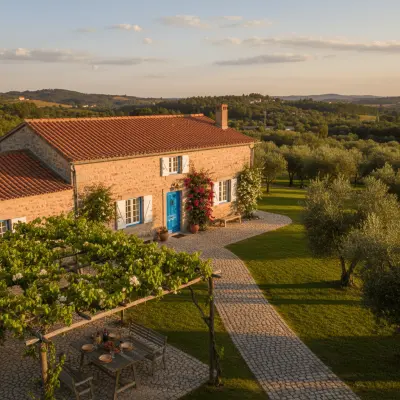
Casa da Avó Genoveva follows the same logic, and the name says it plainly: rural tourism run at the scale of a family home, not a hotel unit. It's the difference between asking for a menu and asking "what's there today", which tends to be the right question in these houses.
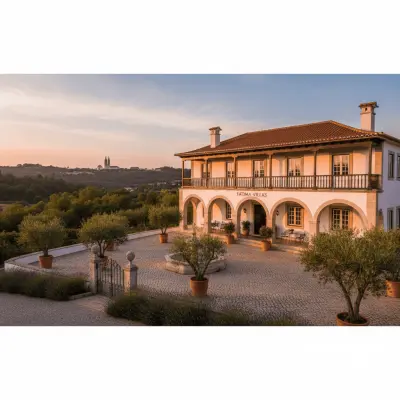
If you'd rather be independent, buying cheese, cured ham, olives and bread in the village and putting your own petiscos spread together, Fátima Villas gives you that flexibility: self-contained units where you can build your own table at your own pace, without relying on someone else's dinner schedule.
What to order, and what not to expect
You won't find a wine list flaunting a protected designation of origin like a trophy here. What you will find is regional wine from the Tejo and Beira areas, often produced in small quantities by people who also tend the vegetable garden. Always ask if it's house wine. If it is, that's the experience you came for.
- Local cheese, served plain, no garnish, usually with olive oil from the groves you visited that afternoon.
- Cured ham and local sausages, when available, served on a wooden board without much ceremony.
- Homemade bread, still warm if you're lucky, to go with everything else.
- Olives from the property itself, more intense and less uniform than supermarket ones, which is a compliment, not a flaw.
Don't expect an English menu, don't expect plates arranged with tweezers, don't expect to be rushed. Expect conversation with whoever's serving you, because they're usually also the person who grew it.
When to go, and when definitely not to
There's one simple rule for planning this evening: never on the 13th of any month, and especially not May 13th. On those dates the entire town turns toward the pilgrimage, roads jam up, accommodation sells out months in advance, and the quiet countryside you're after simply doesn't exist. To understand the real scale of what happens that day, it's worth reading our honest guide to Fátima on May 13th before you book anything. Outside those pilgrimage windows, especially on weekdays, Fátima in the late afternoon is an almost silent town, and it's exactly in that silence that this itinerary works.
The best time of year for this route is between May and October, outside the major pilgrimage days, when afternoons are long enough to walk until sunset and still make it to the farmhouse in time for dinner with natural light.
How to organize the evening, and what it costs
You'll need a car. Central Fátima is walkable, but the farms and olive groves are a few kilometers out, with no reliable public transport outside Mass hours. Start around 5:30pm at the Calvário Húngaro or the Valinhos olive groves, give that part about an hour and a half, and arrive at your chosen farmhouse around 7:30pm, when the light is already changing but hasn't fully faded.
On cost: staying and eating at rural tourism houses around Fátima tends to work out cheaper than an equivalent hotel near the Sanctuary, precisely because you're not paying for location, you're paying for the experience. Always confirm prices and dinner availability directly with each house, as they vary by season and number of guests, and most of these places prefer bookings a few days ahead so they know how much to cook.
In the end, what this itinerary proposes is simple: trade a night of fast-turnover restaurants near the Sanctuary for a slower table a few kilometers away, where the wine is local, the olive oil comes from the tree you saw that afternoon, and nobody is watching the clock waiting for the next group.