Walking Évora: A Deep Immersion into Granite and Lime
Discover the living history of Évora on a guided walking tour that explores Roman heritage, Renaissance cloisters, and the profound philosophy of the Bone Chapel. An essential journey for those looking to understand the Alentejo capital beyond its monuments.
Tracing the Roman and Medieval Threads of Évora
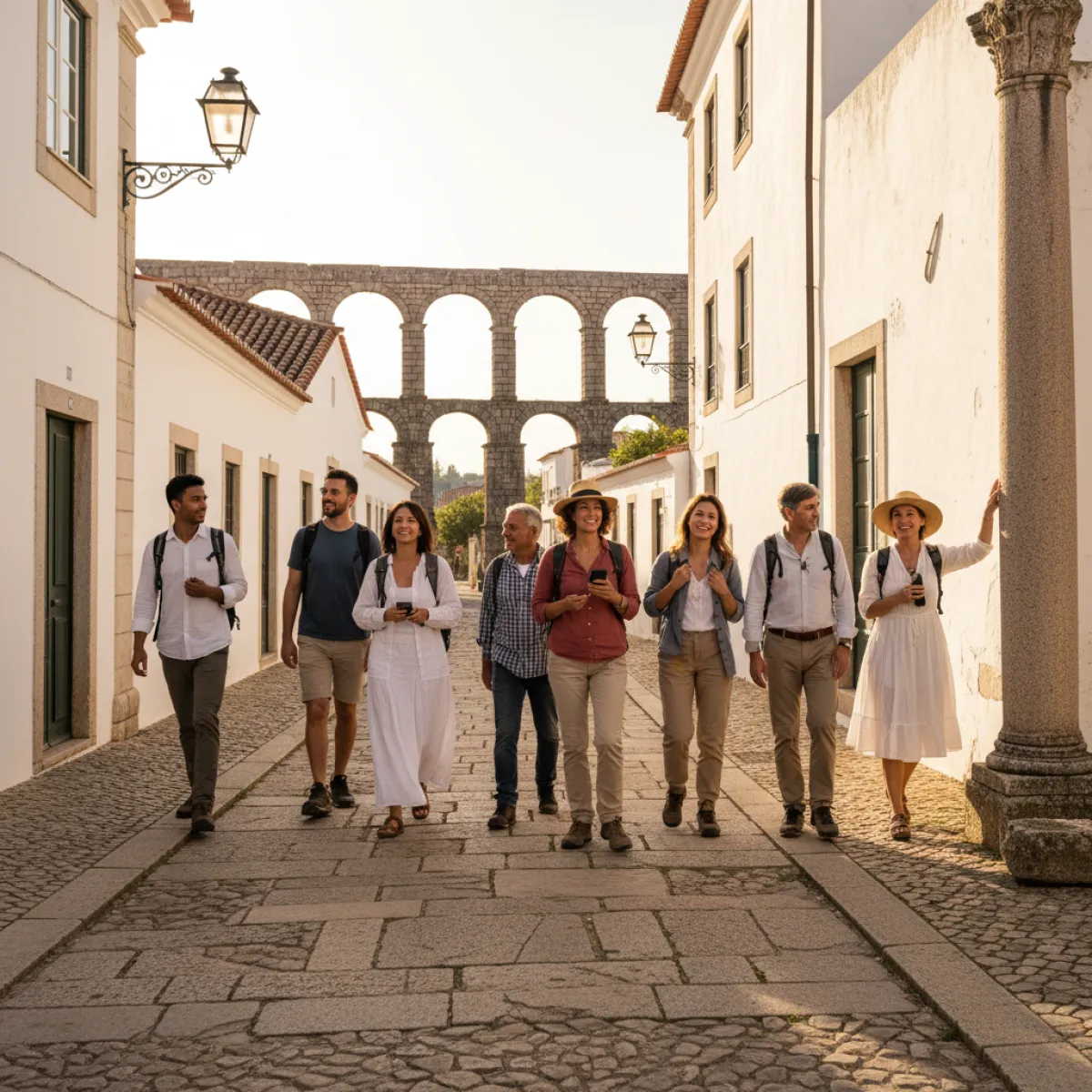
Évora is a city that reveals itself to those willing to slow their pace. Its labyrinthine streets, encased within ancient walls, hold layers of Roman, Moorish, and Renaissance history that require more than a casual glance to decode. To truly grasp the architectural and social fabric of this Alentejo capital, the team at In Évora offers a walking experience that emphasizes storytelling and historical context over a standard list of facts. This two-and-a-half-hour journey is an essential introduction to the city's unique identity.
The walk commences at Praça do Giraldo, the central nervous system of the city. Here, beneath the 16th-century arches and beside the iconic marble fountain, your guide sets the stage for the exploration. The focus is often on the transition from the bustling market life of the past to the administrative and social hub it is today. As you move through the square, you begin to notice the interplay of granite and lime, the two materials that define the local aesthetic and provide a cool respite from the Alentejo sun.
Ascending to the Roman Acropolis
From the main square, the route climbs steadily along Rua 5 de Outubro. This street is lined with traditional workshops specializing in cork and wool, offering a tactile connection to the region's rural industries. At the summit sits the Roman Temple, often incorrectly attributed to Diana but actually dedicated to the Imperial Cult of Augustus. The guide explains its remarkable survival; having been walled in during the Middle Ages to serve as a fortress and later a slaughterhouse, the Corinthian columns remained intact while other Roman structures across Europe were dismantled for stone.
Adjacent to the temple stands the Sé (Cathedral), a massive structure that resembles a fortress more than a traditional church. This is where one day in Évora finds its most dramatic visual anchor. The transition from Romanesque solidity to Gothic lightness is evident in the nave and the exquisite 14th-century cloister. Climbing to the roof provides a panoramic view of the city’s terracotta tiles and the vast plains stretching toward the horizon, offering a moment of quiet reflection before descending back into the city’s academic heart.
Academic Tradition and the Weight of History
The tour continues to the University of Évora, founded in the mid-16th century by the Jesuits. The Colégio do Espírito Santo, with its magnificent Italianate cloister, represents the intellectual peak of Évora’s Golden Age. Here, the guide delves into the history of the pedagogical methods of the time and the eventual decline of the institution following the expulsion of the Jesuits by the Marquis of Pombal. Walking through the tiled classrooms, one feels the stone and silence that have preserved the atmosphere of 16th-century scholarship almost perfectly.
The Philosophical Depth of the Bone Chapel
The final significant stop is the Church of St. Francis and its accompanying Chapel of Bones (Capela dos Ossos). Constructed in the 17th century by Franciscan monks, the chapel’s walls are lined with the remains of thousands of people. The inscription at the entrance, "We bones that are here, for yours we wait", serves as a powerful memento mori. Rather than being a macabre display, the guide presents it as a site for philosophical contemplation on the transience of life, a theme deeply rooted in the Franciscan tradition. It provides a sobering and profound end to the walk, contrasting with the light and air of the nearby Public Garden.
Practical Details and Booking
- Provider: In Évora
- Website: inevora.pt
- Price: Approximately €25.00 per person for small group tours.
- Meeting Point: Praça do Giraldo, by the central fountain.
- What to Bring: Comfortable walking shoes with good grip (the cobblestones can be polished and slippery), a hat, and a bottle of water.
- Best Time to Book: Morning tours starting at 09:30 or 10:00 are highly recommended to avoid the midday heat, particularly during the summer months.
Advanced booking is essential, especially during the peak season. You can contact the provider directly through their website to secure a spot. Taking this guided walk is the best way to synchronize with the slow pulse of the Alentejo and understand the deep historical currents that have shaped this UNESCO World Heritage city.