Kayaking Down the Arade River from Silves
A roughly nine-kilometre descent of the Arade, from Silves down to Estômbar, with the tide doing half the work. Guide, gear and transfers by Algarve Selvagem (RNAAT no. 325/2013); confirm the start time, because everything hinges on the tide.
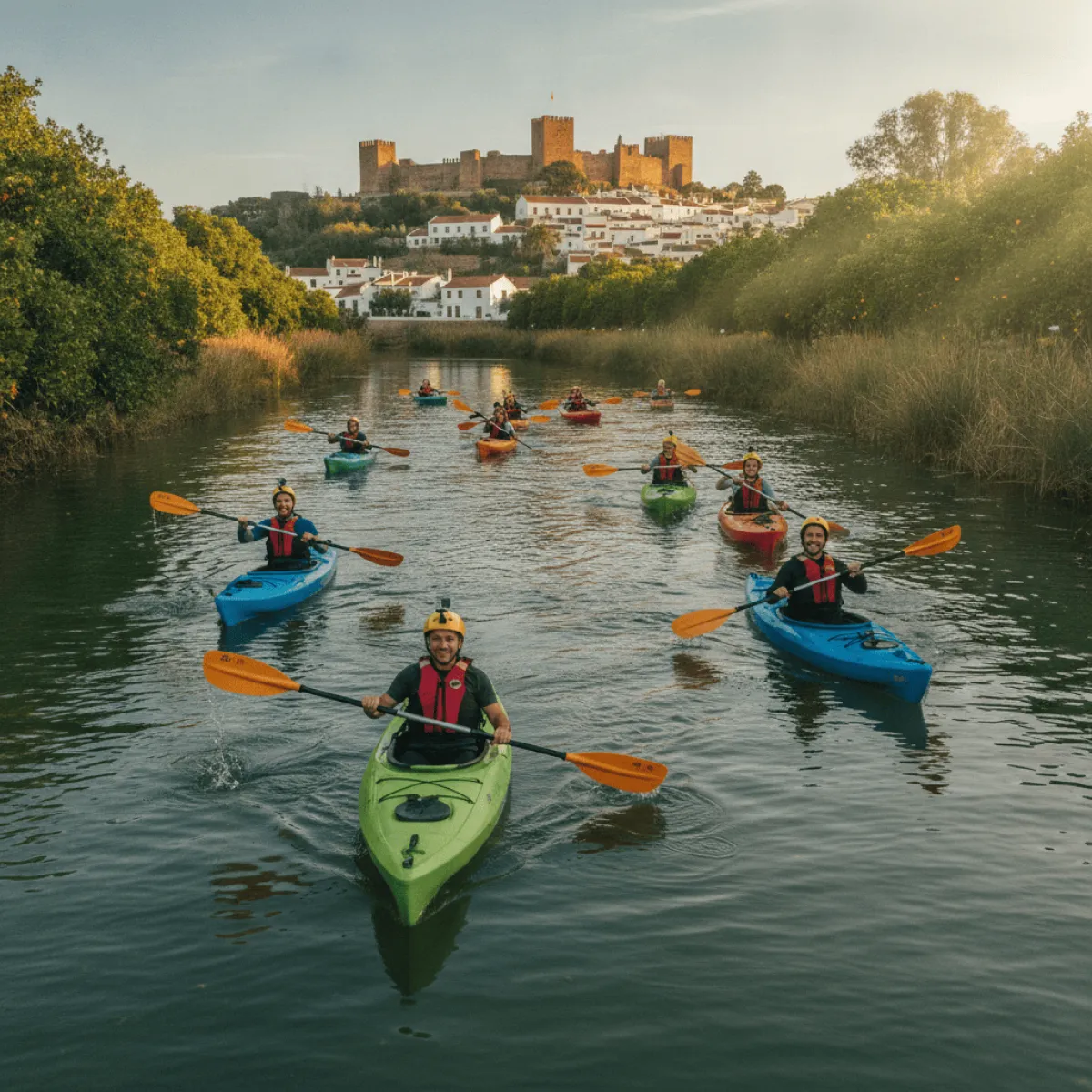
There is a way to see Silves that no guidebook puts first: from below, at water level, with the castle shrinking behind you as the current pulls you downriver. The kayak descent of the Arade starts exactly where the medieval town leans over the water and ends roughly nine kilometres later, near Estômbar. It is one of the few Algarve activities where the effort is almost optional, because the tide does half the work for you.
Who actually runs it
The verified operator for this kind of guided descent on the Arade is Algarve Selvagem (Trilhos do Sul), properly registered as a nature tourism agent under RNAAT no. 325/2013. The paddle along the Arade estuary toward Silves is part of their half-day kayak programmes, with guide, equipment and transfers included.
- Operator: Algarve Selvagem (Trilhos do Sul), RNAAT no. 325/2013
- Phone: +351 968 483 912
- Meeting point: Urbanização Colina Mourisca, Lote 10, Vale das Hortas, 8500-085 Alvor
- Website: algarvesselvagem.wordpress.com
- Duration: half day
On price: none was published on the site at the time of writing. Confirm directly with the provider by phone, and confirm the date while you are at it, because everything here hinges on the tide.
What the descent involves, step by step
The logistics are simple but need planning. You leave one vehicle at the finish, in Estômbar, then drive up to Silves to start. You do it this way because nobody wants to paddle nine kilometres against the current at the end of the day. The descent rides the ebb tide, the water emptying toward the sea, which is why the start time shifts from one day to the next.
The opening stretch, right below Silves, is the best part for me. The river is narrow and calm, almost a channel, and it is full of life: egrets, grey herons, storks and, if you are lucky, a kingfisher cutting across the water like a blue spark. You paddle slowly because there is no rush and because it is worth looking back: the castle of Silves and the cathedral sitting on the hill, seen from the river, is a view you simply cannot get anywhere else.
Around the three-kilometre mark you reach the Clube Náutico de Silves, the usual rest and lunch stop. Midway you pass under two bridges, the motorway and the national road, and there is a small shrine carved into the rock by the higher bridge that most people never notice.
The second half changes character. The river widens, the landscape opens into salt marsh, riverside quintas and reeds, and the wind can pick up. Here is a practical tip from someone who has met chop before: hug the riverbank to avoid the waves when wind fights tide. You finish at the ramp of the Estômbar nautical club, arms aware they have done something, but without that end-of-race exhaustion.
The best moment, and what to skip
The launch below Silves is the high point, no argument. It is calm, scenic and where the birdwatching is richest, in an estuary that hosts herons, terns, ospreys and even flamingos at certain times of year. The final stretch, wider and more exposed, is less interesting to look at and more at the mercy of the wind, so do not fixate on it: save your energy and enjoy the opening section without watching the clock.
What to wear and bring
- Clothes that can get wet and dry fast. You will catch spray, guaranteed.
- Closed shoes that can go in the water: sport sandals or old trainers. No loose flip-flops.
- Sunscreen and a hat. There is no shade on the river and the glare off the water is deceptive.
- Water and a snack, in a reusable bottle clipped to the kayak.
- A dry bag for phone and keys. A cord for your sunglasses unless you want to gift them to the Arade.
Best time to book
Spring and early autumn are, in my opinion, the ideal windows: the water is pleasant, the heat does not crush you, and the wildlife is more active. In summer, choose the morning session: less wind, less heat, and the light on the water is simply different. Book a few days ahead, because the start times follow the tide table and guided places are limited.
Getting there and what to do around it
Silves is about 15 minutes from Portimão by road. If you are coming from further afield, it is worth sleeping a night in town and building a weekend around the descent. The Horta Grande Hostel and the Hostel Supremo are two friendly, central bases for waking up and walking down to the river.
After paddling you will be properly hungry. The obvious stop is a bifana at Marinho, which is as much a part of Silves as the castle itself. To stretch the visit, our historic centre walking route shows what to see beyond the fortress, and if you stay into the late afternoon, the guide to Silves at golden hour tells you exactly where the light gets it right. To understand what you are paddling over, the Islamic history of old Xelb is told in our guide to the legacy of Xelb.
It is a morning that pulls together everything the Algarve does well away from the beach: river, history and quiet, with the castle as a backdrop. Confirm the tide, take sunscreen seriously, and go in the morning. The rest takes care of itself, downriver.