Silves Beyond the Castle: The Islamic Legacy of Xelb
Discover the Islamic heritage of Silves, the ancient Xelb, where water engineering and the poetry of Al-Mutamid define a city that resists time. A deep dive into the historical capital of Al-Gharb, far from the coastal clichés.
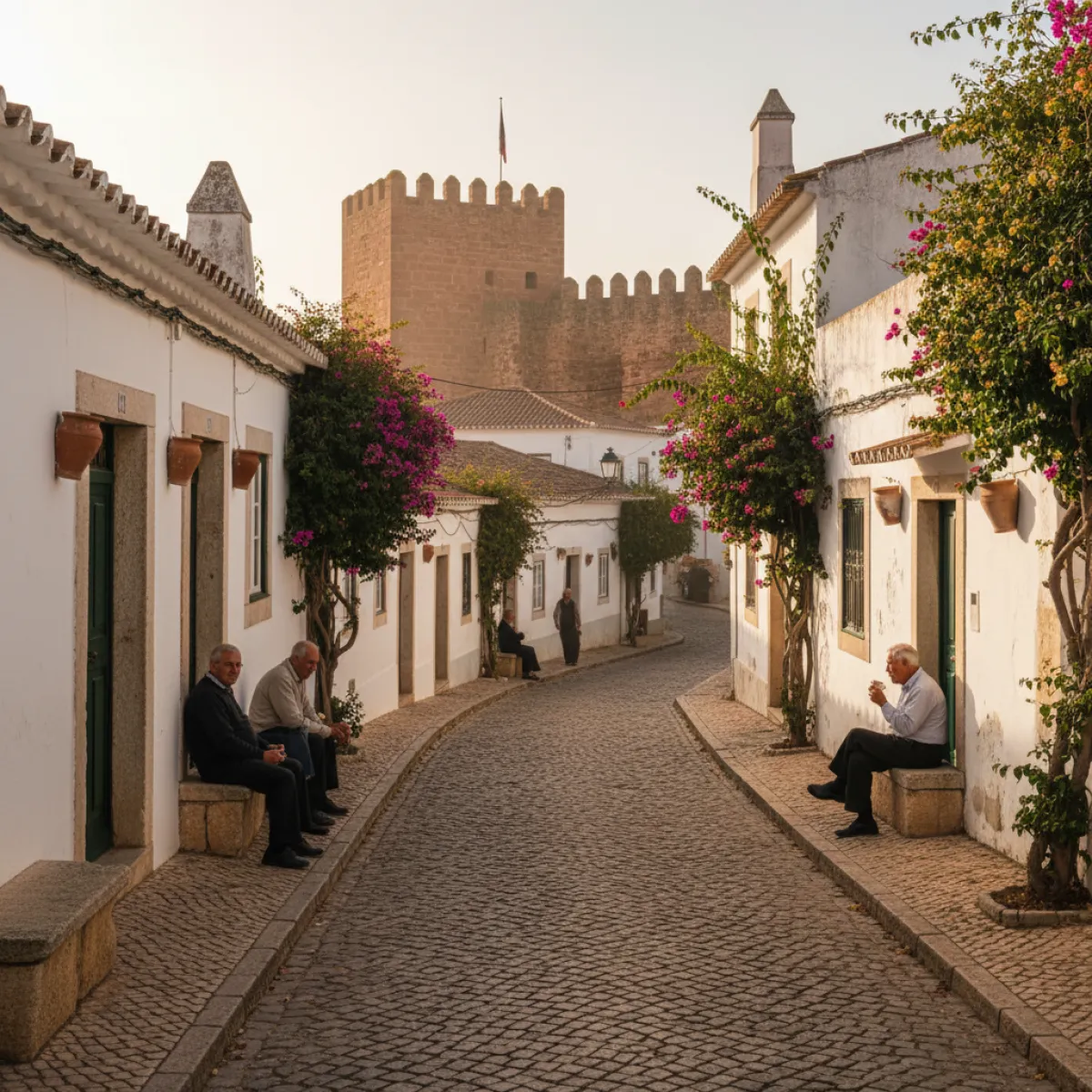
The Echo of Xelb in the Arade Valley
There is a density to the air in Silves that is absent from the Algarve's coastline. While the seaside towns define themselves by the Atlantic’s reflection on salt and lime, Silves, the ancient Xelb, is a construction of terracotta, dust, and memory. For the traveler arriving accustomed to the contemporary gloss of marinas, the first sight of the red sandstone walls is both a thermal and chromatic shock. Yet, the true spirit of this former capital of Al-Gharb does not lie in the restored towers dominating the skyline, but in what remains invisible at first glance: the urban, poetic, and technological sophistication of a civilization that turned this valley into one of the most vibrant intellectual centers of the Iberian Peninsula in the 11th century.
The Geometry of Water
To understand Silves, one must go down, not up. The Silves Municipal Archaeology Museum, built around a 12th-century Almohad cistern, is the essential starting point. It is not merely a repository of ceramic fragments; it is a testament to the Islamic obsession with water management. The cistern, with its eighteen-meter depth and imposing arches, was the heart of a city that flourished in a climatic desert thanks to engineering. As we explore the Local Culture in Faro: Traditions and Experiences of the Authentic Algarve, we realize how the current capital inherited the administrative function, but Silves retained the agricultural and technical soul. The system of 'aceias' and 'alqueives' that still irrigates the orange groves around the city today is a direct descendant of Mozarabic knowledge.
The Melancholy of Al-Mutamid
One cannot speak of Silves without evoking Al-Mutamid, the poet-king who ruled Xelb before becoming the sovereign of Seville. His poetry is an emotional map of the city: he described Xelb as a place where women were gazelles and poets were princes. This literary heritage bestows upon Silves a dignity often lacking in beach resorts. Unlike what is observed in the Lagos Neighborhood Guide: Discover Every Corner of This Algarve Gem, where the energy is cosmopolitan and outward-facing, Silves invites an almost Andalusian introspection. Walking the narrow streets that descend from the castle toward the Arade River is to follow in the footsteps of philosophers and geographers like Al-Idrisi, who praised the elegance of its buildings and the courtesy of its inhabitants.
The Palate of Moorish Heritage
Gastronomy in Silves is an act of cultural resistance. While the coast has largely surrendered to simplistic grilled fish, the interior preserves the complexity of spices and dried fruits. The use of almonds, figs, and carob in sweets is not just a regional tradition; it is a direct inheritance from the diet of Xelb. At the Café Inglês, at the foot of the Cathedral, or at Taberna Al-Medina, one should seek out dishes that use citrus in savory cooking. The Silves orange, considered by many the best in the world due to the valley's microclimate, is the region's modern gold. A lunch here should be unhurried, far from the crowds that characterize the Local Culture in Albufeira: Traditions, Festivals and the Algarvian Soul, allowing the flavors of the land, stewed wild boar, xaréns (maize porridge), and conventual sweets with Moorish influences, to tell the story of the transition between worlds.
Urban Fabric and the Barrocal
The structure of Silves is a lesson in organic urbanism. The streets wind in a way that breaks the wind and creates perpetual shadows, a thermal survival technique that modern architects are now attempting to replicate. Observing the city from a distance, one notices the division between the medina (the upper part) and the suburbs that extended to the river. This organization is a fascinating contrast to the more modern grids or historical centers of other Algarve cities. Silves is the gateway to the Barrocal, that transition zone between the mountains and the sea, where limestone and red clay create a landscape of absolute sobriety. It is an Algarve of silences, of shepherds, and of artisans who still work wicker and palm with the same techniques as their 10th-century ancestors.
Logistics and the Ritual of Visiting
To experience authentic Silves, avoid the months of July and August, when the medieval market transforms the city into a theatrical stage. The best time is between February and May, when the almond blossoms and the scent of orange blossoms (azahar) dominate the air. Budget around 50 to 70 euros for a full day, including monument entrance fees and a high-quality meal. The train from Lagos or Faro offers a scenic journey, though the Silves station is about two kilometers from the center, requiring a pleasant walk through orchards. If opting for a car, park by the river and climb up on foot; the physical exertion is an integral part of understanding the city's defensive topography.
Conclusion: The Permanence of Xelb
Silves is not an open-air museum; it is a city that breathes upon the layers of its own past. When the sun sets and the sandstone walls take on a bloody hue, it is easy to forget we are in the 21st century. The Islamic legacy of Xelb is not just in the stones, but in the slow dignity of its people and the intelligence with which the city still dialogues with its river. It is, without a doubt, the deepest Algarve, the one that requires time, silence, and a gaze capable of seeing beyond the obvious.
