Silves at Golden Hour: Where the Light Gets It Right
Silves' red sandstone turns extraordinary in late afternoon light, no filter required. From the castle walls to the old bridge, here are the exact spots and times to photograph the Algarve's former capital.
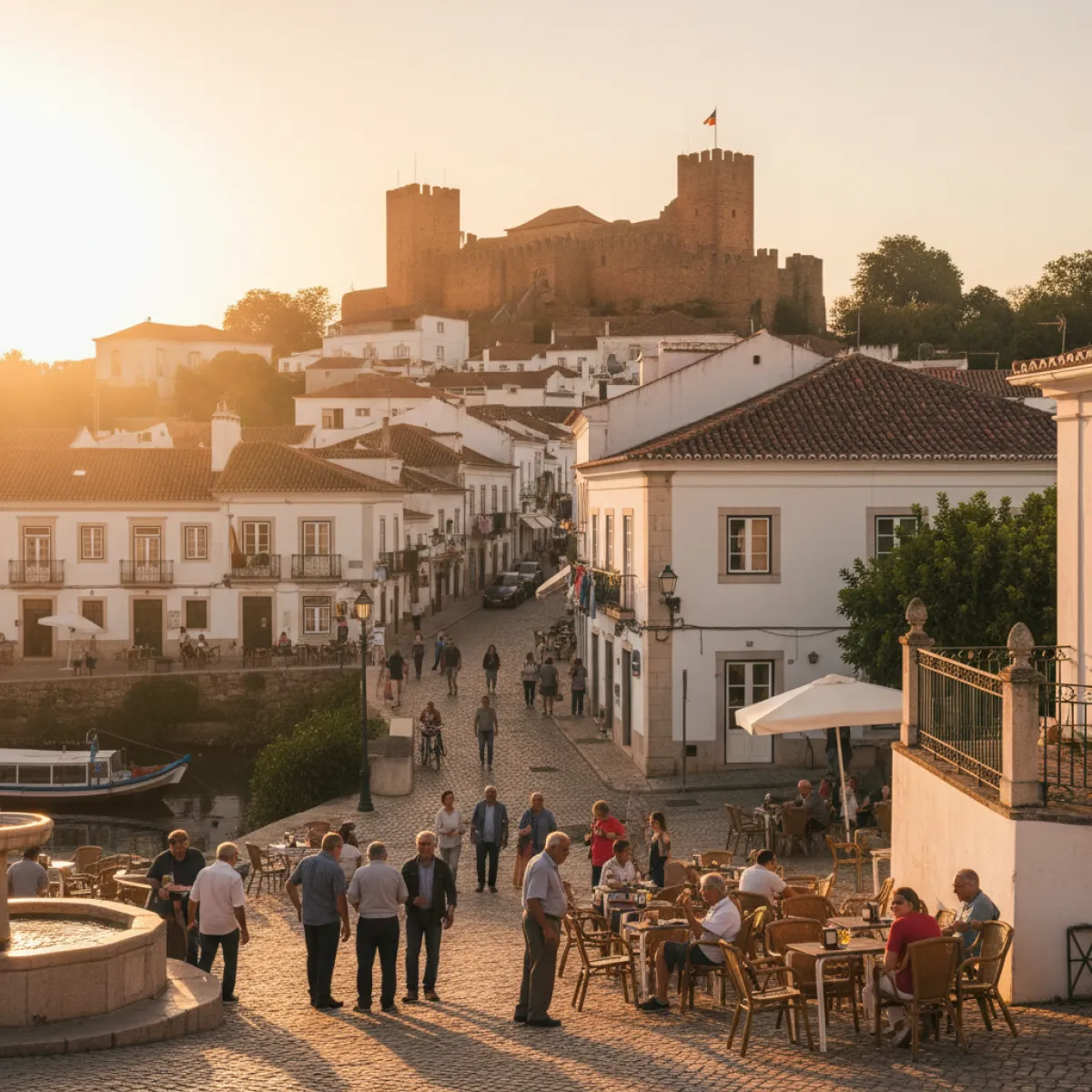
There's a reason Silves is built from red sandstone, and it's not just because the Moors had good taste. When the late afternoon sun drops over the Arade valley, the entire town turns a shade of burnt orange that no Instagram filter can replicate. The castle walls, the cathedral facade, the old bridge by the river: everything glows. If you're in the Algarve with a camera and you skip Silves, you're missing the best frame in the region.
But showing up at the wrong time means flat light, harsh shadows, and photographs that look like everyone else's. Silves rewards the patient. Here's how to get the light right.
The Castle at Sunrise: For Early Risers Only
Let's start with the obvious: Castelo de Silves. It's the highest point in town, and the panoramic views stretch south across the Arade valley (you can almost guess where the ocean is) and north toward the Algarve hills. Everyone goes. The question is when.
Early morning, between 7am and 8:30am in spring and summer, the sun rises behind the eastern hills and hits the western face of the ramparts. The red sandstone turns an almost pinkish tone in that raking light. The best angle for this, ironically, is from outside the castle: the road climbing up Rua da Cruz de Portugal gives you a side view of the towers with the town still half-asleep below. At that hour, the only sounds are dogs barking in backyards and, if you're lucky, the smell of fresh bread from somewhere you can't quite locate.
Inside the castle, climb to the northern walls. From there you look down over the roof of the Sé Catedral, a Gothic construction in lighter stone that contrasts beautifully with the red towers. In the morning, this view has a depth of shadows that vanishes completely by noon.
Entry is around €3 (check locally for current pricing), and it's worth every cent just for the wall walk. Go on a weekday if you can, before the tour buses arrive.
The Old Bridge and the River Arade: The Classic Shot
The Ponte Romana, which despite the name actually dates from the 15th century, is probably the most photographed scene in Silves. And for good reason. The stone bridge crosses the Arade in an elegant curve, with the castle rising behind it on the hilltop. It's the kind of composition that requires zero effort: river, bridge, red walls, all lined up.
The best light here is late afternoon, roughly between 5pm and 7pm depending on the season. The sun drops to the west and illuminates the castle face directly, making it almost incandescent against a sky shifting from blue to orange. The south bank of the river, near the park, is where you want to set up. If you didn't bring a tripod, the low wall along the road works fine.
A tip: wait until the sun drops low enough for the castle's reflection to appear on the water. The Arade isn't a fast-flowing river in Silves, especially in summer, and on calm afternoons the surface works almost like a mirror. That's your shot.
After the photo session, walk across the bridge (it's pedestrian-only) and climb through the old town. The narrow streets leading up to the cathedral give you unexpected angles of the castle framed between Algarvian chimneys and flower pots on windowsills. Not the postcard shot, but more interesting.
Rua da Sé and the Cathedral: Afternoon Shadows
The Sé Catedral deserves attention in its own right, but from a photography standpoint, the best moment is when the afternoon sun enters at an angle through the main facade. The lighter stone of the cathedral contrasts with the darker sandstone of surrounding buildings, and the shadows from the arcades create geometric patterns that shift every half hour.
The Gothic interior, with its vaulting and stained glass, is another matter. Light entering through the side windows in the late morning creates dramatic pools of illumination over the medieval tombs. Shooting the interior requires patience: the exposure difference between the lit areas and the shadows is enormous. If your camera allows bracketing, use it.
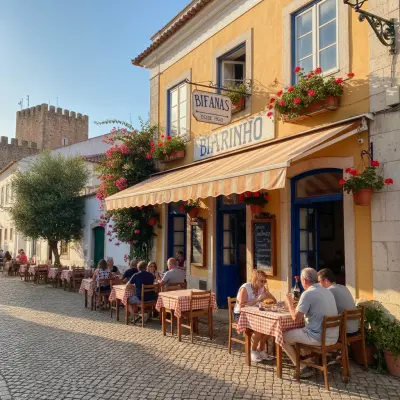
In the square in front of the cathedral, stone benches let you sit, review your shots, and plan the next move. It's also the ideal spot for a break. And speaking of breaks: if hunger has kicked in by now, head down to Bifanas do Marinho. The bifana (pork sandwich) is one of those things that doesn't need to be complicated to be perfect, and they do it right here.
The View from the São Bartolomeu de Messines Road
This is the spot most visitors miss, because it requires a car. Leaving Silves on the N124 toward São Bartolomeu de Messines, there's a stretch of road about 2 km after the town exit where the road climbs enough to give you a complete view of Silves in the valley below. Orange groves, the river snaking through, the castle on top, the cathedral beside it. Everything in one frame.
This view works best in the morning, when the sun lights up the eastern face of the town. In the afternoon, Silves is backlit from here, which can work for silhouettes but not for detail. There's a wide shoulder where you can safely pull over, but there's no formal viewpoint. It's just a stretch of road that happens to work.
The Municipal Market: Natural Light and Colour
Not everything is landscape. The Mercado Municipal de Silves on Saturday mornings is an exercise in colour and natural light photography. The fruit stalls (Silves oranges are famous for a reason), the glistening fish, the women selling herbs with the seriousness of contract negotiators: all of this happens under a structure that lets in generous side light.
Always ask before photographing people. Most say yes, especially if you've already bought something from them. A box of oranges costs almost nothing and earns you smiles and cooperation.
If you want to combine the market visit with a deeper dive into local food culture, the Silves food tour through the market and Moorish streets gives you historical context and flavours you'd struggle to find on your own.
Timing It Right by Season
The Algarve gets over 300 days of sunshine per year, which means you'll rarely be without light in Silves. But the quality of that light varies enormously.
- Winter (December to February): The sun stays low all day, which is excellent for photography. Golden light lasts longer, and shadows are long and dramatic even at noon. The downside: short days, and you might get rain.
- Spring (March to May): Arguably the best season. The fields around Silves are green, the almond blossoms in February/March add white and pink to the frame, and the light is clear without being harsh.
- Summer (June to August): Avoid shooting between 11am and 4pm. The light is brutal, shadows disappear, and the climb to the castle becomes a survival exercise. Focus on golden hour: the sun doesn't set until after 8:30pm, which gives you time to have dinner first and shoot afterwards.
- Autumn (September to November): The oranges start ripening, the light softens again, and the tourists leave. October is, in my opinion, the perfect month for Silves.
Gear and Practical Tips
Silves is a small town you can walk in two hours. You don't need a backpack full of lenses. A wide-angle for the castle landscapes and a 50mm or equivalent for street details and the market will cover almost everything.
Tripod: useful for the bridge in late afternoon and the cathedral interior, but not essential if your camera handles high ISO well. If you're shooting on a phone, recent models do decent work in night mode for blue hour.
Silves is about 20 minutes by car from Portimão and 30 minutes from Albufeira. There's no direct train, but Silves station (about 2 km from the centre) connects to Lagos and Faro on the Algarve line. The historic centre is compact and everything worth shooting is within walking distance.
If Silves gives you an appetite for more Algarve, the Caldas de Monchique thermal spa is half an hour's drive and makes a solid next-day plan. For those wanting to explore the coast, the Lagos neighborhood guide helps navigate a city that has far more than the marina. And if you want to understand the Algarve beyond the beach, it's worth reading about local culture in Albufeira and the traditions that persist behind the tourism.
The Final Shot
The best photograph I got in Silves wasn't planned. I was walking back from the bridge to the car, camera already packed away, when I spotted a black cat sitting on a red sandstone windowsill with the castle blurred in the background and the last light of the day painting everything orange. I took the photo on my phone. It came out better than anything I'd shot with the camera that day.
That's Silves for you. It rewards those who show up at the right time, but also those who are simply paying attention. The red sandstone does half the work. Your only job is to be there when the light decides to cooperate.