Forest Bathing in Mata do Bussaco: Half-Day from Coimbra
Mata do Bussaco is the first certified Healing Forest in the Iberian Peninsula, and it sits 45 minutes from Coimbra. The Instituto de Banhos de Floresta runs guided shinrin-yoku sessions among cedars planted by the Discalced Carmelites in the 17th century. Book the morning slot: it beats ten ordinary forest walks.
What a forest bathing session actually is
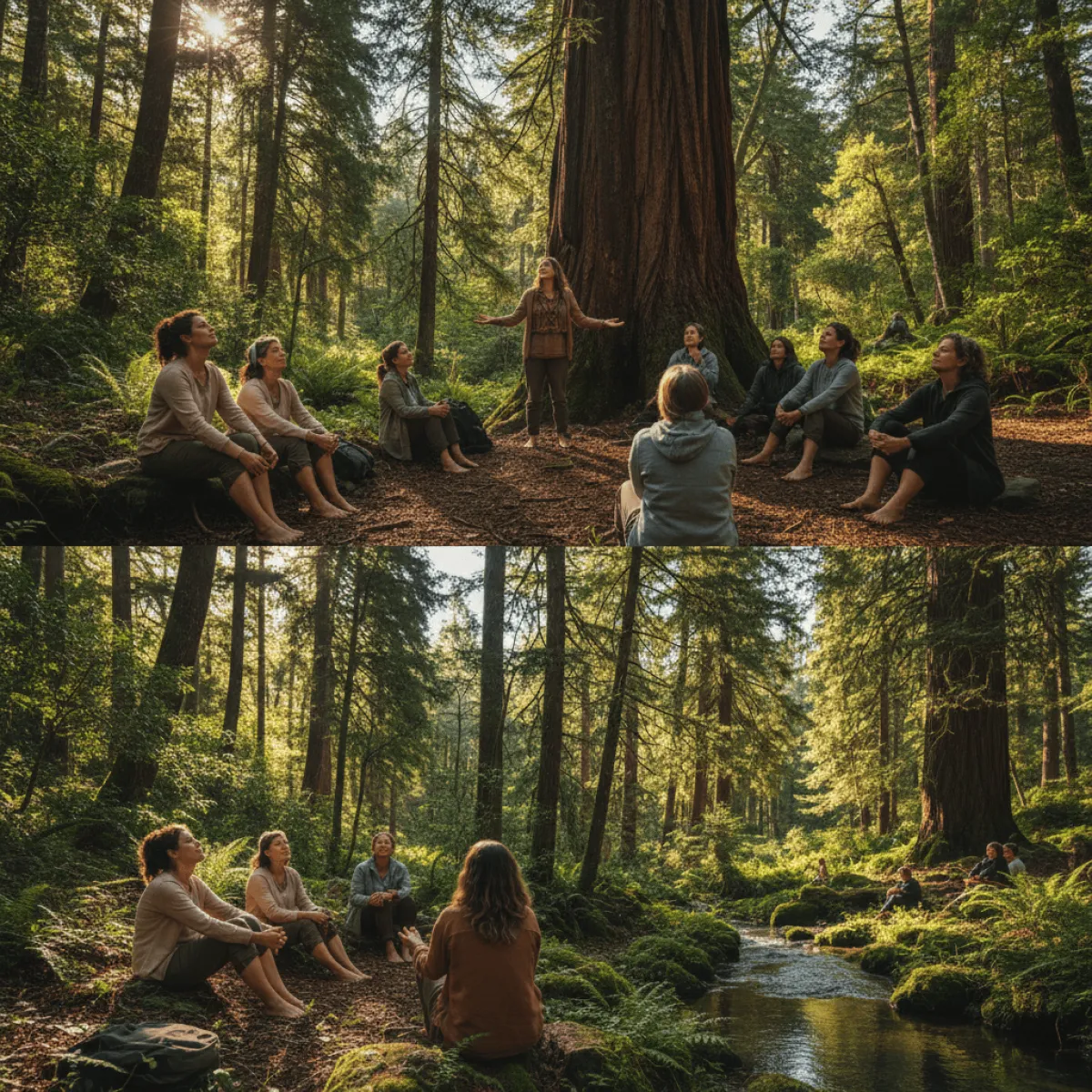
Forest bathing is not a hike and it is not a trail walk. It is closer to the opposite: you move very slowly, you stop for long stretches, and most of the session you are simply standing still under trees doing little more than breathing. The practice comes from Japanese shinrin-yoku, developed in the 1980s, and there is real clinical work behind it, including recent research from Coimbra's Centro Cirúrgico on cortisol drops and lower blood pressure after a two-hour session in dense forest.
Mata do Bussaco is the right place for this in Portugal. It was the first forest in the Iberian Peninsula to be certified as a Healing Forest, with Bussaco cedars over two hundred years old planted by the Discalced Carmelite monks shading moss-covered stone fountains. The air feels denser. Honest warning: if you are coming for sweeping viewpoints and a workout, this experience is not for you. If you want to leave Coimbra for half a morning and come back with your head somewhere else, you will struggle to find anything better forty-five minutes from the city.
Who runs it and how to book
The certified operator for forest bathing sessions in Portugal is the Instituto de Banhos de Floresta, with guides trained by the international Forest Therapy Hub and a working agreement with Fundação Mata do Bussaco, which manages the forest itself. Guided sessions can be booked through institutodebanhosdefloresta.pt or directly via the Foundation's email, [email protected]. There are open sessions on the public calendar, and private groups can be arranged from four people upwards.
Prices for the guided session vary by group size and duration, so confirm directly with the provider. Entry to the forest itself, paid separately at the Porta das Ameias or Porta da Rainha gates, runs between 5 and 7 euros per person for guided foundation visits and is free for pedestrian access, according to Fundação Mata do Bussaco's published rates. Book at least a week ahead, especially from April to October.
Getting there from Coimbra
By car it is about 30 kilometres on the A1 and N234, with the final climb up through Luso taking around fifteen minutes. Park at Largo da Cruz Alta or by the Palace Hotel: both are free and a short walk from the usual meeting point, either Cruz Alta or the entrance to the Valley of Ferns depending on the session. Without a car, there are direct trains from Coimbra-B to Luso-Buçaco several times a day, taking 25 minutes. From the station it is a twenty-minute uphill walk, or a taxi for under ten euros.
How the session actually unfolds
The half-day starts early, usually at 9.30am, with two and a half to three hours inside the forest. The guide gives a short introduction to the practice, collects phones into a shared backpack, and immediately you understand this is not sightseeing. From that point on, very little is said out loud.
The session is built around invitations, sensory prompts the guide offers the group. They can be as simple as walking ten metres in silence over ten minutes, or identifying three distinct sounds without turning your head. Between invitations there are short, low-pressure sharing circles. You walk maybe a kilometre in total, with long pauses in the Valley of Ferns, at the Fonte Fria fountain, and beside the centuries-old cedars in the Relic Forest.
The best moment, honestly, is the closing ceremony: a simple tea brewed from local plants gathered in the Mata, lemon-scented eucalyptus or lemon balm, served in clay cups. It is not photogenic. That is exactly the point.
What to wear and bring
- Closed shoes with a grippy sole. It is not a trail walk, but there are roots, wet stone, and gentle drops.
- Layers. The Mata sits at 540 metres elevation and can be ten degrees cooler than Coimbra at midday, any month of the year.
- A waterproof jacket from April through October. The mist forms in minutes and fine rain is common even in summer.
- A water bottle and a piece of fruit. There are no cafés inside the loop. The closing tea is provided.
- Natural insect repellent from April to September. The mosquitoes near Fonte Fria are not subtle.
- No perfume or cologne. It ruins the olfactory work for the entire group and guides will explicitly ask you to skip it.
Best time to go and tips from people who have done it
The morning session is clearly better than the afternoon one. The filtered light through the cedars before eleven is different, and the tour buses have not yet reached the Palace Hotel. Avoid Sundays and public holidays if you can. October and November are the strongest months: mild temperatures, mushrooms pushing through the ferns, and autumn colour on the Californian sequoias planted in the 19th century.
Afterwards, walk down to Luso along the old thermal paths, drink straight from the Fonte de São João spring, and have lunch at Vacariça or Pedra dos Grilos, both five minutes into Luso village. If you make it back to Coimbra hungry, save dinner for Zé Manel dos Ossos, whose chanfana is worth booking days ahead. On the way, swing past the Miradouro do Vale do Inferno over the Mondego, especially in the late afternoon light.
If you want to make sense of Coimbra after three hours among cedars, read our guide to the city and the piece on student cafés where to sit like a local. It is a good way to close the day: a coffee, a window seat, and the unusual sense that you probably do not need to do anything else.

Similar Experiences
Fado de Coimbra in Coimbra: A Guide to Authentic Houses

Liquid Gold in Coimbra: A Professional Olive Oil Journey at Passeite