Dolphin and Whale Watching from Braga: Where to Go
No whales pass Braga, but there are two real routes from here: dolphins in Lagos with Seafaris from €27.90, or proper whales in the Azores with Futurismo. I explain which to pick depending on your time.
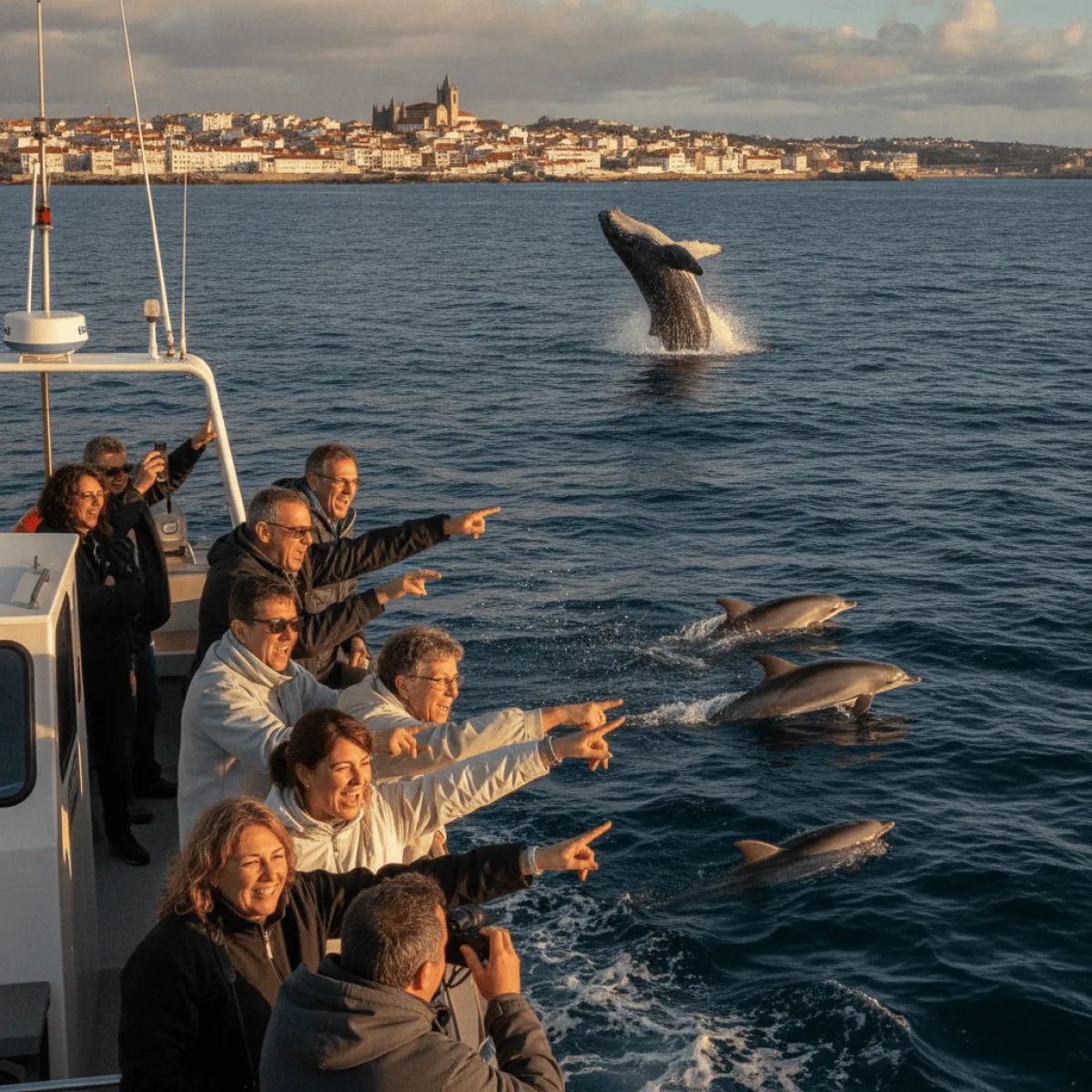
Let us be honest from the start: there are no dolphins in the Cávado river and no whales passing Braga. The city sits inland in the Minho, a good hour from the coast. So if you genuinely want to see cetaceans starting from Braga, there are two real routes, and both are worth the journey. The quick, cheap one is heading south to Lagos in the Algarve, where common dolphins appear almost year round. The spectacular one is catching a flight from Porto to Ponta Delgada in the Azores, one of the best places in Europe to see actual whales. I know both. They are different experiences, and I will tell you straight away which to pick depending on how much time you have.
The quick option: dolphins in Lagos, Algarve
If you only have a weekend, this is the sensible choice. Braga to Lagos is roughly five to six hours by car via the A1 and A2, or a short Porto-Faro flight plus an hour by car or train. Plan it as part of a longer trip south rather than a day return, because that would be punishment.
In Lagos, the operator I recommend is Seafaris, holding RNAAT licence no. 87/2010 and running since 1999. Their dolphin watching trip costs €27.90 per person and lasts between one and a half and two hours. They depart from Marina de Lagos (Shop 5, 8600-315 Lagos) aboard the Tornado, a large, fast rigid inflatable with turbine engines. There is always a marine biologist on board, and they are not decoration: they read the water, spot the pods of common dolphins, and explain why the animals are there.
What to expect on the boat
Check-in is at the marina, with a life jacket and a short briefing. Then you head out towards the coast around Ponta da Piedade. The best moment is not the first sighting, it is when the boat slows and the dolphins decide they like company, riding the bow wave. It can happen in five minutes or forty. The success rate is around 95% in high season, and if there is no sighting many operators offer a free rebooking.
- When to go: the morning session is better, with calmer seas and fewer people. May to September is the most reliable window.
- What to bring: a windproof jacket, sunscreen, sunglasses with a strap, and water. You will catch spray on the inflatable.
- Contact: (+351) 282 798 727 or info@seafaris.pt. Book online ahead in summer.
The serious option: whales in the Azores
If you want whales, and not just dolphins, you have to go to the Azores. There are direct flights from Porto to Ponta Delgada on São Miguel. It is a full day of logistics, but it is the difference between watching a sperm whale breathe twenty metres away and spotting a distant fin.
The reference operator is Futurismo Azores Adventures. The half-day trip departs from Portas do Mar (Shop 26, 9500-771 Ponta Delgada), lasts around three hours including check-in and briefing, and costs from €70 per adult (confirm the current price and fees on their site). The price includes marine biologists, a raincoat when needed, a life jacket, and insurance. Children under five go free when accompanied.
Why the Azores are different
São Miguel still uses land lookouts, the so-called vigias, a legacy of the whaling era, who now locate the animals with binoculars from the cliffs and guide the boats by radio. That is why the sighting probability is so high, around 98%. You can see resident sperm whales all year and, in spring, blue whales, fin whales, and sei whales on migration. The best moment? April and May, when the great baleen whales pass offshore. It is one of the few times you can see the largest animal that has ever existed from a small boat.
Algarve or Azores: how to decide
If you have two or three days and want low cost and guaranteed sun, go to Lagos. If you have four days or more and want the experience that stays with you, go to the Azores in spring. For a family with small children, the Algarve is easier to manage. For anyone who has already seen dolphins and wants more, the Azores have no rival.
In either case, always choose licensed operators with a biologist on board who respect the distances to the animals. The Azores have strict approach rules, and that is a good sign, not a flaw.
Before you leave Braga
Make the trip to the sea the high point of a well-planned visit. If you still want to explore the city before you go, our guide to Braga helps you make the most of the days before the getaway. For a proper last meal, see the guide to traditional Minho cuisine or go straight for a serious burger at DeGema. And if the pull of the water starts before you head south, the summer surf guide from Braga points you to the nearest beaches to get in the water without going so far.
One last practical tip: book the boat trip for the start of your stay, not the end. The sea calls the shots, and if the weather turns you may need to reschedule for the next day. Anyone who leaves the cetacean watching for the final day risks going home having seen nothing. And watching dolphins surf the bow wave, or a sperm whale dive with its tail in the air, is exactly the kind of thing you do not want to miss because of one windy day.