Museu Nacional Frei Manuel do Cenáculo
Discover the Museu Nacional Frei Manuel do Cenáculo, a treasure of erudition in the heart of Évora. From Flemish masterpieces to Roman remains, explore a collection of 20,000 items that define the Alentejo's soul.
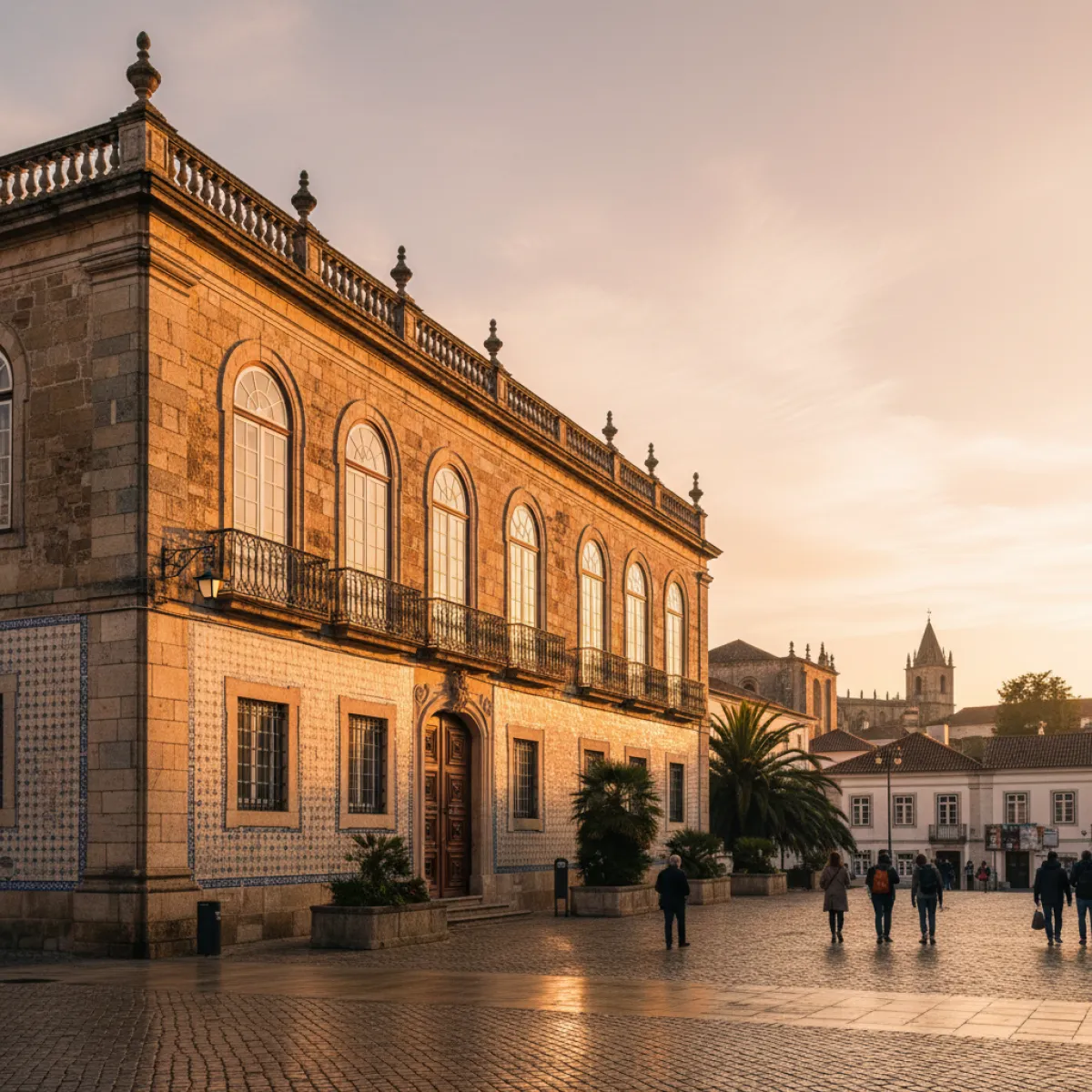
The Memory of Évora Within the Walls of the Episcopal Palace
At the highest point of the city of Évora, where time seems to follow a different rhythm from the rest of the world, the Largo Conde de Vila Flor stands as the epicentre of the city's history. It is here, between the slender columns of the Roman Temple and the granitic majesty of the Cathedral, that we find the Museu Nacional Frei Manuel do Cenáculo. Housed in the former Episcopal Palace, this space is not merely a repository of objects, but the materialization of an Enlightenment ideal that has crossed centuries to tell the story of the Alentejo and European civilization.
Upon entering this museum, visitors are immediately enveloped in an atmosphere of erudition and serenity. The building itself, with origins dating back to the Middle Ages but acquiring its definitive form in the 18th century, serves as the perfect frame for a collection exceeding 20,000 items. This collection was initiated by Frei Manuel do Cenáculo, Archbishop of Évora and one of the most fascinating figures of Portuguese culture, whose encyclopaedic spirit led him to gather treasures ranging from prehistoric archaeology to 19th-century painting.
The Flemish Treasure in Alentejo Soil
While the museum's diversity is vast, one set of works demands a prolonged pause and a keen eye: the Polyptych of the Life of the Virgin. This series of Flemish painting panels, commissioned for the high altar of Évora Cathedral at the end of the 15th century, is one of the most important collections of this period in the world. The technical precision of the masters from Bruges, the vibrant colours that have resisted time, and the richness of detail, from heavy fabrics to meticulous background landscapes, transport us to an era when art was the primary form of divine narrative.
Walking through the museum's rooms is to realize how stone and silence merge to create a contemplative experience. The archaeology section, in particular, offers a fascinating journey through the Roman occupation of ancient Liberalitas Iulia. Latin inscriptions, sculptures, and everyday objects reveal Évora's strategic importance within the Empire, establishing a direct bridge to the ruins glimpsed through the palace windows. It is a constant dialogue between what is preserved inside and what has survived in the open air.
A Journey Through Decorative Arts and History
Cenáculo's curiosity knew no bounds. Beyond sacred painting and archaeology, the museum houses a remarkable collection of decorative arts. Furniture, ceramics, and textiles illustrate the evolution of taste and techniques over the centuries. The jewelry section and liturgical vestments are witnesses to the wealth of the Évora diocese, once one of the most influential in the Iberian Peninsula.
The exploration of this space should be done without haste, respecting the slow pulse of the Alentejo. Each room holds a surprise, be it a piece of Baroque sculpture or a medieval epigraphic find. The museography, while respecting the historical structure of the building, allows for a clear reading of the different eras represented. It is not just about looking at the past, but about understanding how the identity of this region was sculpted by different peoples and sensibilities.
Logistics and What to Expect
Access to the Museu Nacional Frei Manuel do Cenáculo is exclusively on foot for those already in the historic centre of Évora. The area has very restricted vehicle circulation, which helps preserve the medieval atmosphere. If you arrive in the city by car, the ideal approach is to park in one of the lots outside the walls and walk up toward the Acropolis. The walk along Rua 5 de Outubro, filled with traditional cork and handicraft shops, is the perfect preamble to the visit.
Practical Information and Visiting Tips
- Opening Hours: The museum is generally closed on Mondays and specific public holidays. Checking the official website for seasonal hours is recommended.
- Admission: With a symbolic price (€), access is affordable for all budgets. Discounts are available for seniors, students, and families.
- Planning: Allow at least two hours for a full visit. If you are following a precision itinerary for the Alentejo capital, reserve the morning period for the museum, when natural light best enhances the textures of the stone and paintings.
- Dress Code and Etiquette: As it is a national museum in a historic building, silence is appreciated, and the use of flash photography is prohibited to protect the integrity of the artworks.
The Museu Nacional Frei Manuel do Cenáculo is more than a cultural stop; it is an exercise in historical understanding. In the heart of a city that is itself an open-air museum, this space provides the necessary context to interpret the layers of time that define Évora. It is an invitation to pause, reflect, and encounter beauty that has survived the centuries.
