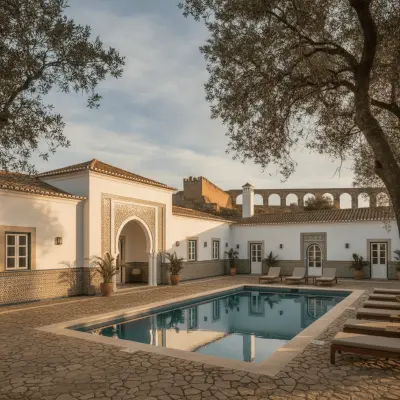
Sleep
€€€
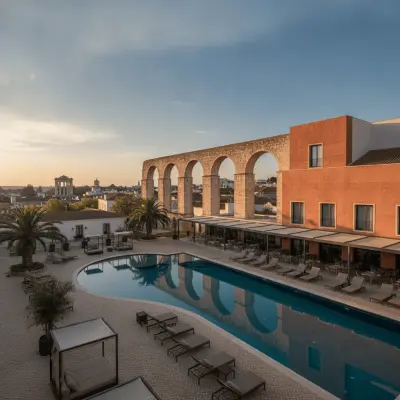
MouraSuites Hotel
Évora
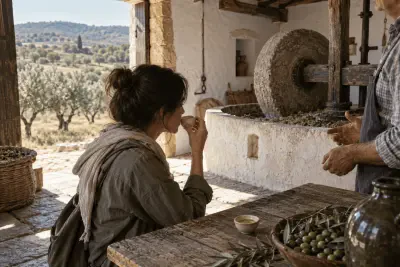
The Alentejo harvest campaign generally runs from October to February, but a good visit confirms that the mill is operating and teaches you to distinguish fruitiness, bitterness, pungency and defects.
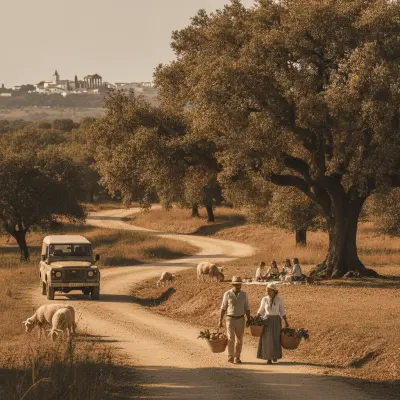
At two in the afternoon in August, the coolest place in the Alentejo is under a cork oak. A road trip from Évora that treats the montado as a destination rather than roadside scenery: reversed hours, gaspacho instead of migas, and Monsaraz after six.
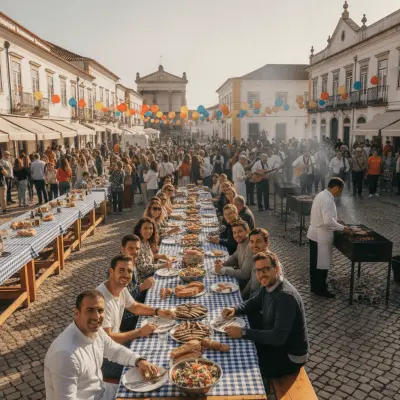
Évora sits ninety minutes from the sea and is no sardine town. But in June, with the Santos Populares, the rule breaks: grill smoke fills the neighborhoods beyond the walls. Here's when to come, where to eat and why to skip the central square's tourist menus.
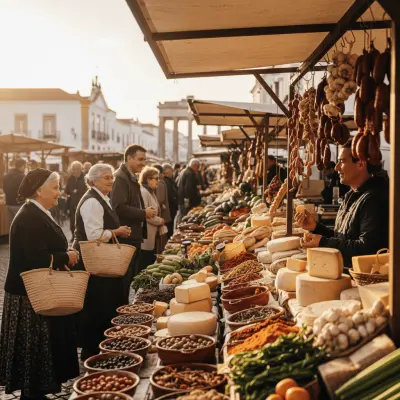
At the Mercado Municipal 1.º de Maio, Saturday at 8am, you can assemble a picnic for four for under 25 euros: Serpa cheese, black pork paio, Alentejo bread that actually weighs something. This is the opinionated guide that separates the worthwhile from the merely photogenic.
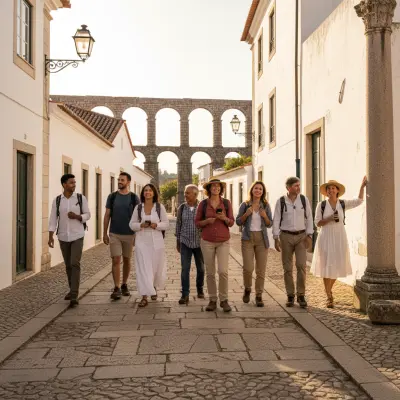
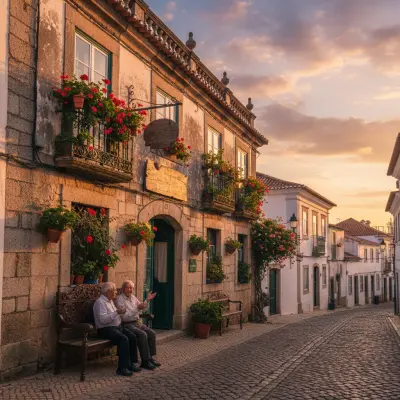
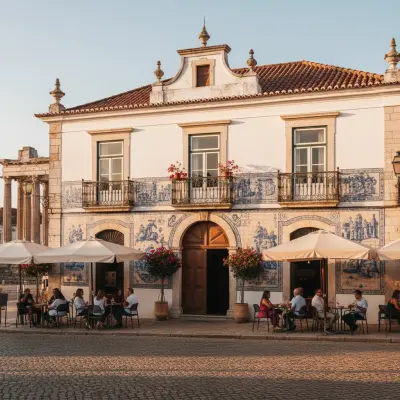
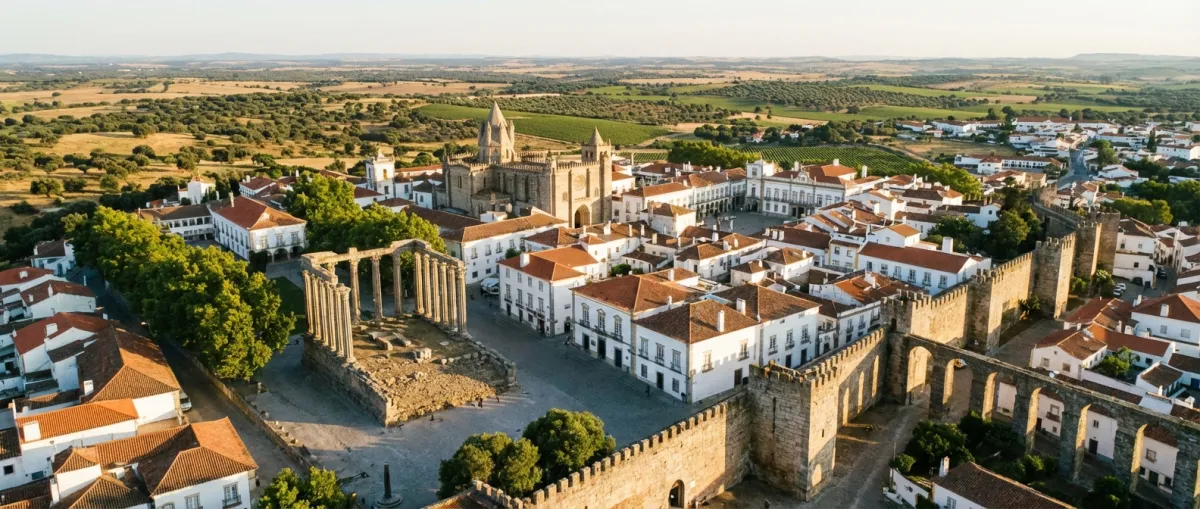
Évora is a city you read on foot, slowly, preferably in the heat. The historic centre, a UNESCO World Heritage Site since 1986, fits within a forty-minute walk end to end, but it's not meant to be rushed. The narrow streets between Praça do Giraldo and the Cathedral reward those who stop often, and the granite and whitewashed facades shift in tone with the light.
The Roman Temple dominates its square, but what really marks Évora is the compression of eras into a tight space. A few metres from the temple, the Church of São João Evangelista holds 18th-century azulejos that almost no one visits. The Chapel of Bones, inside the Church of São Francisco, is the city's most touristic spot, and it's worth seeing, despite summer queues. The Museu Nacional Frei Manuel do Cenáculo, already featured in our guide, is one of the Alentejo's best cultural surprises, with collections spanning Roman archaeology to Flemish painting.
The Alentejo eats well, and Évora is the right place to start. Migas with pork, lamb stew, and Serpa cheese with Alentejo bread are non-negotiable. Açorda alentejana, a thick soup of bread, coriander, garlic, and poached egg, appears on nearly every menu but varies widely from place to place. Around Praça do Giraldo and along Rua 5 de Outubro you'll find several taverns and restaurants serving regional cooking at fair prices. Alentejo wines, naturally, accompany everything.
Two days are enough to see the historic centre properly and eat well. Évora in summer is seriously hot, temperatures easily pass 40°C in July and August, so spring and early autumn are the better seasons. The city works well as a base for the central Alentejo: the Cromeleque dos Almendres is twenty minutes by car, Monsaraz under an hour. From Lisbon, it's ninety minutes on the motorway.