
Visit
€
Praia da Adraga
Sintra
Two kilometres of Atlantic coastline beneath Sintra's dark cliffs, with championship-grade surf, a 1950s ocean pool, and 100-million-year-old dinosaur footprints in the rock. A beach that demands respect and rewards those who give it.
The name is literal: Praia Grande means Big Beach. And at two kilometres of unbroken golden sand backed by dark limestone cliffs on Sintra's Atlantic coast, it earns the title without exaggeration. This is not a beach that whispers. The waves here arrive with force, the wind is a constant companion, and the water temperature hovers around 16-18°C even at the height of summer. It is a beach with character, and it demands yours in return.
Praia Grande sits in the parish of Colares, a name better known for its wine, one of the few European varietals that survived the phylloxera plague, thanks to sandy soils that shielded the vine roots. The coastline here is a different proposition from the palace-studded hills of inland Sintra. Raw cliffs of Jurassic-era rock frame the beach on both sides, and at the northern end, embedded in the stone, are fossilised dinosaur footprints dating back over 100 million years. They are classified as a Natural Monument, though you would not know it from any signage at the beach itself. Finding them requires low tide, some patience, and a willingness to look closely at rock formations rather than your phone.
If you are following a two-day Sintra itinerary, spending an afternoon on this coast provides a welcome counterpoint to the ornamental gardens and tiled palaces of the interior. The shift in register, from Romantic-era fantasy to geological reality, is worth the twenty-minute drive alone.
Praia Grande has hosted World Bodyboard Championship stages, and the waves here remain a serious draw for intermediate and advanced surfers. The break is consistent, with beach breaks working across a range of swell directions. Winter and autumn deliver the biggest swells, but even in summer there is usually enough energy in the water to make a session worthwhile.
For those who do not surf, the beach's ocean pool is the standout feature. Built into the rocks at the southern end in the 1950s, this concrete seawater pool fills naturally with each tide. Swimming laps while Atlantic swells crash against the outer wall is an experience that sits somewhere between exhilarating and absurd. The pool typically opens from June through September, weather and sea conditions permitting.
July and August bring crowds. Lisboetas drive out on weekends, families claim the central stretch of sand, and parking becomes a genuine ordeal after 11am. The beach is long enough to absorb numbers, but the area near the main access points gets dense.
The ideal window is May to mid-June, or September. Air temperatures are comfortable, the sand is quieter, and the light, that particular Atlantic light that photographers chase, is at its best. For walking the full two-kilometre stretch, these shoulder months are perfect.
Foggy days deserve special mention. The coast here generates its own microclimate, and when the sea mist rolls in, Praia Grande becomes a different place entirely. The cliffs dissolve into grey, sound behaves strangely, and you can walk the entire length of the beach in near-solitude. If you appreciate landscape with mood, seek out these days rather than avoiding them.
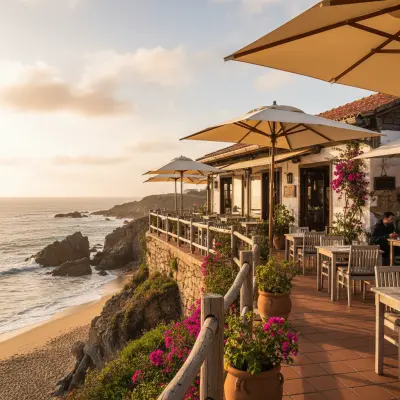
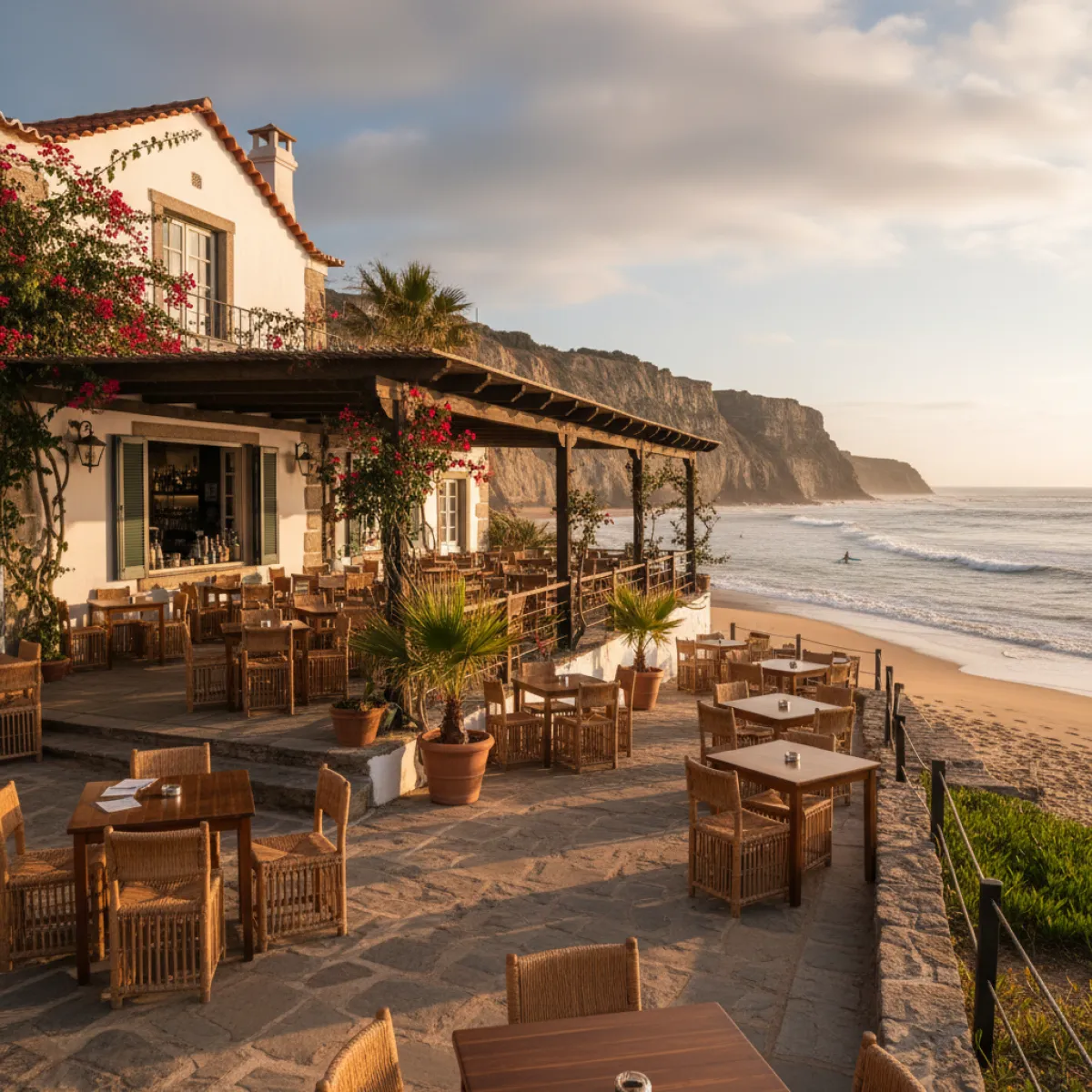
Several restaurants and bars line the avenue behind the beach. Bar do Fundo, at the southern end, has a terrace with unobstructed sea views and serves competent grilled fish, sea bream and sea bass are the reliable choices. Prices are fair for a beachfront location. Expect queues at lunch in summer.
The casual bars near the car park handle the basics well: bifanas (pork sandwiches), toasted sandwiches, and cold beer. Nothing remarkable, but exactly what a day at the beach calls for. For a more considered meal, drive ten minutes up to the village of Colares, where traditional restaurants serve regional cooking at prices the coastline has long since abandoned.
Bring water. Vending machines exist but are not always operational, and the combination of wind, reflected sun, and salt air dehydrates faster than you might expect.
From Sintra town centre, the drive takes about fifteen minutes via the N375 through Colares. Free parking is available at the beach, but spaces fill early on busy days. There is an overflow area on the clifftop to the north that tends to have availability when the main lot is full.
The Scotturb 441 bus connects Sintra to Praia Grande via Colares, though the service runs infrequently, check timetables in advance. A taxi or ride-share from Sintra costs approximately €15-20 each way.
The different neighbourhoods of Sintra each have their own identity, and the Colares coastline is an essential part of the municipality's geographic character, the part that faces the open ocean rather than the sheltered hills.
Sunscreen, even under cloud cover, UV exposure on this coast catches people out regularly. A windbreaker, because the sea breeze is persistent and temperatures drop noticeably in late afternoon. Footwear you do not mind getting wet if you plan to explore the rock pools and formations at the beach's extremities. And a towel you are prepared to sacrifice to fine sand that works its way into everything.
If the dinosaur footprints interest you, research their location beforehand. They are at the northern end of the beach, at the base of the cliff, and easiest to spot at low tide. The absence of interpretive signage is part of the appeal, but it also means many visitors walk past without noticing.
Praia Grande is not for everyone. It is too exposed for those seeking shelter, too cold for anyone who equates beach with warm water, and too large for those who prefer intimacy. But for anyone who takes the Atlantic seriously, who wants to feel the scale of the ocean and the weight of geological time, it is one of the strongest beaches in the Lisbon region. Among the best things to do in Sintra, this is the one that smells of salt and seaweed rather than jasmine and old stone.
Two kilometres of sand, a hundred million years of history in the rocks, and an ocean that makes no concessions. Take it as it is.